Small Is Beautiful: A Study of Economics As If People Mattered is a collection of essays by British economist E. F. Schumacher. The phrase "Small Is Beautiful" came from a phrase by his teacher Leopold Kohr.[1] It is often used to champion small, appropriate technologies that are believed to empower people more, in contrast with phrases such as "bigger is better".
After two weeks of being in LV and then SJ hanging around data center people having interesting discussions it struck me how small the data center world is. Yet it is growing.
With Social Networking and the bigger getting bigger, there is a small set of people who are driving the industry forward. Yet, there is an increasing set of people who demand data center services including IT organizations who don't understand how the small data center world works.
I think part of the problem for an newbie to data centers is to filter through the marketing and sales positioning to get the core of how the data center works. The marketing folks are not taking an approach that "Small is Beautiful" and it is about taking small steps in technology to empower people to design, build, and operate data centers better than the past.
The small is beautiful approach is an interesting one, that needs to be studied more.
I was at IBM's Impact conference in a smart fire side chat type of format with a bunch of media folks and an IBM VP. We went around the room and introduced ourselves. The IBM executive and I shook hands and then he said "I know you." I quickly went through my memory trying to figure out where I had met the executive. Sometimes the brain doesn't work the way it used and I couldn't figure out where we had met. Then he said, "I read your blog." My first reaction was reading my blog doesn't mean you know me. I've shared this story with a few and had a few laughs. Then one of the my data center friends said well given the way you write and share your thoughts beyond the data center industry, people do feel like they know you.
After a few days in LV last week and a few days in Santa Clara catching up with friends and making new ones. I do think people know me through this blog.
This past week I hosted 30 - 40 people in a brew pub. Went to a small dinner party that I helped reach out to some thought leaders who were in town to attend. Last week was in LV was another pub social, dinner with IBM execs, and a 100 person party at PURE nightclub. So kind of socially burnt out. I have two days of rest before we host 50 people at our house for a going away party. Only one guy going does any work in the data center industry that I know of, although there are a few real estate people who have done some data center work. I think I'll take some pictures with my Canon 6D and post some. I am surprised how photography does show up in some of the conversation I have on the road.
Part of what got me writing in the style to share more than data center stuff is when Olivier Sanche and I would jump into conversations and I would mention blog posts. He cut me off and said I read everything you post, so let's just reference various ideas you have discussed and I'll tell you if I agree or disagree. It's kind of like we were having linked cross referenced discussions with footnotes of relevant ideas. It really tests my memory to remember what I posted on. Sometimes I need to look at the daily e-mail posting from the site to remember what I posted on. :-) And, my local friends read my stuff more than my wife does and will send he posts to her with their comments. In fact, I think the readers of my blog have a better idea of where I am going next than my wife does. Next week is North Carolina, then 7x24 Boca, then GigaOm Structure in SF.
Thanks for visiting this blog. And, I guess people do know me through what I post.
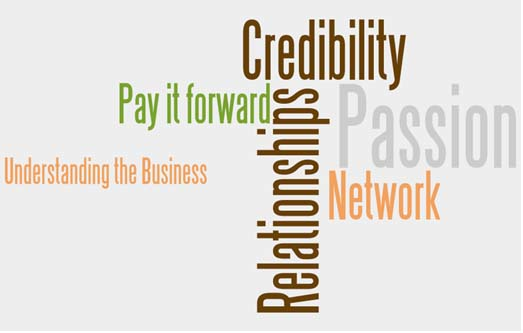
The Pachera Group has a good post on Secrets for Successful Recruiting. Finding data center talent is really hard. The Pachera Group doesn't recruit far data centers, but their points are well made.
deep understanding of business
tremendous tenacity
a thick skin
courage
passion for people and making connections
If you are looking for Technical staff for other parts of a business The Pachera Group is some one worth checking out.
Disclosure: Vikki Pachera a Partner of The Pachera Group is a great friend who I have known for 30 years. I helped get her a job at Apple and we worked side by side on many projects. She has worked at IBM, Apple, and HP on product development so she knows what is like to live the jobs she recruits for.
A respected Silicon Valley executive and widely-known new media and technology expert, Vikki Pachera is deeply conversant with a sweeping array of skill sets and disciplines. They include enterprise-level management, business development, strategy, hardware and software product development, consumer products, marketing, and professional services.
Vikki served as Vice President of Strategic Alliances & Business Development at Hewlett-Packard, where she brokered new business and developed frameworks to help Warner Bros., Disney, Oracle, and other company’s transition to digital media. She also held several other VP-level positions, served as an executive within Apple’s consumer electronics division, and co-founded a start-up software as a service (SaaS) company. She began her career as an engineer at IBM’s storage product group.
Vikki has placed executives in consumer electronics, media & entertainment, IT, retail & fashion, and enterprise companies. She holds a BSME degree from Michigan State and an MBA from Santa Clara University. She is an avid animal lover, and enjoys international and exotic travel.
I was talking to a data center executive and he got in serious trouble once with his PR team because he wasn't willing to lie about his PUE. Luckily he stuck to his morales, eventually left the company and the PR person. He is one of the respected in the industry meanwhile no one ever hears of the PR person who thought cheating on PUE was OK.
The WSJ has an article that discusses cheating in children and advises to understand what is causing the child to cheat.
Other children start feeling pressured at this stage by busy sports and activity schedules that don't allow time to study, says Kenneth Shore, an East Windsor, N.J., author and psychologist. "Parents can get a little panicky" and compound the problem by orchestrating kids' science projects, dictating sentences or typing their kids' essays, he says. Not only does this send the message that presenting someone else's work as your own is OK, but it suggests that grades are more important than learning—an attitude linked in research to higher rates of cheating.
Besides lying to cheat the numbers, the other type of cheating is taking credit for other people's work. This is used by those who are making it seem like the smartest in the class.
The lesson learned for the parent with 17, 20, 21 year old kids is a good one.
Looking back, Ms. Heffernan wishes she could correct one mistake—telling her sons that cheaters are always punished. "To say that kids who cheat will get caught and they will be punished—and they will not gain by cheating—isn't true anymore," she says. Insisting otherwise only leads kids to conclude, "Mom doesn't understand," she says. Her sons shot down that argument in elementary school, telling her they'd seen other students cheat without getting caught.
It worked better, she said, to tell her kids, "Cheating flies in the face of the values of our family and the rules of the school." She told them they'd be letting her down if they cheated, and she wouldn't defend them. "Not only will they be in trouble at school—they will be in hell at home."
The data center executive could have gotten away with cheating on PUE, most would not know and he would get a pat on back for supporting the company PR person. But, he would be seen by the insiders as some on who cheats to look good, and someone who cannot be trusted to do the right thing and tell the truth.
Being obsessed by performance metrics and looking like you are the smartest in the class, can lead people to cheat.
Good data center operators have a low tolerance for cheating, because cheating leads to bad behaviors and sloppy work that can affect the performance and availability of the data center. Wouldn't it be interesting if you see through a person's history how much they cheated when they were in school? Did their parents instill good values. The one way to see this is to see how a person is with their kids. Most likely if they took short cuts growing up they think it is OK that their kids do as well.
Ms. Avant explained to Kaci that cheating was wrong, said she was disappointed in her and met with her teacher and principal. She says she also spends more time now going over homework, lowering her voice and encouraging Kaci to "be more up front" when she doesn't understand something. Kaci has since been showing her mother all her papers, including answers she got wrong. The third-grader still gets mostly As, and she has learned that "cheating is bad," Kaci says in a phone interview. If she doesn't know a test answer, "I just do the best I can," she says.
For parents, stressing intrinsic goals, such as mastery, learning and doing one's best, can be tough. But research shows it is one of the best ways to prevent cheating.
Google I/O is one of the few times you know Urs Hoelzle is going to speak. Urs is the MAN behind Google's Infrastructure. Urs is Google employee #8. He is wicked smart, got plenty of money to do what ever he wants, and has the backing of the Google executive staff to build for the future.
When most hear the words of "Cloud Services" they think of Amazon Web Services. Amazon.com being a great retailer has a phenomenal presence and selection of Cloud Services. But, I'll tell you something that is not widely known, just because something is well marketing and looks like a good price doesn't mean it is built to last and to handle stress. An example of this I've noticed is ski jackets that get used by ski mountain staff. They wear the jackets multiple times a week, wash every week (we hope), putting more stress on a jacket in a month than most would put on their ski jackets over 5 years. Quickly, they learn what will really last or not, and how it is priced and what brand is many times irrelevant. They learn to look at the material, construction, and quality of the jacket and where their past jackets have broken. fyi, AWS breaks in various areas that developers run into which can frustrate the hell out of them. I know this first hand because my friends have gone through the hell of finding where AWS breaks, and had to make the choice to build the services themselves.
So, let me walk through Urs's keynote and point out some of the cool infrastructure things. Note: I mention in the title than I'll compare to AWS. Well I threw that up to get your attention, but actually there is very little out there if any that discusses AWS infrastructure. It is like a retailer, it is all about price, selection, and selling to the target audience.
If you want to see the presentation go to about 21minute mark in this video.
Here is Urs's title slide.
The next slide, Urs's discusses the physical world of data centers to support the cloud. It's not a bunch of fluffy stuff that scales infinitely. It is built on physics.
Then slides showing the physical infrastructure that Connie Zhou documented in her pictures. There weren't any new pictures that most of you haven't already seen.
The environmental message is delivered.
Google's announcements over the past year of expansion.
Besides building data centers, Google runs their own network with their own sub marine cables
The network spans the world and at some point will most likely reach Africa, Middle East, and India.
One of the thing Google does is it thinks of its SW as infrastructure. Urs reviews the history of the Google SW infrastructure.
At about the 30:24 mark Urs discusses the obsolescence of features to learn from the past and make things better, focusing on quality and performance. Sounds like my ski jacket story above. :-)
163 improvements are listed over 12 months.
Customer wins are discussed on the platform.
To disrupt the business model of an AWS, Google has added sub minute billing.
In the spirit of a little green server, Google has a micro VM of only 0.6 GB.
Getting Cloud to be useful many times requires integrating with on data center services in the company's data center if you can have an encrypted VPN connection.
Persistent disks are useful, but the standard is 1TB. Google has announced 10 TB.
Platform infrastructure is great, but what good is it if you can't develop apps.
To meet the needs of Information Security, Google Cloud Service are ISO 27001 are certified.
If you want to see an app to build at the 45:00 mark you can see a demo of building an app.
In building applications this is what AWS has tons of content on.