The Facebook DCIM whale that got away, Facebook builds its own DCIM solution

Some use the term Whale Hunting to describe going for the big sale, and I would expect that some had used this term going for a DCIM sale at Facebook.

If you don't like the Whale analogy.  Another one is the biggest wins are many times like the "belle of the ball" where companies are the most attractive for a sale.  

Whatever analogy you use the Whale or Belle these companies are smart and know what the market looks like and is used to turning away advances and not taking the bait on a hook.

Then Facebook sends this message out discussing DCIM at DCD SF.

The management tools used today are already a hodgepodge of DIY and third-party solutions. The DCIM solution Furlong hopes will emerge from the current effort will establish a line of communication between management tools on the server side and management tools on the data center side.

Facebook is stuck. With as important as DCIM is, it is not a high enough priority to dedicate the resources to solve.

At the same time, using software-engineer hours to build a solution from the ground up does not make business sense. “Our software developers are better utilized worrying about our infrastructure and worrying about product than they are worrying about data center space.”

You don't hear glowing reviews of DCIM SW from the Whales or Belles in the industry.  Does this mean DCIM is only good enough for the smaller less attractive companies?

Digital Realty has chosen to build its own DCIM which is part of why they'll discuss their solution.

SAN FRANCISCOMay 13, 2013 /PRNewswire/ -- Digital Realty Trust, Inc. (NYSE: DLR), a leading global provider of data center solutions, announced today that it launched EnVisionSM, a comprehensive data center infrastructure management (DCIM) solution.  EnVision provides increased visibility into data center operations, including the ability to analyze data in a manner that is digestible and actionable; a user interface with displays and reports that are tailored to data center operators; and access to historical data as well as predictive capabilities.

"Up until now, data has been collected, but it has not necessarily been easily accessed or arranged in an intuitive manner that is helpful to a data center operator," said David Schirmacher, senior vice president of portfolio operations at Digital Realty. "The goal in rolling out EnVision across our global portfolio is to give our customers a common database that is structured around the specific needs of data center operators and can therefore manage the millions of data points that are found in today's large-scale facilities."

DataCenterDynamics discusses this is not a threat.

DCIM vendors should not see this trend among hyper-scale operators as a threat, however, Ascierto says. Yes, their physical footprint does represent a sizable chunk of the addressable market, but the market is so immature, and the market penetration rate of DCIM is so low, there are plenty of other operators to go after, she says.

Not getting the big win may not be a threat, but it never feels good to miss the big sale that could be bragged about as the Whale or Belle of the Ball.

CloudPhysics uses a modeling, simulation, data approach to Operate Virtualized Infrastructure

GigaOm's Barb Darrow reports on CloudPhysics.

Exclusive: CloudPhysics seeks to nip VMware deployment issues in the bud


1 HOUR AGO

No Comments

John Blumenthal
SUMMARY:

CloudPhysics says its Knowledge Base Advisor about VMware deployments is just first step in it becoming the New Relic of VMware operations.

...

“We continuously analyze your operational data and relate it to a massive index of knowledge base articles and other unstructured data we manage.  We call this a ‘relevance matching engine’ for finding the exact vendor issue alerts personalized for specific components and configurations in your environment,” he said.

CloudPhysics has focused on managing VMs, but many of the ideas are ones to consider in the Physical data center.  This page is one I liked.

NewImage

 It will be interesting to see how CloudPhysics develops as they identify more areas of inefficiencies.

We think datacenters of today are woefully inefficient, both in terms of machine and human cost. Often, issues are discover when it is too late, requiring emergency fire drills to resolve. We understand these issues, and the dynamic nature of your virtualized environment. You demand deeper visibility into your datacenter, and we provide that by tapping into what we call ‘collective intelligence.’

Canary in a Data Center, maybe a time to break down the security, IT, and facility barriers

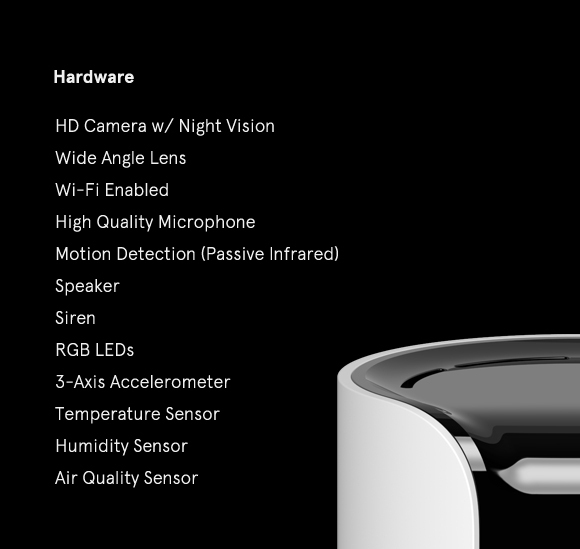
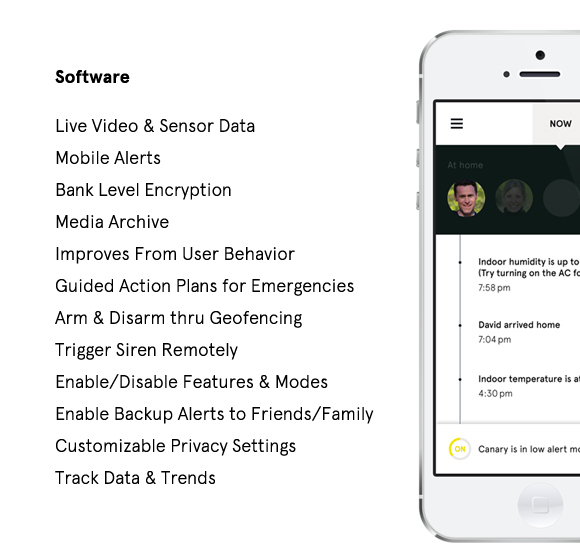
Fast Company has a post on the Canary intelligent home security system.  But, my first thought is this would be great in a data center, colocation, or server closet.  The biggest problem would be it threatens the silos of security, facilities, and IT operations teams in their specialized systems.

I know one of you out there will take the leap and order one of these for your server area.

BTW, I have a home video recording system and it is so much better than a typical security system approach.

The hardware has these features.

NewImage

The software has these features.

NewImage

Finally College costs may drop as supply of freshman drops

For all the complaints about college costs rising which seems like no one can do anything about.  I find it rare that anyone looks at the problem as a supply and demand problem.  Demand from parents and students has been rising for college education.  Colleges see an inelastic price curve. They raise prices and still have full enrollment.  If the supply of students drop and colleges are competing for a limited supply of students, then prices should drop.

WSJ has an article on a student drought hitting smaller universities.

Student Drought Hits Smaller Universities

At Loyola, Freshman Class Size Plunges

As Loyola University New Orleans gears up for fall classes next month, the 101-year-old Jesuit University faces a crisis: There will be 25% fewer freshmen than the school had banked on.

"It was a pretty big hit," said Marc K. Manganaro, provost and vice president for academic affairs.

Getting a targeted number of accepted students to commit to a college's freshman class—known as the "yield"—has become more crucial for thousands of schools.

Enrollment rates for numerous smaller and lesser-known colleges and universities are falling this year, due to a decline in the U.S. college-age population, years of rising tuition, increasing popularity of Internet courses and a weak job market for recent graduates.


There is data to show the student enrollment is declining.

After decades of growth, college enrollment nationally dropped 2.3% this spring, compared with spring 2012, according to a report released by the National Student Clearinghouse Research Center. The decline is poised to continue. The number of U.S. high-school graduates peaked at 3.4 million in 2010-2011 and is projected to fall to 3.2 million by 2013-14, according to the Western Interstate Commission for Higher Education. The dip in graduates has been particularly pronounced in the Midwest and South.

I have 7 more years before my first goes to college, and I am disappointed by the possibility of college costs retreating.

Counting Servers is Easy, there are a lot of other things that are much harder

James Hamilton has a post saying that is hard to count servers.

At the Microsoft World-Wide Partners Conference, Microsoft CEO Steve Ballmer announced that “We have something over a million servers in our data center infrastructure. Google is bigger than we are. Amazon is a little bit smaller. You get Yahoo! and Facebook, and then everybody else is 100,000 units probably or less.

That’s a surprising data point for a variety of reasons. The most surprising is that the data point was released at all. Just about nobody at the top of the server world chooses to boast with the server count data point. Partly because it’s not all that useful a number but mostly because a single data point is open to a lot of misinterpretation by even skilled industry observers. Basically, it’s pretty hard to see the value of talking about server counts and it is very easy to see the many negative implications that follow from such a number

What is hard is figuring out how many cores these servers have.  What is the age of the servers?  Oldest is 4 years.  Or 3.  What is the rate of adding new data center capacity and how does that relate to overall cores and storage increasing?

The one advantage Microsoft has in making a statement on server count is the companies will not speak up what theirs is.

The first question when thinking about this number is where does the comparative data actually come from?  I know for sure that Amazon has never released server count data. Google hasn’t either although estimates of their server footprint abound. Interestingly the estimates of Google server counts 5 years ago was 1,000,000 servers whereas current estimates have them only in the 900k to 1m range.

We'll see if others speak up on server count or not.  

The US census for years has conducted a study of manufacturing capacity for years.


Quarterly Survey of Plant Capacity Utilization (QPC)

The Survey of Plant Capacity Utilization provides statistics on the rates of capacity utilization for the U.S. manufacturing and publishing sectors.

  • The Federal Reserve Board (FRB) and The Department of Defense (DOD) co-fund the survey.
  • The survey collects data on actual, full, and emergency production levels.
  • Data are obtained from manufacturing and publishing establishments by means of a mailed questionnaire.
  • Respondents are asked to report actual production, an estimate of their full production capability, and an estimate of their national emergency production.
  • From these reported values, full and emergency utilization rates are calculated.
  • The survey produces full and emergency utilization rates for the manufacturing and publishing sectors defined by the North American Industrial Classification System (NAICS).
  • Final utilization rates are based on information collected from survey respondents.

Wouldn't it be useful for the FRB and DOD to understand data center capacity and utilization?  It is hard to assess, but that doesn't mean it shouldn't be done.