Iceland Hydropower plant Irafoss tour

Yesterday was geothermal, today is a hydropower tour.  One of the questions I asked the maintenance crew is how often they shut down.  Every year 3 days.  Every three years, for about a week.  Every 6, 9, and then 12 years the shut downs are longer.  With shut down being up to 6 weeks every 12 years.  The grid is highly available, but that doesn't mean there aren't maintenance events.

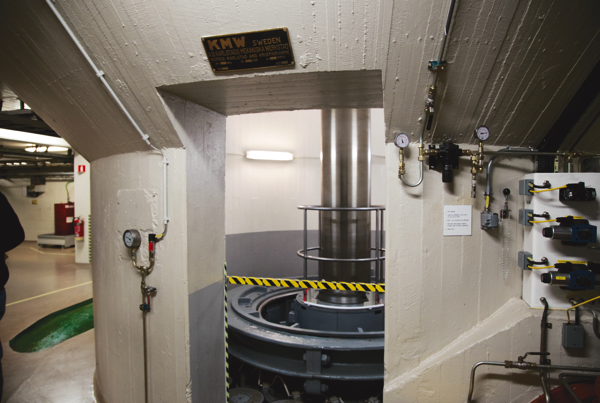
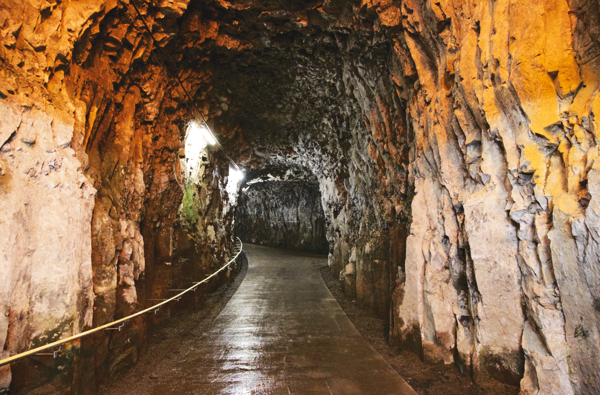
The facility had an access tunnel at the lowest level.  This photo came out nicely with 12800 ISO f/4 1/30.  No flash, just really big 12800 ISO.  Love my Canon 6D.

NewImage

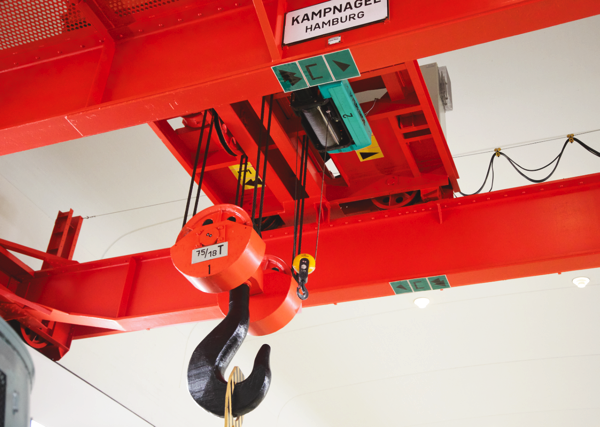
There is a crane to lift gear in the generator room.

NewImage

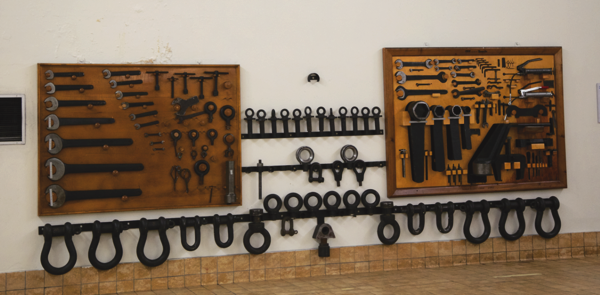
Here are some of rigging and tools for the crane.

NewImage

NewImage

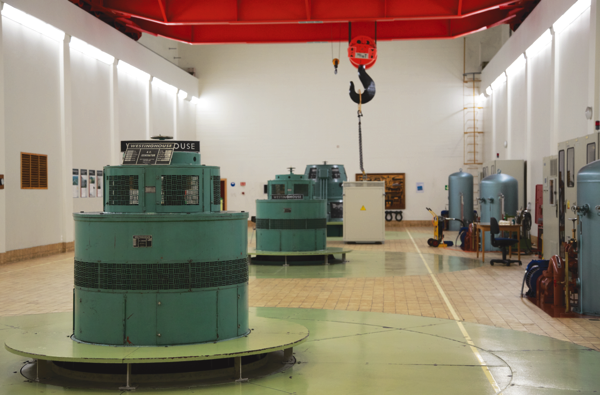
The above is the magnetizing of the coils.  Below are the generators.

NewImage

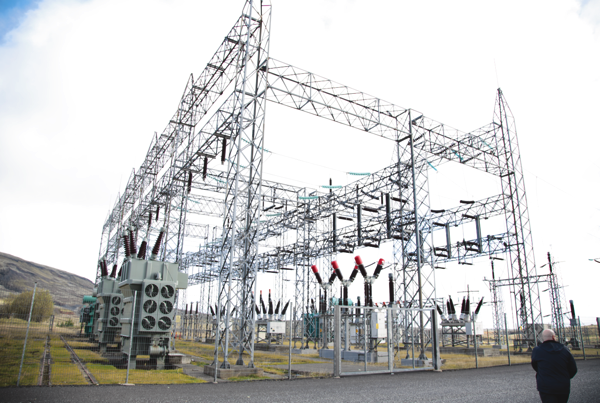
Power is transmitted at 132kV and 220kV.

NewImage

Here is a video of the water leaving the generators.  There is pressure in the discharge area to reduce the pressure differential from inlet to discharge.  One of the reasons for reducing the pressure change is too high a differential can create damaging resonances.

A Golden Circle tour of Iceland for a Technology Oriented Person - IC Iceland

This is my first time to Iceland and had a bit of time for a tour.  The folks at Verne Global recommended Omar at IC Iceland for a tour of the Golden Circle.  For a technology person Omar was a great fit for a tour guide. Omar used to work OS support in Iceland for IBM AS/400 and 360, then worked on complex system installs for Hughes Electronics equipment, and even worked on an ABB control systems with SCADA controls in a power plant in Iceland.

IC Iceland is a fully licensed tour operator specializing in guided super truck tours and extended tour around Iceland. Super trucks are powerful 4×4 vehicles that are customized in Iceland to handle tough terrain of the highlands and glaciers.

About Omar

Omar is the owner and guide for IC Iceland (previously Iceland on Track). Omar has an MS in software engineering and an MBA, and worked in IT for over 20 years before pursuing his passion for the outdoors full-time. He enjoys exploring the Icelandic highlands, travelling the country, super truck winter adventures, hiking, fishing and hunting. Omar is very knowledgeable about Icelandic history, folklore, geology and geography – and enjoys sharing and introducing this knowledge with his clients.

So first what the data center crowd would care about.  The sights, the glaciers, waterfalls.  No power.  Well he did see the awesome sights of the area, and also saw the power infrastructure.

Here is a small venting of the steam from a drill site.

NewImage

Driving up to this drill site you can't see much.

NewImage

Here is a view of many more drilling sites.

NewImage

The steam from the range of well gets piped to a steam processing area.

NewImage

Here is a closer look at the steam plant.

NewImage

The steam gets sent to power plant.

NewImage

NewImage

Here is a smaller power plant.

NewImage

Omar did a great job of also showing the sights of the Reykjavik and the Golden Circle. Here are more of the shots you would expect from a typical tour guide.  Don't know of any one who would show you the above.

NewImage

Omar is in this shot.  Omar is the one who looks like he is not cold. 

NewImage

FYI, most of Iceland's power comes from Hydroelectric.

NewImage

We were heading up to the Glacier.

NewImage

But we weren't going to see anything.

NewImage

So we turned around when the road was like this.

NewImage

One of the unexpected pleasures was driving by Ossur which bought a good friends company years ago. It was nice to see the company I have heard about.

NewImage


Amazon's A9 creates a video that tells the story of what it is like working for the company

Here is a video about Amazon.com's A9.  This video has only 392 views and is a humorous spin on working for A9.

What is most interesting to the data center crowd is their technical operations team.

Technical Operations

Our global team keeps Product Search and other services running 24x7.


Infrastructure That Scales.

Search and several related services we support are at the core of the Amazon business: they help customers find the items they want to buy. We are always online and ready to respond. 

Our globally distributed team oversees the smooth-running of all search system operations on Amazon sites in North America, Europe and Asia; our Client Services group provides hands on support for those that depend on A9’s search systems.

NewImage

Besides our ultra-high availability frontline operations, we plan and scale with the fast-paced growth of search. We look at the data; we determine what services are needed; we implement solutions and we manage deployments. We are responsible for thousands of servers handling 100s of millions customer searches daily.

We stay agile so that we can adapt to unexpected change and exponential growth. We are ready when peak traffic surges, and we understand that yesterday’s record is going to be tomorrow’s average, so we always stay ahead with our infrastructure.

Collaborating across time and space.

The Search Operations team builds and runs the world's largest e-commerce product search. 

Our "follow the sun" operation is based in three locations: Palo Alto, Dublin, and Tokyo. Each of our teams can, during their work hours, address any issue in any locale as soon as it arises, giving it full attention.  

No matter what the volume of traffic, the conditions on the ground, or the intricacy of the systems, our services perform seamlessly for our customers, 24x7.

We manage critical capabilities—high availability, cross-platform, scalable product search and an advertising platform that serves advertisers and publishers alike—for our parent company Amazon and other clients.

Are you Ready for the 7 billion Mobile Device Future? Intel's Top Anthropologist predicts a Mobile Future with 4 insights

Intel Developer Forum was this week and I have gone 3 times but didn't go this year.

The last days keynote is here by Genevieve Bell who is an anthropologist.  Below is a video of her keynote and the presentation.

Intel Developer Forum 2013 Keynote - Genevieve Bell


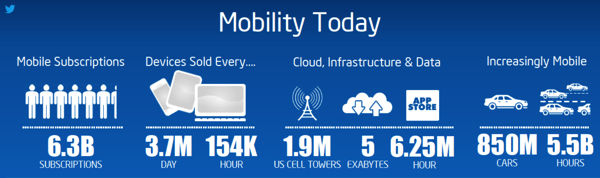
To help the attendees tweet the her presentation Genevieve inserted Twitter Blue Birds to help people know what to tweet.

NewImage

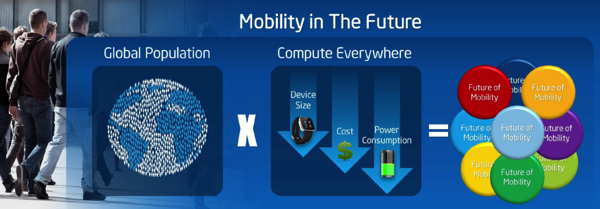
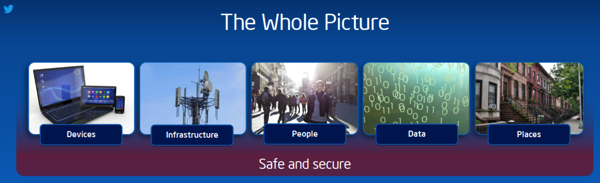
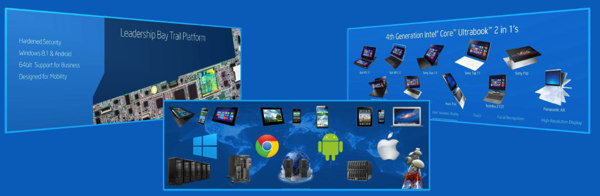
Part of why I like to blog is there are things I can say or show that is too hard to tweet.  It is so much easier to tell a story.  Here are the four insight that Genieve shared.

NewImage

One of the points made is being in the moment, in the flow.  One of the problems Windows has is association with this.

NewImage

To its credit Windows doesn't crash the way it used, but I would say the number 1 irritant is Windows Update. I can almost count on when I fire up Windows that Windows update will disrupt my flow.  Now to be fair I only use Windows once a month and too many times there is a critical update that forces a reboot.  Or I just get used to when I fire up Windows I allow 15-30 minutes at the beginning to run Windows update.  Luckily I just run Windows on parallels on my Mac.  The Mac does have updates as well, but they almost never force themselves in my flow.

NewImage

Intel just announced it was shutting down its plant in the Boston area because it is stuck in 32nm wafer fab past and Intel is getting ready for a 14 nm future.  The old way of Intel was to build big complex processors to make money.  It looks like the new way is billions of small, low cost, power efficient chips.  Huh, sounds like the ARM strategy.

NewImage

One of the things that doesn't get presented is whether Intel has figured out a future that allows the selling of these small devices, making little money on the billions of small devices because in the big picture Intel can figure out where to maximize its profit across the whole system.  Its like Google giving away Android so it can make money on advertising.

NewImage

NewImage

NewImage

OK this what i wanted to say.  Couldn't do this in a tweet.  

Another day at DCD Seattle 2013 talking to guys who know what is going on, a different thought leader

The term thought leader is well known in the industry.

thought leader is an individual or firm that is recognized as an authority in a specialized field and whose expertise is sought and often rewarded.[1] The term was coined in 1994 by Joel Kurtzman, editor-in-chief of the Booz Allen Hamilton magazine Strategy & Business, and used to designate interview subjects for that magazine who had business ideas which merited attention.[2]

But, in the data center industry I would use a different definition of a thought leader.  the above says the individual is recognized as an authority.  One way to interpret the recognized is the person is presenting and covered by the media.  But, just because you are recognized and covered by the media does not mean you are a thought leader.  

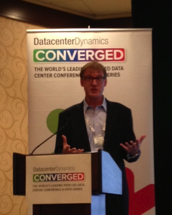
While I was at DCD I was catching up with and handful of people who I think of thought leaders.  One is Stephen Worn, CTO of DCD.

NewImage

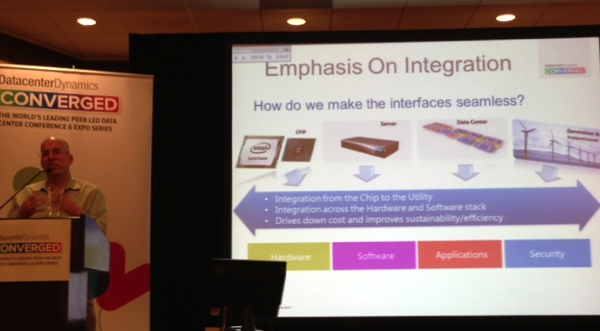
Another was Christian Belady

NewImage

And another is Don Beaty

NewImage

But, there many more who I consider thought leaders who were not presenting and the media doesn't know about.  These guys know how to operate data centers across the world and build new ones that provide a low TCO while fitting their business models.  They are often all over the world.  These people are not making the presentations and they are quietly out of the attention of the media working on innovative solutions where the client is building a competitive advantage.

Sometimes the so-called thought leaders are the ones who enjoy getting in front of the audience telling people how good they are and what they have done.  This collects a set of people who will follow this leader, believing his words as if they are gospel.  It becomes almost a religious following.  If you try to point out to the followers that their thought leader may be wrong, you will be accused of blasphemy.  It's not as bad as a Jim Jones cult, but it is not often not worth trying to enlighten the followers.  They'll find out eventually what happens if you follow the faux thought leader for too long.

Myself I have made the mistake of believing what people present as true at a data center conference.  With experience though I learned to fact check what people say.  What is fact checking?  Here is an illustration of the Washington Post fact checking the NYTimes post by Vladimir Putin.

Russian President Vladimir Putin has an op-ed in today's New York Times urging President Obama not to strike Syria. It's a fascinating document -- a very Russian perspective translated into American vernacular, an act of public diplomacy aimed at the American public and the latest chess move in the U.S.-Russia standoff over Syria, one in which we the readers are implicated. Putin does make a number of valid and even compelling points, but there is an undeniable hypocrisy and even some moments of dishonesty between the lines.

Below, I've annotated the op-ed, line-by-line, elaborating and translating at some points, fact-checking a bit in others. Putin's writing is set off in italics and bold; my notes are in plain text.

When I see a faux data center thought leader I learn to find the facts that are not quite true.