Part of why Data Center presentations are boring is many lack the skills of a storyteller

I've worked on a lot of executive presentations, and part of why I don't sit in many data center ones is they are so boring and I am constantly critiquing the presentation style and soon lose interest.

If you are interested in making a better presentation consider learning the skills of the storyteller. I just finished this book by Jonathan Gottschall.

Humans live in landscapes of make-believe. We spin fantasies. We devour novels, films, and plays. Even sporting events and criminal trials unfold as narratives. Yet the world of story has long remained an undiscovered and unmapped country. It’s easy to say that humans are “wired” for story, but why?


In this delightful and original book, Jonathan Gottschall offers the first unified theory of storytelling. He argues that stories help us navigate life’s complex social problems—just as flight simulators prepare pilots for difficult situations. Storytelling has evolved, like other behaviors, to ensure our survival.

Drawing on the latest research in neuroscience, psychology, and evolutionary biology, Gottschall tells us what it means to be a storytelling animal. Did you know that the more absorbed you are in a story, the more it changes your behavior? That all children act out the same kinds of stories, whether they grow up in a slum or a suburb? That people who read more fiction are more empathetic?

Of course, our story instinct has a darker side. It makes us vulnerable to conspiracy theories, advertisements, and narratives about ourselves that are more “truthy” than true. National myths can also be terribly dangerous: Hitler’s ambitions were partly fueled by a story.

But as Gottschall shows in this remarkable book, stories can also change the world for the better. Most successful stories are moral—they teach us how to live, whether explicitly or implicitly, and bind us together around common values. We know we are master shapers of story. The Storytelling Animal finally reveals how stories shape us.
What Planet are DCIM vendors on? A Sales World

Adinfa has a blog post asking the question What planet are DCIM Vendors on?  The world is different.

And that is a big part of the problem, I think.  Too many DCIM products are over-hyped, over-priced and over-complicated.  Lots of Powerpoints, lots of conference presentations but little that is tangible and deliverable particularly when it comes down to the reality of retro-fitting DCIM into a multi-vendor data centre.  If you need to run Flash, if you need high-power graphics cards in the server, if you need permanent contractors, if you need week long training courses for users, if you try to position your DCIM product as comparable to ERP or CRM of old then you are probably missing the point.

When I think of the way vendors sell DCIM, I think of a world that is defined by the vendor sales team.  A Sales World where  you will pay all this expense and time to reach the nirvana promised in the ppt.

The Adfina post continues with what is the alternative to DCMI Sales World.

People who want to use DCIM want tools that take their pain away and make their life easier.  In this era of instant gratification, asking someone to make a case to their board for something that will take months to deploy and years to achieve RoI (based on more tangible measures than notional savings derived from those oft-quoted cost of downtime studies) is about as palatable to them as asking them to make a case for building their very own “Curiosity”.  What most data centre managers really want from DCIM is a practical software tool that is straightforward to implement, simple to navigate, intuitive to work with, browser-based (with no add-ins needed), flexible in nature and priced reasonably.  They don’t need to go to Mars for that.

Do you prefer Drawing or Talking?

Some people exist in a verbal world wanting to talk in person or on the phone.  Writing is too much work.  And Drawing is not even something they attempt.

But, think about this.

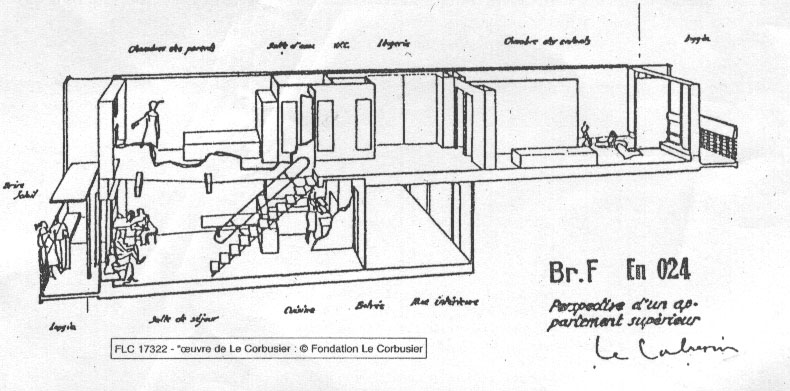
corbusier drawing
“I prefer drawing to talking.  Drawing is faster, and leaves less room for lies.”

Le Corbusier

If you want the truth and less lies, you may want to draw more.  This is one reason why I have chosen Galaxy Note smartphones and tablets as my main devices.  Oh and a pad of paper.

With Amazon Fire Mayday, Amazon will collect more data from consumers

Amazon.com revolutionized retailing by tracking customer habits and allow them to rank items and write comments.  With Amazon Kindle Mayday feature most focus on the tech support issue, but the game changer is for Amazon to collect more data from consumers to create the next game change.

Here is the Mayday feature.

News sites are focusing on the tech support feature and a bit on how to sell more.

  1. Slate Magazine (blog)


    Amazon launches Mayday, a virtual Genius Bar for theKindle Fire ...

    The Verge-by Dan Seifert-Sep 24, 2013
    Amazon may be trotting out new versions of its Kindle Fire tablets and an updated software platform for them, but its also introducing a unique ...
     
  2.  

    How the Kindle Fire's 'Mayday' Feature Will Help AmazonSell More ...

    Wired-Sep 26, 2013
    Amazon's Mayday tech support for Kindle Fire HDX puts a tiny helper on your screen when you need it most. But the exchange between you ...

Amazon if they do this right is going to have an ability to connect to consumers in a way that no one else can.

I have my Kindle Fire HDX on order so I'll be able to see how it works.

98% of Egypt's Fresh Water is imported, an Ethiopian Dam brings change

National Geographic has a post on a new dam on the Nile River in Ethiopia.

Water Wars: Egyptians Condemn Ethiopia's Nile Dam Project

Aerial photograph of the Blue Nile river in Northern Ethiopia.

The Grand Ethiopian Renaissance Dam along the Nile has ignited a water debate between Egypt and Ethiopia.

Photograph by Cameron Davidson, Corbis

As the Grand Ethiopian Renaissance Dam takes shape, tempers rise.


What caught my eye was how much fresh water is imported to Egypt.

A total of "98 percent of Egypt's freshwater comes from outside its borders, and it has exceptionally little leverage," said Angus Blair, an economic and political analyst at Cairo's Signet Institute.

Besides the water supply the dam will change power generation capacities.

Egypt fears that storing water behind the Ethiopian dam will reduce the capacity of its own Lake Nasser (thereby reducing the power-generating capacity of Egypt's giant hydroelectric plant at Aswan). Ethiopian officials have sought to allay fears by pointing out that storing water in the cooler climes of the Ethiopian lowlands will ensure much less water is lost to evaporation, but Egyptians are unconvinced.

"The production of electricity at the Aswan High Dam is likely to drop by almost 40 percent should the Ethiopian dam be built," concluded Nader Noureddin, a professor of agriculture at Cairo University.