China's New East China Data Center has Local River as cooling Source

DatacenterDynamics has an article on a new East China Cloud Data Center.  Part of what is going on in China is the Cloud is being used to centralize the hosting of IT services.

Many domestic telecommunication players, large financial institutions and top 100 websites are also expected to use the Jiande cloud computing data center as a platform to enter into the cloud computing market and develop large high-end technology industry cluster.

When it is cold enough outside air will be used for cooling. When it gets too warm, then the river can be used as a cooling source.

General Manager of Zhejiang Yunkuaichuan Science and Technology CoHe Qing said the data center will draw on the nearby Xin’anjiang River’s constant water temperature - at about 17℃ year round - for cooling purposes.

When (the outside air) temperature is low, the data center can be partly or completely cooled by natural cooling, while the water in the cooling tower can be used as a cooling source; when (the outside air) temperature is above 15℃in wet-bulb temperature, the water of the Xin’anjiang River can be used as a cooling source.

Given Solar Panels are limiting Firefighters abilities, will Fire Insurance rates increase?

FoxNews covers the risk to Fire Fighters when Solar Panels are on a roof.  There are efforts to address this problem.

A 2010 report by the Fire Protection Research Foundation found that slipping or tripping on solar panels were potential hazards for firefighters, as well as the possibility of the roof collapse due to the weight of the panels, which are generally made of crystalline silicon or thin-film semiconductor material. The maximum voltage of most systems, meanwhile, is roughly 600 volts, which can cause shock or burns.

“The industry has to continue to work with the fire service community, both on education and updating building codes to meet firefighters’ needs,” Smirnow continued. “That’s really where I think we can make the most progress.”

Even after all these efforts it will most likely be riskier to fight a fire with solar panels on the roof which slows down the fighting of a fire.  This can increase the damage from a fire which then could trigger higher insurance rates.

We are at the beginning of solar panels on roofs and electric cars.  As much as these are better for the environment, when there is fire it is harder to put out the flames.

Besides the insurance issues there is a public perception issue.  GigaOm's Katie Fehrenbacher covers the Tesla's exposure with its care fire.

Will customers be worried about Model S cars catching on fire after collisions? And will that effect sales at all? An investigation in a couple of fires during safety testing with Chevy’s Volt back in 2011, seem to contribute to a considerable freeze in Volt sales for awhile. Fires certainly weren’t great publicity for Fisker’s electric cars back when those were on sale.

Large companies with diverse product lines can weather branding and publicity issues more easily than startups that have one product on the market. If that one product turns sour, there’s nothing else out there to prop up the brand.

But this fire issue could end up being another hurdle Tesla jumps over. Cars get in accidents, and bad things happen in accidents. But the company will likely have to work on its own PR campaign to be transparent but also soothe any worried customers. And the good news is that Tesla has always been particularly adept at PR and marketing, so expect some type of reaction, and soon.

Do you think Spatially? A neglected skill is becoming a hot talent

HBR has a post on Spatial Thinking.

The Importance of Spatial Thinking Now

In its 375 years, Harvard has only ever eliminated one entire academic program. If you had to guess, what program do you think that was and when was it killed off?

The answer: Harvard eradicated its Geography Department in the 1940s, and many universities followed suit.

The timing couldn’t have been worse, really. Shortly after the elimination of Geography here at Harvard, the discipline underwent a quantitative and computational revolution that eventually produced innovations like Google Maps and global positioning systems, to name just two. Seventy years later we are paying for a prolonged lack of spatial thinking at American universities. There are too few classes that enable learners to improve their spatial reasoning abilities, with maps and visualizations being of course the most central artifacts to such improvements. The problem is simple: not enough people know how to make maps or handle spatial data sets.

In 1999 when a couple of us at Microsoft wanted to leverage GPS data with images, people thought we were nuts.  Thanks to smartphones, GPS data is with images and all kinds of other data that comes from the phone.

I wrote about spatial intelligence a year ago, and it is nice to see that spatial is becoming a more popular topic

Amazon, Google, Apple, Facebook are Vanity Fair's Leading Innovators

Vanity Fair lists the top 50 Innovators.

The faster things change, the tougher it is to stay on top. In this year’s rankings, 50 leading innovators shake the foundations of their industries, while 25 members of the power elite demonstrate why they’re not going anywhere soon.

Guess who is top - Amazon, Google, Apple, and Facebook - all companies where data centers are a big deal.

Polar opposites, Kindle Paperwhite (easy) vs. Samsung Galaxy Note 3 (hard)

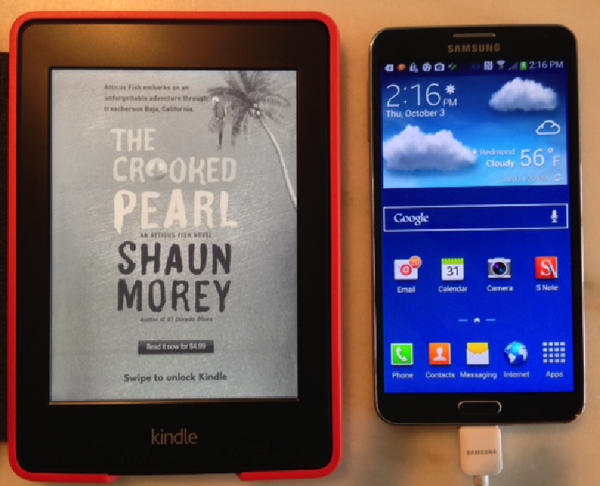
Within 3 hours today I received the 2nd generation Kindle Paperwhite and a Samsung Galaxy Note 3.

NewImage

The screens are almost the same size.

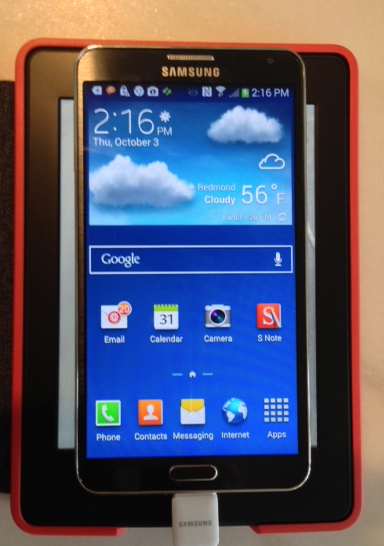
Below, I put the Galaxy Note 3 on top of the Kindle Paperwhite.

NewImage

One of the biggest differences was setup.  Turn on the Kindle Paperwhite.  Connect to my wireless network and the device auto configures.  No logging on.

The Galaxy Note 3.  I need to click on an activation link in my e-mail, enter the IMEI # from the phone and the ICC # from the micro SIM.  Waited an hour for ATT to activate the phone.  Finally works.  

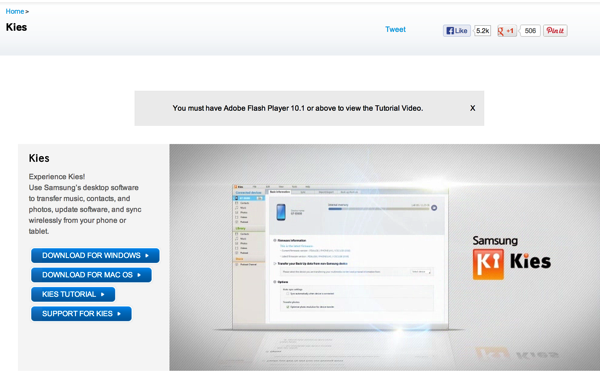
Oh and the Galaxy Note 3 requires Kies 3.0.  you go to http://www.samsung.com/us/kies/ and no version 3.0.  The download is 2.6

NewImage

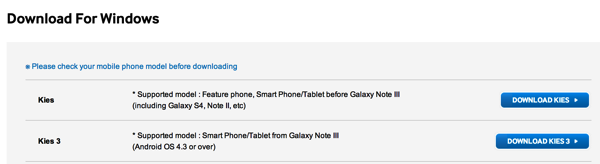
Go to to the UK site. http://www.samsung.com/uk/support/usefulsoftware/KIES/JSP and there is Kies 3.0. Obvious.  Yeh. :-)  I must use version 2.6 with the Galaxy Note 1 and version 3.0 is only for the Galaxy Note 3.  uh huh.  really easy.

NewImage

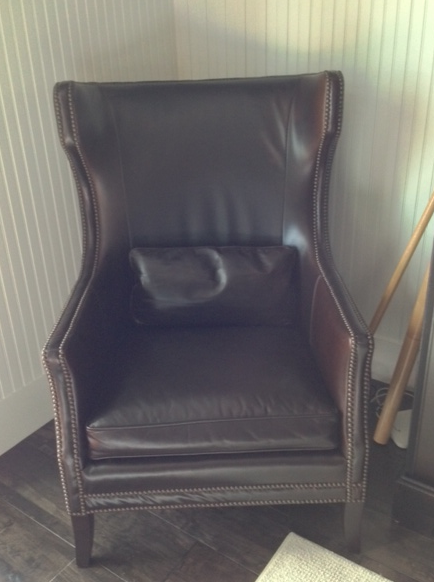
Why would I want a Kindle Paperwhite?  Because when I pick up the Kindle it is my time to read a book with no distractions.  I find it hard to read more than 1/2 hour, sometimes 15 minutes before I feel the urge to check e-mail or browse the web.  When I have the Kindle it is only to read a book in a comfortable chair.

NewImage

So what is the Galaxy Note 3 for?  

1920 x 1280 resolution, quad core 2.3GHz processor, 3 GB of RAM, 96 GB of SSD, pen stylus, bluetooth, wifi - this is compute anywhere with lots of apps.  And I can sit in the same chair in be in work mode.

Also just tested our custom mobile app and it looks perfect at 1920 x 1080.

With the Galaxy Note 3 I may write blog entries from it, but this is where I still find it is nice to have a full size keyboard and 2880 x 1800 resolution.

NewImage