Unprecedented Climates predicted for 2050 and beyond

Arstechnica has a post on climate change forecasts.

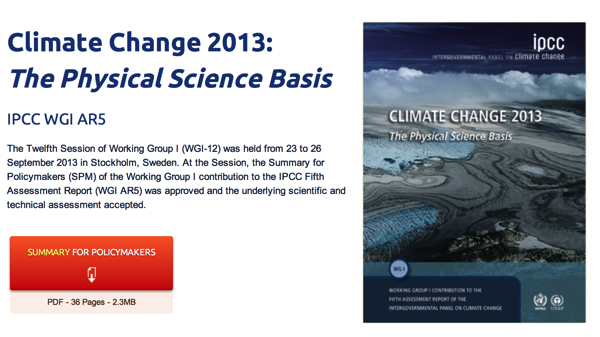
If there was one overarching point that the fifth Intergovernmental Panel on Climate Change reporttook pains to stress, it was that the degree of change in the global climate system since the mid-1950s is unusual in scope. Depending on what exactly you measure, the planet hasn't seen conditions like these for decades to millennia. But that conclusion leaves us with a question: whenexactly can we expect the climate to look radically new, with features that have no historical precedent?

The answer, according to a modeling study published in this week's issue of Nature, is "very soon"—as soon as 2047 under a "business-as-usual" emission scenario and only 22 years later under a reduced emissions scenario. Tropical countries will likely be the first to enter this new age of climatic erraticness and could experience extreme temperatures monthly after 2050. This, the authors argue, underscores the need for robust efforts targeted not only at protecting those vulnerable countries but also the rich biodiversity that they harbor.

Here is the group that prepared the prediction.
NewImage

A peak into Google Corporate IT, restricted use of Windows

AllthingsD has a post with an interview of Google CIO, Ben Fried.  For those of you who are curious how Google corporate IT is different from yours you can read this post.  

Google CIO Ben Fried on How Google Works


Warning if you are a Windows user, you need to have business justification for why you need to use Windows to do your job.

Google also restricts the machines it lets employees use. For example: Windows computers.

Dating back to early 2010, when Google disclosed that its corporate infrastructure had been subject to attacks originating in China, the company began cracking down on use of Windows machines.

That’s not to say PCs are banned — Fried said that Google employees today use “many thousands of Windows laptops and desktops.” But now, Googlers must apply to a manager to get permission to use Windows, and explain why it is important and necessary for their job. “There’s somewhat a difference between using it because it’s the only thing you know, and using it because it’s the best tool for your job,” Fried said.

The point, Fried said, was to get a better balance of types of computers used within Google, because heterogeneity would make the company less susceptible to attacks. Then, it was a mix of Windows, Mac and Linux; today, Chromebooks have been added to the mix.

Google tours media in its Council Bluffs DC expansion

Here is a local media article on Google's open house on Oct 3, 2013.

Google shows off new Council Bluffs data center at grand opening

Print
Font Size:
Default font size
Larger font size
 

Posted: Thursday, October 3, 2013 5:07 pm | Updated: 8:29 pm, Thu Oct 3, 2013.

Employees on motorized scooters, paintings of Stormtroopers in a field of poppies, scale-model rockets. A recreation room with a pool table, two TVs and gaming systems. Bright colors.

The new Council Bluffs Google data center on Bunge Avenue was everything you’d expect from the iconic corporate behemoth. And it was pretty cool.

About 40 members of the community stopped by the Google campus Thursday afternoon for an open house at the data center on the southern edge of the city.

Making a few enemies is OK

One of the good lessons I learned working on the Mac II at Apple was to ship something difficult you need to be willing to piss off some people.

I just wrote to a friend.

Making a few enemies is not a problem in life.  You can't be friends to everyone.  if you are you aren't doing anything interesting.

Winston Churchill says this better.

You have enemies? Good. That means you've stood up for something, sometime in your life.
Winston Churchill 

I have written some things that have made a few enemies, and that's OK.  And, I'll probably write even more in the future. 

Have you hit $50k a month on AWS? Do you have the itch to move?

GigaOm's Barb Darrow has a post on startups that have moved off of AWS.

Amazon Web Services: should you stay or should you go?


4 HOURS AGO

2 Comments

Image credit: Wikimedia Commons
SUMMARY:

Startups love the flexibility and pricing of AWS. But then again, no one cloud is right for everyone. Here are a few startups who decided to move at least some of their workloads off AWS.

$50K is the magic number that gets discussed in the article.  One bigger player, not a startup is in the post with their views.

Paris Georgiallis, VP of platform operations for RMS, which builds catastrophe risk models for insurance companies, also put some credence in the $50,000 per month cut off, although he, cautioned that every user’s needs vary. “$50K a month equates to $1.8M of capital spend over 36 months. An experienced IT team can work miracles with $1.8M in infrastructure, especially in a mid-to-large enterprise,” he said via email. 
RMS started out with AWS because well, it’s developers loved AWS. That appeal is Amazon’s ace in the hole. AWS “is winning the developer war much like Microsoft did in the 90s — by creating simple tools and eliminating infrastructure as a concern for developers that attraction is high.” The problem with that is developers tend to treat AWS as an all-you-can-eat-buffet which is fine — to a point. But with poor management of VMs and storage, costs can and often do skyrocket.

And, in the comment section is a reader who references his blog post of host their own server vs. softlayer in London.

The hardware experiment – London colocation

The hardware experiment – London colocation

Written by David Mytton

Recently we’ve been reviewing the infrastructure that powers our server and website monitoring service, Server Density, and as a result we have started an experiment looking into buying and colocating our own physical hardware.

Currently, the service is run from 2 data centers in the US with Softlayer and we’re very happy with the service. The ability to deploy new hardware or cloud VMs within hours or minutes on a monthly contract, plus the supporting services likeglobal IPs is very attractive. However, we’re now spending a significant amount of money each month which makes it worth considering running our own hardware.