Haste makes waste, Fukushima's water tanks flawed according to construction worker

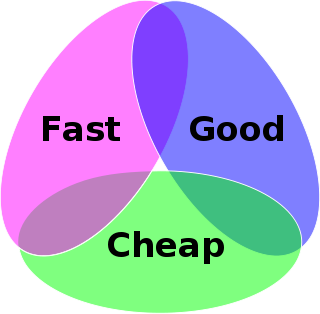
Any who runs projects knows it is really hard to get the balance in the project between cost, schedule, and quality.

NewImage

It is easy to get two of the three with one suffering.

Huffingtonpost reports on problems in Fukushima’s hasty water tank construction.

"I must say our tank assembly was slipshod work. I'm sure that's why tanks are leaking already," Uechi, 48, told The Associated Press from his hometown on Japan's southern island of Okinawa. "I feel nervous every time an earthquake shakes the area."

Officials and experts and two other workers interviewed by the AP say the quality of the tanks and their foundations suffered because of haste — haste that was unavoidable because there is so much contaminated water leaking from the wrecked reactors and mixed with ground water inflow.

"We were in an emergency and just had to build as many tanks as quickly as possible, and their quality is at bare minimum," said Teruaki Kobayashi, an official in charge of facility control for the plant operator, Tokyo Electric Power Co.

It is easy for executives to claim they got the work done fast and cheap, then they either change jobs or when there quality problems, they are ready to point the fingers of blame to operations, vendors, maintenance procedures, anything that looks it was the fault of others, not them.

Quality Control exist for a reason.  In industries who have a long term view they need someone who focuses on the quality to reject the shipping of services until it meets the quality bar.  Short term thinkers will shave cost and schedule to look like they are heroes. 

Casualties of Windfarms over 600,000 of bats in 2012

Environmentalist will see a nuclear plant as evil compared to the peaceful spinning of wind farms.  What almost no one sees is the 100,000s of bats who are killed by the blade collision and pressure differential from the blades.

Here is the press release from American Institute of Biological Sciences. 

High bat mortality from wind turbines

More than 600,000 of the mammals may have died in 2012 in the contiguous United States

A new estimate of bat deaths caused by wind turbines concludes that more than 600,000 of the mammals likely died this way in 2012 in the contiguous United States. The estimate, published in an article in BioScience, used sophisticated statistical techniques to infer the probable number of bat deaths at wind energy facilities from the number of dead bats found at 21 locations, correcting for the installed power capacity of the facilities.

Bats, although not widely loved, play an important role in the ecosystem as insect-eaters, and also pollinate some plants. They are killed at wind turbines not only by collisions with moving turbine blades, but also by the trauma resulting from sudden changes in air pressure that occur near a fast-moving blade. The article by Mark Hayes of the University of Colorado notes that 600,000 is a conservative estimate; the actual figure could be 50 percent higher. The estimate is in rough agreement with some previous estimates, but bigger than most. The data that Hayes analyzed also suggest that some areas of the country might experience much higher bat fatality rates at wind energy facilities than others: the Appalachian Mountains have the highest estimated fatality rates in Hayes's analysis.

The consequences of deaths at wind energy facilities for bat populations are hard to assess because there are no high quality estimates of the population sizes of most North American bat species. But Hayes notes that bat populations are already under stress because of climate change and disease, in particular white-nose syndrome. The new estimate is therefore worrisome, especially as bat populations grow only very slowly, with most species producing only one young per year.

Some will argue that Nuclear Plants kill wildlife due to the increase water temperatures from the cooling systems.

Unfortunately, there are casualties of almost any energy system.  But, few knew wind turbines killed 600,000 bats in 2012.  Hopefully there will be efforts to figure out how to keep the bats away which would most likely cause the unintended consequences of insect growth and problems pollinating plant life, the two benefits of bats.

5 Steps to protect your iPhone or iPad if lost or stolen

Unfortunately a lost or stolen iPhone is part of life and there are too many people out there who will take your phone when you put it down.  My son just had his phone most likely stolen on Tues and it has not shown up.  After going through a bunch of what could be done, I figured out the following as good steps to take.  I did some of these but not all, and have now taken these steps with mine and the rest of the families iPhones

1. Install the latest iOS 7 release that allows you to keep the phone from being re-imaged unless you turn off Find iPhone.

2. Turn on Find iPhone with Activation Lock.

3. Disable ways to go into Airplane Mode.  Airplane mode turns off cell and wifi connections so you can’t ring or Find the iPhone.

4. You can try going to your carrier or police, but if you can’t find the iPhone there isn’t much they will be able to do.

5. Monitor your usage and Find iPhone to see if there is any activity from your account.

So let’s walk through these five steps.

1. Install iOS 7 to protect your phone with Find iPhone.

Forget iTunes Radio, thin fonts, and multitasking. The most important new thing about iOS 7 might be that your friendly neighborhood police officer loves it.

That’s right: In New York and elsewhere around the country, law enforcement officials are actively encouraging iPhone and iPad users to upgrade to Apple’s new mobile operating system. Why? Because the new Activation Lock feature in iOS 7 makes the phone very difficult to use or to wipe and resell if it gets stolen. Police and prosecutors hope that this technological development will lead to a reduction in smartphone thefts.

2. The specific feature you want is Find My iPhone with Activation lock.

With iOS 7, Find My iPhone includes a new feature called Activation Lock, which makes it more difficult for anyone else to use or sell your iPhone, iPad, or iPod touch if you ever lose it. It starts working the moment you turn on Find My iPhone in iOS 7. With Activation Lock, your Apple ID and password will be required before anyone can:

  • Turn off Find My iPhone on your device
  • Erase your device
  • Reactivate and use your device

3.  I had done the previous two steps, but I didn’t do this.  Disable ways to get to Airplane Mode.  Why?  Because someone grabs your phone puts it in airplane mode and now you can’t ring it or find it, because it is not connected to the Internet or Cell network.  Most of us use airplane mode from settings, but without a password you can get to Airplane Mode through the control center.  Turn off control center in lock mode if you don’t want just anyone to be able to make your iPhone disappear.

NewImage

4 and 5.  My son’s iPhone has not had any activity (data, phone calls, or SMS) since it disappeared and it has been in offline mode the whole time which means most likely the phone was stolen, not lost.  Even if you hard reset a locked iOS 7 iPhone when you turn it back on it will show up on the network and you can see if through Find My iPhone.

It was a bit painful to go through this process.  Luckily I have another iPhone 4S for my son or a galaxy Note 1.  I have some other ideas too on how I could make it so my son is not a target of those on his school bus.  It is sad that kids will do this to others on a bus, but it is a harsh lesson to learn that some people will pray on your trust of thinking your mobile devices are safe.

It takes less than 2 seconds to swipe control center on iPhone and hit that airplane mode icon, and the phone is gone.  iPhone’s are so small it is easy to hide.  And, I am sure they are ready for the mistaken excuse of it looked my iPhone and I put it in my pocket by accident.
Revenge of the Nerds, Technologists are in the drivers seat for fixing Obamacare

As much as technology is important in society rarely is the direction of a country directed by technologists.  I was reading Foxnews latest criticism of Obama’s apology for cancelled insurance and this paragraph reminded me of a “Revenge of the Nerds” moment.

“The president now is toxic," he said. "The thing is called ObamaCare. There's no running away from it, it's got his name on it. You see the president, you think about the policy and you know that it's a disaster. And the problem for the Democrats is they are hostage to a bunch of geeks working around, right now, late into the night, trying to fix a system which is not just the glitches it talked about, the architecture, the underlying structure of it is wrong."

Todd Park, the CTO in charge of fixing Obamacare has refused to testify in front of congress until after Nov 30.  Park has hung out the “DO NOT DISTURB” sign to congress which of course pisses them off.

An official in the Office of Science and Technology Policy told Issa that Park was too busy repairing HealthCare.gov to appear before December. 

"Pulling him away from that work even for a short time at this stage would be highly disruptive," wrote Donna Pignatelli, assistant director for legislative affairs. 

The letter proposed scheduling another hearing for the first two weeks of December and making Park available for an informal staff briefing sometime this month. 

The alternatives "would permit Mr. Park's intensive work on improving HealthCare.gov during this critical period to continue unabated," Pignatelli wrote.

Park is right.  Talking to Congress is going to do nothing to fix Obamacare website by Nov 30.

Who knows the US government may slowly figure out what any growing successful company knows.  Information Technology is key to the success of the company  Twitter, Facebook, Google, Amazon, Apple and so many others are built on data centers as the foundation of transforming services.

Politicians are disturbed that the technology doesn’t work according to the law.  As hard as it is to get laws through congress, they are finding out technology doesn’t care about the laws.  It would be interesting to see how many things in the Obamacare website are no-win situations where there are conflicts in requirements that make no sense, and the execution into code will confuse the users.

Obamacare could be the pivot point, or the start of more problems for politicians who are frustrated with information technology.  

Wonder how many start-ups think as we scale, let’s add a Washington DC politician to our staff.  Versus, how many people in Washington DC are thinking we need to add some information technology people.  I don’t know about you, but the brightest in IT don’t think of going to DC in their career path.

AWS is not always the right answer for a startup

There is a flawed belief that the Cloud which many times is AWS is the right answer for a startup.  Here is a post friend sent me of someone who went through the numbers and came up with a non-AWS solution.

First, we simply wanted to reduce the number of variables when we needed to troubleshoot this critical layer. For us, audio quality is a top priority, and the fewer layers of virtualization and their parties between us and the user, the better.

Second, and more technically, we were having syncing issues between the time clock on the physical Amazon machines and the time clocks on the OS and virtual layers, which was causing additional delays. Moving to our own physical servers in a data center instantly solved this problem.

Third, the audio/voice layer of our system scales fairly predictably, giving us a fair amount of lead time to order new physical servers. The elasticity of cloud hosting was thus not a priority for us.

Finally, in our own financial analysis we found that when it came to our audio/voice component, our own physical servers would be cheaper than any of the cloud providers we were considering. For our API layer and Web interface, we found the opposite to be true, and so we host these across a few different cloud providers for the sake of redundancy.

That brings up a secondary point: Being open-minded means remembering that it is fine to mix-and-match. Not only is one server solution the best across all startups, it may not even be the best acrossall components of one startup. By thinking of these components’ needs separately, considering all your options, planning for the near future and not for forever, and finding the best fit for you, you can vastly improve the odds that you’ve made a good decision.