9 year old faced with replacing his iPhone 4s or switch to Android Samsung Galaxy Note, he picks the Note - Why?

Less than a week ago my 9 year old son had his iPhone 4S stolen from the bus he rides.  My son spends 45-60 minutes on the bus going to a school that addresses kids with dyslexia.  He has made great progress over the past 2 1/2 years, and we got him a feature phone for the long bus ride.  The family has upgraded to iPhone 5/5S, so we had a 4S we could hand down.  He has been pumped to use the 4S.  Last year we let him have a 3GS.  But he had his phone stolen from the bus and I wrote this post on the 5 steps you can take to protect your iPhone from being stolen.

My son felt bad his phone was lost/stolen, and he was afraid he would be punished.  We have talked about what he can learn from the experience.  All kids go through that painful first experience of having a valuable item lost or stolen.  Two days after the event, he is asking if he can have the other 4S that I was going use for development work.  I told him to wait.  

I decided to charge up my Samsung Galaxy Note 1, wipe it clean, reset it to factory defaults and see if he wanted to play with it.  He wanted to get the move “Remember the Titans,” as he has been getting more into football playing on a well coached flag football team.  He couldn’t figure out how to spell Remember the Titans, so I brought up the mobile browser, hit the microphone button and told him to say “remember the titans.”  Google recognized it, listed the search results.  Next I showed him the pen feature and how he could write with the stylus.  Then the camera app.  He played for hours and was ready to use the Galaxy Note.

There are those of you who may argue that the iPhone 4S can do all this same stuff, minus the stylus.  

Here are a few of the reasons why I am supportive of him using the Galaxy Note with Android on it.

1.  Using multiple devices is like language skills.  It is good to learn another mobile OS. Over twenty years ago I would tell people who knew I worked at Apple and then at Microsoft what computers should their kids should use at home.  They were frustrated their kids had Macs at school and Windows at home.  I told them that kids don’t care most of the time.  It is good to learn different OSs.  Yet with mobile it is quite rare for people to know how to use iOS and Android.  I have an iPhone 5 and a Samsung Galaxy Note 3 which I carry most of the time.

2.  Google’s integration into Android is different than iOS and it creates a different experience which includes more voice features.

3  Samsung’s use of the stylus in the Note series supports hand writing which is good for those who don’t think everything should be from a keyboard.  My son is 9 and he is regularly practicing his hand writing.

4.  My son will learn there are the same and different applications for Android vs. iOS.  It’s not the end of the world switching, yet for some it could be quite traumatic, but not nearly as traumatic as having your phone stolen by kids who you thought would never do such a thing.

5.  The Galaxy Note is bigger and different so it is not a target the way an iPhone 4/5 is.

6.  I am getting an extra battery, so he can swap out the batteries.  Ever notice how many iPhone users are plugged into the wall at conferences?  no spare battery.

7.  He has 48GB of memory, so plenty of room.  16GB internal with 32 GB microSD.

Kids can easily change their minds.  My daughter at first wanted a Windows phone 1 year ago, then within a week said she wanted an iPhone.  I still have a 4S and a nice friend has offered us a Windows Phone.  For now, my son will be on the path to learn Android.  and, he will hopefully comfortably swap between mobile OSs for the rest of his life.

Even though his phone was stolen, he is moving on learning.  Which is part of the challenge of dyslexia.  You hit obstacles.  Adjust.  Try something different.  Keep on going.

Cloud is going to get interesting watching Amazon Web Services compete against IBM

I saw this post that Om Malik reposted.

CIO Magazine: IBM Will Win the War With Amazon

Rob Enderle has been analyst for too long and has mostly been wrong about his favorite target, Apple. And now he has turned his guns on Amazon (Web Services) and points out that IBM is going to win the war with AWS. I think we all have a different definition of winning,  especially considering the troubled cloud effort by IBM. Anyway read the piece, if nothing, for a chuckle!

Talk about two different approaches.  IBM’s business is built on relationships with the CxO to deliver IT services.  Amazon.com is retailer who uses technology the way no other retailer does.  Departments are pulling out their credit cards to use AWS to build IT services that are assumed to be at a lower cost and faster time to market.  In this rush to push out IT services, there are probably many mistakes made from a compliance perspective.  The types of mistakes that can get you fined or in the middle of a lawsuit.

Amazon offsets this by bypassing IT and selling directly to employees. However, IT retains the responsibility for compliance; given enough ammunition, IT generally can block access to any vendor seen as unreliable or unsecure. Expect IBM to start providing IT with the evidence to provide this block and with cost-effective alternatives that IT can use instead.

The CIO article says IBM is ready for a fight.

Don't Bet Against the Old Dog in the Fight

IBM learned early on that fights in any market are often won and lost on perception. The company allocates staff and resource accordingly. In these battles it comes down to who has the most resources and knows the battlefield best. On all vectors, this should be IBM. Amazon may, as the first mover, have the tactical advantage, but IBM has the strategic advantage. At the end of the day, this is IBM's battlefield. It has the best weapons and the appropriate skills.

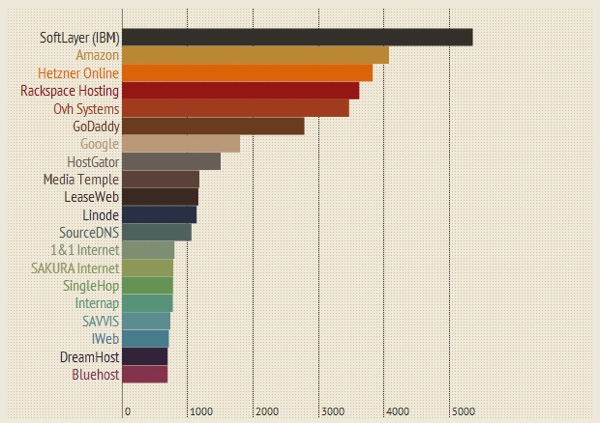
Here is the current state of IBM’s Cloud website. 270,000 more websites than amazon is on IBM’s cloud.

NewImage

NewImage

Haste makes waste, Fukushima's water tanks flawed according to construction worker

Any who runs projects knows it is really hard to get the balance in the project between cost, schedule, and quality.

NewImage

It is easy to get two of the three with one suffering.

Huffingtonpost reports on problems in Fukushima’s hasty water tank construction.

"I must say our tank assembly was slipshod work. I'm sure that's why tanks are leaking already," Uechi, 48, told The Associated Press from his hometown on Japan's southern island of Okinawa. "I feel nervous every time an earthquake shakes the area."

Officials and experts and two other workers interviewed by the AP say the quality of the tanks and their foundations suffered because of haste — haste that was unavoidable because there is so much contaminated water leaking from the wrecked reactors and mixed with ground water inflow.

"We were in an emergency and just had to build as many tanks as quickly as possible, and their quality is at bare minimum," said Teruaki Kobayashi, an official in charge of facility control for the plant operator, Tokyo Electric Power Co.

It is easy for executives to claim they got the work done fast and cheap, then they either change jobs or when there quality problems, they are ready to point the fingers of blame to operations, vendors, maintenance procedures, anything that looks it was the fault of others, not them.

Quality Control exist for a reason.  In industries who have a long term view they need someone who focuses on the quality to reject the shipping of services until it meets the quality bar.  Short term thinkers will shave cost and schedule to look like they are heroes. 

Casualties of Windfarms over 600,000 of bats in 2012

Environmentalist will see a nuclear plant as evil compared to the peaceful spinning of wind farms.  What almost no one sees is the 100,000s of bats who are killed by the blade collision and pressure differential from the blades.

Here is the press release from American Institute of Biological Sciences. 

High bat mortality from wind turbines

More than 600,000 of the mammals may have died in 2012 in the contiguous United States

A new estimate of bat deaths caused by wind turbines concludes that more than 600,000 of the mammals likely died this way in 2012 in the contiguous United States. The estimate, published in an article in BioScience, used sophisticated statistical techniques to infer the probable number of bat deaths at wind energy facilities from the number of dead bats found at 21 locations, correcting for the installed power capacity of the facilities.

Bats, although not widely loved, play an important role in the ecosystem as insect-eaters, and also pollinate some plants. They are killed at wind turbines not only by collisions with moving turbine blades, but also by the trauma resulting from sudden changes in air pressure that occur near a fast-moving blade. The article by Mark Hayes of the University of Colorado notes that 600,000 is a conservative estimate; the actual figure could be 50 percent higher. The estimate is in rough agreement with some previous estimates, but bigger than most. The data that Hayes analyzed also suggest that some areas of the country might experience much higher bat fatality rates at wind energy facilities than others: the Appalachian Mountains have the highest estimated fatality rates in Hayes's analysis.

The consequences of deaths at wind energy facilities for bat populations are hard to assess because there are no high quality estimates of the population sizes of most North American bat species. But Hayes notes that bat populations are already under stress because of climate change and disease, in particular white-nose syndrome. The new estimate is therefore worrisome, especially as bat populations grow only very slowly, with most species producing only one young per year.

Some will argue that Nuclear Plants kill wildlife due to the increase water temperatures from the cooling systems.

Unfortunately, there are casualties of almost any energy system.  But, few knew wind turbines killed 600,000 bats in 2012.  Hopefully there will be efforts to figure out how to keep the bats away which would most likely cause the unintended consequences of insect growth and problems pollinating plant life, the two benefits of bats.

5 Steps to protect your iPhone or iPad if lost or stolen

Unfortunately a lost or stolen iPhone is part of life and there are too many people out there who will take your phone when you put it down.  My son just had his phone most likely stolen on Tues and it has not shown up.  After going through a bunch of what could be done, I figured out the following as good steps to take.  I did some of these but not all, and have now taken these steps with mine and the rest of the families iPhones

1. Install the latest iOS 7 release that allows you to keep the phone from being re-imaged unless you turn off Find iPhone.

2. Turn on Find iPhone with Activation Lock.

3. Disable ways to go into Airplane Mode.  Airplane mode turns off cell and wifi connections so you can’t ring or Find the iPhone.

4. You can try going to your carrier or police, but if you can’t find the iPhone there isn’t much they will be able to do.

5. Monitor your usage and Find iPhone to see if there is any activity from your account.

So let’s walk through these five steps.

1. Install iOS 7 to protect your phone with Find iPhone.

Forget iTunes Radio, thin fonts, and multitasking. The most important new thing about iOS 7 might be that your friendly neighborhood police officer loves it.

That’s right: In New York and elsewhere around the country, law enforcement officials are actively encouraging iPhone and iPad users to upgrade to Apple’s new mobile operating system. Why? Because the new Activation Lock feature in iOS 7 makes the phone very difficult to use or to wipe and resell if it gets stolen. Police and prosecutors hope that this technological development will lead to a reduction in smartphone thefts.

2. The specific feature you want is Find My iPhone with Activation lock.

With iOS 7, Find My iPhone includes a new feature called Activation Lock, which makes it more difficult for anyone else to use or sell your iPhone, iPad, or iPod touch if you ever lose it. It starts working the moment you turn on Find My iPhone in iOS 7. With Activation Lock, your Apple ID and password will be required before anyone can:

  • Turn off Find My iPhone on your device
  • Erase your device
  • Reactivate and use your device

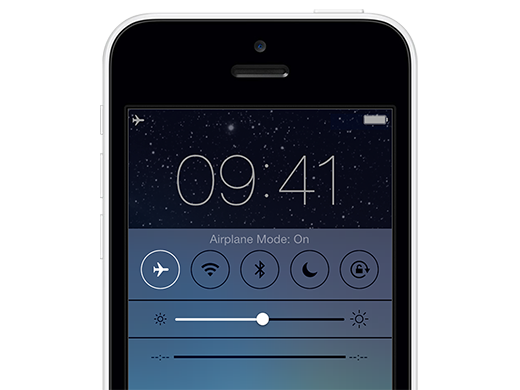
3.  I had done the previous two steps, but I didn’t do this.  Disable ways to get to Airplane Mode.  Why?  Because someone grabs your phone puts it in airplane mode and now you can’t ring it or find it, because it is not connected to the Internet or Cell network.  Most of us use airplane mode from settings, but without a password you can get to Airplane Mode through the control center.  Turn off control center in lock mode if you don’t want just anyone to be able to make your iPhone disappear.

NewImage

4 and 5.  My son’s iPhone has not had any activity (data, phone calls, or SMS) since it disappeared and it has been in offline mode the whole time which means most likely the phone was stolen, not lost.  Even if you hard reset a locked iOS 7 iPhone when you turn it back on it will show up on the network and you can see if through Find My iPhone.

It was a bit painful to go through this process.  Luckily I have another iPhone 4S for my son or a galaxy Note 1.  I have some other ideas too on how I could make it so my son is not a target of those on his school bus.  It is sad that kids will do this to others on a bus, but it is a harsh lesson to learn that some people will pray on your trust of thinking your mobile devices are safe.

It takes less than 2 seconds to swipe control center on iPhone and hit that airplane mode icon, and the phone is gone.  iPhone’s are so small it is easy to hide.  And, I am sure they are ready for the mistaken excuse of it looked my iPhone and I put it in my pocket by accident.