Here's a bit odd point, why is it inevitable Google build a data center in Hong Kong?

Many have blogged based on Google choosing to not build a data center Hong Kong.

Then I saw this post on why this event is odd.

Google sets aside Hong Kong data center plans. Here’s why that’s a bit odd

Google sets aside Hong Kong data center plans. Here’s why that’s a bit odd

An aisle of servers in a Google data center

The point made is that Google will be in every country, so they will return to Hong Kong.

And because high-speed service has been a priority for Google product managers over the years, it’s not hard to imagine that one day a Google data center could be located in every country, or every other country. Google’s got the money and the demand, so while a Hong Kong data center might be off the roadmap for the immediate future, it will probably open someday.


I guess you can imagine that there are users in every country in the world using Google.  Oh, that is pretty much true except where Russia, China, and other countries may make it difficult for Google to do business.  But, given Google has users in every country, does the company need to have data centers in every country?

What's wrong with so many operations, not seeing the flaw of human intervention

I just spent some time in an operations discussion, and I quickly realized the path that the team was taking was wrong.  It was a classic enterprise IT system approach to collect all the requirements, get all the people on board, lots of meetings, create an enterprise IT solution that meets the requirements.  Spend millions of dollars on the system and pray that it will deliver.

What is wrong?

Lots of process.  More people add more errors.  Move at the pace of meetings.  limited by how fast people will type, and review.

Another example of how things don’t work is in hospital care.  Here is a NYTimes op-ed piece.


More Treatment, More Mistakes


DOCTORS make mistakes. They may be mistakes of technique, judgment, ignorance or even, sometimes, recklessness. Regardless of the cause, each time a mistake happens, a patient may suffer. We fail to uphold our profession’s basic oath: “First, do no harm.”

The piece closes with a possible solution to the problem.

Hospitals are supposed to take care of the sickest members of our society and uphold the highest standards of patient care. But hospitals are also charged with teaching doctors, and every doctor has a first mistake. The only thing we can do is learn each time one happens, and reduce future errors in the process. Having a consistent gathering to talk about the mistakes goes a long way toward that goal, and just about any institution, public or private, could benefit from a tradition like M and M. It is not enough to stop the practice of defensive medicine, but when doctors are asked by their colleagues to justify the tests they ordered and the procedures they performed, perhaps they will be reminded that more is not always better.

It is amazing how so many systems are not focused on catching the errors and addressing them.   The #1 mistake I see is when people can’t see that the system itself is full of human errors.  How can you run operations with an IT system that introduces more errors on top of the problems you are trying to fix?

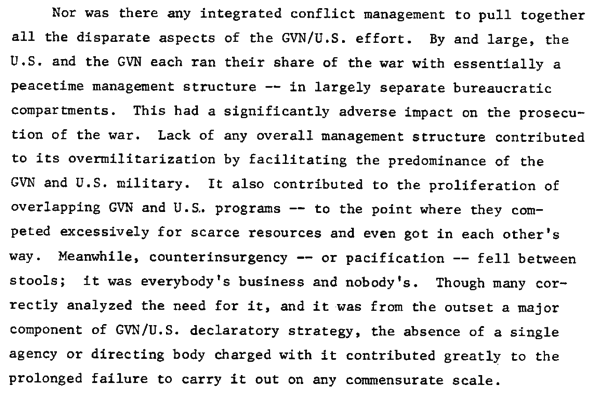
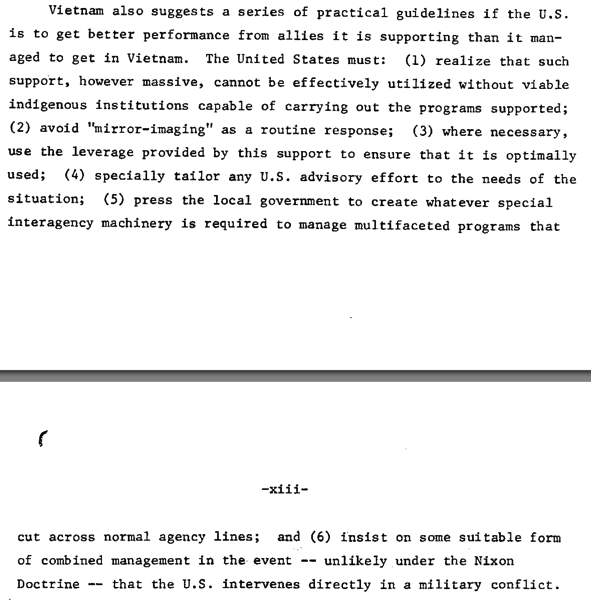
The Bureaucracy of the Vietnam War comes to mind as something that introduced more problems than it solved.
NewImage

Being closer to the problem and understanding the impact is something that I think works better.
NewImage

Google opens it Taiwan and Singapore Data Centers, Pretty Pictures

Data Centers can be boring, but pretty pictures can make it more interesting.  Google announced its new Taiwan and Singapore data center, and they have nice pictures to make it more interesting.  Here is picture of pipes in Google’s new Taiwan data center.

NewImage

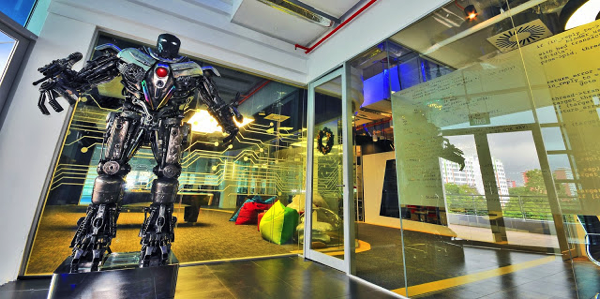
Singapore has a Robot in its office space.

NewImage

Remember all those media posts on the news that Google was ooohhh building a multi story data center in The Dalles.  Well, the Singapore data center is multistory now, and I don’t recall anyone thinking it was newsworthy.

NewImage

Our first multi-story data center

Windfarms are a standard practice for Google’s renewable energy strategy and here is a nice pic of Taiwan.

NewImage


Google Double downs in Taiwan

Google just announced it is expanding in Taiwan.

Google doubles Taiwan data centre investment to $600 million

CHANGHUA, Taiwan Wed Dec 11, 2013 1:03am EST

Dec 11 (Reuters) - Google Inc said on Wednesday it will double its planned investment to $600 million for its data centre in Taiwan to cater to the world's fastest growing technology consumer markets.

"While we've been busy building, the growth in Asia's Internet has been amazing. The number of Internet users in India doubled, from 100 million to 200 million. It took six years to achieve that milestone in the U.S.," Google's vice president of data centres, Joe Kava said in a statement.

The funny thing is I was looking at the Google data center Taiwan website and it said...

In December 2013, we announced the opening of our facility that represents a total long-term investment of USD 600 million.

When.  Oh 24 minutes ago.

A good strategy to go for three data centers in a region, Google folds HK, keeps Singapore and Taiwan

Google announced data centers in HK, Singapore and Taiwan 2 years ago.  Three is a good number when you want to create a high availability service, because sometimes the third has problems.  And in Google’s case they confirmed they will not open up Hong Kong reported in WSJ.

Google Scraps Plan to Build Hong Kong Data Center

Internet giant Google Inc.GOOG +0.60% has scrapped a plan to build its own data center in Hong Kong and will instead expand its facilities in Taiwan and Singapore.

This undated file photo made available by Google shows the campus-network room at a data center in Council Bluffs, Iowa.
 
Associated Press

“While we see tremendous opportunity and potential in Hong Kong…we will not be moving ahead with this project,” Taj Meadows, Asia-Pacific policy communications manager, told The Wall Street Journal on Tuesday

We’ll see if Google chooses another location in Asia Pacific.

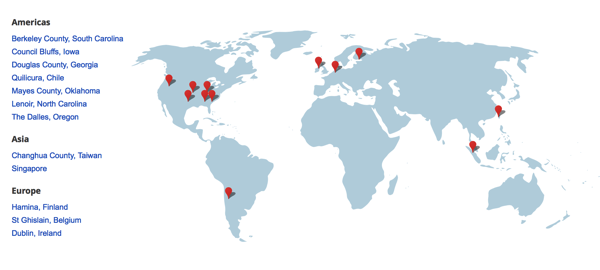
Although when you look at a map it looks like Middle East would be a place sometime in the future.

NewImage