Making a Life Change, Om Malik's serious heart attack

Yesterday, my business partner just had a friend’s father suffer a heart attack.  Yesterday I was at UCSF’s new Hospital Project at Mission Bay working on some process ideas.  And this morning I saw this inspiring post by Om Malik on his life changing experience spurred by his serious heart attack.

Almost exactly six years ago, I survived a serious heart attack thanks to the team at UCSF Medical Center – specifically the cardiology division

Because of their diligence, patience and care, I learned a lot about my health and how I wanted to live the rest of my life. Those three weeks spent in the hospital were as healing for my spirit as for my body. 

At my doctor's suggestion, I adopted better lifestyle habits such as a mostly vegetarian diet, more exercise and no alcohol or smoking. But the bigger change came in my approach to life. 

One of the two promises I made to myself when I was released from the hospital was that I was going to stop trying to control everything. As life’s unpredictability showed me, the best you can do is control the inputs (or your own efforts). We cannot control the outcome. The other promise I made was to stop evaluating life by the moment and instead live in the moment. Or, as Mahatma Gandhi put it, “Live as if you would die tomorrow, learn as if you would live forever.”

These past six years have added up to what could be the best years of my life – for now. And I will forever be grateful to the UCSF cardiology team. They saved me from near disaster and gave me a chance to rewrite my life story. 

Now it's my turn to give back to the team that gave so much to me. My goal is to raise $25,000 to help fund various heart disease-related projects at UCSF, and I would really appreciate your support.

There are three things you can do to help:

  1. Contribute any amount to the campaign before January 31. 
  2. Get more bang for your buck by contributing on Tuesday, December 3. To sweeten the pot, Indiegogo will kick in $1 for every $20 contributed to a #GivingTues campaign on December 3. 
  3. Tell your friends about this campaign and ask them to contribute. 

UCSF is at the forefront of some of the most exciting research in cardiology. Private support is vital to their work. It allows UCSF to recruit outstanding faculty and trainees, launch cutting-edge research projects, and incubate them until they become competitive for government funding sources. All funds raised will go directly to the division of cardiology in the department of medicine

Isn’t it sad that sometimes to change your life needs to be at risk?

How many things finally change habits in the data center after a critical outage?

What Data Center Company will be first to experiment with Hydrogen Solar Cell? Apple, Google, Facebook

For environmental thought leadership in the data center industry the short list is Apple, Google, and Facebook.  Others also have environmental efforts, but these three are consistently in the news sharing their efforts, and the media loves writing about them. 

Here is a press release on a solar powered cell to create hydrogen.

UNC researchers harness sun's energy during day for use at night

Solar energy has long been used as a clean alternative to fossil fuels such as coal and oil, but it could only be harnessed during the day when the sun's rays were strongest. Now researchers led by Tom Meyer at the Energy Frontier Research Center at the University of North Carolina at Chapel Hill have built a system that converts the sun's energy not into electricity but hydrogen fuel and stores it for later use, allowing us to power our devices long after the sun goes down.

"So called 'solar fuels' like hydrogen offer a solution to how to store energy for nighttime use by taking a cue from natural photosynthesis," said Meyer, Arey Distinguished Professor of Chemistry at UNC's College of Arts and Sciences. "Our new findings may provide a last major piece of a puzzle for a new way to store the sun's energy – it could be a tipping point for a solar energy future."

Caption: Tom Meyer's new system generates hydrogen fuel by using the sun's energy to split water into its component parts. After the split, hydrogen is sequestered and stored, while the byproduct, oxygen, is released into the air.

Credit: Courtesy: Tom Meyer

What Google brings to the Nest party, infrastructure that performs and scales

GigaOm’s Om Malik.  Or maybe it should be Om Malik on GigaOm posts on why Tony Fadell decided to team up with Google.

Nest’s CEO Tony Fadell explains why he teamed up with Google: it’s about infrastructure


17 HOURS AGO

8 Comments

Tony Fadell Nest Roadmap 2013
SUMMARY:

In an interview, Nest’s CEO tells us why a union with Google is a good idea (hint: infrastructure and scale) and how he can now get back to designing killer product experiences.

Here are parts that emphasize the google infrastructure.

In an interview with Gigaom following the announcement of the deal, Fadell told us how he wants to refocus on designing product experiences instead of spending his time on scaling and infrastructure — something that’s long been at the core of massive Google. It’s certainly “not about laptops and phones,” joked Fadell; it’s more about a marriage of hardware, software and services, he explained. And the deal has been under discussion for a long time, he noted, Sergey Brin was the one who originally told Google Ventures to start a discussion with Nest.

...

Will Google’s server infrastructure come in handy in a few years? Absolutely. Will their ability to work with algorithms help us? Absolutely. There are a lot of short and long term benefits, but in reality they are going to help us get to new markets at a much faster rate — especially, overseas. I see there are a lot of customers in countries were we are not there yet.

My wish list of what Nest ship after Google acquisition, A Managed Router for the Home

Google acquired Nest and details are in the press release.


Nest, Google and you.

The Nest Team

Today is undoubtedly an exciting day for all of us at Nest, but it’s also meaningful for you, our customers. I’m sure you have questions about whattoday’s news means for you, the Nest Thermostat, and Nest Protect. While Tony answered many of the broader questions regarding our new partnership with Google, I thought we’d talk product – my favorite!

When you look at stuff in the home the thermostat and smoke detectors are kind of important, but not as important as internet access in the home.  Without Internet connection the Nest thermostat and smoke detector are kind of dumb.

So how about if Nest ships a Home Router that is managed device that Google’s smart people with Nest can give us a more highly available internet?

This seems so obvious i hope this comes true by the summer.  You’ve got to believe that the Nest team had gone through the use case and numbers to create a Nest Router.

NewImage

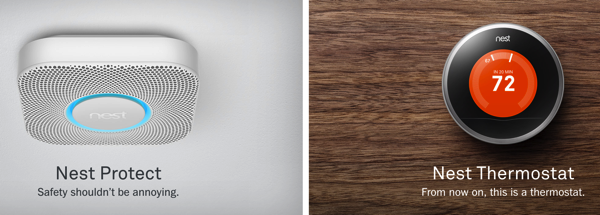
Nest says Safety shouldn’t be annoying.

How about internet connection should not be annoying!!!

A simple thermostat UI.  Green things are working.  Red Internet connection is down.  Google knows your home router has lost connection and is figuring out why?  DNS problems.  Local internet provider issue.  Hard reset required.  “push here to reset”  Or timeout without internet connection, then hard reset yourself. 

Wouldn’t it be great if home routers worked like your smartphones.  Android in Routers.

Water vs. Agile project methodologies

I am about ready to jump on a webinar on Agile and Waterfall methodologies.

Agile Meets Waterfall: How to Manage Multiple Methodologies

January 14, 2014
11:00am — 11:59am PST

FEATURED PANELISTS

Rich Morrow
Rich Morrow founder / head geek,quicloud LLC
Dave Ohara
Jesse Dowdle
Jesse Dowdle Director of Engineering,AtTask

MODERATED BY

Agile methodologies have had tremendous success in task-oriented teams and are increasing their penetration into the enterprise. Still, Agile is just a tool, and not all projects, business processes, and corporate cultures are natural fits. But managing multiple methodologies can be an enormous challenge without the right approach.

Since I am talking on the subject I decided to write a bit first as notes to myself.

So, what is Waterfall Methodology?  Here is a post that compares Waterfall and Agile.  I’ll pull out nuggets that gives you the high level concepts.

What is the waterfall methodology?

Much like construction and manufacturing workflows, waterfall methodology is a sequential design process. This means that as each of the eight stages (conception, initiation, analysis, design, construction, testing, implementation, and maintenance) are completed, the developers move on to the next step.

...

Advantages of the Waterfall Methodology

1. The waterfall methodology stresses meticulous record keeping. Having such records allows for the ability to improve upon the existing program in the future.

...

Disadvantages of the Waterfall Methodology

1. Once a step has been completed, developers can’t go back to a previous stage and make changes.

...

What is Agile?

Agile came about as a “solution” to the disadvantages of the waterfall methodology. Instead of a sequential design process, the Agile methodology follows an incremental approach.

Developers start off with a simplistic project design, and then begin to work on small modules. The work on these modules is done in weekly or monthly sprints, and at the end of each sprint, project priorities are evaluated and tests are run. These sprints allow for bugs to be discovered, and customer feedback to be incorporated into the design before the next sprint is run.

...

Advantages of the Agile Methodology

1. The Agile methodology allows for changes to be made after the initial planning. Re-writes to the the program, as the client decides to make changes, are expected.

...

Disadvantages of Agile Methodology

2. As the initial project doesn’t have a definitive plan, the final product can be grossly different than what was initially intended.