Veterans in the DC continue to grow, Uptime joins the efforts

People with military experience are all over the data center industry, but what hasn’t existed is a proactive effort to give veterans a clear path to work in the DC industry.

Veterans in the Data Center initiative has Lee Kirby to thank and the following companies who joined early.

NewImage

The latest to join is Uptime Institute.

NewImage

About Uptime Institute Veterans’ Initiative

The catalyst for the Uptime Institute Veterans’ Initiative was at the Uptime Institute Network meeting in spring of 2013.  Lee Kirby, who at the time was CEO and Founder of Salute Inc., presented what he was striving to accomplish for military veterans within the data center industry.  His unique approach to proving the value of veterans caught the attention of Uptime Institute and its Network Members and a subcommittee was developed to address the personnel shortage in the data center industry and how to better target and attract Veteran applicants. Founding members included representation from Compass Datacenters, Bayer, and General Electric, among others.

Beyond building the job forum within this website, the subcommittee is establishing a foundation of training for veterans whose military specialty did not include technical training and will assess and recommend human resource polices.

If you are interested in participating or learning more about the initiative please contact us:
+1 206 706-4149
veterans@uptimeinstitute.com

See 40 years of Wind Power in the USA

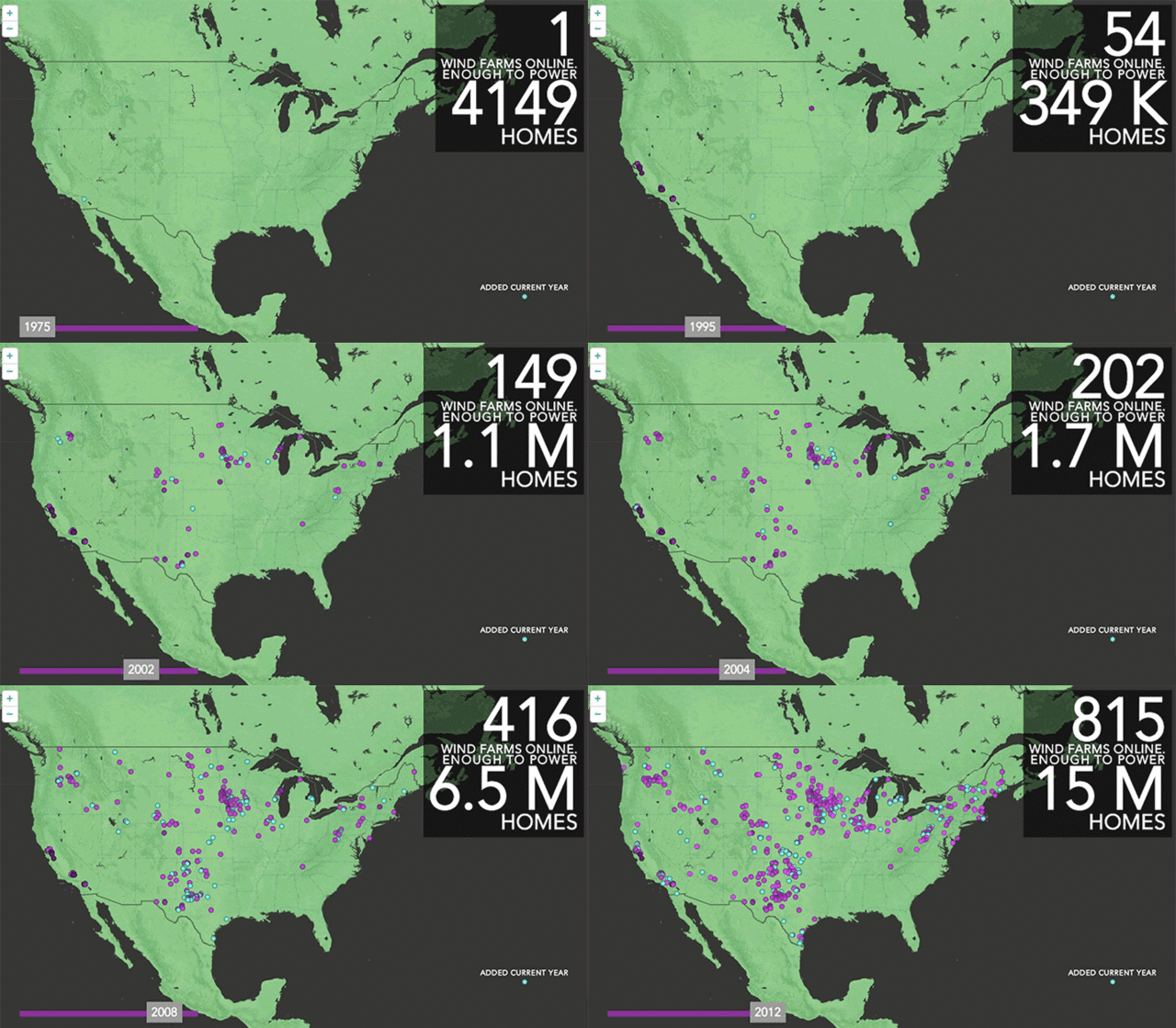
Fast Company has a post showing 40 years of Wind Power in the USA.  Thanks to Google’s investments in wind power, we take it for granted Wind Power is a renewable energy source for data centers.

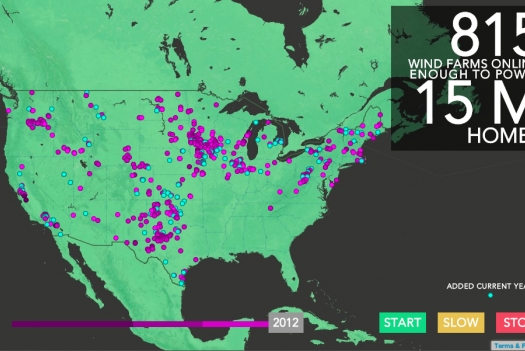
Watch 40 Years Of Wind Farms Spreading Across The Country

We've gone from one small collection of turbines in 1975 to nearly 1,000 wind farms--capable of generating enough electricity for 15 million homes.

Recent NASA studies on the effects of climate change have been rather harrowing, highlighting the need for alternative energy sources. NASA climate scientist Dr. Drew Shindell stated that “it's more clear than ever that we need large, rapid emissions reductions to avoid the worst damages from climate change.”

Reducing our overall energy usage is obviously a big part of curtailing emissions. But renewable energy sources are also a key piece of the puzzle. So it is somewhat heartening to play watch this .GIF of wind-farm growth from the Department of Energy.

The map starts with one tiny wind farm in southern California in 1975. From there, wind farms continue to spread throughout California for the next two decades. Then in 1994 the first wind farm outside of California appears. From there, they quickly spread across 39 states by 2012 (the most recent statistics available). You can play with an interactive version of this map here.

Psst, WSJ says the Data Center is Cloud, Duhh

WSJ has a post in its CIO journal that had me laughing this morning.

The Morning Download: Microsoft Shift Shows the Data Center Is the Cloud

The Morning Download comes from the editors of CIO Journal and cues up the most important news in business technology every weekday morning. Send us your tips, compliments and complaints. You can get The Morning Download emailed to you each weekday morning by clicking here.

Good morning. The transformation underway at Microsoft Corp. probably is the biggest change that the company has undergone since it discovered the Internet back in the ’90s. The evolution tells us as much about the market as it tells us about the company itself, which is shrugging off the weight of its past.

In recent weeks, the company that once fought for the ability to bundle its applications to its platform launched Office for Apple Inc.’s iPad, open-sourced more of its .NET software framework and renamed its Windows Azure cloud computing platform as Microsoft Azure. ”We are witnessing the biggest shift in attitude by Microsoft since the pivot around the Internet in the late 90′s,” IDC analyst Al Hilwa tells CIO Journal.

I don’t know about you, but I wonder where people thought the Cloud was if it was not in data centers.

How many IT/DC problems are caused by the mindset of Repairing vs. Fixing the problem

The wise can see the difference between repairing a problem and fixing a problem.  A repair is many times temporary whereas a fix can take more time, resources, and money.

Here is a story about a simple problem of transporting a crane across a bridge.  When I read this story it reminds of the problems when people don’t understand the difference between a repairing vs. fixing a problem.

The story begins with a company that makes very large and very heavy pieces of equipment. 

They had a special order for an especially large piece of equipment. They completed the piece of equipment and got it ready to ship to the client. In order to ship it to the client it had to pass over a bridge that was located very close to the plant where the piece of equipment was built. 

As the piece of equipment was passing over the bridge, the bridge collapsed and the huge piece of equipment fell into the river. The company quickly went into action and rented a crane that was used to extricate the piece of equipment from the river and place it safely on the plant side of the bridge. 

The city which owned the bridge quickly went into action building a new bridge relying on the assumed knowledge that the company would never try to go over the bridge with another piece of equipment that weighed so much.

...

Click this link to read the whole story.

AWS says Greenpeace you got the wrong rock, get a different one, this one, no, this one, no...

One of the funny words of observation I remember is Sheila Brady during the development of System 7 telling the story of how you can play with your dog and it brings you a rock.  You can tell the dog no not that rock.  Go get another one.   It gets another one.  No not that rock.  this one. no.  this one.  no.  The dog can keep this up trying to please you.  Sometimes people expect you to be like a dog.  How about if the software works this way.  No.  How about this way.  No.  This way.  No.  Can you tell me what you want?  No. I’ll tell you when I see it.

This reminds me of Amazon’s interaction with Greenpeace.  Greenpeace gives Amazon numbers on its data center carbon footprint.  No that’s not accurate.  What is wrong with the numbers.  Go get another rock and I’ll tell you if it is the right rock.  Greenpeace isn’t dumb enough to play this game and this game is getting documented.  Forbes posts on the topic.

In a statement emailed to me at my request, an AWS spokesperson agrees with Greenpeace that clean sources of energy should be a priority but says the Greenpeace analysis “misses the mark by using false assumptions on AWS operations and inaccurate data on AWS energy consumption. We provided this feedback to Greenpeace prior to publishing their report.”

The company also makes the point that the AWS Cloud reduces dependence on smaller, over-provisioned data centers that are less energy-efficient. It notes:

We work hard on our own, and together with our power providers all over the world, to offer AWS Cloud services in an environmentally friendly way in all of our regions. AWS operates efficient and highly utilized data centers across 10 different regions globally, two of which (Oregon and GovCloud Regions) use 100% carbon-free power. We like offering customers the choice of being able to run carbon-free, and we love doing it without charging a premium over other North American regions.

You could argue whether or not AWS has been as proactive as it should be about clean energy sourcing. The point is that we really can’t tell, and that is probably Greenpeace’s biggest issue.

Could Amazon tell Greenpeace how they are wrong?  Yes.  But, Amazon likes Greenpeace not knowing what the answers are.  How would you like to get a test with a C on it and nothing marked with what is wrong and only Amazon has the answers to the test.  Would you take the test again?  I don’t Greenpeace will until next year when they come up with another guess at what the carbon footprint is of Amazon’s data centers.