DePaul shows their new data center space in Dupont Fabros Chicago Facility

Normally when you see a wholesale data center space like Dupont Fabros you can’t go into the spaces that are occupied.  here is a video of DePaul University sharing their new space in Dupont Fabros’s Chicago Data Center.

Dupont Fabros has more information on the building here.

CH1 - Chicago, IL

Located in the western suburbs of Chicago, CH1 is one of the Midwest’s most sophisticated and efficient data centers. The facility is constructed in two phases of 18.2 MW of Critical Load each; Phase I was delivered in August 2008, with Phase 2 delivered in February 2011. Clients are able to lease one or multiple dedicated computer rooms each with independent redundancy and security. The property has multiple major fiber carriers on site and benefits from some of the country’s most competitive power rates. Customer requiring substantial office space can utilize the adjacent and exclusive 32,000 square foot office building. The facility is currently 100 percent leased.
How fast is your Connection to Netflix?

There is a lot of news on Comcast Netflix agreement that speeds up streaming video.  ArsTechnica writes on how the speed has increased after the connection agreement.

After Netflix pays Comcast, speeds improve 65%

When Netflix and Comcast customers both pay Comcast, the traffic flows smoothly.

Netflix's decision to pay Comcast for a direct connection to the Comcast network has resulted in significantly better video streaming performance for customers of the nation's largest broadband provider.

Netflix has bemoaned the payment, asking the government to prevent Comcast from demanding such interconnection "tolls."

Netflix has posted the latest performance results for Mar 2014.


NewImage

Curious I decided to see how fast my connections are to Netflix.  You can watch a Netflix movie and embedded in your stream is the speed of connection.

Netflix has released a new “test” video that will then report on how fast and at what quality you are getting Netflix content.

Click here to launch

The tool streams a test video and displays the data up in the top corner.

I tried the movie on my MacBook Retina.  Max Resolution is 1280x720 at 3mbps. 

NewImage

Went to AppleTv and FireTV and both of their speeds were 5.8mbps at 1920x1080.  I can get the higher speeds because I upgraded my home network to Business Comcast so no usage caps and much higher speed streams. 

Doesn’t it seem kind of sad that you spend all the money on a nice TV and if you watch Netflix and many other streaming services over your home ISP you are lucky to get 720p.  Heck until I switched off of Home Comcast Internet I was like the rest of you stuck at 480p.

NewImage

NewImage

Benefits of a hybrid are dependent on how often you use electric battery system, seems kind of obvious

BBC has a post on the insight that the benefits of a hybrid are dependent on the use, location and driving patterns.

Hybrid cars are good for the environment, right? Their ability to switch to battery power means more miles to the gallon, and lower greenhouse gas emissions.

These things are true, however recent research suggests that preciselyhow green hybrid vehicles are may depend on traffic levels, road design and, perhaps most intriguingly, national driving styles. It also shows these vehicles provide significantly greater environmental benefits in cities in India and China, where there are hardly any hybrids, than they do in places like Tokyo and Los Angeles, where they are most common.

What is funny that the BBC positioned this paper as research was needed.  If you ask the question of when will you use the electric battery system.  When accelerating, braking, and at rest, then the answer is kind of obvious.  if you drive consistent highway miles the electric battery system is going along for the ride with a weight penalty.

When the computer generated vehicles were “driven” according to the real world driving data, the hybrids generated fuel savings of 48% in India and up to 55% in China, compared with around 40% in the US.

Why the discrepancy? At low speeds, such as found in many cities, the internal combustion engine is inefficient, and so in the hybrids the electric motor took over. Energy recovered through regenerative breaking – when the electric motor is allowed to run backwards as a generator when the car is slowing – was, as expected, the main reason why they hybrids were much more efficient.

The second most important factor surprised the researchers. “We forgot about the aggressiveness of the driving styles,” says Gopal. “Dense traffic and aggressive driving styles favour hybrids.”

In India and China, driving involves a lot of accelerating and braking – which can both be done more efficiently with an electric drive train versus a petrol engine.

ExtremeTech provides a perspective for gas vs. hybrid vs. diesel.

Here’s the broad answer: Go with gasoline if you’re a low-mileage driver, hybrid for city driving, and diesel for high-mileage (mostly highway) driving.

The mainstream gasoline engine is best if you drive less than 7500 miles a year because the savings on fuel won’t match the premium you’re likely to pay for a hybrid or diesel car.Hybrid is the winner if you cover a lot of miles in stop and go city driving or on clogged expressways, where braking recharges the battery that powers the electric motor. It helps if you’re easy on the throttle and brake early and smoothly in a hybrid.

I drive 3,000-4,000 miles a year so gas is my option.

Some good lessons from Pixar CEO, Ed Cutmull

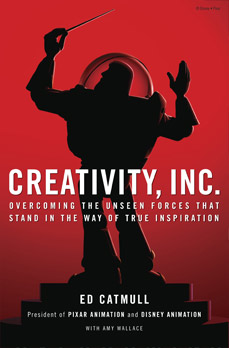
I just got the book Creativity Inc to read which is the story of developing Creativity at Pixar by the CEO Ed Catmull.

NewImage

From Ed Catmull, co-founder (with Steve Jobs and John Lasseter) of Pixar Animation Studios, comes an incisive book about creativity in business—sure to appeal to readers of Daniel Pink, Tom Peters, and Chip and Dan Heath.

Creativity, Inc. is a book for managers who want to lead their employees to new heights, a manual for anyone who strives for originality, and the first-ever, all-access trip into the nerve center of Pixar Animation—into the meetings, postmortems, and “Braintrust” sessions where some of the most successful films in history are made. It is, at heart, a book about how to build a creative culture—but it is also, as Pixar co-founder and president Ed Catmull writes, “an expression of the ideas that I believe make the best in us possible.”

WSJ wrote a review with some good lessons.

Here is a good one on why many technologies fail.  The technology is not embraced by the users.

Recruited in 1979 by George Lucas to help work special-effects images into live-action footage, Mr. Catmull, who had studied computer graphics in graduate school, soon found himself up against a problem that would yield one of his early lessons. The film editors at Lucasfilm resisted working with a computer. They didn't think it would do much more than what could already be done by snipping filmstrips with razor blades and gluing them together. The editors didn't realize that, for a new level of creativity to happen, they would have to embrace change. Relatedly, Mr. Catmull realized that a transformative idea, no matter how good, was useless unless the people who had to implement it fully embraced the concept.