Confusing Abstract and Concrete makes it hard to figure out things

I had conversation with a mechanical engineer from the East Coast who worked for years on buildings.  I am an industrial engineer from the West Coast who worked for years on software.  We were chatting about some things I am working on and he was providing feedback.  The conversation was good in that it got me thinking about how different people will look at the same situation, identify different problems, and then take different actions.

This took me down the path of thinking of Abstract vs. Concrete.

The abstract/concrete distinction has a curious status in contemporary philosophy. It is widely agreed that the distinction is of fundamental importance. And yet there is no standard account of how it should be drawn.

Reflecting I can think of so many conversations that confused people because i was explaining abstract ideas and the listener was hearing concrete things.  Part of working on software is you get used to working in abstract, and then shift phases to the concrete when need be.  Part of the challenge of user interfaces is some users favor abstraction others favor concretism.

Going back to the conversation I realized that the user interface we created favors a concretism user, the use of the system by analyst, managers, engineers, and others who consume the data are people who can think in the abstract and understand the value of concrete.

Ironically part of what we were discussing is the process tracking in the pouring of concrete.  Now, I am more confused.  The abstraction of processes to pour concrete vs. the concretism of the concrete pour.
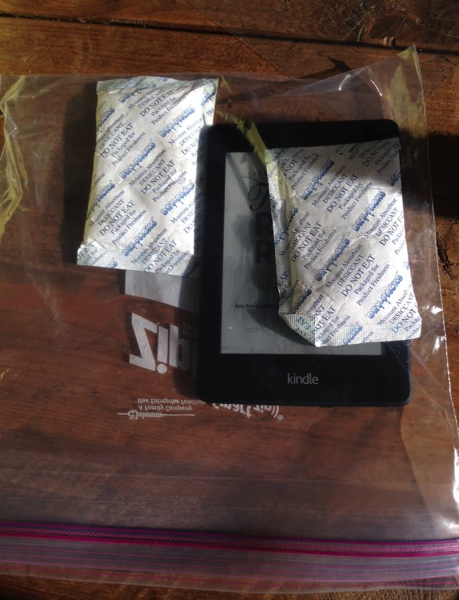
Forget the Rice when Drying A Wet Phone/Kindle/Tablet, use desiccant

My Kindle Paperwhite got wet when my water bottle leaked on my travel pack.  Luckily nothing else got web except the Kindle Paperwhite.  The Kindle was locking up and the backlighting wasn’t working.  There is a common advice to put the wet device in rice.  Being Japanese-American I have plenty of rice to put the device in, but also being an engineer it didn’t make sense that putting a wet electronic in rice which has been exposed to air is an effective desiccant and the smart particles in rice could cause more damage.  Popular Mechanics has a post on this topic. 

Finally, use a desiccant to wick away any leftover moisture. The most convenient choice is uncooked rice. Just leave the phone (and its disconnected battery) submerged in a bowl of grains overnight. If you're worried about rice dust getting inside your phone, you can instead use the packets of silica gel that often come stuffed in the pockets of new clothes. But acting fast is far more important than avoiding a little dust, so don't waste time shopping if you don't already have a drawer full of silica gel. 

The most important thing to remember is to avoid heat. That means no hair dryers, ovens, microwaves or extended periods in direct sunlight. While heat will certainly evaporate the moisture, it could also warp components and melt adhesives. Those fragile glues are also why you'll want to avoid dunking the phone in rubbing alcohol (an oft­prescribed tip on the Web). Alcohol is a solvent and can dissolve the internal adhesives. (If you drop your phone in the toilet, it's okay to wipe the outside with alcohol to disinfect it.)

Fortunately, I have bags of desiccant to put in bags when I think my camera gear is going to be exposed to moisture.  Cameras (Lens, little motors, and electronics) tend to have much more problems with moisture than phones/tablets.

NewImage

24 hours later the Kindle Paperwhite works fine.

Data Center Social LV PURE Event 2014, Norland's Steve Manos hosts another winner

This is my fifth year of going to Steve Manos’s infamous data center social at PURE nightclub, and this Tues was the annual event in LV.  Steve has created the premier data center industry social event where some of the exceptional people in the industry get together.

NewImage

Steve Manos's data center socials have been going on for years and each one gets better and better. 

Here is a picture from one of the early Data Center Socials with Steve and Mike Manos.

NewImage

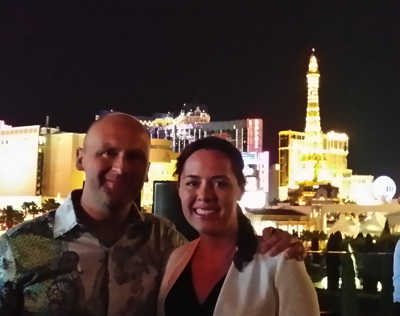
Updating the classic Steve Manos and Katie O’Hara picture.  FYI, this is the only time I took a picture with Steve and Katie’s permission.

NewImage

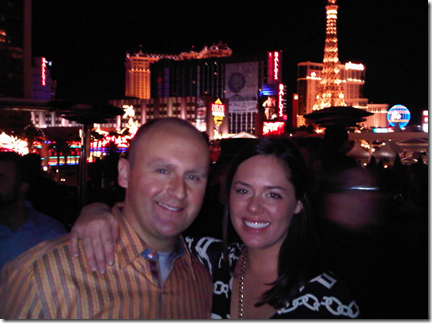
Here is Steve and Katie from the event 3 years ago.

NewImage

What is improving the data center industry is people realizing socializing with your peers has many benefits, and yet many times going to conferences doesn’t work for socializing.  Don’t think friends are important.  Check this out.

Good Friends Are Good for You

They might get on your nerves at times, but good friends have bigger benefits than you may realize.

"You got to have friends to make that day last long," sings Bette Midler. But good friends may help your life last longer, too, according to an Australian study. Conducted by the Centre for Ageing Studies at Flinders University, the study followed nearly 1,500 older people for 10 years. It found that those who had a large network of friends outlived those with the fewest friends by 22%.

Why is this so? The authors suspect that good friends discourage unhealthy behaviors such as smoking and heavy drinking. And the companionship provided by friends may ward off depression, boost self-esteem, and provide support. Also, as people age, they may become more selective in their choice of friends, so they spend more time with people they like.

These events couldn’t happen without the support of sponsors.  This year’s sponsor were.

NewImage

NewImage

NewImage

NewImage

Also a special thanks for Mandy Modic for playing the role of Kristy Rivetts, the person who contacted all the attendees when they arrived in LV, made sure they had the logistics information and the commemorative event coin.  There were other subtle tweaks in the event that made the event better than prior years.  Do you say that about the data center events you go to?

NewImage

Water tips the use of Power in NSA Utah Data Center

Crawling public records for evidence of data centers being built is common.  Another thing you can do is use public records of utility use.  It is tough to get the amount of power used in public records, but water use is not considered as confidential.  Well, until Salt Lake Tribune reported on the water use of NSA’s Utah Data center.

NSA paying for water it’s not using at Utah Data Center
Records » It could be evidence the data center in Bluffdale is not operating at anticipated capacity.
 
First Published Apr 28 2014 03:10 pm • Last Updated Apr 29 2014 07:30 am

The National Security Agency’s Utah Data Center has been paying for water it’s leaving in the tap.

A review of the data center’s recently released water bill shows that since at least July, the NSA has been paying its mandatory minimum bill. In July, the NSA paid Bluffdale $28,596 for 6.2 million gallons of water.

There are rumors there are problems in the electrical systems in the data center which limit the power used.

The water bill is further evidence the Utah Data Center is not operating at anticipated capacity. The Wall Street Journal reported in October the facility was suffering from electrical problems, delaying full-scale operation. The NSA has refused to discuss the status of the Utah Data Center, even to say if it’s operational.

We’ll see what the water use is in July 2014 for get a year to year usage.

News in the DC News, Did Yevginey Sverdlik change jobs?

A friend asked if I had seen a datacenterknowledge post.  i hadn’t .  Long time ago I used to follow what Matt Stansberry wrote, but now he is an Uptime Institute.  I used to follow Kevin Heslin, but he is now at Uptime Institute.  Another person I used to follow is Yevginey Sverdlik looks like he is at datacenterknowledge.  At least he has two posts that started with the one my friend sent.

Scott Noteboom: Technology Trapped in Real Estate Prison


Who is Yevgeniy? He is, was...

Yevgeniy Sverdlik

Regional Editor, North America, at DatacenterDynamics

San Francisco Bay Area
Media Production

And now he his two posts at DatacenterKnowledge.

I was just in LV with 130 other data center thought leaders.  I wasn’t in town for the data center conference and neither where most of the others. I’ll write another post on what we were in town for in a day or two.

I did run into a data center friend in the Caesar’s Forum shop area who I have had the pleasure of watching their software service grow and he was at data center conference in LV.  I asked him how the show was.  One of his presentations was good, the other he had maybe 25 people in the room.  Asked him the keynote was.  He said it was 1 1/2 long and had little substance.  That seemed strange for a keynote.  Then I saw the point that Yevgeniy wrote about.

He said he was trained by Apple not to talk about anything you were doing until you had something great to talk about, and has decided to keep things under wrap at LitBit until the time is right.

Ohh, that’s why the keynote had little substance. 

Knowing people and their perspectives allows you to better interpret what they write.