What USA data center will be geothermal powered?

I’ve been to Iceland and seen geothermal in action powering a data center.  It is a dream to have geothermal in the USA for a data center given the lack of availability, but tracking is arriving to improve geothermal performance.

The economist posts on the state of geothermal in the USA.

The zigzag route to success

DEPENDING on your point of view, hydraulic fracturing—or “fracking”—is either the future of clean, natural gas or an environmental apocalypse. Fracking liberates gas trapped underground by drilling sideways from vertical well-shafts into horizontal layers of shale rock. Millions of gallons of a cocktail of water, sand and chemicals are injected into the horizontal wells at high pressure, fracturing the shale, releasing the gas—and causing violent protests in Europe and parts of America.

It looks like the industry will have chances within a year or two.

The sticking-point, says Susan Petty, AltaRock’s founder, is commercialisation. Geothermal is a steady source of energy (unlike windpower), has very high capacity-utilisation rates, zero fuel costs and near-zero greenhouse-gas emissions. The trouble is that successful existing geothermal plants do not need EGS, and for many failed wells it is uneconomic to introduce it. So with the help of an as-yet unnamed partner, AltaRock plans to buy up existing fields that it thinks it could make profitable using its version of EGS. That way it will avoid the costs of new infrastructure while demonstrating its technology’s viability.

The energy department reckons that EGS techniques could be commercially viable as soon as next year, at which point more private investors and perhaps utilities might pile in. It is not alone in its optimism: Germany, France and Britain have state research programmes for EGS.

Michael Siteman Switches from (Huge) Digital Realty Trust to Boutique (small, elite) M-Theory Group, EVP of Cloud & DC

M-Theory Group announced Michael Siteman has joined their company as EVP of Cloud and Data Center Solutions.

NewImage
Fast Growing Disruptive Technology Company Strengthens Resources
Los Angeles, CA – M-Theory Group (http://www.M-TheoryGrp.com) announced today that Michael Siteman has joined the firm to lead their Strategic Alliances, Origination and Product awareness.

Michael has a quote in the press release.

Michael Siteman comments “I have worked for very large organizations in the past, however I am very excited to bring my enterprise experience to a boutique firm, where my contributions will have an immediate effect. Chant Vartanian has developed a very unique, first of its kind, model that I am certain will revolutionize the Cloud industry. I am excited to play a key role.”

Michael has gone from some of the biggest companies to a small innovative services company for data center solutions.

Michael’s former employers include Digital Realty, Jones Lang LaSalle, Base Partners, and The Staubach Company.


M-Theory provides premier datacenter and colocation services. Offering SSAE 16 SOC 2 Type 2 Audited Internet Datacenters with multicarrier Internet connectivity, flexibility and full 24x7 managed services, virtualization, application delivery and continuity.

We also understand that you may require multiple datacenter relationships. With that in mind, M-Theory provides datacenter real estate services helping design and implement the ideal solution for your growing business strategy. Our managed services and application delivery strategy can be utilized at any datacenter worldwide.

Our consultancy approach allows you to source or build your optimal datacenter solution.

Flaw of Customer Research, customers inability to describe what they want when the don't know

A friend sent me this post by I, Cringely on creating solutions, Age of Supply, not Demand

Here are a few nuggets.

“Demand drove supply in the industrial age,” said Aurel. “You needed more steel to build cars so a new steel mill was built. But today it seems to me that supply is actually driving demand.”

...

“You can’t rely on customers to tell you what to build,” said Aurel. “They don’t know.”

Some people think that money is what is needed to build innovation.  One example is Google going cheap vs. Excite being Sun Servers.

We see this effect over and over. Look at cloud computing, for example. It’s easy to argue that the genesis of cloud was Google’s desire to build its own hardware. Google was nailing motherboards to walls at the same time Excite (Google’s main search competitor at the time) was spending millions on Sun computers in a sleek data center. Google’s direction turned out to be the right one but that wasn’t immediately evident and might well have never happened had not Larry and Sergey been so cheap.

The whole idea of market research is turned on its head now a days.  In the past, companies would spend millions on customer research, and what are you building?  The next instagram.  What customer survey would tell you to build instagram?

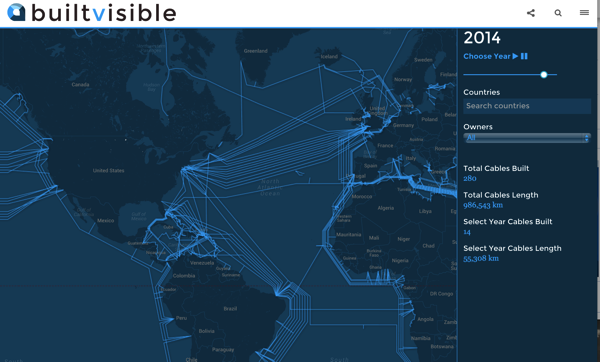
Google continues building a World Class Network

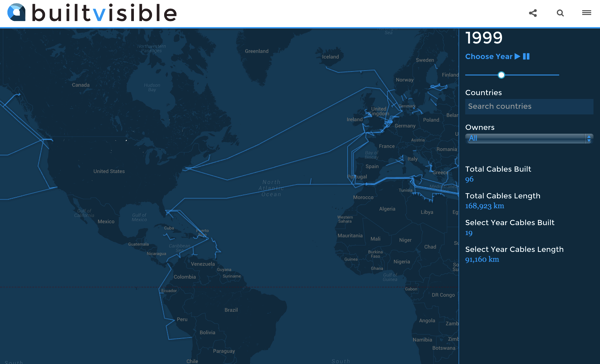
Too many times the data center issues are separate from networking issues.  Many times there have been so-called innovative data centers that are promoted, and when you dig behind the scenes the network is not up to the same quality as the data center.  Google is one of those who accounts for the relationship of the network with its data centers at all kinds of levels, and they invest long term to have best of breed network.

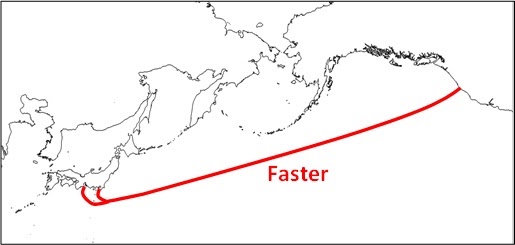
The latest announcement has Google’s Urs Hoelzle posting on a new Japan-USA 60 Tbps connection.

At Google we want our products to be fast and reliable, and that requires a great network infrastructure, whether it's for the more than a billion Android users or developers building products on Google Cloud Platform. And sometimes the fastest path requires going through an ocean. That’s why we’re investing in FASTER, a new undersea cable that will connect major West Coast cities in the US to two coastal locations in Japan with a design capacity of 60 Tbps (that's about ten million times faster than your cable modem). Along with our previous investments - UNITY in 2008 and SJC (South-East Asia Japan Cable) in 2011, FASTER will make the internet, well, faster and more reliable for our users in Asia. 
Show less
 

The 6 partners represent Japan, China, Singapore, Malaysia, and USA (Google).

I think we can look forward to more consortiums networking the world.  Does your data center group have connections with the leading network thought leaders?

One of the interesting things to see is how Urs’s post is shared.  Not the upper right where there is an independent share of the fiber network project in Korea.

NewImage