Analyst MKM ups rating to Buy for Intel based on Data Center Surge

Data Centers are part of regular news.  Today ran across this on Barron's blog on Intel being up a Buy from Hold by MKM.

MKM Partners‘s Ian Ing today raises his rating on Intel (INTC) stock to Buy from Neutral, and raises his price target to $45 from $40, as part of a broad overview of end-market conditions for semiconductors in 2015, with one of the main themes being the explosion in data traffic that requires more server processing.

“We likely kept our neutral rating (with positive bias) for too long,” writes Ing, “as PCs stabilized, data center improved, and INTC demonstrated a flexible approach to succeed in tablets and access existing China consumer channels.”
— http://blogs.barrons.com/techtraderdaily/2015/01/05/intel-mkm-ups-to-buy-on-data-center-surge/

In this same post Microsoft says there are 12 million physical servires running Windows Server 2003.  On July 14, 2015 Microsoft will end support for Windows Server 2003.  Kind of funny to think WinSvr2003 was the last OS I worked on at Microsoft and it is being retired.  Windows XP was last desktop OS I worked on.

Part of the growth potential is also China and Mobile where I now spend way more of my time than working on OS issues.  So it is nice to see that others think there is growth in these areas. The key is to be agile.

INTC demonstrated a flexible approach to succeed in tablets and access existing China consumer channels.”


Happy Holidays!!!

I've been slow posting.  Been thinking what has been meaningful in the data center industry this past year.  Not a whole of things are popping to mind.  It seems like we are ready for some big changes for 2015.

As most of you are getting ready for the holidays I'll be cutting back on my blogging as most of you won't be reading as much.

My family is ready for the holidays and I am too.

Happy Holidays.  I'll have plenty more to write about in 2015

My kids are in holiday spirit. Enjoy your family and friends. Below my daughter is the center of attention.

IMG_6514.jpg

One of the good rules for our kids party's is turn in your phones.  Focus on the party.

E-mail is permanent, therefore others can read, Sony Hack reminds non-technical crowd

One lesson learned from Microsoft's Monopoly trials is what you write in e-mail can haunt you.  This lesson has been repeated through multiple trials and discoveries.  I always write in a style that my e-mails could get to a broader audience than just the addressed.

Sony's hack has revealed how executives haven't learned this lesson that most of my technology friends know.

Bonnie Hill, a director of Yum Brands Inc. and California Water Service Group , echoed that point, saying the attack on Sony got everyone’s attention and is a reminder “that you don’t use your email for general, chatty conversations.’’ She said she expects boards to start asking more questions about what kind of information is being kept and how safe it is.

“A sufficiently skilled, motivated and funded attacker will get in, period,” Co3’s Mr. Schneier said. Companies must continually improve security with layers of defense that include intrusion prevention, detection and incident response, he said.

“This is going to take years to unwrap,” Mr. Schneier added. “Now every company is thinking, ‘What would it be like if everything in our company was made public?’ ”
— http://www.wsj.com/articles/fears-spread-of-sony-style-hack-1418863212?mod=WSJ_hp_LEFTTopStories

Whenever I have something extremely confidential to discuss I reach for the phone or switch to other means of communication, but not e-mail.  Using something like encrypted iMessage is an option.

We take a very different view of this than a lot of other companies have. Our view is, when we design a new service, we try not to collect data. So we’re not reading your email. We’re not reading your iMessage. If the government laid a subpoena to get iMessages, we can’t provide it. It’s encrypted and we don’t have a key. And so it’s sort of, the door is closed. But our business Charlie, is based on selling these [pointing to devices]. Our business is not based on having information about you. You’re not our product. Our product are these, and this watch, and Macs and so forth. And so we run a very different company. I think everyone has to ask, how do companies make their money? Follow the money. And if they’re making money mainly by collecting gobs of personal data, I think you have a right to be worried. And you should really understand what’s happening to that data. And companies I think should be very transparent about it.
— Tim Cook


Developing your Data Center Relationships - Chinese Guanxi

Relationships is a complex topic.  Some think it is about exchanging business cards, LinkedIn connections, and business dinners.  But, I think what so many miss is are your friends in the data center industry.  Do you have laughs, share perspectives, and talk about things outside the data center industry.  Are you social?  Do you have Guanxi?

BBC has an article that explains an application of Guanxi that I think many will find familiar.

He points out that the Chinese generally tend to be less private and socialise more with their colleagues than their Western counterparts, and doing deals this way is a natural extension of that.
...
Yet guanxi’s roots are tightly bound in history, with the notions of obligation and loyalty going back thousands of years.
— http://www.bbc.com/news/business-29524701


Relationship between Power and Fresh Water, Desalination Plant scenario

MIT's Technology Review has an article on San Diego's current state of the art desalination plant.

Desalination out of Desperation
Severe droughts are forcing researchers to rethink how technology can increase the supply of fresh water.
By David Talbot on December 16, 2014

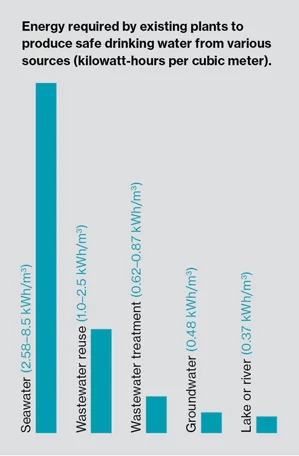
One of the graphics shown is the amount of power used to produce a cubic meter (264 gals) of water.

What the article doesn't mention is the amount of water consumed to generate power in San Diego.  The DOE has a paper you can check out on water use in thermoelectric power generation.  67% of SD power comes for natural gas plants.  24% renewable

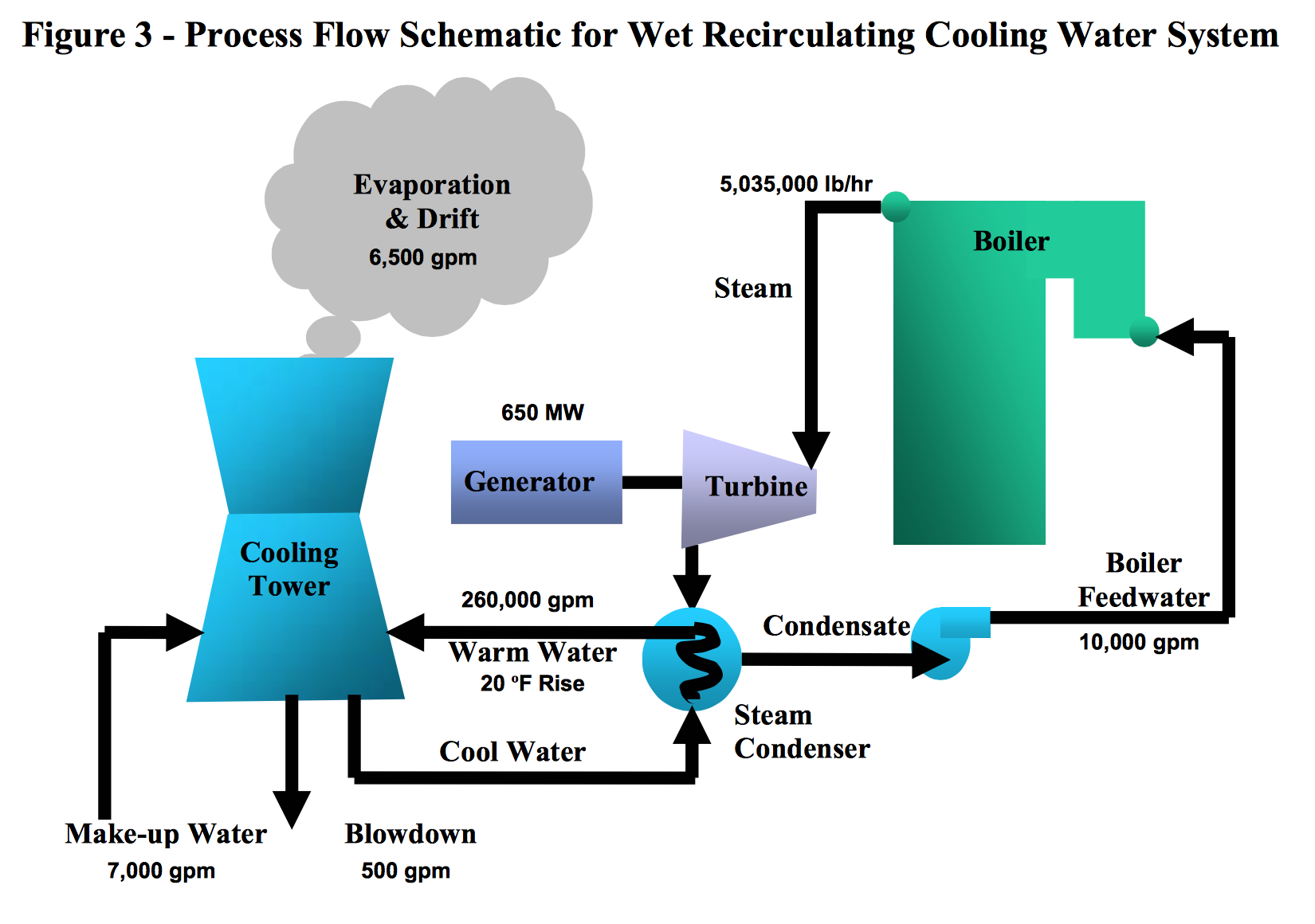
Each kWh of thermoelectric generation requires approximately 25 gallons of waterd, primarily used for cooling purposes – a 500 MW power plant would use approximately 300 million gallons of water per day. However, power plants also use water for operation of pollution control devices such as flue gas desulfurization (FGD) technology as well as for ash handling, wastewater treatment, and wash water. When discussing water and thermoelectric generation, it is important to distinguish between water use and water consumption. Water use represents the total water withdrawal from a source and water consumption represents the amount of that withdrawal that is not returned to the source.
— http://www.netl.doe.gov/File%20Library/Research/Energy%20Analysis/Publications/PowerPlantWaterMgtR-D-Final-1.pdf

Here is a graphic to show the areas of water use in thermoelectric power plant.

For an example of thinking about water use in the data center check out this Google video on the use of gray water.