Tips for spotting the foolish leader

We have all seen the leaders who act like fools. But it can be hard to be specific.  I found this post while sitting watching a presentation that was particularly foolish.  The post is good here is a snippet.

How do we know if a potential leader is foolish? The principle is in this statement that Jesus made: “Every healthy tree bears good fruit, but the diseased tree bears bad fruit” (Matthew 7:17). We must examine the fruit. And the Bible is quite clear on what the diseased fruit of foolishness looks like:

The foolish look with haughty eyes (Proverbs 6:17).
The foolish engage in slander (Proverbs 10:18).
The foolish joke about their wrongdoing (Proverbs 10:23).
The foolish make great boasts (Psalm 12:3).
The foolish are stubbornly right in their own eyes (Proverbs 12:15).
The foolish are quickly annoyed by insults (Proverbs 12:16).

Words of wisdom on the application of Computer Technology to Process from 50 years ago, Pete Dawkins

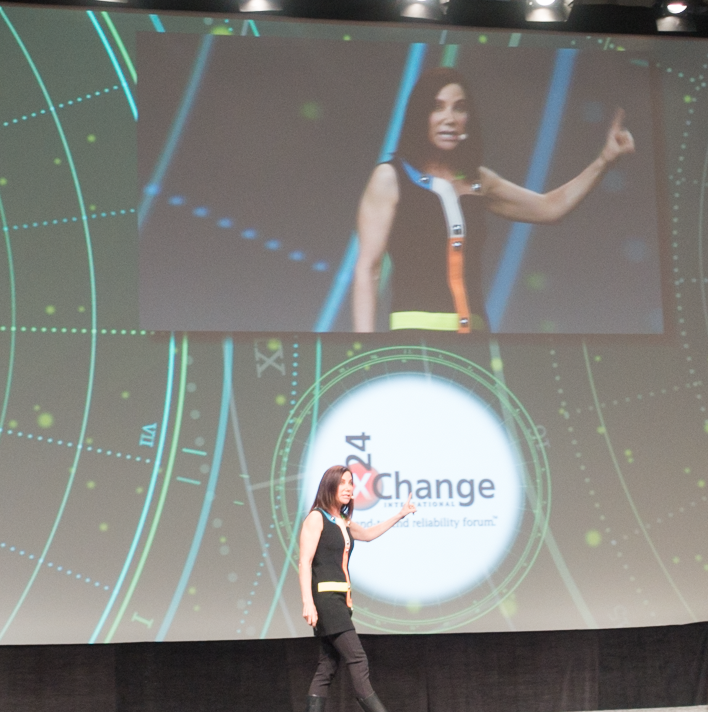
At the 7x24 Exchange Keynote Alison Levine mentions General Pete Dawkins and his great words on the "Freedom to Fail." His document is here. And the 1st paragraph is so good I had to share.

"it was a genius who developed a machine which could calculate every day the total amount of toilet paper used by the entire United States Army; but was a damn fool who ordered us to keep track.

"it was a genius who developed a machine which could calculate every day the total amount of toilet paper used by the entire United States Army; but was a damn fool who ordered us to keep track.

Bet you have all experienced something similar to this.

I think one of the top things artificial intelligence, machine learning, neural networks could do that would make all of our lives so much better is to find the processes created by the damn fools who made our lives worse tracking stupid things.

7x24 Exchange Keynote lesson - Networking is Everything

One of the highlights of the 7x24 Exchange conference is the opening keynote. This year it was Alison Levine, the leader of the 1st all women's expedition to climb Everest.

Alison covered many topics and if you want an overview of the concepts you can read her book "On the Edge." If you want a shorter version here is a Forbes article.

The #1 thing I enjoyed from Alison's talk is her emphasis on networking. My notes from her talk.

Networking: build relationships - networking can save your life. Who can you work with outside your team. This is why the smart people go to a DC conference like 7x24 Exchange.

Instead of writing a long post on all the things I liked I am going to through up short words. Blog posts. :-)

Do people think about how the data center bulding shapes the Internet Services and its team?

Winston Churchill is know for a well known quote.

In October 1943, following the destruction of the Commons Chamber by incendiary bombs during the Blitz, the Commons debated the question of rebuilding the chamber. With Winston Churchill’s approval, they agreed to retain its adversarial rectangular pattern instead changing to a semi-circular or horse-shoe design favoured by some legislative assemblies. Churchill insisted that the shape of the old Chamber was responsible for the two-party system which is the essence of British parliamentary democracy: ‘we shape our buildings and afterwards our buildings shape us.’

Data Centers look like warehouses from the outside.  Their efficient and over time determined as the lowest cost way to house the equipment for Internet Services.  Just like any other commercial building design.

Like Winston Churchill says "we shape our buildings and afterwards our buildings shape us."

What happens if you are focused on a creative collaborative team who would run a data center. Should the data center be designed differently?

An example of different is Pixar's headquarters covered by Buzzfeed.

The beating heart of the campus — and of Pixar itself — is the two-story Steve Jobs Building that provides a tremendous 218,000 square feet of space for roughly 700 people to work, eat, and play. The name is not just an honorific to the late Jobs, who bought the company from LucasArts in 1986 and served as its Chairman and then CEO until it was purchased by Disney in 2006. In a very real sense, the building is Steve Jobs.


“Since Steve didn’t actually make our movies, the building itself became his project,” says company President Ed Catmull, one of Pixar’s co-founders with John Lasetter. “This is the only building that Steve ever designed and built and carried through [with finishing] it.”

How many data centers look all the same? Data halls, electrical rooms, mechanical rooms, and last the office space.