iOS 11 the Mobile OS that can replace Desktop for more people

I have worked on OS, operating systems for a long time, working on System 6 & 7 at Apple, then Windows 3.1, 95, 98, NT3.1. NT3.5, NT4, Windows 2000, Windows XP and Windows Server 2003. Watching mobile OS efforts from Apple, Microsoft, Google, Palm and others has too many times been by a small team. I bet you the iOS team is bigger than the MacOS team, and it is more exciting and challenging to develop iOS features than MacOS. With all the new hardware showing up in iPhones and iPads there are more changes than any Desktop hardware. Who would build a better camera into a Laptop?

There are plenty of reviews out there on iOS 11 and many are saying how good it is and how it is a desktop replacement. http://www.trustedreviews.com/reviews/ios-11

iOS has better multitasking, 64-bit only, File Manager, Multi-screen, drag and drop, and many other features you would expect from a modern operating system. 

I can now do something I always did on my Mac and screen grab and insert the image. Below is some research I am doing on the gray zone and found some good papers written by strategic analysts.
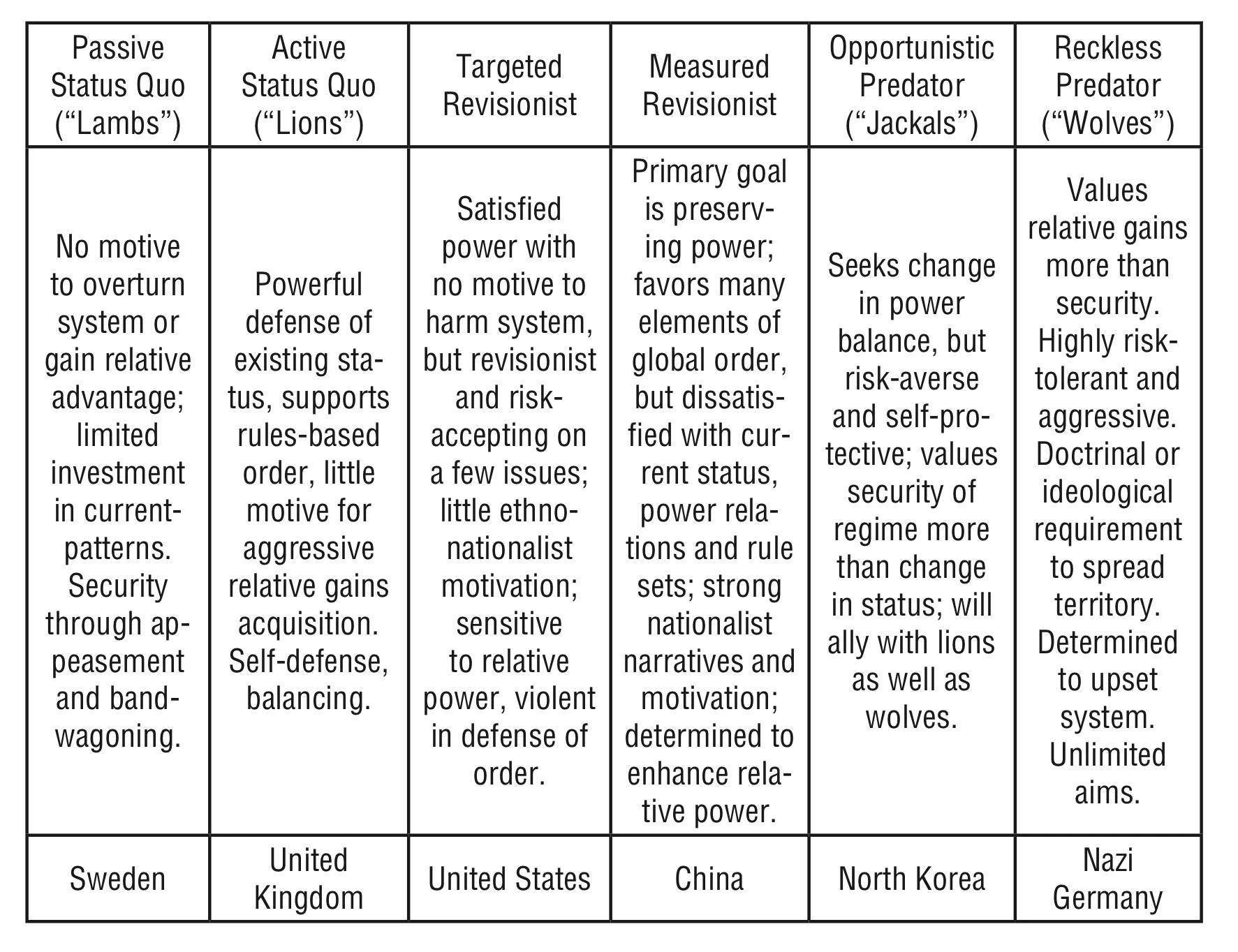
FullSizeRender.jpg

After 15 years finally figured out Infrastructure Patterns

About 15 years ago while I was still at Micosoft I switched over to a group that worked on the IT Pro challenges, the world of a system administrators running the IT infrastructure. Watching how a group would provide guidance it seemed like software patterns could be applied to IT infrastructure. One of the people I connected in that conversation was Bill Loeffler. Unfortunately, Bill passed away 3 years ago from melanoma and wrote a post about our past.

I wish I could have this conversation with Bill as after 15 years I have finally figured out how to apply patterns to IT infrastructure. The path to get there though led me through data centers as they are critical parts of cloud infrastructure. Then to design and construction of data centers.

And last week I found a paper that does a good job of describing software patterns in a way that can be used for IT Infrastructure.

Te pattern concept lets us think about the world in a new way.Pattern languages can be used to research and communicate design expertise to make it more widely effective. Te idea of a simple, creative process opens the field of creativity for everyone. And the ethics of design – with the quality of living systems at its core – supports better design.
Alexander’s thinking seems even powerful enough to question the status quo of the existing world and to show a way to correct its deficiencies. Tisclearly points to a world after capitalism. A better world needs a new top priority, and must put profit into a subordinate position. The new top priority is the quality of living systems, the quality without a name
in English, Lebendigkeit in German. All people can understand this quality and use their in born feeling for this quality. Alexander suggests making design knowledge available to all people, so that all people can better act as designers of their personal spheres and as co-designers of our shared world.
May this rethinking of the world succeed
— https://www.academia.edu/23521230/Christopher_Alexander_-_An_Introduction_Draft_for_Feedback_and_Discussion_?auto=download

Patterns are a powerful concept. IT infrastructure has patterns that can be combined with software patterns to create new systems.


Media needs to learn how to calculate tax breaks for data centers

I saw this article on Salon about technology companies getting subsidies for building things like data centers in a city. Apple's data center in Ohio is the example in this article.

For agreeing to build a data center in Waukee, Apple received $213 million in tax breaks for 50 permanent jobs — that’s $4.3 million per worker — and even bigger subsidies are on offer for factories. Tesla received $1.25 billion in assistance to build its gigafactory in Nevada, and Foxconn is poised to get a $3 billion incentive for its proposed Wisconsin factory, despite a legislative analysis showing the state won’t break even for at least 25 years.

Having worked with tax teams who negotiate details like property tax let's review what the media doesn't cover. What is property tax?

The property tax is the main tax supporting local education, police/fire protection, local governments, some free medical services and most of other local infrastructure.
— https://en.wikipedia.org/wiki/Property_tax#United_States

Let's do a simple number 1% property tax on a small data center. :) $250 million. So the annual tax bill is $2.5 mil. One of the main use of the property tax is for education. With 50 employees that is $50,000 per employee. What is out of whack is the assumption that the cost of the property equates to a tax burden. This leads to a discussion of what is reasonable amount of property tax to support 50 employees.

Let's jump to sales tax. It is easy for a $250 million data center spend $250 million on IT equipment that it replaces every 3 years. Let's use a low sales tax rate of 5% for $12.5 million sales tax. Almost every capital equipment intensive industry gets exemptions on sales tax to equip a facility. Yet, IT equipment all too often is not considered capital equipment to be exempt from sales tax and special legislation is required.

If there was no data center in an area there would be no property and sales tax on a data center. With a data center with 50 people and $250million of IT equipment in $250 million building what are fair taxes?  A $213 million tax break enrages people, but without these breaks there is no way a data center would be built. What few cover is the incremental taxes that do come in from a data center. Property taxes will be paid and sales taxes on other items.

This is why the government's are willing to change tax structures for data centers in their location. To be fair based on the impact the data center with its few employees.

Amazon iterates its physical bookstore with 10th opening in San Jose and Bellevue

When I joined Microsoft there were many millionaires who had the idea of retiring and opening a bookstore with coffee shop. Their names were not Jeff Bezos or Howard Schultz. Luckily I don't know of anyone who followed through on their dream which would have turned into a nightmare competing against Amazon and Starbucks.

Amazon is reinventing retail and on Aug 24th it opened its 10th stores in San Jose and Bellevue. I have been to Amazon bookstore in University Village (Seattle) and I want to go to the Bellevue store in Bellevue Square.  Next week I should have time to go to the San Jose store. Why go to the physical store? Because Amazon is using data to reinvent retail and I curious to see the spaces.

San Francisco Chronicle covered the San Jose store as an irritant to the local independent book sellers.

“I think it’s ironic — Amazon has been so predatory to brick-and-mortars in general,” said Calvin Crosby, executive director of the Northern California Independent Booksellers Association.

“There’s always a new way for Amazon to take a percentage of our sales,” he said.

Crosby has visited Amazon Books’ New York City location, and said he wasn’t impressed, calling it “a kiosk” and “showroom-y.” He said the growth of Amazon bookstores detracts from local businesses, which offer a deeper experience for customers. “You get much more than a book put in your hand when you go to an independent bookstore.”

Typically, a small bookstore would stock 8,000 to 10,000 titles, substantially more than San Jose’s Amazon Books, he said.

The South Bay has a rich history of independent bookstores, Crosby said. Books Inc., which has locations around the Bay Area, traces its history back to the California Gold Rush. Family bookstore Hicklebee’s has been in San Jose since 1979, and Kepler’s Books in Menlo Park opened more than 60 years ago.
— http://www.sfchronicle.com/business/article/San-Jose-s-new-Amazon-bookstore-raises-ire-of-11956622.php

I like Geekwire's article which focuses on how the bookstore concept has evolved.

“We got a lot of feedback from customers saying they were having a hard time, both because the aisles weren’t as wide, but also because it was just harder to see down to the bottom shelf,” Garavaglia said.

The Bellevue store is smaller than the University Village one — 4,600 square feet versus 5,500 — but the more spacious aisles and a bigger area dedicated to demos of Amazon devices like the Echo and Echo Show, make the space feel bigger than it is.

Garavaglia calls the stores a “mecca of discovery” that take advantage of 20-plus years of selling books online. It uses data from customer purchases, as well nearly endless reviews, to decide which books to put in stores. What’s changed is the variety of ways Amazon has instituted to display books.

For example, in Bellevue, a technology hub all its own, the store has an endcap related to coding books. Customers at other stores have told Amazon they want more subsets of larger categories, hence the presence of a “historical fiction” section at the new store.

“We keep trying different features that allow us to bring that data to facilitate discovery for our customers,” Garavaglia said.
— https://www.geekwire.com/2017/amazons-new-seattle-area-bookstore-shows-first-major-retail-concept-evolved/

Equinix expands its use of Fuel Cells in CA and NY

Equinix has a press release on its use of Bloom Energy fuel cells.

12 Additional North American Data Centers to be Powered with State of the Art Fuel Cell Technology

REDWOOD CITY, Calif., Aug. 16, 2017 /PRNewswire/ — Equinix, Inc. (Nasdaq: EQIX), the global interconnection and data center company, today announced the signing of a 15-year Power Purchase Agreement (PPA) between a subsidiary of Southern Company and Equinix in which Bloom Energy fuel cells will be installed at 12 International Business ExchangeTM (IBX®) data centers in the U.S. The project will provide a total capacity of more than 37 megawatts of power with a phased installation that begins in late 2017 through 2019.

What is a key fact is where the Fuel Cells are going. California and New York.  Where the price of power is high and the rebate incentives work out.  If you are looking a Fuel Cells CA and NY are some of the areas where the numbers work out.

The new project will install fuel cells at seven Equinix IBX data centers in the Silicon Valley (SV1, SV2, SV3, SV4, SV5, SV6, SV10), three in the New York area (NY2, NY4, NY5) and two in the Los Angeles area (LA3, LA4). It builds on the pilot program at Equinix’s Silicon Valley SV5 IBX data center that began in 2015.