Understanding the office environment when Gary Starkweather inventing the Laser Printer in 1967

There have been lots of compliments on the post written on Gary Starkweather here. I wrote the post a week ago and have reflecting more on what Gary inventing the laser printer in 1967.

With an M.S. in optics from the University of Rochester and after an 18-month stint at Bausch and Lomb, Starkweather went to work for Xerox, intrigued by the imaging technology the company was developing. One of his initial projects was the highspeed facsimile machine. Tasked with the challenge of getting enough light on the paper and getting the output device to create an image, he suggested using lasers, a new technology then. His idea worked.

Then one day in 1967, Starkweather was sitting in his lab looking at these big mainframe facsimile machines when he started thinking, “What if, instead of copying someone else’s original, which is what a facsimile does, we used a computer to generate the original?”

What was the technology of the office in 1967? Here is an article about the 12 vintage office devices from 1967 - Xerox Copier, Dictaphone, steel desks, carbon paper, samsonite briefcase, computer punch cards, hat racks, typewriters, intercoms, fancy lighters, and desk lamps. That is the office environment of 1967. Below is the 813 xerox copier.
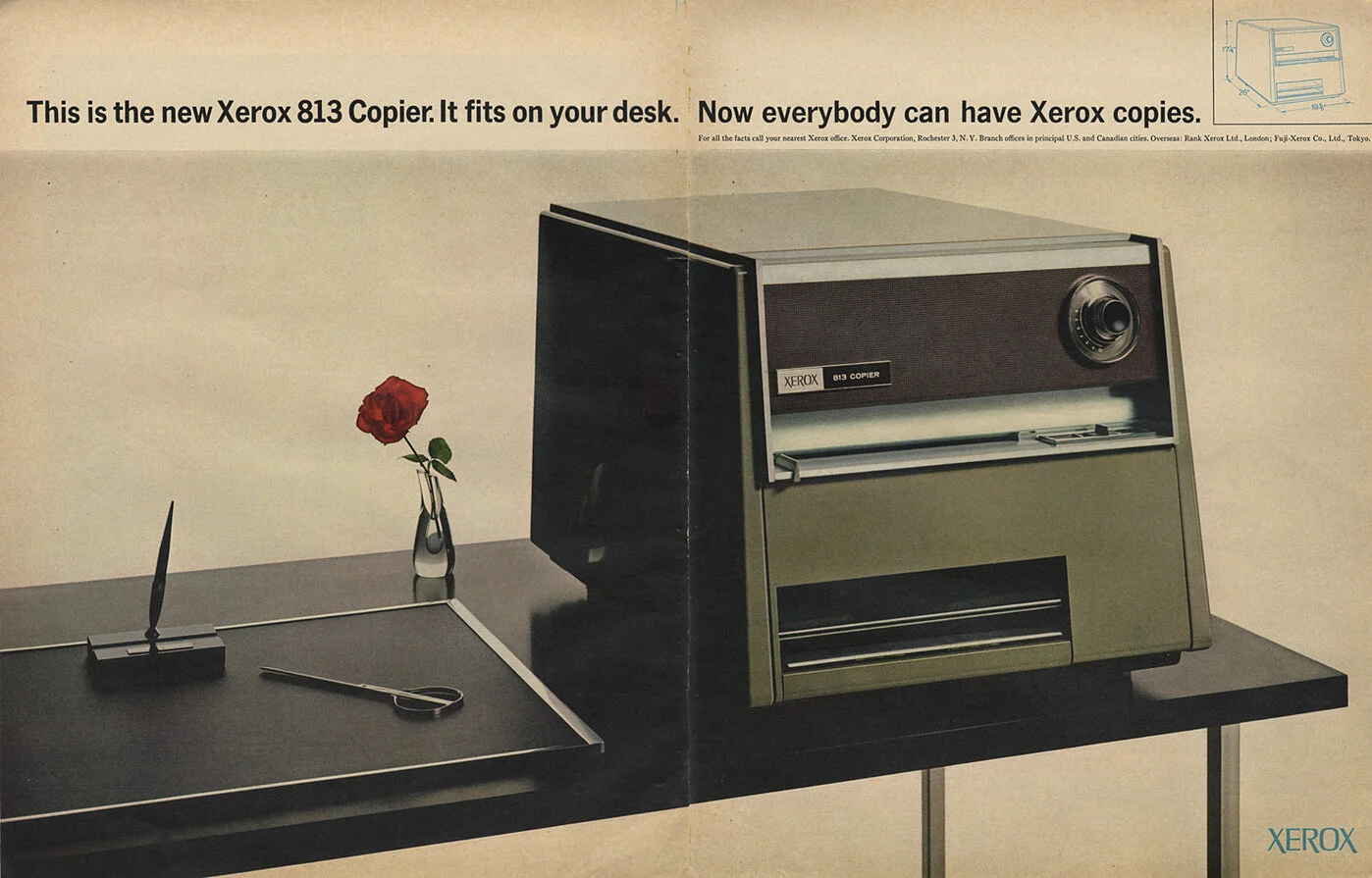
813_ad1.jpg

The dominant office machine was the IBM selectric typewriter.
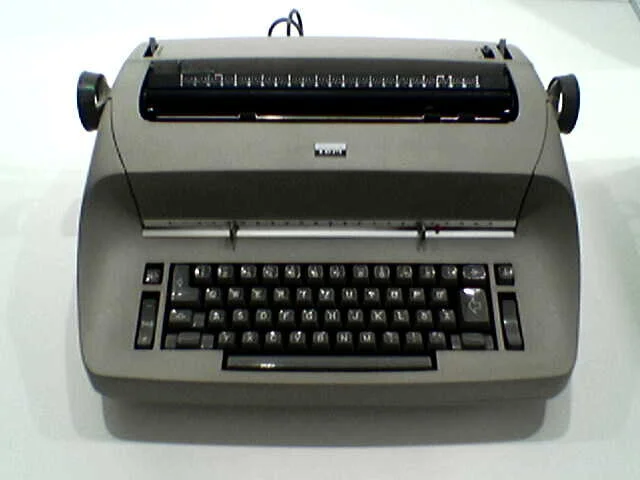
IBM_Selectric.jpg

And there is Gary in his lab thinking of how to solve a copier problem and comes up with this. It is easier to see why there was so much resistance. This laser setup looked like it would not work. Would be expensive too.
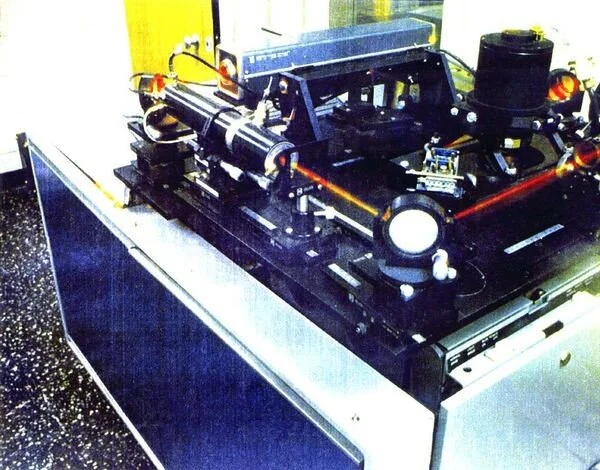
500004700-03-01.jpg

But would Gary could see in the future is where component costs would head to. Below shows the first laser printer mechanism in production that cost $10,000 was eventually replaced by an assembly that cost $40.

Imagine Gary coming up with this invention when the office was dominated by IBM selectric typewriters, computer punch cards, Rolodexes, and Xerox copiers.
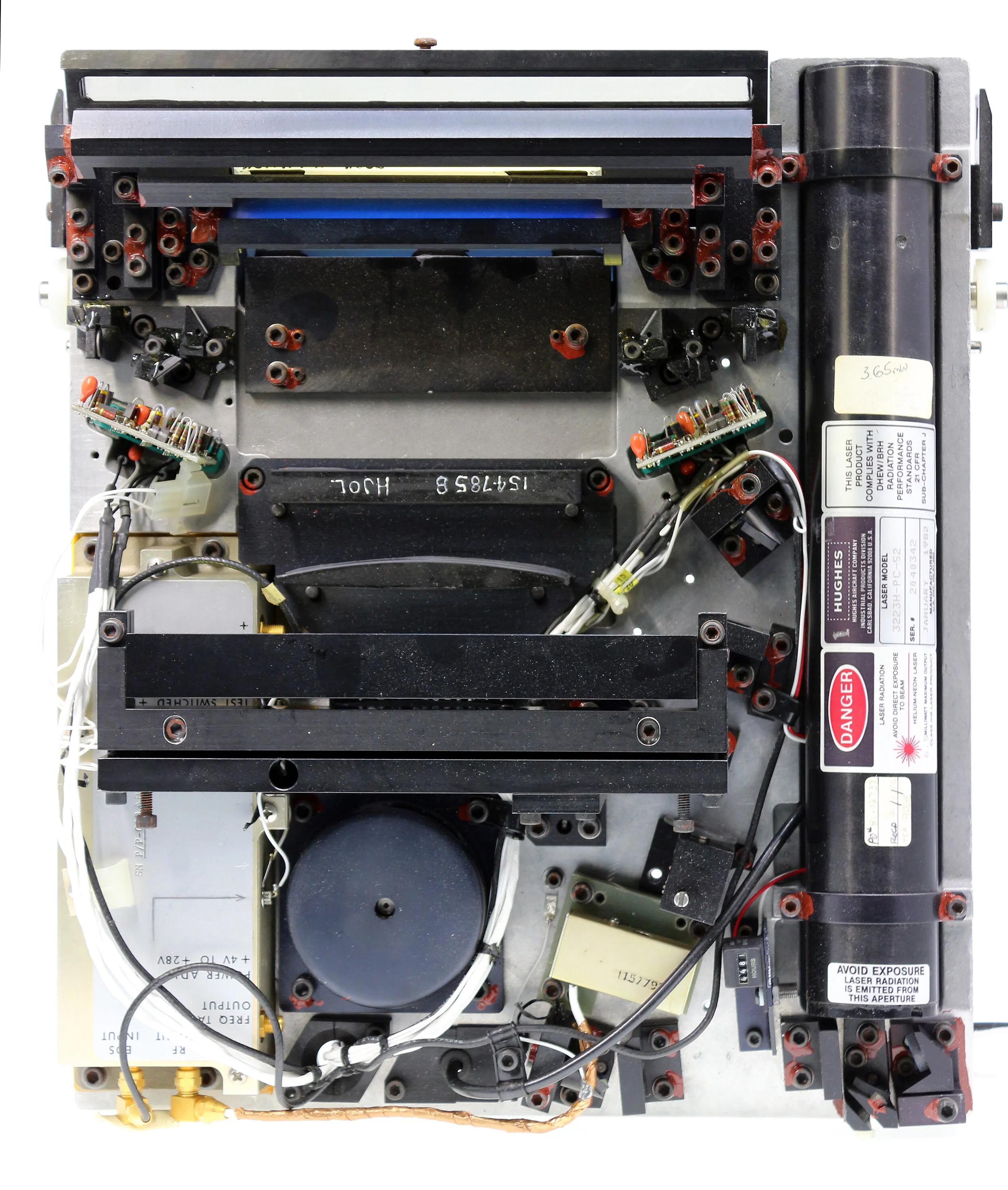
$10,000 laser assembly from first laser printers.

$10,000 laser assembly from first laser printers.

equivalent functionality laser mechanism from Canon that cost $40.
equivalent functionality laser mechanism from Canon that cost $40.

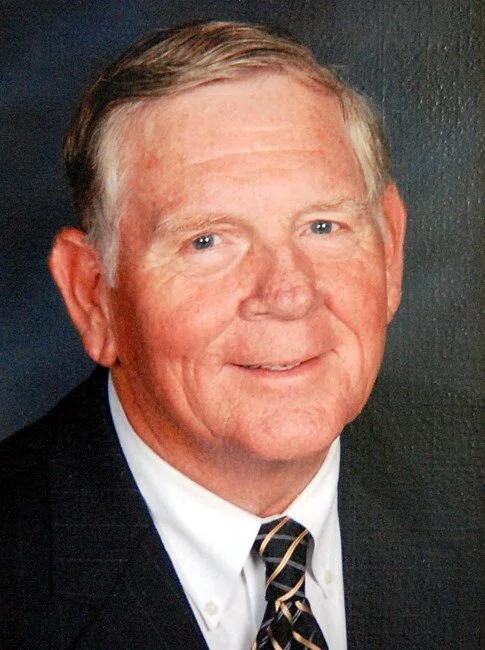
Gary Starkweather passed away Dec 26, 2019 -- inventor, problem solver who persevered, mentor for the next generation

Gary Starkweather passed away on Dec 26, 2019 at the age of 81.

gary-starkweather-sanford-fl-photos1.jpg

Gary invented the laser printer, solving the problem of how to print within seconds anything on your computer screen. Before the laser printer, office printers were limited in output and speed using character or line printers. 50 years after the invention of the laser printer, it is obvious the laser was the right way to solve the quality and speed problem. Gary’s gift of invention was his perseverance to find the right way to solve a design problem, arriving at a solution when explained it was obvious it was the best solution. Going back in time 50 years ago the resistance to commit to the laser printer for high performance office printing was so high Gary’s only option to finish his invention was to move from corporate to a supportive environment at Xerox PARC.

The invention of the laser printer was a catalyst for the imaging software in printers and computers. One startup, Adobe Inc came from PARC’s work, and they ran into the same corporate resistance. A Xerox executive said “If you think it’s so hot, go form your own company.”  Steve Jobs recognized the value of Adobe and failed to buy the company in 1982 for $5 million. In 2020, Adobe Inc has a market capitalization twenty (20) times bigger than Xerox. If Xerox had 5% ownership of Adobe it would double the current market cap. How many other opportunities did Xerox miss because brilliant inventors like Gary Starkweather had to leave headquarters or the company to complete their work and persevere?

Gary’s next move after Xerox was to Apple, working in Research and printing groups, but after 10 years Gary was running into the same resistance to invention he had with Xerox executives. In 1997, Gary made one more radical move as he did from Rochester, NY to Palo Alto, CA and joined Microsoft in Redmond, WA. At age 60, Gary finally found a work environment where his skills as a persistent problem solver were valued as he found a home in Microsoft Research. Gary retired 8 years later.  For the next 13 years Gary continued to be a learner and a mentor, sharing his life’s experiences to the next generation of inventors while experiencing their discoveries.

Gary had a gift of discovering the problems worth solving. Being a big problem solver Gary would be thinking 5 or more years in the future. Gary’s favorite Einstein quote he shared, “Imagination is more important than knowledge.” Conversations with Gary would follow this theme as you imagine how things could be in the future and are you solve the problem in the right way that lasts.

The invention of the laser printer was over 50 years ago and for the past 50 years Gary has shared his passion to persevere. “One of the crucial things for people to know – especially young people getting started – is that perseverance is so important.  Failure is important to success – whether it’s a child learning how to walk, roller skate or ice skate, you fall down a lot – that’s the key to learning how to do it.”  

“The laser printer is arguably the greatest invention made in a Xerox research center,” said Steve Hoover, chief technology officer, Xerox Corporation.

Sharing thoughts with his alma mater Michigan State in an interview Gary said, “I’ve had the great good fortune of God’s blessing in allowing me to have more joy and more thrills than I ever thought I could expect to have.”

Gary and I have been friends for 31 years from the days we were both at Apple through time at Microsoft and after. Reflecting on the past 31 years and researching his past writings guided me in a brief tribute to a special man whose words and advice still play in my mind. Gary Starkweather is a man who deserves to be memorialized for future generations of inventors and that is something I plan to do for the rest of my life.

—    Dave Ohara

AWS and Azure have edge 5G solutions for Carriers, Market for Edge DC gets smaller

The hottest topic in data centers for many is the edge. Low latency, high bandwidth 5G traffic. Companies have pitched their solutions to be new structures that can house equipment at the edge in metro areas.

Stacey Higginbotham has a post summarizing the current state of where AWS and Azure are at partnering with Telcos for 5G edge solutions.

The AWS deal looks like this.

With the Verizon-Amazon deal, Amazon is putting its hardware inside metro data centers operated by carriers. The goal is to allow developers building latency-sensitive use cases access to networks closer to their end users. It’s part of a new service AWS calls Wavelength. These data centers will act like an Amazon availability zone, although Amazon’s Raj Pai, vice president of EC2 for AWS, explained that Amazon is calling these “Wavelength Zones.” Developers will simply choose Wavelength Zones in cities where they want to deploy their latency-sensitive services, and Amazon will ensure the Wavelength Zones closest to the user field the traffic.

The Azure deal looks like this.

AT&T’s deal with Microsoft Azure is similar, but AT&T is letting Microsoft put gear inside its radio access network. So far, the Microsoft Azure services will only be available in Dallas. Next year, AT&T plans to add Los Angeles and Atlanta.

And as Stacey mentions there is no reason why the Telcos would not have multiple deals for each cloud.

The idea behind both networks is the same, and I expect we’ll see AT&T sign deals with Amazon, and Verizon sign deals with Microsoft Azure.

The other question is what will Google do?

With Amazon, Microsoft, and Google all having 5G edge solutions with strategic partnerships with Telcos what is the Edge DC opportunity? Can’t each of these companies share its own micro data center solution that is an edge container.

Google was first with a container data center. Then Microsoft and eventually AWS. They have all learned the advantages and disadvantages of deploying and running containers. If they think mini container at the edge is a solution they have the no how and they have the Cloud hardware and software.

Seems really hard to be in the edge DC business as the Telcos dedicate resources to work on the integration of AWS and Cloud infratructure.

Why is it so hard for smart people to listen and learn

I have been researching some new ideas as part of the effort of Makai University. One concept I have is Double Loop Learning. The Wikipedia post describes this as

Double-loop learning entails the modification of goals or decision-making rules in the light of experience. The first loop uses the goals or decision-making rules, the second loop enables their modification, hence "double-loop". Double-loop learning recognises that the way a problem is defined and solved can be a source of the problem.[1] This type of learning can be useful in organizational learning since it can drive creativity and innovation, going beyond adapting to change to anticipating or being ahead of change.[2]

But this loses most of you. What I like better is the 1991 Harvard Business Review paper that introduces the double loop learning concept where the author discusses “Teaching Smart People How to Learn.”

First, most people de􏰜ne learning too narrowly as mere ‘‘problem solving,’’ so they focus on identifying and correcting errors in the external environment. Solving problems is important. But if learning is to persist, managers and employees must also look inward. They need to re􏰝ect critically on their own behavior, identify the ways they often inad- vertently contribute to the organization’s problems, and then change how they act. In particular, they must learn how the very way they go about de􏰜 ning and solving problems can be a source of problems in its own right.

I have coined the terms ‘‘single loop’’ and ‘‘double loop’’ learning to capture this crucial distinction. To give a simple analogy: a thermostat that automatically turns on the heat whenever the temperature in a room drops below 68 degrees is a good example of single-loop learning. A thermostat that could ask, ‘‘Why am I set at 68 degrees?’’ and then explore whether or not some other temperature might more economically achieve the goal of heating the room would be engaging in double-loop learning.

One

Professionals embody the learning dilemma: they are enthusiastic about continuous improvement—and often the biggest obstacle to its success.

This paper is over 28 years old, but it still applies well to challenges of why it is so hard for smart people to listen and learn when they are in their professional life.

The weakest link in 5G deployments - Cloud expertise and running fiber to all the antennas

Saying 5G is hyped seems like an understatement. You read and listen companies and they say how great it will be. But here are a few weaknesses that will slow down the deployments.

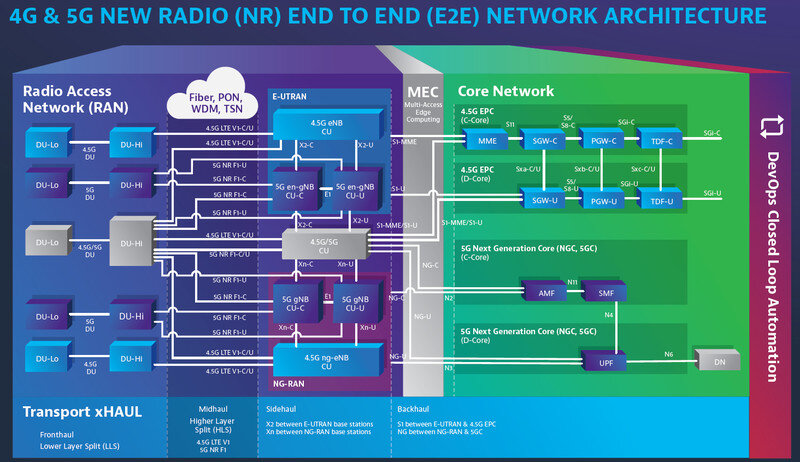
Below is a diagram from https://www.viavisolutions.com/en-us/5g-architecture.

When you get to the physical environment it is a cloud solution. OK makes sense to support the virtualization that permeates many parts of the system. Here is a simple test. How many of the top cloud experts at AWS, Microsoft Azure, and Google Cloud Platform would make the career move to work at a Telco to work on the Cloud environment? Pay enough money and you get a few. Now how many field technicians who deploy and run cloud infrastructure at those same companies want to quit and join a Telco? Are they paid top dollar. Nope. How many of the Telco people who have decades of experience running legacy LTE systems want to throw most of what they know out and learn a new Cloud infrastructure? This number is probably less than the number of people at the Cloud companies who want to move to a Telco.

Getting people to work on Cloud Infrastructure is really really hard.

What could be harder or at least just as hard is running all optical fiber to all the antennas for 5G. It is hard enough to get rights to put LTE antennas up. The number of antennas for 5G is a significant increase. The cost and time to get the easements to run optical fiber is significant. Even the Telcos creating showcase 5G solutions for stadiums do not provide complete coverage of high speed mmWave radios.

5G is a nice hype message. Everyone wants lower latency and higher speed. But the cloud expertise and running fiber are significant obstacles to overcome.

IMG_0014.jpeg