Washington Post completes the 3rd news obituary for Gary Starkweather

On the afternoon of Dec 26th I heard from Gary Starkweather’s wife Joyce that Gary had left us. She asked if I could share the news with Microsoft friends as I worked at the company when Gary was there and I was the one who got him to leave Apple for Microsoft. Given the holidays I knew that most would not be reading e-mail. After a few days I reached out through LinkedIn to a few in Microsoft who were at the company when Gary joined in 1997.

There was one post on LinkedIn my Michael Shamiyeh on Gary’s passing away. Otherwise there was no news. On Jan 2nd I started thinking about how to write about Gary’s life, and that is when I realized I had known Gary for 31 years. Searching for what to write I went back through what has been written on Gary. The Dealer’s of Lightning book on Xerox PARC has a whole chapter (#9) on Gary called “The Refuge.” Talking to Joyce Starkweather was helpful to review Gary’s life and it was nice to hear how she is doing and his family. Joyce gave me background on Gary’s discussion with Michael Shamiyeh and she pointed out how much time Gary had worked with Mike Sinclair. I told Joyce I would reach out to Michael and Mike and both have been helpful to capture Gary’s ideas he shared.

Gary’s service was going to be on Jan 8 and there was still no other news on Gary’s passing in any news sites. So I posted my tribute on this website on Jan 6 which was out there for a while with a few hundred visits and then I posted my tribute on news.ycombinator site and within days there were over 5,000 views. Which is nice but not enough.

Thanks to Michael Shamiyeh’s efforts to get the news out the WSJ and NYTimes were interested in writing obituaries and I was able to chat with both the writers to review Gary’s life and provide a plain English explanation of how a laser printer works. Both writers did an excellent job of summarizing Gary’s life and contribution.

And yesterday, Jan 16th the Washington Post put their obituary up on the web.

Gary Starkweather, inventor of the laser printer, dies at 81

By Matt Schudel Jan. 16, 2020 at 3:40 p.m. PST

Gary Starkweather, who defied his corporate boss to invent the laser printer, a revolutionary development that made it possible to print images and text directly from computer terminals in homes and offices, died Dec. 26 at a hospital in Orlando. He was 81.

Three weeks ago Gary left this earth and now there are memorials of Gary on the NYTimes, WSJ, and Washington Post. Oh and my blog post and Michael’s LInkedIn post.

But this is just the beginning of memorializing Gary’s work as Joyce has boxes of Gary’s work including his original log books from inventing the laser printer. People would always ask Gary to tell the story of inventing of the laser printer.
NYTimes posts on Gary Starkweather’s life and the invention of the laser printer

Cade Metz of the NYTimes posts a nice summary of Gary’s life and the invention of the laser printer.

The closing has a nice closing quote by Gary.

“A little work takes you a long way,” he said. “Even as technologists, when we think we are on the edge, we are not on the edge.”

Gary is now memorialized in the WSJ and the NYTimes with well written articles. These posts will soon rise to top Search Results for “Gary Starkweather” and “Inventor of Laser Printer.”

WSJ posts Gary Starkweather obituary, an optical expert who could see a better way of printing

WSJ has a Gary Starkweather obituary here. https://www.wsj.com/articles/gary-starkweather-invented-a-laser-printer-at-xerox-11579024691?mod=searchresults&page=1&pos=1

This article does an excellent job of covering Gary’s life and his work.

This is one more step in memorializing Gary. There is more to come.

Mr. Starkweather recalled in an oral history produced by the Computer History Museum, “I couldn’t get this thing out of my head. I thought, ‘He’s wrong. This is so good that it’s got to work.’

Understanding the office environment when Gary Starkweather inventing the Laser Printer in 1967

There have been lots of compliments on the post written on Gary Starkweather here. I wrote the post a week ago and have reflecting more on what Gary inventing the laser printer in 1967.

With an M.S. in optics from the University of Rochester and after an 18-month stint at Bausch and Lomb, Starkweather went to work for Xerox, intrigued by the imaging technology the company was developing. One of his initial projects was the highspeed facsimile machine. Tasked with the challenge of getting enough light on the paper and getting the output device to create an image, he suggested using lasers, a new technology then. His idea worked.

Then one day in 1967, Starkweather was sitting in his lab looking at these big mainframe facsimile machines when he started thinking, “What if, instead of copying someone else’s original, which is what a facsimile does, we used a computer to generate the original?”

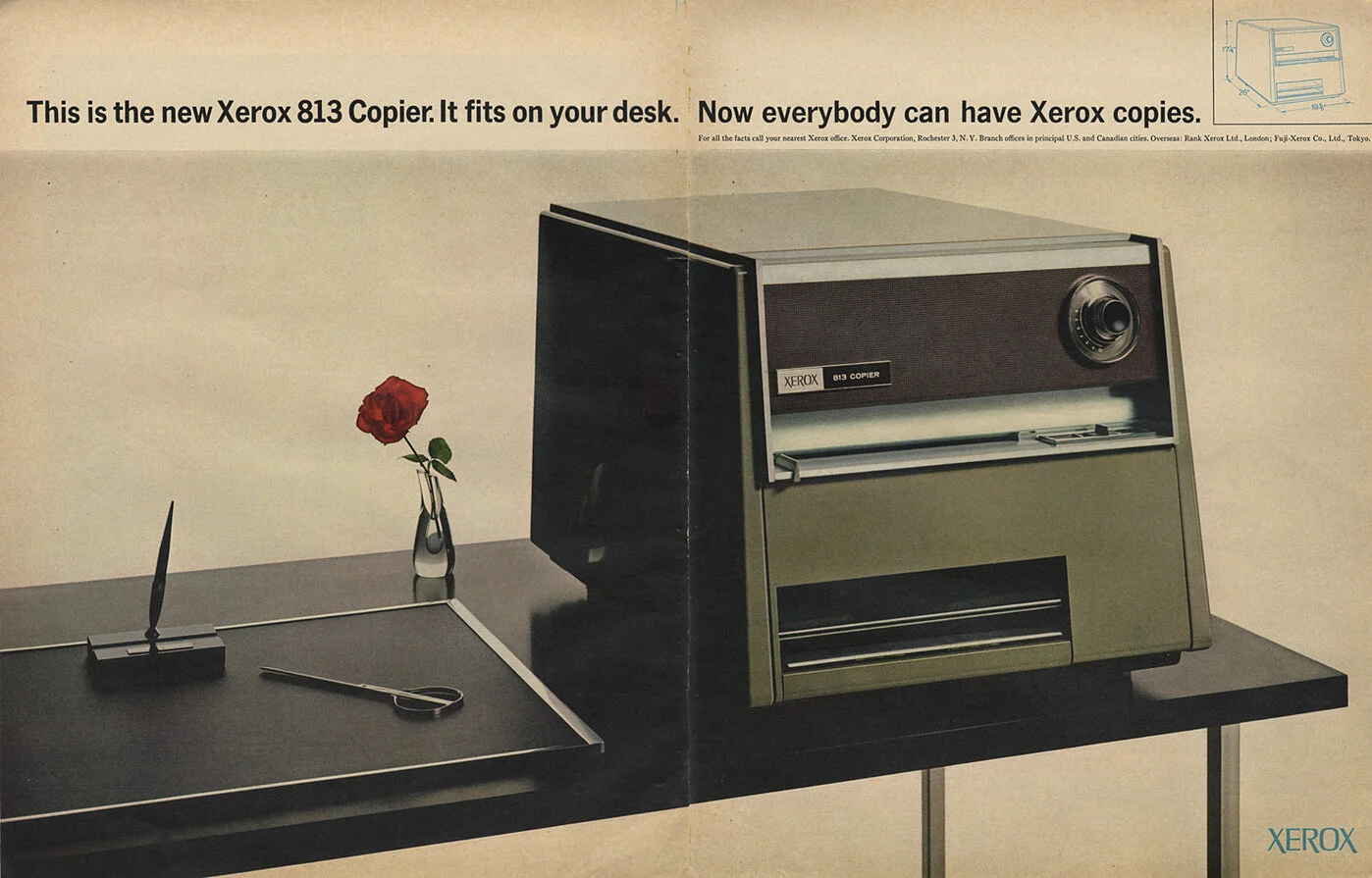
What was the technology of the office in 1967? Here is an article about the 12 vintage office devices from 1967 - Xerox Copier, Dictaphone, steel desks, carbon paper, samsonite briefcase, computer punch cards, hat racks, typewriters, intercoms, fancy lighters, and desk lamps. That is the office environment of 1967. Below is the 813 xerox copier.

813_ad1.jpg

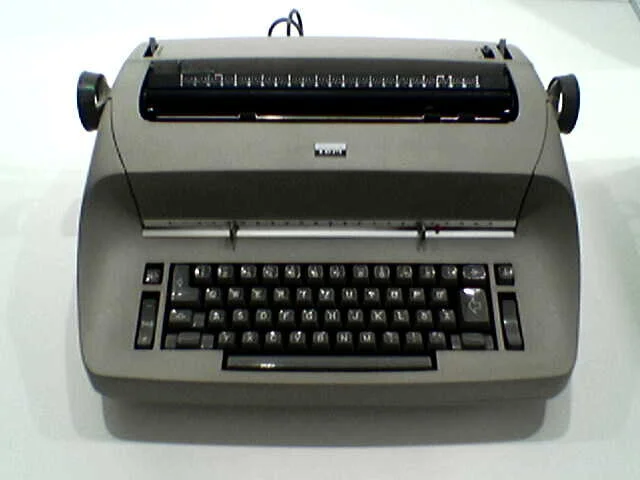
The dominant office machine was the IBM selectric typewriter.

IBM_Selectric.jpg

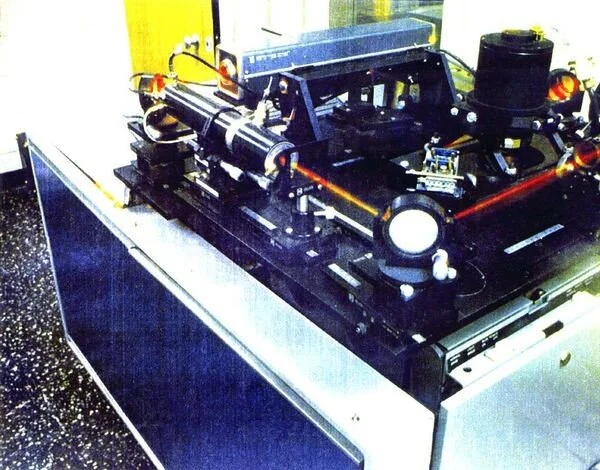
And there is Gary in his lab thinking of how to solve a copier problem and comes up with this. It is easier to see why there was so much resistance. This laser setup looked like it would not work. Would be expensive too.

500004700-03-01.jpg

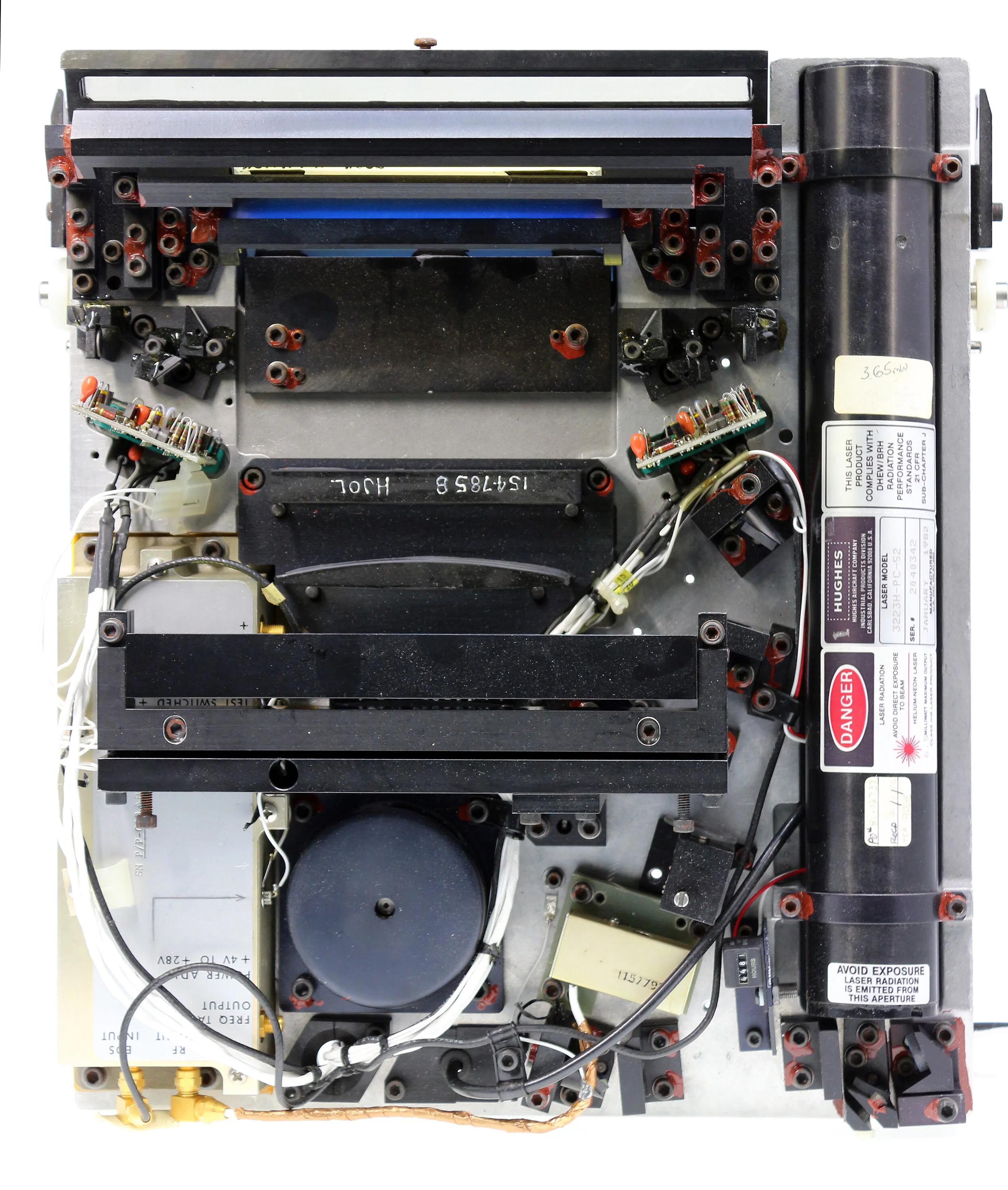
But would Gary could see in the future is where component costs would head to. Below shows the first laser printer mechanism in production that cost $10,000 was eventually replaced by an assembly that cost $40.

Imagine Gary coming up with this invention when the office was dominated by IBM selectric typewriters, computer punch cards, Rolodexes, and Xerox copiers.

$10,000 laser assembly from first laser printers.

$10,000 laser assembly from first laser printers.

equivalent functionality laser mechanism from Canon that cost $40.

equivalent functionality laser mechanism from Canon that cost $40.

Gary Starkweather passed away Dec 26, 2019 -- inventor, problem solver who persevered, mentor for the next generation

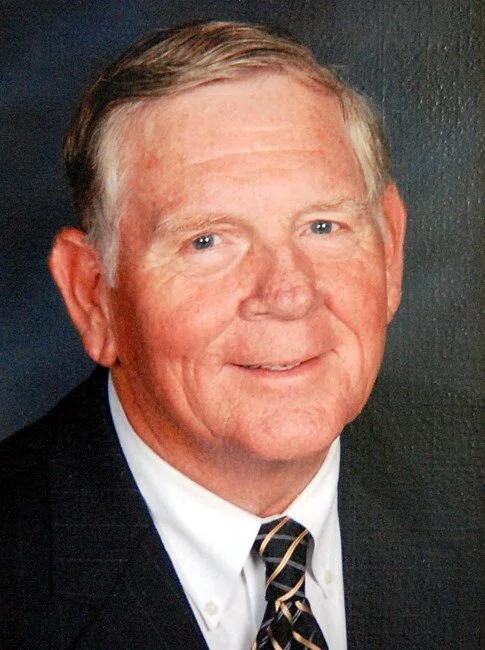
Gary Starkweather passed away on Dec 26, 2019 at the age of 81.

gary-starkweather-sanford-fl-photos1.jpg

Gary invented the laser printer, solving the problem of how to print within seconds anything on your computer screen. Before the laser printer, office printers were limited in output and speed using character or line printers. 50 years after the invention of the laser printer, it is obvious the laser was the right way to solve the quality and speed problem. Gary’s gift of invention was his perseverance to find the right way to solve a design problem, arriving at a solution when explained it was obvious it was the best solution. Going back in time 50 years ago the resistance to commit to the laser printer for high performance office printing was so high Gary’s only option to finish his invention was to move from corporate to a supportive environment at Xerox PARC.

The invention of the laser printer was a catalyst for the imaging software in printers and computers. One startup, Adobe Inc came from PARC’s work, and they ran into the same corporate resistance. A Xerox executive said “If you think it’s so hot, go form your own company.”  Steve Jobs recognized the value of Adobe and failed to buy the company in 1982 for $5 million. In 2020, Adobe Inc has a market capitalization twenty (20) times bigger than Xerox. If Xerox had 5% ownership of Adobe it would double the current market cap. How many other opportunities did Xerox miss because brilliant inventors like Gary Starkweather had to leave headquarters or the company to complete their work and persevere?

Gary’s next move after Xerox was to Apple, working in Research and printing groups, but after 10 years Gary was running into the same resistance to invention he had with Xerox executives. In 1997, Gary made one more radical move as he did from Rochester, NY to Palo Alto, CA and joined Microsoft in Redmond, WA. At age 60, Gary finally found a work environment where his skills as a persistent problem solver were valued as he found a home in Microsoft Research. Gary retired 8 years later.  For the next 13 years Gary continued to be a learner and a mentor, sharing his life’s experiences to the next generation of inventors while experiencing their discoveries.

Gary had a gift of discovering the problems worth solving. Being a big problem solver Gary would be thinking 5 or more years in the future. Gary’s favorite Einstein quote he shared, “Imagination is more important than knowledge.” Conversations with Gary would follow this theme as you imagine how things could be in the future and are you solve the problem in the right way that lasts.

The invention of the laser printer was over 50 years ago and for the past 50 years Gary has shared his passion to persevere. “One of the crucial things for people to know – especially young people getting started – is that perseverance is so important.  Failure is important to success – whether it’s a child learning how to walk, roller skate or ice skate, you fall down a lot – that’s the key to learning how to do it.”  

“The laser printer is arguably the greatest invention made in a Xerox research center,” said Steve Hoover, chief technology officer, Xerox Corporation.

Sharing thoughts with his alma mater Michigan State in an interview Gary said, “I’ve had the great good fortune of God’s blessing in allowing me to have more joy and more thrills than I ever thought I could expect to have.”

Gary and I have been friends for 31 years from the days we were both at Apple through time at Microsoft and after. Reflecting on the past 31 years and researching his past writings guided me in a brief tribute to a special man whose words and advice still play in my mind. Gary Starkweather is a man who deserves to be memorialized for future generations of inventors and that is something I plan to do for the rest of my life.

—    Dave Ohara