Cebit’s Green IT 2009

GreenerComputing posts on Cebit’s Green IT efforts.

Green IT Takes Center Stage at CeBIT

By GreenerComputing Staff
Published March 3, 2009

HANOVER, DE -- Last year's CeBIT conference in Hanover had a noticeably green hue: Microsoft's CEO Steve Ballmer pushed energy efficiency in a keynote speech, the Climate Savers Computing Initiative launched a European-focused green IT program, Greenpeace released an environmentally oriented ranking of OEMs at the show, to name just a few events.

This year's gathering will likely leave all those announcements in the dust.

When the nearly 500,000 expected attendees arrive at the show this week, they'll find a greatly expanded area for CeBIT's Green IT World showcase arena.

The Green IT World will showcase five areas key to improving IT's environmental performance: data center and chip technologies, IT innovations, communications and mobile applications, and green IT strategies and consulting. A fifth area, centered on telepresence and videoconferencing, highlights IT's potential for reducing environmental costs of other areas of business operations.

About 20 organizations will be presenting and exhibiting in the green IT section of CeBit, including Fujitsu Siemens, Hitachi, IBM, Nokia Siemens, Sun Microsystems, Toshiba, and others.

Here is Cebit’s specific on Green IT.

Datacenter & Chip Technologies
The consistently growing demand by professional and private users for IT processing power results in a correlating increase in energy use. Only in the last few years have center operators realized the large potential for optimization - both through modern server architecture and cooling technologies, and also through virtualization and consolidation. In the focus area data center & chip technologies exhibitors have the ideal forum in which to present their solutions for planning, modernization and implementation of energy efficient data centers. Within this context, future appliances, potentials and visions of innovative chip technologies shall also be demonstrated.

Read more

Wasting Watts – Data Center Dynamics NY event

DataCenterKnowledge blogged the DCD NY event.

DataCenterDynamics NY Coming March 4

February 24th, 2009 : Rich Miller

DataCenterDynamics will hold its 7th annual New York conference and expo on Wednesday, March 4th at the Hilton Avenue of the Americas. Last year’s event drew more than 900 data center professionals involved in the design, construction and operation of mission critical IT facilities. The conference will include updates from the U.S. Environmental Protection Agency and Department of Energy, ASHRAE’s TC9.9 and The Green Grid focusing on new regulations, codes, standards, metrics and accreditation. There will also be case studies and technical overviews on data center design and construction techniques, including adaptive thermal management, modular building platforms, and new power architectures.

and here information about the event.

New York

Wednesday, 4th March
Hilton Av. of the Americas

Wasting Watts?
Find out how to unleash your stranded capacity, do even more with less and balance data center productivity with efficiency at the 7th Annual New York DatacenterDynamics Conference and Expo

As a focal point for end-users, consultants and solution providers, the DatacenterDynamics Conference & Expo is New York's largest gathering of professionals involved in the design, build and operational management of 24/7 mission critical IT facilities. It is an unrivalled education & networking opportunity for the industry, where the regular audience is characterized by senior representatives of the financial sector, trading firms, service enterprises and other Fortune 500 companies operating in the New York Metropolitan area.

I’ll be there as well.

Read more

HyperPUE, Maximizing Data Center Efficiency

I ran into Google’s Christopher Malone at Data Center Dynamics London.  I was surprised to see Christopher come all the way from Mountain View, CA to London.  I just ran across a term that may describe Christopher’s behavior.  New Oxford American Dictionary’s word of the year is HyperMiling.

Hypermiling is a term used in North America that refers to a set of techniques used to maximize fuel economy. Those who practice the techniques are referred to as "hypermilers." The term was originally coined by Wayne Gerdes, who is considered by the media to be one of the top hypermilers in the world,[1] and is known to hold the record for gas mileage in some common vehicles, including 30 miles per gallon (mpg) in an Acura MDX and 59 mpg in a Honda Accord.[2] In 2008, the word hypermiling was selected as the word of the year by New Oxford American Dictionary.[3]

Hypermiling, which can be practiced in any vehicle regardless of its fuel economy, has gained in popularity as a result of the rise in gasoline prices during the 2000s.[4] While common techniques can be carried out by average motorists making minor changes in their driving habits, some expert hypermilers use more advanced techniques, some of which may be illegal in some jurisdictions.[5]

With all the hype from PUE, HyperPUEing seems like a new term that could describe those set of techniques used to maximize data center efficiency.

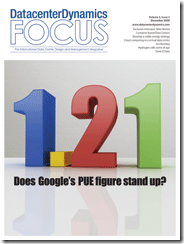
DataCenterDynamics even chose to make Google’s PUE 1.21 its cover page to launch its new data center magazine.

image

A few people I can think of in the HyperPUE club are Microsoft’s Mike Manos & Christian Belady, Lee Technologies’s Lee Kirby, Google’s Christopher Malone, Skanska’s Robert Bellatoni, and OSIsoft’s Martin Otterson,

Are you a HyperPUEing?

Stephen Worn – add this to the list of sessions for a future DataCenterDynamics.

Read more

Side Benefit of Monitoring Obsession, Guaranteed to Pass Auto Emissions Test

I just got back from Data Centre Dynamics London, and I have tons of posts and observations from the conference I need to write up.  One of the things I figured out watching OSIsoft’s Martin Otterson and Iberdola’s Miguel Chavero present on

Command & Control
Connecting the Dots in Data Centre Automation (DCA): Controlling the building and integrating IT systems
Martin Otterson - OSIsoft
Miguel Chavero – Iberdrola

is few people are driven almost to an obsession to monitor systems. As all of you know monitoring a data center is no easy task.  Even though the group of people came to the session to hear Martin and Miguel discuss data center monitoring it was amazing how few people had monitoring in place.  I think I am hanging out with too many people who take for granted using PUE as one of their tools to measure data center efficiency.

One guy who stuck around to ask questions was from http://www.syska.com/, but otherwise it seemed like users want the monitoring, but it is too hard to add instrumentation/monitoring after the fact.  Could you imagine how hard it would be to add the equivalent of the Prius hybrid monitoring system after the fact.  Isn’t it more cost effective to have monitoring built in as part of construction?  Of course yes.  This is what Google and Microsoft do, but why don’t others make monitoring part of their RFP?

I had previously mentioned the auto monitoring device scan gauge in a post, and decided to buy one as neither of my cars have a MPG gauge.  After 3 weeks of using the device it gave me better information about my cars that typically only the mechanics get to.

I needed to take my car into local Washington State Emissions test site for an emissions test.  I was standing in the safety area waiting, and the technician was taking a long time, then I realized he was having a hard time finding the OBD connector.

On-Board Diagnostics, or OBD, in an automotive context, is a generic term referring to a vehicle's self-diagnostic and reporting capability. OBD systems give the vehicle owner or a repair technician access to state of health information for various vehicle sub-systems. The amount of diagnostic information available via OBD has varied widely since the introduction in the early 1980s of on-board vehicle computers, which made OBD possible. Early instances of OBD would simply illuminate a malfunction indicator light, or MIL, if a problem was detected—but would not provide any information as to the nature of the problem. Modern OBD implementations use a standardized fast digital communications port to provide realtime data in addition to a standardized series of diagnostic trouble codes, or DTCs, which allow one to rapidly identify and remedy malfunctions within the vehicle.

I told him he needed to unplug the scan gauge and then he could plug in his test equipment.  He asked what it was and what it did.  He said, “it’s too bad more people don’t have devices like this.” He’s seen people drive for 18 months with engine codes blinking and they don’t get their car fixed as they don’t know what the blinking light means, and their car will have a higher probability of failing the emissions test. At the end of the test, he continues “you pass of course, as you know everything is working.”

I used a similar device to figure out the evaporative fuel system had caused the check engine light to go on in my wife’s car.  Talked to our car mechanic, and he suggested trying to tighten the fuel cap.  Ridiculously simple to fix with the right tool.

Just like a car has built in instrumentation, data centers need to have built in instrumentation.  Slowly more and more people are starting to get this, and the good thing is some of my friends are getting permissions from customers to tell their stories.

Read more

My Home Office is Working Better than I thought, Driving only 20 miles a week

I bought a ScanGauge II device to get some data from my car. I decided to top off the tank to calibrate the device, and saw I only drove 120 miles in 5 weeks. 20 miles a week. Less than 3/4 gallons of gas a week.

This is my data to prove my home office is working to keep me at home working.

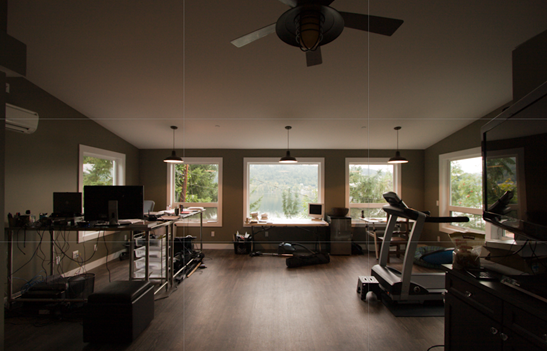
Here is a picture of my home office.

I have 500 sq ft of space and  a treadmill to exercise given I am not walking much. image


A view out the window.

image

And we don’t go any where far in the summer. Here are pictures from our Summer Soiree Party.

image

image

And this space works well for executive off sites as well.

image

Read more