Apple will need to stop designing state-of-the-art hardware and start designing insanely great data centers, says David Siegel

David Siegel has a book called Pull, The Power of the Semantic Web to transform business.

The Problem

On the Web today, we see millions of web sites, each of which presents web pages and documents. These are simply electronic versions of the old paper-based ways of doing things: writing checks, filing taxes, looking at menus, catalog pages, magazines, etc. When you search for something on Google, you get a list of web sites that may or may not have what you’re looking for, based on keywords found in the text. You have to look at each one and decide whether it answers your question. Google doesn’t know where the information or answers are; it just knows which pages have which keywords and who links to them.

Our information infrastructure isn’t scaling up very well at all. The average person now sees over 1,000,000 words and consumes 34 gigabytes of information every day. Mike Bergman estimates white-collar workers spend 25% of their time looking for the documents and information they need to do their work. One billion people are online now, and 4 billion have mobile phones. Exhaustion of IPv4 addresses (limit is 4 billion) is predicted for sometime in 2011. By 2030, there will be a minimum of 50 billion devices connected via internet and phone networks. Our information infrastructure is built to haul electronic versions of 19th century documents for humans to read, and it’s keeping us from using information effectively.

The solution to our information problem is the semantic web and the pull paradigm.

One section that jumped out is "The Computerless Computer Company" where he makes the statement.

Apple will need to stop designing state-of-the-art hardware and start designing insanely great data centers.

David is a big Apple supporter working on the Tekton typeface and has a blog post on why he should lead Apple.

The irony of I just realized is David's vision actually describes Google's plans.

The huge strength Google has vs. Apple is its advertising system gives them a huge advantage of the "Pull" from consumers.  Apple is a push company.

Google has insanely great data centers.

Read more

Alternative to Google's hiring Renewable Energy Systems Modeling Engineer

I am spending more time researching the Low Carbon Data Center ideas and I ran across Google's job posting on Renewable Energy System Modeling Engineer.

The role: Renewable Energy System Modeling Engineer - Mountain View

RE<'C will require development of new utility-scale energy production systems. But design iteration times for large-scale physical systems are notoriously slow and expensive. You will use your expertise in computer simulation and modeling to accelerate the design iteration time for renewable energy systems. You will build software tools and models of optical, mechanical, electrical, and financial systems to allow the team to rapidly answer questions and explore the design-space of utility-scale energy systems. You will draw from your broad systems knowledge and your deep expertise in software-based simulation. You will choose the right modeling environment for each problem-from simple spreadsheets to time-based simulators to custom software models you create in high-level languages. The models you create will be important software projects unto themselves. You will follow Google's world-class software development methodologies as you create, test, and maintain these models. You will build rigorous testing frameworks to verify that your models produce correct results. You will collaborate with other engineers to frame the modeling problem and interpret the results.

It's great Google see the need for this person, but I was curious if anyone else has done Renewable Energy System Modeling.  Guess what there is, since 1993 in fact.  NREL has this page on Homer.

New Distribution Process for NREL's HOMER Model

Note! HOMER is now distributed and supported by HOMER Energy (www.homerenergy.com)

To meet the renewable energy industry’s system analysis and optimization needs , NREL started developing HOMER in 1993. Since then it has been downloaded free of charge by more than 30,000 individuals, corporations, NGOs, government agencies, and universities worldwide.

HOMER is a computer model that simplifies the task of evaluating design options for both off-grid and grid-connected power systems for remote, stand-alone, and distributed generation (DG) applications. HOMER's optimization and sensitivity analysis algorithms allow the user to evaluate the economic and technical feasibility of a large number of technology options and to account for uncertainty in technology costs, energy resource availability, and other variables. HOMER models both conventional and renewable energy technologies:

image

I signed up for the Homer Energy site which has 510 users, non apparently Google engineers.

image

I hope to make contact with the Homer Energy team as we are trying to have a session at DataCenterDynamics Seattle on a Low Carbon Data Center.

Maybe Google doesn't have to hire the Renewable Engineering System Modeling engineer after all.  :-)

Read more

Google Goes Nuclear to increase its defense capabilities, April Fools

Today is Mar 31, but April 1, April Fool's is right around the corner.

Techcrunch has a post on Google's new nuclear acquisition.

Exclusive: Google To Go Nuclear

by Michael Arrington on Mar 31, 2010

Google has acquired a company that has created a new process for highly efficient isotope separation, we’ve confirmed from multiple sources. The primary use of this technology, say experts we’ve spoken with, is uranium enrichment.

Enriched uranium is a necessary ingredient in the creation of nuclear energy, and one source we’ve spoken with at Google says that this is part of the Google Green Initiative. The company will use the new technology to enable it to design and possibly build small, mobile and highly efficient nuclear power generators. “Google has already begun building an enrichment plant,” says a high ranking IAEA source.

The story continues implying that Google is developing capability for nuclear weapons.

And more chillingly: “It would be trivial for anyone with this technology to build a nuclear weapon.”

Google, which has been shaken by its inability to counter Chinese censorship and hacking efforts, may be engaging in enrichment research as part of a new effort to simply protect itself from outside threats.

Read more

Google's Data Center System Engineering approach

There was recent news on system engineers being the best job in America.

1. Systems Engineer

Systems Engineer

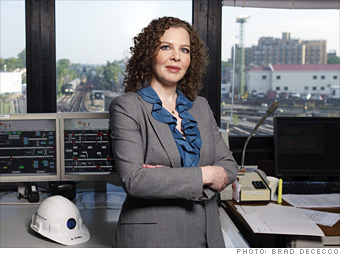
Anne O'Neil, a chief systems engineer at the N.Y.C. Transit Authority, is one of five female senior managers in a department of 1,500.

Top 50 rank: 1
Sector: Information Technology

What they do: They're the "big think" managers on large, complex projects, from major transportation networks to military defense programs. They figure out the technical specifications required and coordinate the efforts of lower-level engineers working on specific aspects of the project.

Why it's great: Demand is soaring for systems engineers, as what was once a niche job in the aerospace and defense industries becomes commonplace among a diverse and expanding universe of employers, from medical device makers to corporations like Xerox and BMW.

CNet News wrote as well.

Systems engineer deemed best job in America

by Chris Matyszczyk

If you're a systems engineer who wonders whether you've chosen the right profession, I bring you good news.

But, what got me write a blog entry was Google's job post for Data Center system engineer.

The role: Data Center Control Systems Engineer

Data Center Control Systems Engineers possess demonstrated design, operation, and construction experience in the areas of complex and mission critical facilities. You will have extensive knowledge of large-scale facilities controls and monitoring systems for all infrastructural systems.

As the Data Center Control Systems Engineer, you have excellent communication skills and are able to work in teams and matrix organizations. You are expected to develop and maintain strong functional relationships across multidisciplinary teams to anticipate future controls and monitoring design requirements. You will be continuously involved in the improvement of plant performance based on historical data collected and collaborate on retrofit projects to improve plant efficiency based on business case justifications.

and on top of that there is a Data Center Strategic Negotiator job which fits as a business/technical person to work with the system engineer.

The role: Data Center Strategic Negotiator

As a Data Center Strategic Negotiator,you will lead a team to collect and analyze large sets of location data, execute extensive on-the-ground due diligence, and to ultimately lead negotiations in to develop comprehensive legal contracts for data centers, real estate, power, and networking services around the world, for both new and existing assets, of all sizes. You must have substantial knowledge of global markets, in-depth technical expertise, and strategic analytical skills, in addition to rock-solid negotiation and collaboration capabilities. All location strategy and site selection initiatives are team efforts spearheaded by the Global Infrastructure Group (“GIG”). You will need to be a flexible, proactive team player who understands and seeks to support the larger strategic initiatives of the company. You are a proven professional with a track record that matches our philosophy of leading by innovation, who has a detailed understanding of both the technological and the commercial sides of data centers, and who has the ability to deliver against aggressive deadlines with a driving passion for cost reduction and highly effective solutions.

The Data Center Strategic Negotiator will carry out the selection and negotiations process for new data centers from start to finish. You will have experience designing and executing large-scale international site selection initiatives; deep and broad transactional knowledge; strong technical negotiation skills in the areas of data centers; real estate leases, purchase agreements, and entitlements; energy and other utilities; telecommunications; and economic development incentives. Technical knowledge and experience negotiating collocation space, racks, power circuits, cross connects and remote hands in conventional data centers is preferred. You will be adept at strategizing, structuring, negotiating, and closing a range of mission critical transactions in diverse settings and with diverse parties.

I spent more time going through the Google job postings for Mtn View.  Google is building teams I was used to working with at Apple developing hardware.  But, Apple didn't have the system engineers above as data centers back when I worked there were just for enterprise applications.

It will be hard to discover what Google's data center system engineer and strategic negotiator do, but keep in mind, they are developing systems for the way Google operates as a business.  Copying their actions could cause more problems than they solve unless you think of the whole system.

It is great to see that Google has reached a stage in maturity to identify system engineering and holistic system negotiation as keys to their continue growth and cost reduction.  On the other hand the job for these people would have been much easier if they were hired 10 years ago as they now need to work with the momentum of dozens of groups who are entrenched.

The biggest challenge to doing the jobs above is whether you have the organizational skills to instill change in groups.

My next read is Switch.

Buy Switch.
Come see us on the book tour.
• Read the first chapter.

Why is it so hard to make lasting changes in our companies, in our communities, and in our own lives?

The primary obstacle is a conflict that’s built into our brains, say Chip and Dan Heath, authors of the critically acclaimed bestseller Made to Stick. Psychologists have discovered that our minds are ruled by two different systems—the rational mind and the emotional mind—that compete for control. The rational mind wants a great beach body; the emotional mind wants that Oreo cookie. The rational mind wants to change something at work; the emotional mind loves the comfort of the existing routine. This tension can doom a change effort—but if it is overcome, change can come quickly.

Read more

GreenPeace targets Cloud Data Centers environmental impact and use of coal power

I blogged back in July 2009 asking what would be Greenpeace's target for environmental impact of data centers, speculating Apple, Google, Microsoft as a possible target.  Well Greenpeace uses the Apple brand recognition and the iPad announcement to create awareness.

The announcement of Apple’s iPad has been much
anticipated by a world with an ever-increasing appetite for
mobile computing devices as a way to connect, interact,
learn and work. As rumours circulated – first about its
existence and then about its capabilities - the iPad
received more media attention than any other gadget in
recent memory. Apple Chief Executive Officer Steve Jobs
finally showcased his company’s latest creation before a
rapt audience in San Francisco. From their smart phones
and netbooks, the crowd feverishly blogged and tweeted
real time updates out to a curious world.

Greenpeace report cover: Cloud Computing and Climate Change
Whether you actually want an iPad or not, there is no
doubt that it is a harbinger of things to come. The iPad
relies upon cloud-based computing to stream video,
download music and books, and fetch email. Already,
millions access the ‘cloud’ to make use of online social
networks, watch streaming video, check email and create
documents, and store thousands of digital photos online
on popular web-hosted sites like Flickr and Picasa.


The term cloud, or cloud computing, used as a metaphor
for the internet, is based on an infrastructure and business
model whereby - rather than being stored on your own
device - data, entertainment, news and other products
and services are delivered to your device, in real time,
from the internet. The creation of the cloud has been a
boon both to the companies hosting it and to consumers
who now need nothing but a personal computer and
internet access to fulfill most of their computing needs.

image

Greenpeace has been making noise about Facebook's data center, and now has started the public awareness in this pdf.

image

I know of some companies that have a sigh of relief they are not on the Greenpeace list.

image

Some of you have noticed I made a change last week to the blog title and now have Green (low carbon) data center.

image_thumb[1][1]

Green is such an overloaded term it made sense to clarify a focus on discussing low carbon as a goal of a green data center.  Note the following in the Greenpeace pdf.


More cloud-computing companies are pursuing design and siting
strategies that can reduce the energy consumption of their data
centres, primarily as a cost containment measure. For most
companies, the environmental benefits of green data design are
generally of secondary concern.

Cloud computing infographic
Facebook’s decision to build its own highly-efficient data centre in
Oregon that will be substantially powered by coal-fired electricity clearly
underscores the relative priority for many cloud companies. Increasing
Key trends that will impact the environmental footprint of the cloud
the energy efficiency of its servers and reducing the energy footprint
of the infrastructure of data centres are clearly to be commended, but
efficiency by itself is not green if you are simply working to maximise
output from the cheapest and dirtiest energy source available. The US
EPA will soon be expanding its EnergyStar rating system to apply to
data centres, but similarly does not factor in the fuel source being used
to power the data centre in its rating criteria. Unfortunately, as our
collective demand for computing resources increases, even the most
efficiently built data centres with the highest utilisation rates serve only
to mitigate, rather than eliminate, harmful emissions.

Some people thought the hype about Facebook's coal power was a fad.  No it is a trend and the start of evaluating the carbon impact of data centers.

image

Here is a sampling of other media coverage.

Coal Fuels Much Of Internet "Cloud", Says Greenpeace

New York Times - Peter Henderson - ‎5 hours ago‎

By REUTERS SAN FRANCISCO (Reuters) - The 'cloud' of data which is becoming the heart of the Internet is creating an all too real cloud of pollution as ...

Greenpeace issues warning about data centre power

BBC News - ‎7 hours ago‎

Greenpeace is calling on technology giants like Apple, Microsoft, Yahoo and Facebook to power their data centres with renewable energy sources. ...

Data clouds called out for dirty energy

Marketplace (blog) - ‎5 hours ago‎

Environmental activities are concerned about server farms' use of dirty energy to keep sites like Google and Facebook running. ...

Greenpeace: Cloud Contributes to Climate Change

Data Center Knowledge - Rich Miller - ‎5 hours ago‎

The environmental group Greenpeace says data center builders must become part of the solution to the climate change challenge, rather than part of the ...

Cloud computing 'fuels climate change'

PCR-online.biz - Nicky Trup - ‎8 hours ago‎

The growth of cloud computing could cause a huge increase in greenhouse gas emissions, Greenpeace has warned. ...

2020: Cloud Computing GHG Emissions To Triple

Basil & Spice - ‎9 hours ago‎

San Francisco, United States — As IT industry analysts label 2010 the “Year of the Cloud”, a new report by Greenpeace shows how the launch of quintessential ...

Greenpeace criticises coal-fuelled internet cloud

TechRadar UK - Adam Hartley - ‎10 hours ago‎

Eco-campaigners at Greenpeace have criticised the idea of an internet 'cloud' - with data centres built by the likes of Facebook, Apple, ...

The iPad, internet, and climate change links in the spotlight

Greenpeace USA - ‎13 hours ago‎

International — On the eve of the launch of the iPad, our latest report warns that the growth of internet computing could come with a huge jump in ...

Read more