Facebook joins Google disclosing power and carbon footprint of data centers, are you next?

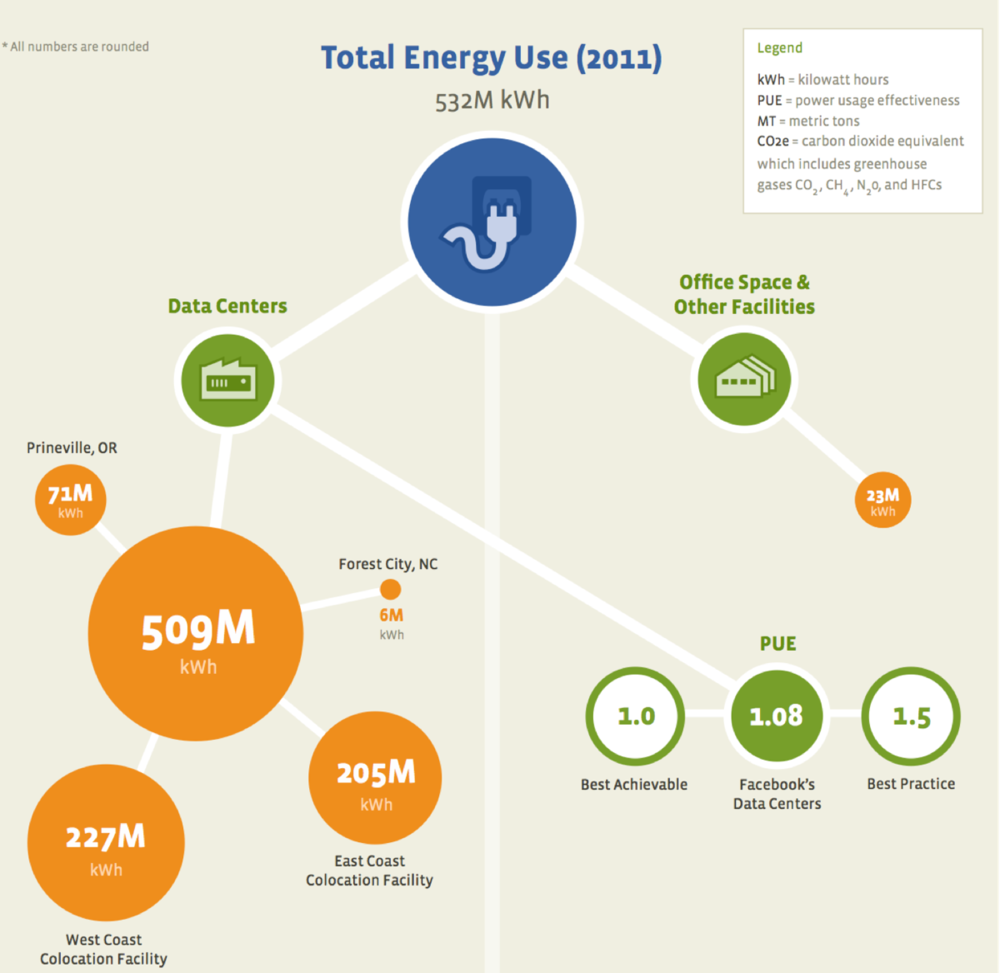
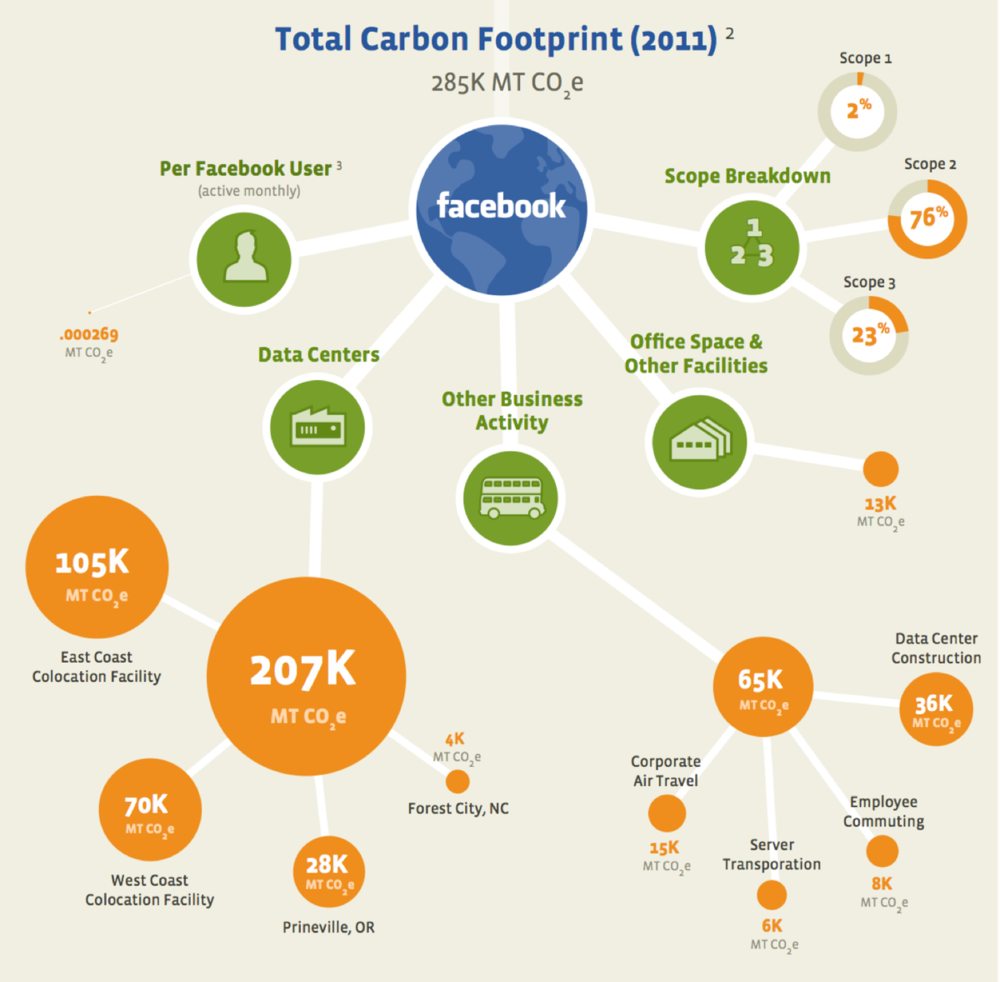
Facebook has published its 2011 corporate power consumption and carbon footprint. 

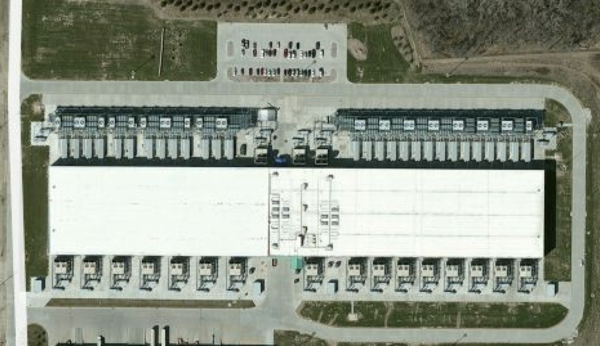
NewImage

NewImage

NewImage

The Guardian UK compared Google to Facebook.

The data, published on Wednesday, shows that despite the social networking's rising star, its carbon emissions are still a fraction of internet rival Google. Facebook's annual emissions were 285,000 metric tons of CO2 equivalent in 2011, compared with Google's 1.5m tons in 2010.

The vast majority of the emissions (72%) come from the company's data centres in the US. The annual footprint for each user that's active monthly is 269 grams, or around the equivalent footprint of a cup of coffee, the company calculated.

Greenpeace gave their approval to the disclosure.

Greenpeace welcomed the move's transparency and hailed it as an important benchmark. Gary Cook, Greenpeace International's senior IT analyst, said: "Facebook has committed to being fully renewably powered, and today's detailed disclosure and announcement of a clean energy target shows that the company means business and wants the world to follow its progress."

If you plan on having a green data center and not being a Greenpeace target you should follow Google and Facebook with an annual disclosure of your power consumption and carbon footprint.

What's Google Fiber, 1 gigabit connectivity good for? A load test for planning the future

A friend asked me what is next for Google data center group?  They build and design their own servers.  Design, build, and run their own data centers.  Google has tackled the network issues with a software defined network (SDN).  You can gather a bit from looking at job postings, but nothing really interesting popped up when I looked at the job postings.  What I did notice is a data center expansion that few know about, but I'll wait and see when others discover it rather than write a post on it.  Sometimes it is  better to share insights with friends rather than put a blog post up.

So, what is Google's next big thing?  I was reading GigaOm's Stacey Higginbotham's posts on Google fiber.  Stacey posted on the July 26th announcement.

Google Fiber to launch next week

Google just sent out invitations to a “special event” in Kansas City on July 26 which is undoubtedly the launch of its much-anticipated fiber-to-the-home network. The search giant sent an invite Tuesday that reads, “We would like to invite you to a special announcement about Google Fiber and the next chapter of the Internet.”


I'll be traveling on July 26th so I'll be slow in covering the news, so let's take a stab at what Google Fiber gives Google.

I think it is relatively simple.  Google fiber connects users with a 1 gigabit bandwidth connection vs. a more typical 10 megabit to the home.   Remember the days when the corporate LAN was 10 megabit, and it was a privilege to have 100 megabit?  1 gigabit is the common connection in corporate LANs now, and data centers are networked with 10 gigabit.

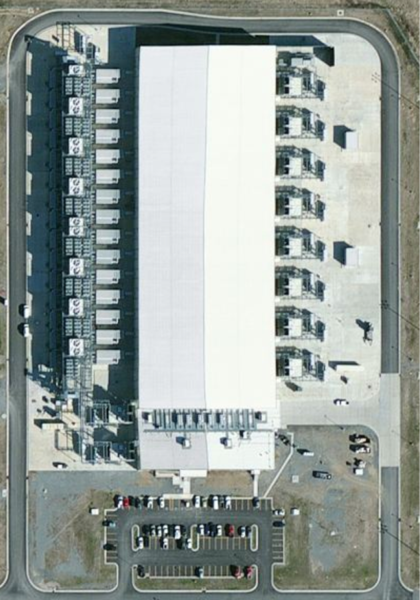
Google Fiber will have 600k population in Kansas City, MO and KS and thousands, ten thousand, maybe eventually a hundred thousand 1 megabit connections to two of its data centers in Iowa and Oklahoma.  
NewImage                  NewImage

Google is going to be able run load tests on these data centers with 1 gigabit connections to thousands of users.

Load testing is the process of putting demand on a system or device and measuring its response. Load testing is performed to determine a system’s behavior under both normal and anticipated peak load conditions. It helps to identify the maximum operating capacity of an application as well as any bottlenecks and determine which element is causing degradation. When the load placed on the system is raised beyond normal usage patterns, in order to test the system's response at unusually high or peak loads, it is known as stress testing. The load is usually so great that error conditions are the expected result, although no clear boundary exists when an activity ceases to be a load test and becomes a stress test.

With this data Google will be able to more accurately plan for when 1 gigabit will be pervasive what kind of changes are needed in the data centers, servers, networking storage, software, operations to run 1 gigabit connections.

Google will get great coverage on July 26th and there will be all kind of discussions on what gets delivered over the gigabit connection.  But, ultimately all these different scenarios are just a bits over the wire that will put a load on the above data centers.

All that use is going to give Google data on well their infrastructure holds up and what is required in the future.

Google fiber is a load testing of Google's data center, servers, networking, storage, software and operations.


NewImage

NewImage

Green Data Center in NC featuring Apple, Google, and Facebook

GigaOm's Katie Fehrenbacher has a detailed state of the green data center story in NC featuring Apple, Google, and Facebook.

The controversial world of clean power and data centers

Poles dot the dusty solar farm, which will eventually hold solar panels.

This article is the third in a four-part series that we’re publishing this week.

Over the past several years, a couple-hundred-mile area north of Charlotte, North Carolina, has emerged as a new hub for massive data centers that power the Internet, attracting industry heavyweights like Apple, Google and Facebook. North Carolina has been able win over those companies despite the fact it generates its power largely from dirty coal and nuclear, which runs counter to a general trend toward a desire for greener sources of energy.

The post is long, but a quick read.  Here is the main point that highlights Apple vs. Google vs. Facebook.

Grid-connected vs off-grid clean power

At this point, Apple seems to mostly stand alone in its desire to build such massive clean power plants next to a data center. The only other firm to announce that it will tackle something similar is eBay. Last month eBay announced that it would build an extension to one of its data centers in Utah that would run off 30 fuel cells, powered by biogas, and use the grid as backup power.

Google’s data center in Lenoir

Google has arguably been the most innovative and aggressive web business when it comes to clean power. But Google’s Demasi told me that Google has “a basic philosophy that renewable energy should be provided through the utility.”

Likewise Facebook’s VP of Site Operations Tom Furlong, told me: “The utility is the obvious location [for clean power]. It would be a lot easier if the utility came to the site with 20 percent renewables and said this is our mix.” Facebook’s sustainability guru Bill Weihl (formerly of Google) emphasizes that Facebook is still working out its strategy for clean power for data centers and he isn’t ruling out onsite clean-power generation. But Weihl also says he’s interested in one day possibly creating an industry trade group that could help bring together companies to influence utilities’ grid choices through the group purchasing of clean power.


Note that Greenpeace is planning an update tomorrow.

While questions still remain about how exactly Apple will meet its 100 percent clean power data centers goals (see Greenpeace report out tomorrow),  Apple is clearly acting as a pioneer.

Wow, Touring North Carolina sightseeing Data Centers of Google, Apple, and Facebook

GigaOm has a post on a tour of Google, Apple, and Facebook's data centers.

Would you take a trip to North Carolina to tour these data centers?  Well it's not really a tour if you don't get to go inside.  This is more like a drive by the gates of the data centers.

The ultimate geek road trip: North Carolina’s mega data center cluster

This article is the first in a four-part series that we’re publishing this week.

One day, one tank of gas, and three data centers – it was a road trip that only a geek would dream up. My destination: a cluster of cutting-edge and massive data centers spread across a few hundred miles north of Charlotte, North Carolina.

If data centers, filled with thousands of servers, are the engines of the Internet, then North Carolina is one of the garages for the Hummers of the tech world: The state is where Apple, Google and Facebook have decided to build their East Coast data centers. It’s a coup for North Carolina to have wooed all three elite Internet brands.


View Road trip: The North Carolina data center corrider in a larger map