IBM follows SuperMicros lead with Nvidia Tesla GPU servers

CNET news reports on IBM's new servers with Nvidia Tesla GPU servers.

IBM supercomputer mixes Intel, Nvidia chips

by Brooke Crothers

IBM announced on Tuesday a hybrid high-performance computer that combines Intel and Nvidia processors--a first for IBM.

The IBM iDataPlex Dx360 M3 is powered by both Intel Xeon central processing units (CPUs) and Nvidia Tesla graphics processing units (GPUs) and is designed to be clustered with other Dx360 M3 modular servers to form a supercomputer.

This is the first time a major computer company has adopted Nvidia GPUs for a supercomputer that can be marketed worldwide.

From IBM's Dx360 M3 page.

Solution integration

  • 2x PCIe 16-slot performance for 2 NVIDIA M1060 or M2050 GPUs per server, with high-speed networking without compromising density
  • Delivered fully configured, ready to be powered up and connected to the network for minimal deployment time and effort
  • Factory integrated and tested prior to shipment and installed by IBM

But if you want to save money and be with who was one of the first consider Supermicro has been selling Nvidia Tesla GPUs successfully.

Supermicro GPU-Optimized Supercomputing Server Solutions

NEW Server with NVIDIA Fermi GPU

image

Read more

DOE Energy Storage Systems Program Study, a guide for Data Centers too

This post covers the stock investment opportunities for Grid-based Energy stocks.

Grid-Based Energy Storage; A $200 Billion Opportunity

John Petersen
Yesterday a reader sent me a copy of an exhaustive new study titled "Energy Storage for the Electricity Grid: Benefits and Market Potential Assessment Guide" that was commissioned by the DOE's Energy Storage Systems Program and prepared by Jim Eyer and Garth Corey. I've been following the work in progress on this report since last summer and have eagerly awaited the opportunity to shift my focus away from the overhyped electric vehicle sector and focus on something with real meat. It looks like my time has finally come. For technology types that want a detailed understanding of what the various potential utility-scale applications for energy storage are, the entire 232 page report is a must read. Over the next few weeks I'll try to extract critical market data and translate that information into a form that will be useful to energy storage investors.

And, the author identifies investment opportunities.

Eyer Translation.png

For Data Centers though the DOE report is useful too.

The following is buried in section 8.1.5.

The primary purpose for this guide is to provide analysts with a framework for evaluating storage prospects for specific value propositions, including guidance about identifying and ascribing value to specific benefits that serve as building blocks for value propositions. Ideally, this framework will provide the foundation, and possibly the mindset, needed to recognize and characterize attractive value propositions.

Section 2.1 covers in data centers what would be discussed as power back-up systems.

image

Read more

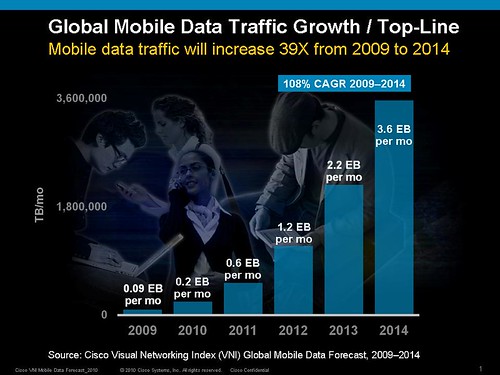
Mobile data center impact, Cisco projects 39X global growth 2009 - 2014

Cisco announced new marketing data projecting a 39-fold increase in Mobile data traffic from 2009-2014.

Cisco Visual Networking Index Forecast Predicts Continued Mobile Data Traffic Surge

More Mobile-Ready Devices and Mobile Video to Fuel 39-Fold Global Growth from 2009-2014

Cisco Visual Networking Index Global Mobile Data Traffic Growth

Cisco Visual Networking Index Global Mobile Data Traffic Growth

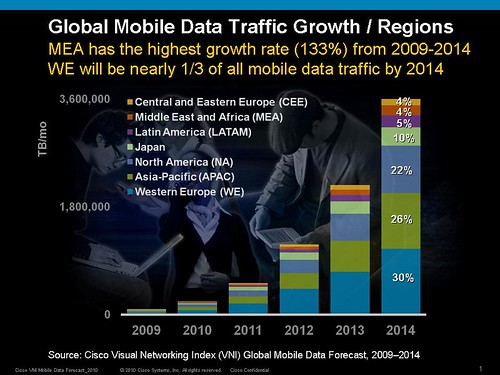
Cisco Visual Networking Index Mobile Data Traffic Growth by Region

Cisco Visual Networking Index Mobile Data Traffic Growth by Region

San Jose, Calif., Feb. 9, 2010 – Cisco today announced the results of the Cisco® Visual Networking Index (VNI) Global Mobile Data Forecast for 2009-2014.

The research projects that annual global mobile data traffic will reach 3.6 exabytes per month or an annual run rate of 40 exabytes by 2014.  Such a figure equates to a 39-fold increase from 2009 to 2014, or a compound annual growth rate (CAGR) of 108 percent.

Two major global trends are driving this increase-the proliferation of mobile-ready devices and widespread mobile video content consumption. By 2014, there could be over 5 billion personal devices connecting to mobile networks – and billions more machine-to-machine nodes. Mobile video is projected by the study to represent 66 percent of all mobile data traffic by 2014, increasing 66-fold from 2009 to 2014-the highest growth rate of any mobile data application tracked in the Cisco VNI Global Mobile Data Forecast.

Interesting little facts are

Mobile video is projected by the study to represent 66 percent of all mobile data traffic by 2014, increasing 66-fold from 2009 to 2014-

Global mobile data traffic today is growing today 2.4 times faster than global fixed broadband data traffic.

Smart phones and laptop air cards are expected to drive more than 90 percent of global mobile traffic by 2014.

If you aren’t thinking about mobile data out of your data center, you will be.

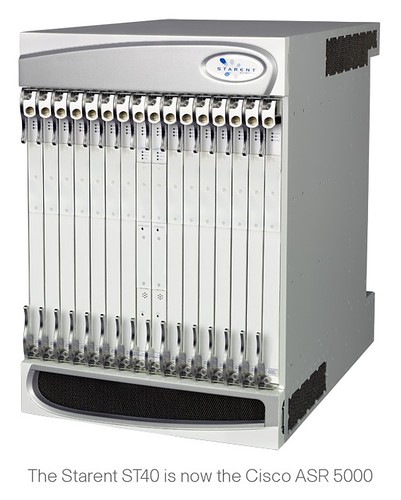
This marketing data coincides with their new mobile data switch, ASR 5000.

Cisco Unveils the Cisco ASR 5000

End-to-end IP NGN Architecture Supercharges the Mobile Internet for Service Providers

Photo
Cisco ASR 5000

Cisco ASR 5000

Cisco Visual Networking Index Global Mobile Data Traffic Growth

SAN JOSE, CA, Feb. 9, 2010 – Cisco today announced it has expanded the ASR Series platforms with the introduction of the Cisco ASR 5000 as a result of the Starent acquisition.  The addition of the ASR 5000 gives Cisco a comprehensive end-to-endInternet Protocol Next-Generation Network (IP NGN) architecture and offers mobile operators a platform specifically designed to accommodate the rapid growth of mobile Internet traffic and mobile multimedia applications.

Read more

Nokia adopts Google’s Free business model for navigation

BusinessWeek has an article on Nokia’s latest move to provide free navigation tools.

Nokia Challenges Google With Free Navigation Tool (Update1)

January 21, 2010, 01:36 PM EST

By Diana ben-Aaron

Jan. 21 (Bloomberg) -- Nokia Oyj, the world’s biggest maker of mobile phones, is offering navigation on its Ovi Maps service free, challenging smartphones using Google Inc. software.

“This will help us defend our selling price for products that contain global positioning system technology,” Anssi Vanjoki, executive vice president of marketing at the Espoo, Finland-based company, said in a telephone interview.

What else is interesting is the statement by Nokia’s CEO.

Internet Services

Nokia Chief Executive Olli-Pekka Kallasvuo aims to build the world’s biggest mobile Internet services platform to protect market share and create new revenue streams. The company is trying different payment models including bundling with consumer handsets and pay-per-download. Google also has a diversified services business model, with most of its revenue coming from advertising.

Nokia made a good move buying Navteq in 2008.

Nokia bought Chicago-based Navteq in 2008, acquiring a maps database to compete with Google’s maps as well as with navigation device companies such as TomTom NV and Garmin Ltd. The Finnish company’s smartphone market share fell three percentage points to 39.3 percent in the third quarter, according to Gartner Inc. figures, as Google drove into mobile handsets with its Android software.

“They’re in a race with Google to get lots of users onto their service as social networking creates new business models,” said Martin Garner, a London-based analyst with CCS Insight. “Google’s linked its maps to advertising and advertising can only come if you have a lot of users.”

I had just read The Economist article on Nokia.

Nokia tries to reinvent itself

Bears at the door

Can the world’s largest handset-maker regain the initiative?

Jan 7th 2010 | ESPOO
From The Economist print edition

Illustration by Claudio Munoz

ASK Finns about their national character and chances are the word sisu will come up. It is an amalgam of steadfastness and diligence, but also courage, recklessness and fierce tenacity. “It takes sisu to stand at the door when the bear is on the other side,” a folk saying goes.

There are plenty of bears these days at the doors of Nokia, the Finnish firm that is the world’s biggest maker of mobile handsets. Although it is still the global leader in the fast-growing market for smart-phones, its devices are losing ground to Apple’s iPhone and to the BlackBerry, made by Research in Motion (RIM). On January 5th Google took a further step into the market with the launch of the Nexus One, a handset made by HTC of Taiwan that the internet giant will sell directly to consumers, and which runs Android, Google’s operating system for smart-phones.

Despite this situation morale is reported to be high at Nokia.

Yet in Nokia’s headquarters in Espoo, near Helsinki, morale is far better than one might expect. Hardly anyone would deny that there are problems. But executives insist that they can be overcome. When board members met financial analysts in December, they made some bold predictions. Within a year, promised Olli-Pekka Kallasvuo, the firm’s boss, the ageing Symbian software will have been vastly improved, to enable Nokia to offer “magic devices”. As for services, the goal is to have signed up 300m users by the end of 2011. “I’ve rarely heard such explicit statements," says Ben Wood of CCS Insight, a long-time Nokia watcher.

The company is changing.

All this will no doubt help Nokia come up with better, if not magic, products. The firm may even reach its goal of 300m users by the end of 2011 because its efforts are not aimed just at rich countries, but at fast-growing emerging economies where Nokia is still king of the hill, such as India. There, services such as Nokia Money, a mobile-payment system, and Life Tools, which supplies farmers with prices and other information, fulfil real needs, says John Delaney of IDC, another market-research firm.

Here is something didn’t know about Nokia.  It’s origin is 1865 as a paper mill.

Yet it is an entirely different question whether Nokia will manage to dominate the mobile industry once more—not just by handset volumes, but by innovation and profits. The example of the computer industry, in which the centre of gravity began shifting from hardware firms to providers of software and services over two decades ago, is not terribly encouraging: of the industry’s former giants, only IBM really made the shift successfully. Then again, Nokia has reinvented itself many times since its origin in 1865 as a paper mill. That, points out Dan Steinbock, the author of two books on the firm, is thanks not only tosisu, but also to a remarkable willingness to embrace change and diversity. Nokia will need those traits in the years ahead.

I made the mistake of thinking of Apple, Google, and RIM as the smartphone market.  Nokia shouldn’t be discounted out.  And, Microsoft’s mobile group isn’t going to give up either.

The mobile device market connected to data center services is the fastest growing market.  So, no one is give up the fight as long as they have the resources to invest.

Read more

Via’s Big Little Green Server: 64 bit, virtualization, low power

Slashgear has a post on Via’s home mini server.

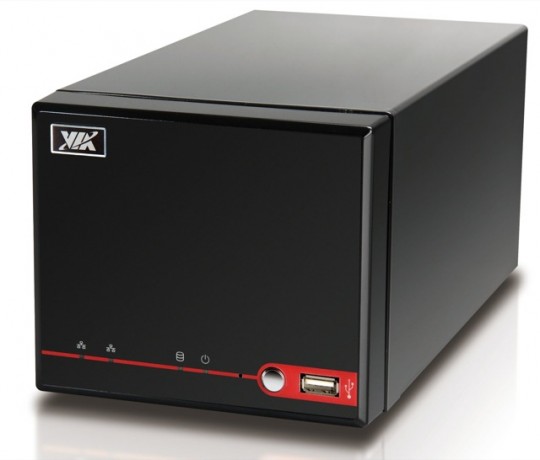
VIA M’SERV S2100 home mini server arrives

By Chris Davies on Wednesday, Jan 13th 2010 1 Comment


One of the reasons we have a soft-spot for VIA is that they eat their own dogfood: not only do they produce processors, mainboards and other chipsets, they also put out a range of products (often to OEMs rather than end-users) that actually use them.  Latest is the VIA M’SERV S2100, a boxy little server intended for home and small business users that’s powered by the VIA Nano CPU.

via mserv s1200 1 540x460

The M’SERV S2100 measures in at 10.2-inches long and 4.7-inches high, yet can be stuffed with up to 4TB of storage space.  There’s also a 1.3+GHz VIA Nano CPU, two memory slots, two SATA bays and an internal Compact Flash socket which the S2100 can boot from.  As for ports, you’re looking at dual gigabit ethernet, three USB 2.0 and a VGA output.

The Via product page has more details.

VIA M’SERV S2100 is a data-oriented 64-bit Mini Server with a large storage capacity, low power consumption and strong network connection. The M’SERV comes equipped with two Gigabit Ethernet that makes this unique mini server system a perfect fit not only for home download applications, but also as a small business/SOHO/personal server that provides ample storage space in an energy-efficient, compact, low-noise system.


64-bit Processor
Powered by the VIA Nano 64-bit processor, the M’SERV S2100 mini server is the first and smallest server to support a 64-bit environment. The VIA Nano processor also features hardware assisted virtualization technology, enabling users to experience improved performance across multiple virtual environments.

CF Socket
Built-in bootable Compact Flash socket is perfect for installing a slimmed-down version Windows or other embedded OS.


Dual Gigabit LAN
Two high-speed Ethernet ports on a speedy PCI Express bus for both Internet and intranet connections.

Low Noise
A quiet ball-bearing fan silently cools the system with noise levels remaining below a mere 26.8 dB.


Two RAM Sockets
Dual onboard DDR2 SO-DIMM sockets for convenient system upgrades.

Low Power
Based on a VIA processor and chipset combination, the M’SERV S2100 is an energy-efficient system with remarkably low power consumption.

Read more