Why I ordered a Motorola Xoom vs. an iPad 2, the Google Cloud

My family has an iPad original which is great for watching movies and surfing the web.  The iPad 2 just shipped on Mar 11, and it was tempting to get an iPad 2 to share with the family.  One of my friends got an iPad 2 on Mar 11 and shared his experience vs. his iPad 2.

I have been enjoying it as much as my original iPad.  Impressions:
- I still find them too slippery!  the smooth aluminum back slides around in my lap.
- it feels a lot thinner.  it feels more like Dave's Kindle 3 in thickness
- it feels a lot lighter, again, closer to Dave's Kindle 3.
- the screen feels brighter
- the operation is snappier.  I find that web pages are rendering faster.  I am getting less of the checkerboard placeholder while web pages render.  I also sense that the lag between starting a touch operation and the system detecting that is shorter, resulting in snappier response in games, etc.
- I read that the white bezel could be distracting and that the black was superior.  I deliberately bought the white to try that out, and to distinguish it from my original iPad (now my son’s).  I am not as used to it yet, but once I am reading, I can't say that I really notice it.  The content, especially that about Japan's earthquake and tsunami are so compelling that the bezel isn't really a factor.
- I haven't seen the fancy new covers yet, but I hear that they are great.  One site is predicting that Apple will sell nearly $1BN of the covers alone!!  what a business!!

Amazon.com and others are taking orders starting Mar 16, 2011 for the $599 Motorola Xoom 32GB wifi tablet.

by Motorola

new

Price:
$599.00 & eligible for free shipping with Amazon Prime

This item has not yet been released.
You may pre-order it now and we will deliver it to you when it arrives.
Ships from and sold by Amazon.com.
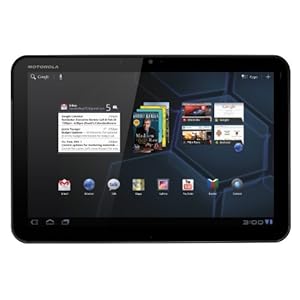
I decided to place an order for a Motorola Xoom as many of my technical friends prefer Google Android vs. Apple iOS operating system.

Forbes has a blog entry on the iPad 2 vs. the Xoom which has a high 22,781 views

Apple iPad 2 vs. Motorola Xoom: Which Wins As A Business Tool?

Mar. 14 2011 - 1:31 pm | 22,781 views | 2 recommendations | 9 comments

The iPad 2 (left) is thinner than the Xoom (right) but has a slightly smaller screen than its rival.

If you are a Travelgeek you either have or are considering one of the latest tablet computers. A lot has been written on this topic, so my focus is on the utility and value of these devices for the pro business traveler. Is it worth the investment?

After reading the Forbes post, it became clearer what I am looking for in the Xoom vs. the iPad.

Why do I believe that Android will prevail? It is because almost all of our lives are now wrapped around Google and its incredible data search and access capabilities. Apple, in my view, cannot compete with what Google can offer to Smartphone and tablet users: an amazing array of instant information from anywhere in the world which has been integrated into the functionality of a tablet or Smartphone through its Android operating system.

I use Gmail and Google Search more than any other app.  For the same reason Microsoft shipped apps for the Mac, but eventually developed more for Windows given they owned the OS, they could do more.  Google can do more on Android than Apple’s iOS.

There are many out there who are happy being an Apple device family.  But, in my work Google is the dominant player with almost no need for Apple software.  I may need to apps running on my iPhone, but I don’t actually need the iPhone.

Google is a company who lives in the cloud.  If you want to leverage the cloud why wouldn’t you get their device.  The Motorola Xoom is the better device for working with the Google cloud than the iPad.  The iPad may be better for entertainment and media, but that is not my work. 

Part 2 of the Forbes blog on iPad 2vs. Xoom closes with.

As the Xoom takes its place as the serious business tablet, then I guarantee you will appreciate its attributes over the iPad, especially if you are computer-savvy and can appreciate the design differences between it and the iPad 2.

As to the utility of tablets in general, I found more and more uses for my iPad during the past year and have come to realize its value and versatility as a computing device. Having said that, it has only taken me two weeks to all but discarded it in favor of what I consider as the “Grown Up” new tablet for business: the Xoom.
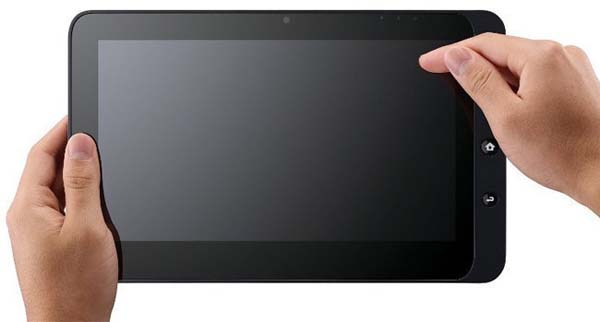
Mobile Gaming has rumors circulating about an Xbox tablet

Zynga is one of the hottest gamers, and it is starting rumors that Microsoft will target the mobile market.  An Xbox console uses 150 watts+ and the TV makes or another 150+.   An iPad has a 25 watt-hr battery.  The mobile market is growing faster than the gaming console.  And, all the games for mobile come from bit distribution vs. gaming DVD/media.

We’ll see if the rumors come true, but if they do the power use for gaming should decrease noticeably.

Vice president of Epic Games, Mark Rein, in an announcement of Unreal Engine 3 on the iPad, expressed his thoughts on the future of gaming consoles. He thought the future of Xbox gaming console could be a gaming tablet with a built-in Kinect.

alt

Below is the excerpt from Rein’s statement

Imagine a future Xbox 360 that is actually a tablet you carry around. It will have more power than 360 does today, with technology like Kinect built right in. Imagine walking into a bar with some friends, propping it up on the table and playing games like Dance Central or Kinect Adventures anywhere you go. Then when you get home that same device will use technology like AirPlay or wireless HDMI to connect to your big screen, you’ll pick up a wireless controller, or use your phone as controller to play games like Gears of War.

Review of APC J35 home entertainment backup with technology support, Part 1 setup

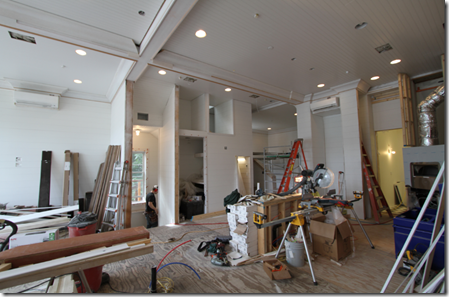
Thinking about data centers and IT all day, it is natural to have the ideas transfer into my home life.  I am close to completing a custom house build where technology and data center ideas have influenced details like availability of services - Internet and Monitoring.

image

I have been having discussions with one of my power friends at APC who came over my house and we discussed what I could do for power back-up systems.  He suggested the Audio Video line as one option, and after some research I decided when the timing was right I would get an APC AV backup system where I will have a cable modem, Dual WAN Router with 3G/4G failover, POE intercom, Security Camera DVR, and some AV equipment.

Luckily the folks at APC just announced a new unit the J35 and they sent one over to let me evaluate it.

Ideal for protecting and backing up televisions, home theater surround sound systems, gaming systems, routers, modems and additional home entertainment and office equipment, the APC J25B and J35B offer:

  • Battery Backup – Data loss is eliminated when power is disrupted because of battery backup that enables saving and backing up DVR recordings, stored games and computer files.
  • Multi-Stage Surge Protection – All electrical modes are guaranteed and offer protected and reliable thermal fusing which helps ensure safe operation under all conditions.
  • Noise Filtering – Electromagnetic interference (EMI) is reduced to help ensure optimum picture and sound quality. The J Type benefits from two filterbanks which are isolated from each other to reduce cross contamination that can negatively impact audio and video performance.
  • Cost-Efficiency and Portability – The industry-low price point offers a portable, consumer-friendly and all-inclusive solution with EMI/RFI, surge protection, AVR and battery backup.
  • Dual-Color LCD Display Viewing – An informative display alerts users of any changing device and power environment conditions and subsequently enables adjustment of all device parameters.

When I hooked up all this gear I had over 100 minutes of battery backup which means my family could use the POE intercom when the power goes out to talk to mom/dad.  The internet access works for security notifications, including cable modem failure with the 3G/4G failover.

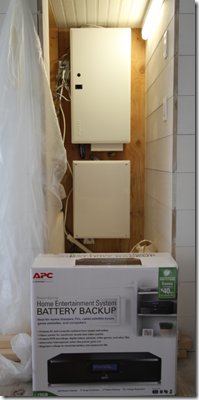
Here is a picture of APC’s new J35 Home Entertainment System Battery Backup.

image

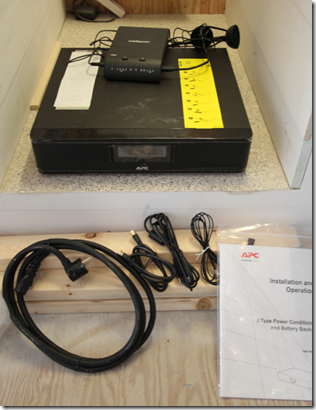
The unit comes with a beefy power cord, some extra cables.  On top of the unit is the Cradlepoint MBR1200 Dual WAN and 3G/4G failover router.

image

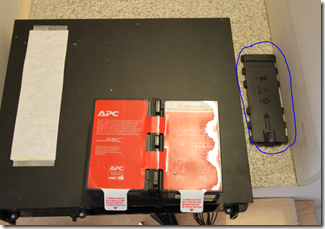
When you take the battery cover off to connect the battery, the battery is installed upside down to disconnect it.

image

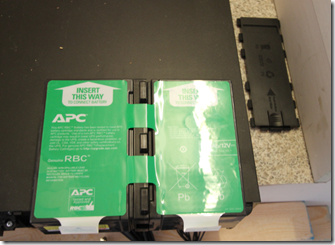
And you flip it over to connect and put the cover back on.

image

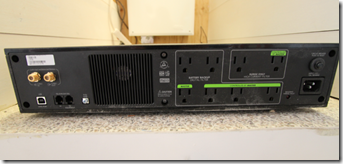
Here is a shot of the back.

image

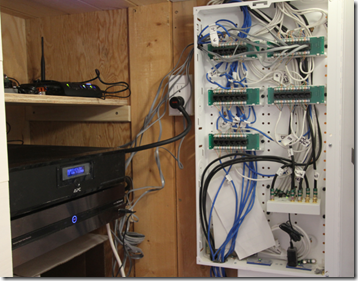
And, the unit hooked up.

image

Next steps are to write about the use and connecting to a PC with the USB cable.

China’s Huawei breaking down barriers of Network and Server gear

GigaOm covers Huawei’s move into Cisco’s space.

Cisco Beware! Huawei Plans a Data Center Push

By Stacey Higginbotham Mar. 9, 2011, 12:30pm PT No Comments

Chinese telecommunications equipment vendor Huawei has plans to invade the enterprise IT market according to a research note out this morning from Deutsche Bank. An analyst at the firm expects the company to introduce a line of servers, low-end switches, security, VoIP and storage products designed for the enterprise before the end of this year. Huawei recently reported $2 billion in revenue from the enterprise and organized the company into three operating segments: carrier, enterprise and devices.

WSJ discusses Huawei’s growth in the Enterprise.


By Lilly Vitorovich and Molly Neal

Of DOW JONES NEWSWIRES


LONDON (Dow Jones)--Global telecoms equipment maker Huawei Technologies Co. Ltd. expects revenue from its enterprise division to increase eightfold over the next three to five years as it takes advantage of new growth opportunities emerging from cloud computing, a senior company executive told Dow Jones Newswires.

In a departure from its main focus on network infrastructure, the Chinese company said it is reorganising its business around four major areas - network infrastructure, enterprise business, devices, and other. Enterprise sales are expected to double to $4 billion in 2011 and hit $15 billion in three to five years, said William Xu, executive vice president of Huawei and president of Huawei Enterprise Business.

Check out Huawei’s server page.

Server

Overview

We are now entering a new era in which telecommunication and IT industry are integrated.
In this new era, IT can totally change the development of an enterprise.
Based on the understanding of customer requirements, Huawei provides technologically-advanced server products and competitive solutions, which helps customers make profit continuously.
Currently, Huawei has released TecalTM T8000 blade servers and R series rack servers into the market. These products help in telecommunication and internet operations, and energy industry. By using the products, Huawei helps users to handle the technical difficulties in saving energy, improving performance, and developing new architecture.

Will one of the biggest change in IT hardware be the arrival of China’s companies?

Facebook and Google influencing Networking Technology faster than Telco ecosystem can react

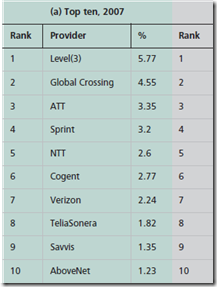
The landscape of Telco is changing.  Fast.  In 2007 the Internet traffic looked like this.

image

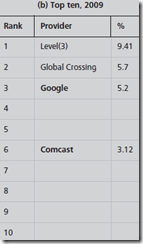
In a Google paper they said hey look at 2009.

image

In 2011, Facebook and Google are both in the top 10 and growing faster than the rest.  Light Reading has an article on this trend.

OSA 2011: Optical World Faces Hipster Challenge

MARCH 8, 2011 | Craig Matsumoto | Post a comment |

LOS ANGELES -- OSA Executive Forum 2011 -- The needs of content providers such as Facebookand Google (Nasdaq: GOOG) are starting to influence roadmaps in optical components and systems, and that's accentuating the differences between telcos and new network owners.

Google makes the case that the traditional Telecom cycle is too slow which reminds me of the old way of product design.

Google's case was particularly spotlighted, partly because the company landed two panel spots (both filled by Senior Network Architect Bikash Koley, due to a colleague's illness). Koley made it clear that he thinks the traditional telecom cycles are too slow for Google and don't produce the right kinds of products anyway.

Google makes the point of the power consumption being too big.  How many network guys/gals do you know discuss the power of the network?  Networks have a big role in a green data center.

That's because standards too often aren't developed with the input of the ultimate buyers, he said. By the time products arrive, they're too big and/or power-hungry to suit the next-generation needs that the user is building for. Koley stepped through an example of how it all goes wrong, drawn not from Google but from his experience at a large equipment vendor. (He didn't specify which one, but his resume includes time at Ciena Corp. (Nasdaq: CIEN))

The users (Google and Facebook) are frustrated.

The problem stems from each vendor taking its cues from a neighboring step in the supply chain, rather than going to the source. The result, in Koley's example: A product that arrived years late. "Not talking to a user gives you the wrong time horizon," Koley said.

And, they are doing something about it.

One alternative is to bypass the standards bodies and develop a multisource agreement (MSA), a tactic that's worked for transceiver modules.

"Any time there's a void and there's enough need, especially if there's enough bandwidth that needs to be deployed, there's a vehicle" thanks to MSAs, said Donn Lee, a senior network engineer at Facebook. (Lee appeared on a panel separate from either of Koley's.)

Need evidence of how this might work? Koley pointed to the recently ratified 10x10 multisource agreement (MSA), which was created with input from a spectrum of companies including not just module suppliers, but also cable operators, telcos, Ethernet service providers and Google.

Here is the 10x10 MSA referred to above.

The 10x10 solutions is designed to meet the needs of users who need to go beyond 100 meters but less than 2 km.  Many data centers have link requirements beyond 100 meters, but don’t need to go much more than a few hundred meters.  The 10km solutions for these applications is overkill because the 10x10 solution can meet the link requirements at less than half the cost of 100GBASE-LR4 and about 70% of the power (14W for 10x10 vs 20W for 100GBASE-LR4).  Since the 10x10 is CFP compatible and can fit in the same port as 100GBASE-LR4, customers will see the benefits of the 10x10 over 100GBASE-LR4 for link distances over 100 meters but under 2 km.

Responding to the call by end-users and equipment manufacturers, the 10X10 MSA is established to deliver the industry’s lowest cost 100GbE solution over single-mode fiber.

The 10X10 MSA is defining a new price and performance trajectory for 100GbE that will significantly accelerate the adoption and economics of 100G deployments.

The 10X10 MSA group is backed by a robust ecosystem of end-users, system manufacturers and optical module suppliers including Google, Brocade, JDSU and Santur.
Member companies include Google, Brocade, MRV, Enablence, Cyoptics, JDSU, AFOP, Santur, Oplink, Hitachi Cable America, AMS-IX, EXFO, Huawei, Kotura, FaceBook, Effdon, Cortina Systems and BTI systems… Read More >>