Loggly, a Hadoop approach in the Cloud to manage servers

Almost everyone puts their management system in the same area as their IT assets. When I worked on management system architecture I asked the question why don’t management systems get located offsite?  This was back in 2005 before the cloud was popular.  Recently, I’ve been asking about a Hadoop base approach to collect IT logs.

Wouldn’t it be cool if there was a cloud base server management system that used Hadoop to do things the big management tools can’t.  And cheaper with a pay as you go basis.

Loggly is a company that uses Hadoop to store log files.  See this job description.

Hadoop Engineer

Forge and weld a different kind of search engine. You are building part of the back end systems that accept data from our customers and push it through to our archiving, indexing and map/reduce framework, then make it available through search and large scale analytics systems. You’re helping form a core team who’s responsibilities are to make us bigger, better and faster. You know what to do, and don’t ask twice.

Here's what makes you tick:

  • have constructed a distributed, elastic system before
  • familiar with both solr and lucene, and realize those projects have in fact merged
  • you conduct map reduce jobs on hadoop for breakfast, or for small afternoon snacks
  • achieved authoring or implementing a high throughput distributed queuing system
  • or have authored or implemented a high performance distributed data store
  • understand that high reliability systems are expected to be highly reliable
  • you’re that guy that comes in, in the middle of the night, and makes magic happen

What is Loggly?

Logging as a service — any time — your way — fast.

Loggly collects, indexes, and stores all log data and makes it accessible through search for analysis and reporting.

You can try Loggly today by signing up for the free product. With no up front investment necessary, you reduce your risk of locking into a software solution. Once you decide to purchase the Loggly service, we run your service at a fraction of the cost you would incur yourself. We manage the infrastructure for you. You don't need to do anything and have your logs at your fingertips at any time from anywhere — fast.

Running in AWS.

Loggly- United States (San Francisco, California)

Loggly is a cloud-based server logging service. Loggly provides a way to collect logs from servers in one centralized location and then quickly search them with an intuitive user interface.

Here is a comparison of Splunk vs. Loggly.

Update:Here’s how chief executive Kord Campbell described the difference between Splunk and Loggly:

We are a hosted solution compared to Splunk’s enterprise software download. Instead of installing your own server, downloading the code, and forwarding logs to that server, you just send them to our system. We run all the servers, storage, code, etc. for you, making life easier in the process. It’s a hell of a lot cheaper too.

We’re leveraging a bunch of Open Source technologies to leap ahead in the search portions of our offering, which makes us more nimble than Splunk. We’re focused on web app developers (like us) initially, providing development and monitoring features for them to maintain their code and systems. Later on we’ll branch out into security, compliance, and analytics.

When it comes to analytics, we’ll be able to use the search system we’ve built to pull data from a customer’s logs, then run a map reduce algorithm on them to crank out statistics on the data. For lots of data. Think of it as a flip side to Google Analytics. They take the log entries from browsers hitting your site – we take the entries from the hits to your server directly, through its logs.

Read more

An example of Carbon Reporting for Data Centers, HSBC

Yesterday, I blogged on The Green Grid CUE metric.

Will CUE be as popular as PUE? Don't think so

Today the Green Grid announced the CUE metric, Carbon Usage Effectiveness metric to help measure the carbon impact of IT equipment.

CUE is defined as

image

The carbon emissions divided by your IT load. Provides a ratio of kg/CO2/kWHr where the best is 0.  Note you can be near zero with hydroelectric or nuclear power sourcing.

Later in the day I had a chance to run into Christian Belady and clarified that I meant no disrespect to the idea of CUE as he was the editor for the document.  I explained most of what I saw people say out there was reporting, but little discussion or analysis.  Getting people to debate a topic is what gets the idea to spread.  Christian is a forward thinker and said he is always open for debate, and took no offense to my blog post.

To illustrate the point of how some companies are reporting their data center carbon footprint, check out HSBC’s environmental site.

Footprint management

The changing size and shape of a corporation is an ongoing challenge for those responsible for measuring and managing its environmental footprint. There a number of different ways to set a boundary around which parts of the organisation are included in target-setting and monitoring. At HSBC, our aim is to communicate our progress transparently, and, in response to stakeholder feedback, we updated our approach to setting and reporting environmental targets in 2009.

Data Centre’s are called out separately.

What about data centres?

Until 2009, data centres had not been subject to targets to reduce carbon emissions. We now have targets to improve the energy efficiency of our eight largest Group data centres by between 2 per cent and 8 per cent in 2010.

HSBC is in the process of building new highly efficient data centres, built to international green building standards such as BREEAM and LEED. We have chosen to separate data centres from the targets for the rest of our buildings because we are working through a programme of consolidating these facilities. This means that sometimes during a handover period, two are operating at once, or data centre operations are moving from one country to another, which can skew the data.

And hereee is the data center power footprint.

Energy use in data centres

The Green Grid’s CUE and WUE are reporting per Kwhr.  But, many are reporting on a per full time employee.

Carbon emissions

Our target is to reduce carbon emissions per FTE by 6 per cent between 2008 and 2011.

Carbon emissions

Water use

Our target is to reduce water use per FTE by 11 per cent between 2008 and 2011.

Water use

Thanks to some helpful people in the financial sector they have been pointing me to where various companies are reporting the data center impacts.

I am starting to believe the financial sector may the group who leads the rest of the industry in environmental/sustainability reporting.

Read more

GreenM3 metrics on Olivier Sanche passing away post

48 hours after learning my dear friend Olivier passed away, I am not more than 10 miles from his home in Los Gatos, 5 miles from his office in Cupertino, and would normally have been thinking about what we will talk about in a 45 minute conversation.  But, he is not here.  He is in France with his family, and I'll never see him again.

It was fun helping to increase Olivier's visibility in the industry.  it's sad to tell the industry he is gone at 41.

I've been watching the web traffic on what has been discussed and how the news has spread.

Here is my web traffic over the last few days to www.greenm3.com.  The last 48 hours has seen my web traffic 4-5x increase, beating any other post traffic, including his joining Apple and big announcements by Google.  Note: the blog traffic on 12/01 is not a complete day and will most likely double.

image

According to Google Analytics 12% of the traffic to the post is coming from Apple domains and 4% eBay domains (his most recent employers).  Note; the actual traffic from each of those companies is much higher as many employees access blog posts not from work.

image

PCmag has an Apple statement about Olivier.

Apple Data Director Dies Of Heart Attack

Apple

Olivier Sanche, Apple's eco-minded director of global data centeroperations, died of a heart attack last Thursday at the age of 41.

"We are saddened by Olivier's passing. We will miss him tremendously and our thoughts are with his family," said an Apple spokesperson.

The Twitter activity has been high which is what I think contributed to PCmag writing, and news continues to spread. http://twitter.com/#!/search/olivier%20sanche

image

CNET news has a blog post.

Apple data center chief dies at 41

by Greg Sandoval

Olivier Sanche, Apple's chief of global data centers

(Credit: Olivier Sanche's Facebook page)

Olivier Sanche, the man who oversaw Apple's global data center operations, died on Thursday, Apple has confirmed.

Read more: http://news.cnet.com/8301-13579_3-20024242-37.html#ixzz16sO6h1tQ

Read more

Saudi Aramco Command Center, the ultimate NOC

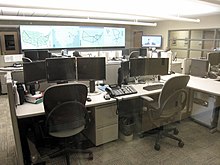
Tours of a data center most of the time end of up on a tour of a NOC.

A network operations center (or NOC, pronounced "nok," like the word "knock") is one or more locations from which control is exercised over a computer, television broadcast, or telecommunications network.

Large organizations may operate more than one NOC, either to manage different networks or to provide geographic redundancy in the event of one site being unavailable or offline.

Check out this video of the Saudi Aramco Command Center, the ultimate NOC.  This is part of 60 minutes special.

Saudi Aramco Command Center from Ben Fry on Vimeo.

What is the hardware behind the Saudi Arabia Command Center?  I would bet Dell and HP based on the use of Dell and HP Hardware used by Saudi Aramco for the Top 500 Super Computers.

Read more