The Battles won with a Team, Hollywood changing to tell the story of teams - Navy Seal Movie

The following is a bunch of ideas that I find interesting in that it illustrates a point that “the team” is more important than individuals.  And, the data center teams that will beat the others are the ones who operate better as a team.  A better data center team will enable businesses to beat others.

WSJ has an article about Hollywood’s change in battle plan in creating military movies.  Here is a video that introduces the concept.

After 10 years of the same story, Hollywood realize they have a problem telling the war story.

Ten years after the Sept. 11 attacks opened an ongoing chapter of U.S. military action, Hollywood’s long history of depicting fighters at war is entering a new phase. The grinding wars in Afghanistan and Iraq spawned films that highlighted characters in uniform who were disillusioned with their missions and scarred in their homecomings. With the conflicted protagonists of movies such as “Green Zone” and “Stop-Loss,” filmmakers tried to tap into the public’s ambivalence about the conflicts, but their movies mostly sank at the box office. Now that deployments to Afghanistan and Iraq are tapering down, filmmakers are homing in on the more clear-cut job of battling terrorists. And they’re finding heroes in the elite—and now famous—special-operations forces leading the hunt. Projects in the pipeline focus on the armed heroics, high-tech tactics and teamwork involved in getting the bad guys.

The US Navy was changing their tune as well.

COVER_Seals
Courtesy of ‘Act of Valor’

Director Scott Waugh films the SEALs.

In 2008, Navy Special Warfare invited a handful of production companies to submit proposals for a film project, possibly a documentary, that would flesh out the role of the SEALs. The goals: bolster recruiting efforts, honor fallen team members and offer a corrective to misleading fare such as “Navy Seals,” the 1990 shoot-em-up starring Charlie Sheen as a cocky lone wolf. “In the SEAL ethos, the superman myth does not apply. It’s a lifestyle of teamwork, hard work and academic discipline,” said Capt. Duncan Smith, a SEAL who initiated the project and essentially served as producer within the military.

A reoccurring theme is “the team.”

After they made a group decision to participate, deciding the project served the SEALs’ greater good, the Navy made the film a formal task for the sailors, who were between deployments. Their names won’t appear in the “Act of Valor” credits; instead, the film will list Naval Special Warfare members killed since Sept. 11.

And what happens when the studio focuses on the team?  The action is better than they have ever shot.

By contrast, in the movie’s many battle scenes, the sailors move with a fluid precision that makes typical Hollywood action movies look bogus. When the SEALs picked off enemies and moved through buildings in a tight snaking column, some footage was captured by helmet-mounted cameras. Certain plot points were based on true stories from the field, including a scene in which a sailor takes a rocket-propelled grenade to the chest at close range and lives.



Google posts Sustainable (Green) Data Center Operations Manager position

I don't know how long this job post has been up, but it is worth blogging.

Manager, Sustainable Data Center Operations - Mountain View

...

As the Sustainable Data Center Operations Manager you will be responsible for growing the team that continually raises the bar on sustainability at Google. This includes keeping our commitment to carbon neutrality, advancing efficient computing across the industry, and ensuring Google’s infrastructure, products and services are sustainable. You will provide leadership for Google’s sustainability efforts, defining goals, organizing teams, and working closely with product engineering, operations, policy, and communications teams.

Good Luck to Google to hire a Green Data Center Operations Manager.

It is funny to think about the reality of a lights out data center, Dilbert Cartoon as an example

Dilbert has a cartoon on lights out data centers.

Dilbert.com

Human error in the data center is a reality, and the funny part is an answer just like above is to not allow employees in the data center.  Especially if the data center is self-aware.

What is potentially worse than employees are the vendor support employees who are not tracked.  Do you exactly what the warranty service technician did in his service call in your data center?

One way to look at Green Data Center Start-ups are they founded by engineers and scientists or VCs

Two of my cloud computing engineering friends and I are having a blast working on a technology solution that can be used in data centers as well as many other areas. I ran across Steve Blank's post on

How Scientists and Engineers Got It Right, and VC’s Got It Wrong

There are many parts of Steve's post that resonate with our team.

Startups are not smaller versions of large companies. Large companies execute known business models. In the real world a startup is about the search for a business model or more accurately, startups are a temporary organization designed to search for a scalable and repeatable business model.

...

Scientists and engineers as founders and startup CEOs is one of the least celebrated contributions of Silicon Valley.

It might be its most important.

We all worked in Silicon Valley, so we have a bunch of methods ingrained our thinking.

Why It’s “Silicon” Valley
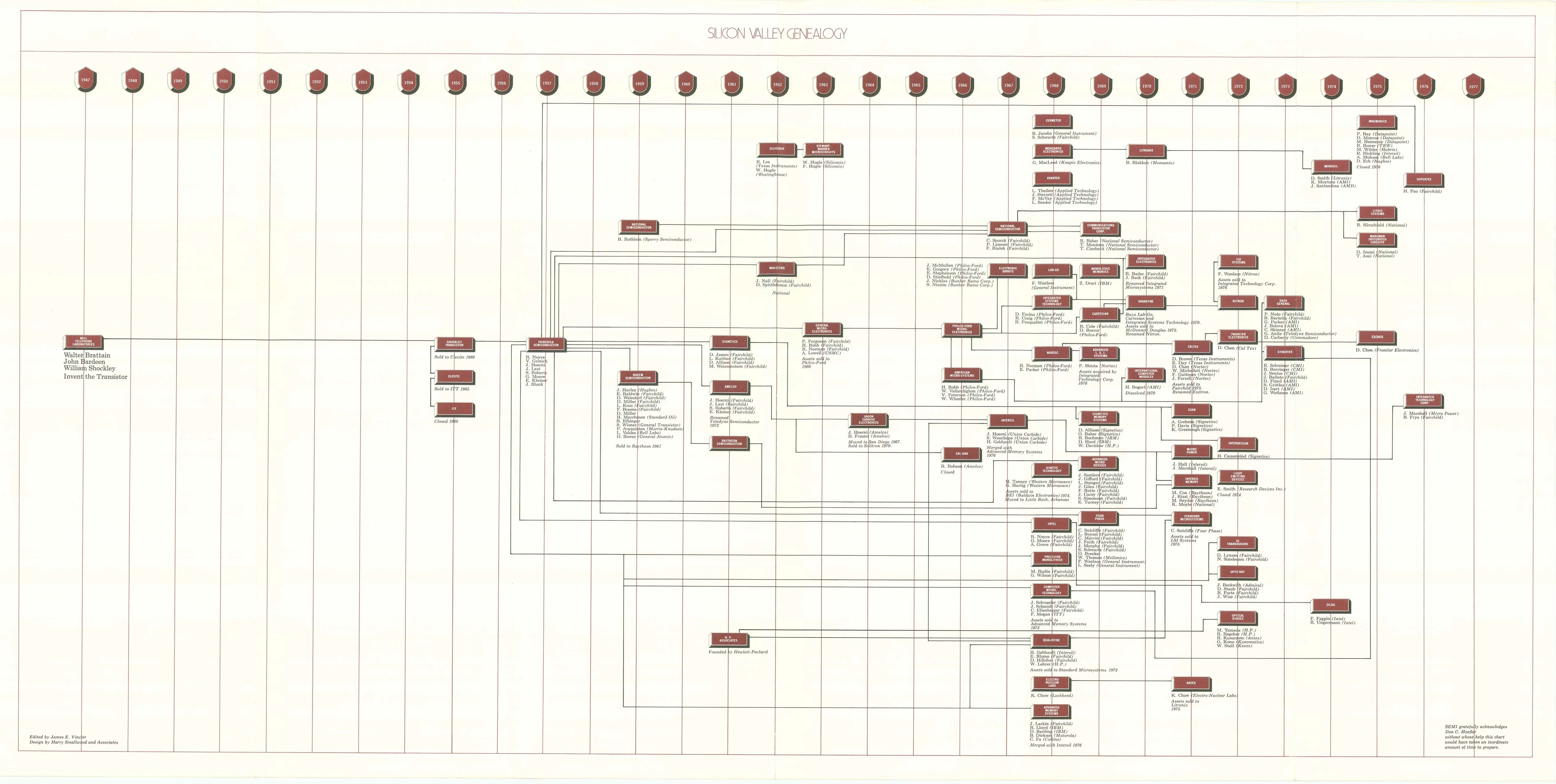
In 1956 entrepreneurship as we know it would change forever.  At the time it didn’t appear earthshaking or momentous. Shockley Semiconductor Laboratory, the first semiconductor company in the valley, set up shop in Mountain View. Fifteen months later eight of Shockley’s employees (three physicists, an electrical engineer, an industrial engineer, a mechanical engineer, a metallurgist and a physical chemist) founded Fairchild Semiconductor.  (Every chip company in Silicon Valley can trace their lineage from Fairchild.)

The history of Fairchild was one of applied experimentation. It wasn’t pure research, but rather a culture of taking sufficient risks to get to market. It was learning, discovery, iteration and execution.  The goal was commercial products, but as scientists and engineers the company’s founders realized that at times the cost of experimentationwas failure. And just as they don’t punish failure in a research lab, they didn’t fire scientists whose experiments didn’t work. Instead the company built a culture where when you hit a wall, you backed up and tried a different path. (In 21st century parlance we say that innovation in the early semiconductor business was all about “pivoting” while aiming for salable products.)

The Fairchild approach would shape Silicon Valley’s entrepreneurial ethos: In startups, failure was treated as experience (until you ran out of money.)

Conveniently, our idea does not need VC money or MBAs.

Scientists and Engineers = Innovation and Entrepreneurship
Yet when venture capital got involved they brought all the processes to administer existing companies they learned in business school – how to write a business plan, accounting, organizational behavior, managerial skills, marketing, operations, etc. This set up a conflict with the learning, discovery and experimentation style of the original valley founders.

Yet because of the Golden Rule, the VC’s got to set how startups were built and managed (those who have the gold set the rules.)

I have been reading Steve Blank and some of his ideas as he experiments with business models.

Earlier this year we developed a class in the Stanford Technology Ventures Program, (the entrepreneurship center at Stanford’s School of Engineering), to provide scientists and engineers just those tools – how to think about all the parts of building a business, not just the product. The Stanford class introduced the first management tools for entrepreneurs built around the business model / customer development / agile development solution stack. (You can read about the class here.)

Some of the best data center conversations I have are on new business models not technology. Give it a try sometime.  It is much more fun.

Funny Story, how I got my Job at Apple Computer from HP

Back in 1990-1992 I was an Industrial Engineer at HP's Personal Computer Distribution Operation (PCDO), working on distribution logistics, packaging engineering, and a bunch of other technologies like Bar Codes and material handling equipment.

image

Around October 1991, I interviewed at Apple for a distribution engineering job at Apple.  In my final interview at Apple, Barry Vorpahl the hiring manager said "we really like your background for the job, but you don't seem like you are really interested in the job."  I told Barry, "well, I am in the middle of a project right now, and I don't want to leave until I finish."  Barry replied, "That's OK.  How long until your project is done?"  I casually responded, "6 months."  Barry, gasps, "6 months, we can't wait that long."

I had a pleasant closing interview with Cheryl Erickson who worked in Apple HR.

Around, Mar 1992,  I got a call from Apple and asked if I was interested in the job at Apple.  What job?  The job I interview for 6 months ago.  They hadn't found a fit, and were impressed that I wanted to stick with my project until the end. One month later, I started working at Apple.

I didn't know a lot about interviewing back then, but I would have never thought that the first step in getting a job at Apple was saying I was too busy.

I am writing this up as some friends of mine are being recruited, and I am telling them it is OK to say you are too busy if you are.