HP Joins the Container Data Center Market

image

The Register writes on HP’s Container offering.

Hewlett-Packard has finally found its way into the data center trailer park.

It took a while, but the hardware vendor is introducing its own scheme for selling chunks of data centers in pre-packaged containers. HP joins the likes of Sun, IBM, Rackable, and Verari with similar White Trash Data Center programs.

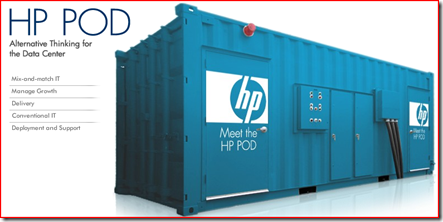
HP calls its offering a "Performance Optimized Data Center" or POD. HP joins IBM by providing the option of filling containers not just with the vendor's own kit, but also a wide variety of third-party metal.

"We engineered our PODs to be the most flexible infrastructure in the industry," said Paul Miller, HP's marketing chief of enterprise gear. "If it can fit into a 19-inch rack, we can pretty much fit it into our POD."

Miller said customers are all about standardized hardware in the container arena. For example, the standards approach lets customers start with half a POD and then move their existing equipment into the container when they need the extra space.

Most other vendors have chosen a ground-up approach for the job — fitting their containers with specialized gear made for life in a 40-foot unit. HP, however, doesn't have new hardware for its container. But at least it's managed to cram a lot of what it currently has in there.

HP claims the shipping containers will support more than 3,500 compute nodes, or 12,000 large form factor hard drives. The company estimates that's equivalent to 4,000-plus square feet of typical data center capacity. It also promises delivery within six weeks of the customer's order.

Here is HP’s POD web site.

HP’s slick video is here.
Read more

Nortel’s Energy Efficiency Calculator

Greenmonk has a post about Nortel’s Energy Efficiency Calculator.

Nortel Energy Efficiency Calculator

Nortel announced the release their Energy Efficiency Calculator online last week.

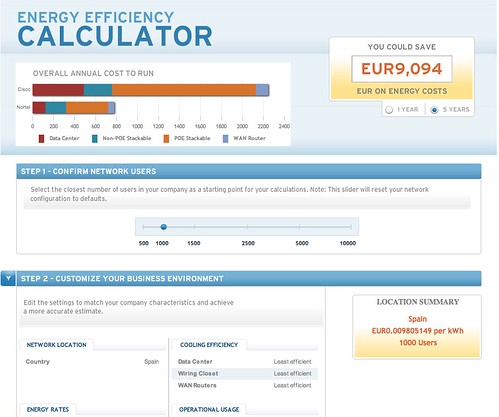
The tool is available for anyone to use after a quick registration (name, email and country) and uses best guestimates to give figures for energy spend.

The data are highly customisable, you can vary country, energy costs, company setup (network, no. of employees, etc.). It outputs costs to run the network infrastructure, kWh consumed, MBTUs generated and CO2 emissions.

This is an extension of the “Cisco Energy Tax” campaign which Nortel have been running very successfully now for some time.

And, they close throwing out a challenge to Cisco

Having said that, this is a neat tool and reinforces the connection for companies between saving costs and lowering CO2 emissions.

Now Cisco, where is your rebuttal? ;-)

[Disclosure: Nortel are a GreenMonk client]

Nortel must be pleased with its Green Data Center efforts it announced at Interop.

Read more

Microsoft Research Paper on SSD Performance and Design Tradeoffs

StorageMojo has a post about Microsoft Research’s paper on Design TradeOffs of SSD.

Design Tradeoffs for SSD Performance

July 15th, 2008 by Robin Harris in Architecture, Future Tech, SSD/Flash Disk

A new Usenix paper looks at NAND flash SSD performance. From a team at Microsoft Research and the University of Wisconsin, including Ted Wobber who worked on last year’s A Design for High-Performance Flash Disks [see Flash chance for the StorageMojo take on that excellent paper - a post Ted was kind enough to review and comment on].

Design Tradeoffs for SSD Performance (by Nitin Agrawal, Vijayan Prabhakaran, Ted Wobber, John D. Davis, Mark Manasse and Rina Panigrahy) makes a deep dive in flash translation layer (FTL) issues. As the authors note, flash vendors keep their FTL designs secret, so the team developed a NAND flash simulator to look at how design choices affected performance.

What they found
They ran several workloads on their trace-based simulator, including TPC-C, Exchange and some file system benchmarks. They found several critical issues in SSD design.

  • Data placement Needed for wear leveling and load balancing.
  • Parallelism Single flash chips aren’t very fast so they need to work together.
  • Write ordering Small random writes are a killer.
  • Workload management You can optimize for sequential or random workloads, but managing both well is hard.

and as StorageMojo closes you need to read the Microsoft Research paper to get a full understanding.

The StorageMojo take
This paper is too rich in detail to summarize well. If understanding SSD controller design is important there is no substitute for a careful read.

The net is that engineers have many options in configuring and managing flash devices inside a solid state disk. The interaction of these design choices with applications is likely to remain a fruitful area of study for years to come.

Expect to see many performance oddities as new solid state disk designs are released. This is a different world than disk drives. There is much innovation and much to learn.

A macro longer-term trade-off is the extent to which SSD vendors should attempt to alter operating system behavior to better match SSDs. In the short term designers must conform to today’s disk I/O oriented operating systems. In the long term however, there must be major opportunities to tweak operating systems to enhance solid-state disk performance.

For this reason SSDs is may find their best short term market to be inside storage arrays where array vendors have complete control over the interface to the array software. This will be no small advantage as array vendors struggle to remain relevant in a world where high performance solid state disks have the potential to replace midsize arrays.

James Hamilton also has a post referring to Spansion’s Flash Memory announcement.

Read more

Giving Cloud Storage a Try

If you have been thinking about giving Cloud Storage a try here is a blog post on Amazon.com’s Simple Storage Service.

amazons-s3-logo Amazon S3 (Simple Storage Service) is an easy and inexpensive Internet hard-drive from Amazon Web Services (AWS) with absolutely no limits.

Now some people assume that Amazon S3 is a storage service meant primarily for web start-ups who store data in-the-cloud but that’s not correct because just about anyone (home users included) can benefit from S3.

For instance, you may backup your large music collection or even your entire computer hard-drive on S3. Similarly, bloggers can use Amazon S3 to store web images without worrying too much about their bandwidth bills.

If you never had a chance to explore Amazon S3 before, read the following guide that makes S3 simple even for non-geeks. It has all the information and tools you would need to quickly get started with Amazon S3.

amazon-aws-secret-keyThe Basic Requirements:

To use Amazon S3 service, you’ll need an Amazon account (yes, it’s free; you pay only if you buy something from them) and an Amazon AWS S3 account.

Now go to AWS Access Key Identifiers and generate a unique Access Key ID + Secret Access Key pair that is required for using Amazon S3.

The post continues with a variety of tools you can use.

Read more

Intel IT: Relevance of Architecture – Closed Loop Feedback System

I found this following blog post on Intel’s Expert Center for IT best practices. It’s kind of a long post, but makes good points on the importance of architecture for Manageability and Automation which are key methods for a Green Data Center

Intel Open Port: Intel vPro Expert Center Blog: Relevance of Architecture: Part 3 - How Architecture Can Help

The primary role of architecture is to provide an orchestrated plan to meet short term and long term Manageability & Automation (M&A) objectives. Architecture is all about technical planning and can enable reduced operational costs and agility if done correctly. I strongly believe that architecture can help accelerate the rate of change and provide real value for "M" and for "A".

The below graphic is one which does a good job of articulating the need for a manageability bus.


image

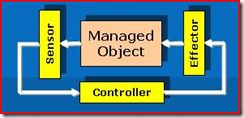
Unfortunately, he misses the simplicity of explaining what you need is a closed loop feedback system as he has this diagram which is drawn backwards.

image

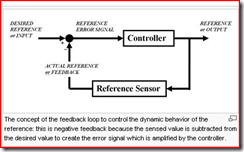
This is the diagram he should have used. http://en.wikipedia.org/wiki/Control_theory

image

I am amazed at how often the IT community misses the opportunity to use control theory to explain management systems.  Most IT systems actually run open loop.

On a related topic I had a chance to meet with a fellow consultant, Michael Emanuel who has worked on IT management tools, and knows of a company developing some innovative solutions to the challenge of building a closed loop management tool for a Green Data Center.  After I  have had a chance to review the product features, it will be in a future blog post.

Read more