Virtualization Projects, Misguided focus on CPU vs. IO, Infiniband vs. 10GbE

Voltaire had a press announcement about how IT executives lack of the green (money) to go green.

Voltaire Survey Shows IT Executives See Greening of Data Center as Mission-Critical, But Lack “Green” To Go Green

Voltaire Develops “50-50-300” Pledge and Efficiency Calculator in Response to Findings

BILLERICA, Mass. and HERZLIYA, Israel – September 3, 2008 – A recent survey by Voltaire Ltd. (NASDAQ: VOLT) found that, although CIOs and senior IT executives overwhelmingly believe that a green data center will become mission-critical, many lack the “green” to go green.

Nearly 90 percent of executives surveyed said they believe that greening their data centers will be crucial to meeting their companies’ business objectives in 2009, and 57 percent said they believe going green gives them a competitive advantage. Yet, 76 percent do not have a committed budget for a greening policy. The survey queried CIOs, CTOs, and senior IT executives who attended the 2008 MIT Sloan CIO Symposium.

In response to these findings, Voltaire developed a “50-50-300 Pledge,” which states that IT executives, working with the company to deploy a Voltaire unified fabric, can save 50 percent on power/cooling related to server interconnections and 50 percent on hardware allocation/usage, while delivering up to a 300 percent increase in application performance. Voltaire has also developed an Efficiency Calculator (www.voltaire.com/calculator) to help IT executives estimate their network energy and cost savings and justify the investment.

“It appears from these findings that senior IT management is still in the planning phases, and they will need to prioritize funding for these important greening initiatives,” said Patrick Guay, Executive Vice President Global Sales and General Manager of Voltaire, Inc., the U.S. subsidiary of Voltaire Ltd. “We help them with the analysis and data collection in order to validate the savings they will achieve. Our numbers show that for enterprises, the return on a green data center fabric infrastructure using currently available technology is in the millions of dollars. For example, a Fortune 500 company with five data centers worldwide, and 3,000 servers per data center, can save approximately $7,400,000 per year.”

I was able to get time with Patrck Guay  on Sept 5 to discuss more about Voltaire's solution. What has me interested in Voltaire's is their strategy of going after the early adopter market of areas like supercomputing and high performance computing where performance per watt is becoming a standard practice. As users have needed faster IO, evaluating technologies like 10Gb Ethernet, Voltaire has been able to get Infiniband based solutions in as better performance per watt solution. I asked Patrick if he saw much interest in his products in the dev/test/quality server labs in enterprises, and he said this area is another early adopter of Voltaire's product with a 24 port switch including full Infiniband network support in an entry switch.

High Performance, Low Latency InfiniBand Switching for Small-to-Medium-Sized Clusters and Grids
Overview
isr 9024, Linux, low latency, Massachusetts, non-blocking switch, supercomputer The Voltaire Grid Switch 9024 is a high performance, low latency, fully non-blocking switch for high performance computing (HPC) clusters and grids. Offering available bandwidth of up to 960 Gbps, the Grid Switch 9024 is a cost-effective alternative to proprietary interconnect technologies. With twenty-four 20 or 10 Gbps ports in a 1U chassis, the standards-based Grid Switch 9024 delivers high bandwidth and low latency at affordable pricing. Using the Grid Switch 9024, you can build high performance clusters and grids that scale from several to tens of nodes.

    Key Features
  • 10-20 Gbps performance for clusters and grids
  • Ultra-low latency: under 140 nanoseconds
  • Available bandwidth of up to 960 Gbps
  • Built-in high availability
  • Ideal for scientific, commercial HPC and enterprise applications
  • Architected to provide high MTBF
  • Powerful CPU to allow management of fabrics, as well as device management capabilities

Here is Voltaire's 50-50-300 pledge.

Voltaire is the only company today that can deliver a unified fabric based on InfiniBand, which uses 10x less power per port than
10 Gig E
. Unified fabrics provide seamless, high performance networking services between InfiniBand fabrics, Fibre Channel SANs and Ethernet LANs over a single high performance fabric with multiple virtual interfaces replacing actual physical adapters.

Most of the focus on Greening the data center is on the CPU, getting the most performance per watt out of each processor. The problem is this leads many to focus on a high CPU utilization as a measure of efficiency. You can imagine how some IT departments are showing off their CPU utilization numbers as proof they are more efficient.  But, as many of us have experienced in a bad application, driver, or technology like indexing that hogs the processor on your laptop - there is a flaw of a narrow-minded focus on CPU utilization.

Most server HW is IO bound, by memory, disk, network, and CPU IO to these devices.  As HP just announced its BL495C blade for virtualization, HP focused on 3 issues to tout its strengths - more DIMMs, SSD, and 10GbE - all IO issues. The blade itself is only 2 quadcore AMD processors with claims of supporting up to 32 VMs.

Which brings up an interesting side by side comparison.  HP compared itself vs. Dell and IBM. What I would like to see is a Sun based Infiniband (Voltaire) blade comparison vs. HP's BL495C & 10 GbE.

  1. 10 GbE vs. Infiniband.
  2. HP's AMD implementation vs. Sun's AMD implementation. 

What is more efficient? 

And that brings up the problem of how do you get numbers you believe and trust.

Which probably explains why Voltaire has seen the need to pledge its claims as we have all learned to filter the greenwashing.

Voltaire has a white paper here.

White Paper

Reducing Data Center Energy Costs up to 50% By Consolidating and Virtualizing your Network

This white paper describes how combining data center networks into one "fabric" will have a significant impact on o

Read more

GreenM3’s Google Search Rankings, Diving into a Detail

On purpose I am not going to put the text for what I am discussing in this blog, but use pictures as I don’t want users out there hitting this blog entry by mistake.

Today I was going over some use stats on TypePad, the hosting site I use for my blog, and found some interesting search results showing up and I was getting hits on my site.

image

Out of curiosity I opened the referring links for google search, and guess what I beat HP’s own product page for the image

Belows is a screen snapshot of a google search. 

image

I don’t know how long I’ll beat HP’s own page, but I am also amazed I beat all the rest of the websites like bladewatch, byteandswitch, techtarget, informationweek, theregister, and eweek..  If I add HP to image , then HP’s product side jumps to #1, and greenm3 drops to #4.

This type of traffic could go to explain why I am getting more contacts from companies to blog about their solutions in the Green Data Center space.

Read more

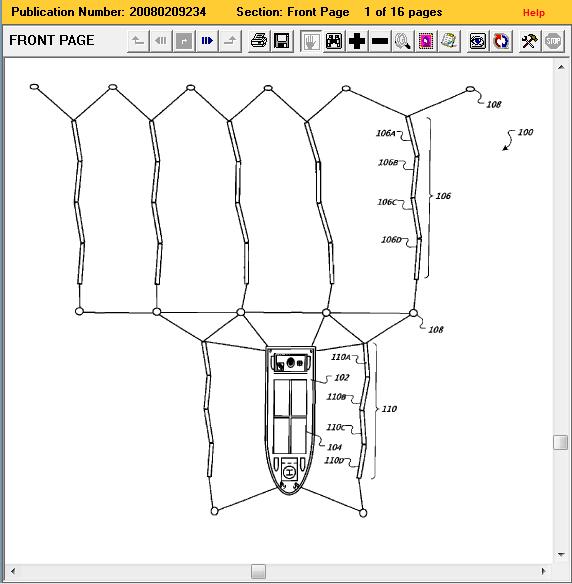
Google’s Floating Green (Water-Based) Data Center Patent

SlashDot has a post on the Google Navy.

theodp writes"Is Google preparing to launch its own Navy? In its just-published application for a patent on the Water-Based Data Center, Google envisions a world where 'computing centers are located on a ship or ships, which are then anchored in a water body from which energy from natural motion of the water may be captured, and turned into electricity and/or pumping power for cooling pumps to carry heat away from computers in the data center.' And you thought The Onion was joking when it reported on Google's Fleet of Naval Warships!"

DataCenterKnowledge’s Rich Miller adds more details for the data center crowd.

In a startling new take on data center engineering, Google has filed a patent for a “water-based data center” that uses the ocean to provide power and cooling. The patent also confirms Google’s development of a container-based data center, describing “crane-removable modules” to power the computing platforms.

The floating data centers would be located 3 to 7 miles from shore, in 50 to 70 meters of water. If perfected, this approach could be used to build 40 megawatt data centers that don’t require real estate or property taxes.

…

The patent filing says the data centers would be located 3 to 7 miles offshore, which may signal that Google’s interest in undersea cables goes beyond connectivity between land-based data centers. While the floating data centers would include power and cooling, they would still require industrial strength connectivity. Earlier this year Google said it would partner with five other companies in building an undersea communications cable across the Pacific, which could provide high-speed connectivity to new Google data centers in Asia.

Another alternative for power could be floating nuclear plants.

Russia is already building floating nuclear power plants for Arctic operations.

Given that we are already supposed to be facing the twin threats of terrorism and environmental meltdown, you might think the last thing the world needs is a fleet of floating nuclear power plants (NPPs). Russia disagrees, and confirmed this week that construction has started on the first of seven ships carrying a 70MW nuclear reactor. The ships will provide power to remote coastal towns, or be sold abroad, with 12 countries, including Algeria and Indonesia, said to have expressed interest.

But, keep in mind as some of the slashdot commentators, the sea is a harsh environment.

by Jaktar (975138) on Saturday September 06, @03:36PM (#24903267)

Having served on a Navy ship I can point out a few problems:

First, sea water temperatures vary greatly depending on the part of the world you're operating in. It's not uncommon for surface sea water temps to be in the 85F(30C)+ range for most areas where you're likely to moor a ship. The AC units that we used were barely able to keep the small server room that I ran cool under those conditions.

Second, the motion of the ship caused premature drive failures due to the pitch and roll of the ship. This could be alleviated with solid state drives, but that's a bit off for a data center at the moment.

Lastly, bandwidth and latency are problematic. Sure, Google could just buy a satellite, but they can't modify the 2000ms latency. Depending on ship size and sea conditions, keeping a satellite lock may be an issue as well due to roll.

All I can really say to Google is, good luck with all that!

Keep in mind this could be a defensive patent and not an actual intent for Google to build data centers at sea.

Read more

HP Announces Virtualization Blade - BL495C

HP (NYSE: HWP) announced its BL495C, claiming the first blade designed for virtualization.

Overview The HP ProLiant BL495c virtualization blade is the world’s first server blade designed specifically to host virtual machines. The BL495c is the ideal platform for virtualized environments that require significant memory, data storage and network connections to optimize server performance.


The BL495c eliminates performance bottlenecks by accelerating virtual server speed with twice the memory capacity, solid state drives that use significantly less power, and up to two more Ethernet network connections than competitive offerings.(1) Based on the typical configuration of 4 gigabytes (GB) per virtual machine (VM), the BL495c can support a minimum of 32 VMs. Customers filling an HP BladeSystem c7000 enclosure with 16 BL495c server blades can utilize up to 512 VMs versus 256 and 112 from the closest competitors.(2)


“Customers looking to maximize the performance of their virtualized infrastructure have the answer with the BL495c. It was architected and optimized specifically for virtual machines,” said Mark Potter, vice president, HP BladeSystem. “With its memory, storage and I/O capabilities, the BL495c is unmatched in the industry and redefines server blades for virtualization.”

The BL495C ships with 10GB NICs.  In a video on this page, HP specifically points out comparisons vs. IBM and Dells used of 1GB NIC and half the DIMM slots.  HP’s support for SSD also is another point. 

10GB vs 1 GB. 2 times the DIMMs. Support for SSD.

It is interesting that HP has added all this IO capability to dual proc, quadcore AMD blade. This supports the idea that IO is the big issue in virtualization hardware.

This announcement was part of a bigger HP Virtualization initiative.

HP Encourages CIOs to Rethink Virtualization in Business Terms

HP has expanded its industry-leading virtualization portfolio to maximize better business outcomes for customers. To meet the growing demands of technology environments, HP is providing businesses with the virtualization tools and strategies needed to rethink infrastructure management, client architectures and barriers to building and organizing infrastructures.

HP's latest hardware, software and services offerings enable enterprises to blend physical and virtual assets to expand virtualization beyond the data center, providing new ways for customers to accelerate growth, lower cost and mitigate risk.

Read more

Extremes of Desktops: Green vs. Gaming

WSJ has an article about the growth of Green Desktops.

Computer manufacturers, chip makers and software companies are developing "greener" products for environmentally conscious consumers. While some tech companies are developing more energy-efficient product lines, others are releasing software to make existing computers consume less. And electronics manufacturers are expanding ways to make new computers out of recycled materials, as well as encourage customers to recycle old machines. Consumers may pay a slight premium for some eco-friendly electronics, but many prices will be comparable with traditional offerings.

Several factors are pushing companies to be greener. Many want to stay ahead of environmental legislation and to garner favor with green investors, says Christopher Mines, an analyst with Forrester Research Inc. And with energy prices high, they trying to appeal to people like Ms. Conrad, who are looking for ways to chip away at expenses.

Forrester surveyed 5,000 U.S. adults and found that 12% are willing to pay extra for electronics that use less energy or are made by an environmentally friendly company. Companies think this number will grow, Mr. Mines says. "They are looking to polish up their image with consumers," he adds.

The exception to the Green movement is the gaming community as news.com points out with machines requiring their own circuits to keep from tripping breakers.

There is an ungreen revolution taking place in enthusiast game PC circles.

A 1,250-watt power supply--this one from Cooler Master--is the largest a game PC maker will install today.

A 1,250-watt power supply--this one from Cooler Master--is the largest a game PC maker will install today.

(Credit: Cooler Master)

The eye-opening graphics possible on today's game PCs come at a cost: light-dimming power consumption. The trend, rooted in the perennial quest for more speed, bucks the overall greening of the PC industry.

Green PC designs have become more than just practical; they're cool. Power-sipping Netbooks are in, as are small desktops like the Dell Studio Hybrid and Hewlett-Packard Pavilion Slimline.

This is not the case for high-end gaming PCs, where bigger is better.

…

It's an ominous trend, according to box makers. "If this trend does continue, then, yes, it will give us problems," said George Yang, an engineer at Los Angeles-based game rig maker IBuyPower. "A regular home user would have to have an electrician come in, get the outlet out, and plug in a higher breaker," Yang said. Today, some of the higher-end systems with big power supplies require a special wall power socket, according to Yang.

Other game rig makers are equally concerned. "I swore that I'd never break 1,000 (watts)," said Kelt Reeves, president of game PC maker Falcon Northwest. "Unfortunately, that's been the solution for the past several years. Bigger, bigger, bigger power supplies."

"A regular home user would have to have an electrician come in, get the outlet out, and plug in a higher breaker."

--George Yang, IBuyPower engineer

Reeves says that 1,200 watts is now essential for gaming systems based on multiple boards from Nvidia or AMD's ATI graphics unit. "With three GTX 280s or two of the R700 cards, we're recommending they go with a 1,200-watt power supply," Reeves said, referring to the newest graphics chips from Nvidia and ATI respectively.

Many of these gamers are unaware that 1.34 lbs of CO2 are generated per kW hour.  So their 4 hour gaming session could generate over 5 lbs of C02 on one of these high end 1,000 watt machines.

For reference, driving is still one of the worse carbon emitters with 20 lbs of C02 per gallon of gas.

Wouldn’t it be interesting as time goes on that the same way some countries tax cars with big engines, a government decides to tax high power consuming desktops.  What is the effect on society if a desktop over 300 watts was taxed?

Read more