Real-time and Long-term Efficiency Montoring, example from Lincoln 2011 MKZ Hybrid SmartGauge - leaves and flowers

GoodCleanTech has a post on the SmartGauge in the 2011 Lincoln MKZ hybrid that add long term fuel efficiency monitoring to the real time MPG numbers.

2011 Lincoln MKZ Hybrid to Get Upgraded SmartGauge
Categories: Automotive
The upcoming 2011 Lincoln MKZ hybrid, which is based on the existing Ford Fusion hybrid, will feature an updated SmartGauge layout, AutoblogGreen reports.
The twin 4.3-inch LCDs will bracket a centrally mounted speedometer as before. But the gauges will feature a newer, green-gold design, plus long-term efficiency indicators in the form of apple blossoms.
You read that right: after the first 4-6 weeks, if you've been driving efficiently over time, the first flowers will begin to appear.
The flowers start out as little buds, and then grow into smaller and then finally larger flowers, the report said. According to Ford, earning all of the flowers on the display means you saved about $8,000 in fuel costs and 30 tons of CO2 emissions over the lifetime of the car; I imagine that last achievement will take a while.

In this instrument gauge to the right is the SmartGauge.

image

image 

The idea is good, but a challenge to apply to data center efficiency monitoring in there isn't a simple metric like PUE that measure the overall efficiency of resource consumption and work done.

Lincoln did usability testing to figure out this gauge.  There are ways to develop a gauge like this for data centers, but it requires integration of the work performed by the data center which requires a visibility to the SLAs for services run in the data center.

Read more

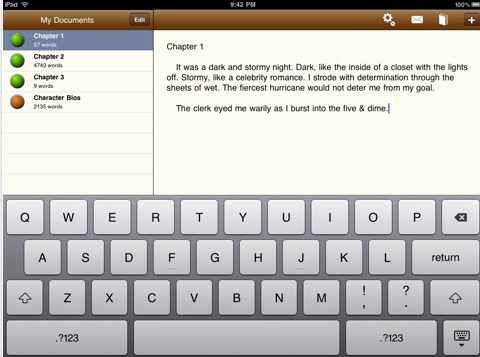
A peak at how bloggers work, when one tries to blog from an iPad

Blogging is an interesting skill to develop.  A friend sent this article on as something I would find interesting as I recently passed on an iPad purchase and bought a Thinkpad.X200 TabletPC.

I'll reference this article with points to help you see how a blogger works.  One of the problems the iPad blog post runs into is the lack of multitasking.

Secondly, there’s the lack of multitasking in the iPad, which makes for working between apps and conducting research painfully difficult. A couple of multitasking apps might be helpful. For instance, BrowserNotes  and MyMultiView allow you to open web pages and a notepad in the same application. There’s also iAnnotate PDF for reading and annotating PDFs. But these apps only go so far. There are still improvements that Apple needs to make for its mobile devices to get the one-open app limitation.

Why is multitasking so important, because part of blogging is you have many things up at same time to pull your research together.

The Wall of Limitations
If novel writing were what you wanted to do on the iPad, then you probably could get by just fine. But if the writing you do requires researching, quoting text, embedding URLs, adding images blog posts, and multitasking between apps—all of which is what bloggers do—then the iPad is going to push you back to your Mac desktop or laptop.

Being able to cut and paste is critical.  I use Windows 7 Snipping Tool consistently to grab screen shots and paste them into blog entries.  iPad clipboard functionality is ironically limited compared to use on the Mac.

Thirdly, a big issue for me as a blogger is the lack of a universal clipboard manager. No prolific blogger can pound out writing without a way to retrieve multiple snippets of text from the clipboard. The iPad, of course, like the iPhone, only saves one copy of text at a time. I’m not a developer, but I‘m pretty sure that Apple can include some sort of clipboard manager that can be accessed at least through Mail and word processing apps. There’s enough Mac desktop-based clipboard managers out there that Apple could easily borrow code and produce something similar for the iPad.

I use Windows Live Write a WYSIWG blogging tool.  And, found it painful to hear the writer describe the use of editing tools on the iPad.

Writing Apps 
There are plenty of writing apps for the iPad, beyond Pages, which work great up to a point for text editing. Apps like SimpleNote, MyWritingNook, and even the default Notebook for the iPad can be used draft pieces of writing.

And, don't forget if you are going to write you'll need the external keyboard.

However, I must say that serious writing is best done using an external keyboard. Apple’s wireless keyboard is the one I use, and I found it to be the best keyboard I‘ve ever used. The keys are quick and responsive, and the keyboard‘s small size makes it perfect for the iPad.

The author threw the conclusion at the beginning and I'll use it at the end.

Can You Blog On the iPad?

by Bakari Chavanu Jun 04, 2010

Can you blog on the iPad? The quick and honest answer is, no. Not as effectively as you might like.

This post is written in less than 10 minutes, and that includes reading, bouncing back and forth multitasking to the article.

If you can't hammer a post out in less than 10 minutes, look for another blogging process.

Read more

A Random Humorous Article about Google and Apple Data Centers

I started reading this post from CNET Asia expecting to learn something.  What I learned is how hard it is for a reporter to get the facts right in context to explain anything meaningful.

I am sure any of you reading this will get confused.  But, is good for a few laughs.

The war in the clouds : How massive data centers will change the war venue

Jun 2, 2010 15:10

I have been writing this article since March 17, found it in my "not published" tray, so I decided to finish it today, There are data centers and there are DATA CENTERS. What is a data center? Data center infrastructure layers are power, cooling, telecoms, data rooms and network operations center. In May 2008, Jeff Dean spoke at the Google I/O  conference highlighting some information on the inner workings of their data center and ambitious plans. With already 36 data centers around the world in 2008 and over 200,000 servers, that is a lot.

OK. Here is one that got me chuckling.

Current hardware


Servers are commodity-class x86 PCs running customized versions of Linux. The goal is to purchase CPU generations that offer the best performance per dollar, not absolute performance.[8] Estimates of the power required for over 450,000 servers range upward of 20 megawatts

44 Watts per Server with a PUE of 1.0.

He thinks the Apple Maiden Data Center is operating.

Apple has been building a MDC (massive data center) in Maiden North Carolina, and is said to have gone into operation already

And, the funniest one yet. is he thinks Eric Schmidt and Steve Jobs would discuss data centers.

It is said that Eric Schmidt stole all the secrets from Apple during his days as a board member of Apple, but knowing Steve Jobs, I have a feeling Steve would have picked Eric's brains on how to construct, run and use a data center as well. I find it unlikely that Apple would launch such an aggressive investment (yes, Apple's data center is the biggest and most expensive in the corporate world) into a data center if it did not have confidence on construction, operation, usage, returns and investment.

I hope the data center execs get a laugh of this one.

Read more

Greenpeace says Bill Gates Climate Leadership is not transferred to Microsoft, says Google is the Leader

Greenpeace is an organization which wants to drive changes.  In this blog post they start out pointing out Bill Gates Climate position.

Does Microsoft Do as Bill Gates Says on Climate?

Blogpost by Jodie - June 2, 2010 at 10:00 PMAdd comment

photo by Thomas Hawk

In January, Bill Gates published an argument about solving climate change titled “Why We Need Innovation, Not Just Insulation”. As you may have guessed, Gates’ point is that energy efficiency alone will not achieve us the emissions cuts scientists say are necessary to avoid the most catastrophic effects of climate change. Innovation, Gates says, is key to getting the bulk of emissions - those from transportation and electricity generation - down to zero.

The points out the inconsistency of how Microsoft performs as a company.  Bill is still Chairman of the Board.

Given the scope of the problem, combating climate change is going to require all of the above -- innovation, private and government sector investment, and regulation. Perhaps a more important question, then, given Gates' power and influence as the founder and current Board Chair of Microsoft, is whether he can influence the company to offer the innovative solutions needed to fight the climate crisis.


Is Gates putting his money where his mouth is?


We recently evaluated Microsoft on its climate leadership efforts and discovered that, even in the realm of innovation, Gates’ company has a way to go if it intends to meaningfully address climate change with technology. In fact, Microsoft receives only 31 points out of 100 on the latest version of the Cool IT Leaderboard.

Then they hit a pain point.

Thus far, Microsoft’s CEO, Steve Ballmer, has failed to articulate the urgent need for government policy to drive a clean energy transformation. By comparison, Microsoft’s competitor, Google, is the top scoring Leaderboard company on advocacy for the clear position taken by its CEO, Eric Schmidt, in support of political action to drive transformative investment in clean energy technologies.

And close by stating a paradox.

If innovation and government encouragement are what IT pioneer, Gates, says will get us to zero emissions, shouldn’t an IT behemoth like Microsoft be demonstrating stronger leadership to get us there?

Watch out for the author Jodie if that is really their name.  This is the same author who scared the Uptime Symposium audience.

Greenpeace strikes fear in Uptime Symposium, continues No Coal Data Center efforts

I was talking to a friend who was at Uptime Symposium and he asked if  I heard that Greenpeace was there and Greenpeace asked Mike Manos a question in his CO2Kpresentation.  The fear in the crowd reached levels not typical as they knew they knew Greenpeace has target data centers as the IT polluters like the way Greenpeace has targeted Facebook, and no one knew Greenpeace was attending.  No sane data center event is going to promote that Greenpeace will be there.  See below for Greenpeace's latest move versus Dell.

image

He commented that the Greenpeace question to Mike was a softball question.  I told him of course, Mike is out there discussing issues Greenpeace supports.  They are not going to attack Mike.

Another friend send me a link to the Greenpeace blog post based on Uptime attendance.

Read more

Ubuntu's Founder saw questions being asked about ARM in server and cloud tracks

Mark Shuttleworth writes a post that got my attention.

At our last UDS in Belgium it was notable how many people were interested in the ARM architecture. There have always been sessions at UDS about lightweight environments for the consumer electronics and embedded community, but this felt tangibly different. I saw questions being asked about ARM in server and cloud tracks, for example, and in desktop tracks. That’s new.

Who is Mark Shuttleworth?

Biography

Mark is founder of the Ubuntu Project, an enterprise Linux distribution that is freely available worldwide and has both cutting-edge desktop and enterprise server editions, and has become very popular.

The founder of Ubuntu felt tangible different at the Ubuntu Developer Summit seeing enthusiasm for ARM based Servers and Cloud Computing.

And Mark is excited about the Linaro announcement.

So I’m very excited at today’s announcement of Linaro, an initiative by the ARM partner ecosystem including Freescale, IBM, Samsung, ST-Ericsson and TI, to accelerate and unify the field of Linux on ARM. That is going to make it much easier for developers to target ARM generally, and build solutions that can work with the amazing diversity of ARM hardware that exists today.

Linaro is using open source ideas, and Mark plans to keep Ubuntu in sync with Linaro.

Linaro is impressively open: www.linaro.org has details of open engineering summits, an open wiki, mailing lists etc. The teams behind the work are committed to upstreaming their output so it will appear in all the distributions, sooner or later. The images produced will all be royalty free. And we’re working closely with the Linaro team, so the cadence of the releases will be rigorous, with a six month cycle that enables Linaro to include all work that happens in Ubuntu in each release of Linaro. There isn’t a “whole new distribution”, because a lot of the work will happen upstream, and where bits are needed, they will be derived from Ubuntu and Debian, which is quite familiar to many developers.

For more information about Linaro here is an executive PDF.

image

And Mark does an excellent job of pointing out the value of Linaro.

The nature of the work seems to break down into four different areas.

First, there are teams focused on enabling specific new hardware from each of the participating vendors. Over time, we’ll see real convergence in the kernel used, with work like Grant Likely’s device tree forming the fabric by which differences can be accommodated in a unified kernel. As an aside, we think we can harness the same effort in Ubuntu on other architectures as well as ARM to solve many of the thorny problems in linux audio support.

Second, there are teams focused on the middleware which is common to all platforms: choosing APIs and ensuring that those are properly maintained and documented so that people can deliver any different user experience with best-of-breed open tools.

Third, there are teams focused on advancing the state of the art. For example, these teams might accelerate the evolution of the compiler technology, or the graphics subsystem, or provide new APIs for multitouch gestures, or geolocation. That work benefits the entire ecosystem equally.

And finally, there are teams aimed at providing out of the box “heads” for different user experiences. By “head” we mean a particular user experience, which might range from the minimalist (console, for developers) to the sophisticated (like KDE for a netbook). Over time, as more partners join, the set of supported “heads” will grow – ideally in future you’ll be able to bring up a Gnome head, or a KDE head, or a Chrome OS head, or an Android head, or a MeeGo head, trivially. We already have goot precedent for this in Ubuntu with support for KDE, Gnome, LXE and server heads, so everyone’s confident this will work well.

The diversity in the Linux ecosystem is fantastic. In part, Linaro grows that diversity: there’s a new name that folks need to be aware of and think about. But importantly, Linaro also serves to simplify and unify pieces of the ecosystem that have historically been hard to bring together. If you know Ubuntu, then you’ll find Linaro instantly familiar: we’ll share repositories to a very large extent, so things that “just work” in Ubuntu will “just work” with Linaro too.

When you read this and go back to Mark's learning about the interest for ARM Servers, do you have any doubt Linux ARM Servers will be coming soon to the data center?
Read more