Tip for building a better data center, work with the best salesperson

I have often joked that one of things people don't understand in the data center industry is many times the vendor selected goes to who has the best salesperson.  The experienced data center professionals know the reality of what they need and are careful of sales tactics.  With multi-million dollar equipment purchases the commissions are huge.

Ironically, some of the most arrogant people are the ones who are most vulnerable as a good salesperson can assess the arrogant ego easily and play them well.

exaggerating or disposed to exaggerate one's own worth or importance often by an overbearing manner

A good salesperson has the following skills.

* Cherish the client at all times

* Treat clients as you would your best friend

* Listen to clients and decipher their needs

* Make (or give) clients what they need

* Price your product to its dollarized value (in other words don't sell price sell the value received from purchasing)

* Give your clients more than they expect

* Thank each client sincerely and often

I was reading James Hamilton's blog about his boat and he makes an excellent point most miss.

If you do plan to request price quotes, be aware that if you approach a company without choosing a salesperson, one is assigned to you and this can be difficult to change later. Get feedback from other owners and explicitly choose one to work with before approaching the builder. The salesperson can have a major impact on the project, particularly if you plan major customizations.

image

In your effort to get the best design and best equipment, how many of you look for the best salesperson?

Read more

Changing the Site Selection game, being in Control, leveraging Mike Manos's post

Mike Manos is extremely busy now and doesn't blog as much as he used to, but when he does post he still gets lots of traffic.  Mike and I were laughing once when a corporate data center blog was discussing proudly how many people they reached in a month with their blog. Mike said, "I get that much in less than a week."  Which brings up a good point of how your view changes if you knew what you don't know.  If they had known Mike gets 10x more traffic than them in a month, they'd wonder how influential they really were, and whether they are successful or not.

I always enjoy reading Mike's post, figuring out ways to use less words than he does, but also reading what Mike is trying to say, but hasn't put it down in words.  Luckily leveraging multiple discussions with Mike, I can take a pretty stab at what he was thinking of when he was writing.

Mike posted July 14 on Site Selection.

Site Selection,Data Center Clustering and their Interaction

July 14, 2010 by mmanos

I have written many times on the importance of the site selection for data centers and its growing importance when one considers the regulatory and legislative efforts underway globally.   Those who make their living in this space know that this is going to have a significant impact on the future landscape of these electronic bit factories.   The on-going long term operational costs over the life of the facility,  their use of natural resources (such as power) and what they house and protect (PII data or Personally Identifiable Information) are even now significantly impacting this process for many large global firms, and is making its way into the real estate community.  This is requiring a series of crash courses in information security, power regulation and rate structures, and other complex issues for many in the Real Estate community.

What I think Mike is trying to say is it is much easier to build a better performing low cost data center with the right site.  But, few understand the complex relationships that affect data center performance.  I've always found it naive and over simplistic when companies and consultants use a long list of weighted criteria as the method to pick a site, assuming the highest score is the best site.  This works for those who the most complex math they are comfortable with is multiplication and addition, but think about this hundreds of millions of dollars of CAPex, OPex, and IT equipment will be spent over a data center lifetime, and you are going to make the decision based on addition and multiplication?

I believe modeling techniques should be applied to ask the question "what is the right site?"  And, Mike has his own mental models of what is right and wrong.

The right site for what?  Pick 3 - 5 data center designs that you think you would want to build and use them as models to represent what you intend to build.  If you have built the model with enough detail you should see the relationships that Mike talks about.

Tying into the power conversation is that of water.  With the significant drive for economization (whether water based or air-based)  water continues to be a factor.  What many people don’t understand is that in many markets the discharge water is clean to dump into the sewage system and to ‘dirty’ to discharge to retention ponds.  This causes all kinds of potential issues and understanding the underlying water landscape is important.   The size of the metropolitan sewage environments, ability to dig your own well efforts, the local water table and aquifer issues, your intended load and resulting water requirements, how the local county, muncipality, or region views discharge in general and which chemicals and in what quantities is important to think about today.  However, as the use of water increases in terms of its potential environmental scrutiny – water is quickly rising on the site selection radar of many operators and those with long term holds.

I have friends who designed a waterless cooling system in Australia due to the drought conditions.  There was a cost associated for this data center design vs. cooling towers, but when you looked at the total system it was the right design.

If you really want to be advanced you can use semantic models.

Savanna is a model-driven analysis solution for solving complex problems. The magic of Savanna is in defining models that address what’s relevant to your problem at any given point in the analysis process. Savanna’s semantic models are driven by the Thetus Publisher architecture, enabling information synthesis by offering users the unique ability to derive meaning from information sets and to bridge the gaps in information. Savanna’s innovative, mind-mapping interface provides intuitive tools for approaching analysis from a point that frames the problem rather than one that starts from the information out.

Warning this technique works, but few have the capabilities to operate in this way. Using semantic models change the game as you focus on the problems and questions to ask, and enables you to see things others cannot.

To take control of site selection you need to have data center designs in mind for what you are building.  If you are Mike Manos you can see the relationships of the site to the data center designs and how the system will operate.

If you can't do what Mike Manos does, then be prepared to make lots of mistakes even if you hire experts.  Because you are not in control and are being told what to do.  Do you think you can be a good cook by hiring a bunch of experts to tell you what to do?  You need to be in control.  Use data center designs to take control.

If you walk into a site selection consultant and say here are five data center designs I am looking at find me sites that support these designs.  When you find me a site tell me which design works best and worst on the site. You'll find out whether the consultant can do more than addition and multiplication, and whether they really understand what a good data center site is.

Read more

Complexity of Data Center Construction Projects requires challenging the status quo, site selection example

I met with a friend who has worked in the high tech start-up environment and currently works in a company that has a data center presence, and he is thinking of a career change over to data centers.  We spent a couple of hours discussing many topics, a who's who in the industry, dynamics of how the industry works, and systemic problems in the current ways.

A systemic problem is a problem due to issues inherent in the overall system,[1][2] rather than due to a specific, individual, isolated factor. Contrast with pilot error, user error or mistake.

A change to the structure, organization or policies in that system could alleviate the systemic problem. On an Ishikawa diagram (fishbone diagram) of cause-and-effect links, the source of the problem can be said to be a common cause, rather than a special cause.

My friend showed me some jobs he was thinking of applying for, and some ideas started to gel together on problems the data center industry have.

One, data centers are computers.  Google threw this idea out there.

Google: The Data Center Is the Computer

By Stacey Higginbotham Jun. 15, 2009, 11:47am PDT 1 Comment

61

Server room and devices

As folks increasingly store and access information online, the data centers powering cloud services need to be managed more like a single computing entity rather than a bunch of servers, according to a Google white paper (Google calls it a mini-book) released today.

The paper lays out the concept of warehouse-scale computers (which we have previously referred to as both web-scale computing and mega data centers), specifically how to build out the infrastructure to support Internet services managed across thousands of servers. Google’s Luiz Barroso, a distinguished engineer, and Urs Hölzle, SVP of operations, both of whom help manage and build out Google’s data center, lay out their definition of WSCs:

Most data center projects are projects where fiefdoms battle for control of budget and resources - facilities, real estate, IT ops, application groups, and various users.

Most projects start with a data center project approval at the executive level and an approval of a budget. Then the real estate group takes control on site selection.  Consultants are hired for the site selection process to figure out the right data center site.  Lots of hours are spent interviewing people making the project more complex and more expensive.

Each group maneuvers to be the owner of a piece, and it sets you down a path without an overall design.

How many site selection companies are thinking like Mike Manos's post on site selection?

Site Selection,Data Center Clustering and their Interaction

July 14, 2010 by mmanos

I have written many times on the importance of the site selection for data centers and its growing importance when one considers the regulatory and legislative efforts underway globally.   Those who make their living in this space know that this is going to have a significant impact on the future landscape of these electronic bit factories.   The on-going long term operational costs over the life of the facility,  their use of natural resources (such as power) and what they house and protect (PII data or Personally Identifiable Information) are even now significantly impacting this process for many large global firms, and is making its way into the real estate community.  This is requiring a series of crash courses in information security, power regulation and rate structures, and other complex issues for many in the Real Estate community.

...
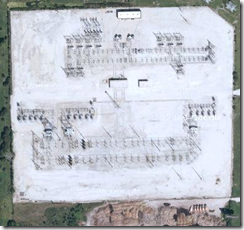

Elmhurst Electrical Yard

The Generation mix of that area has a large nuclear component which has little to no carbon impact, and generates long term stability in terms of power cost fluctuations.   According to Phil Horstmann, President of Ascent, their is tremendous interest in the site and one of the key draws is the proximity of its nearby neighbor.  In the words of one potential tenant ‘Its like the decision to go to IBM in the 80s.  Its hard to argue against a location where Microsoft or Google has placed one of its facilities.’

How can a data center site be picked without a data center design?  Do you pick a data center design and then figure out sites?  If you have not picked your cooling system design, how do you know the affect of the water supply is and the impact of water on your design.

Tying into the power conversation is that of water.  With the significant drive for economization (whether water based or air-based)  water continues to be a factor.  What many people don’t understand is that in many markets the discharge water is clean to dump into the sewage system and to ‘dirty’ to discharge to retention ponds.  This causes all kinds of potential issues and understanding the underlying water landscape is important.   The size of the metropolitan sewage environments, ability to dig your own well efforts, the local water table and aquifer issues, your intended load and resulting water requirements, how the local county, muncipality, or region views discharge in general and which chemicals and in what quantities is important to think about today.  However, as the use of water increases in terms of its potential environmental scrutiny – water is quickly rising on the site selection radar of many operators and those with long term holds.

The industry standard is you pick a site, spent million dollars plus on site selection consultants, buy a site after a long evaluation period.  Then, the rest of the system never says a word about you picking a bad site.

I get a good laugh whenever people criticize another person's site selection.

One of the ways you can change site selection is to bring in the top data center construction companies to evaluate your site before you make your final selection. "here are the 2 - 3 sites I am looking at to build a data center.  Can you tell me the pros and cons for the sites?"

I got this idea talking to data center construction executive when he said they had won a new construction project and thank god the customer didn't pick the site in another state that was a crappy site.  "Why don't you get involved before a site is selected?"  After more chatting, figured out the site selectors want to close the deal with a site selection process they control.  Bringing in data center construction experts decreases their control and shifts the control to the customer.  This is bad for the commercial real estate process.  We need to remove conflicts on interest by keeping suppliers who would influence the decision process isolated.  BS!!!

If you take the idea to the next step, why not invite the electrical contractors to the site as well.  Electrical systems are the dominant cost in a data center project.  Site characteristics will affect the electrical systems and the costs.  Why not get the electrical contractors input too.  Cooling and water would be easy to add.

Hope this gets you thinking on how to change your site selection process.

A holistic approach thinking of the data center as a computer is better than following the status quo. A process of hiring a bunch of experts who have limited knowledge on how data centers are computers.

Read more

Google adds 20 year 114 MW Renewable Energy Purchase to its Green Data Center strategy, is electricity hedging a future for data centers?

Google's Urs Hoelzle posts on Google's Official Blog their Google Energy LLC renewable energy purchase.

Reducing our carbon footprint with the direct purchase of renewable energy

7/20/2010 07:12:00 AM

When we decided in 2007 to voluntarily become carbon neutral, our intent was to take responsibility for our carbon emissions and promote sustainable environmental solutions. We approach this goal in three ways. First, we minimize our energy consumption; in fact, we’ve built some of the world’s most energy efficient data centers. Second, we seek to power our facilities with renewable energy, like we did in Mountain View, CA with one of the largest corporate solar installations. Finally, we purchase carbon offsets for the emissions we cannot directly eliminate.


We just completed a substantial 20-year green Power Purchase Agreement that allows us to take responsibility for our footprint and foster true growth in the renewable energy sector. On July 30 we will begin purchasing the clean energy from 114 megawatts of wind generation at the NextEra Energy Resources Story County II facility in Iowa at a predetermined rate for 20 years. Incorporating such a large amount of wind power into our portfolio is tricky (read more about how the deal is structured), but this power is enough to supply several data centers.

The wind farm, which began operation in December 2009, consists of 100 GE 1.5MW XLE turbines.

Google is not buying this power for its data centers.  Google is reselling the power on the spot market.

In this case, we’re buying renewable energy directly from its source – the wind farm. We cannot use this energy directly, so we’re reselling it back to the grid in the regional spot market – but retiring the RECs associated with the power. By obtaining RECs through the purchase of green power, our deal has a greater impact on the renewable industry than simply buying “naked” RECs from third parties; our long-term commitment directly frees up capital for the developer to build more wind projects.

With Google's cash reserves and long term view they have figured a better way to use their money than buying Renewable Energy Credits (REC).

Buying renewable energy directly from the developer impacts the development of renewable energy projects in ways that are more meaningful than the purchase of Renewable Energy Certificates (RECs) from third parties. RECs allow energy consumers to identify and track power made from eligible sources of renewable energy. They have value and are typically bought and sold independently of the electricity from which they are generated.

Most data center operators have discounted renewable energy as they look at the local availability.  With Google Energy LLC, Google is changing the game in the same way that Southwest Airlines added fuel hedging to its strategy being an airline.

Hedging fuel

Southwest has a longtime program to hedge fuel prices. It has purchased fuel options years in advance to smooth out fluctuations in fuel costs.[citation needed]

In 2000, Southwest said it had "adjusted its hedging strategy" to "utilize financial derivative instruments... when it appears the Company can take advantage of market conditions." Additionally, the company hoped to "take advantage of historically low jet fuel prices."[25] Southwest’s decision proved to be a prescient and, for a time, an extremely profitable effort.[citation needed]

To lock in the low historical prices Southwest believed were occurring at that time, Southwest used a mixture of swaps and call options to secure fuel in future years while paying prices they believed were low. The company also stated that with this new strategy, it faced substantial risks if the oil prices continued to go down. They did not. Previously, Southwest had been more interested in reducing volatility of oil prices. Now, they hoped to reap large gains from oil price appreciation.[citation needed]

In 2001, Southwest again substantially increased its hedging in response to projections of increased crude oil prices. The use of these hedges helped Southwest maintain its profitability during the oil shocks related to the Iraq War and later Hurricane Katrina.[citation needed]

Google can make a move few can do.  The idea of long term renewable energy purchase allows Google to be a player in defining the future energy market.

Would you bet against Google in this area?

We depend upon large quantities of electricity to power Google services and want to make large actions to support renewable energy. As we continue operating with the most energy efficient data centers and working to be carbon neutral, we’re happy to also be directly purchasing energy from renewable resources.
Posted by Urs Hoelzle, Senior Vice President, Operations

Urs Hoelzle is making his mark in the data center industry that hopefully many others will follow.

How many of you think of the value of RECs you own and can resell?  Urs knows the future value of Google Energy's REC portfolio.  It will be interesting to see Google's next move.

Read more

I built my datacenter in 5 minutes sticker

I blogged about the Amazon Web Services stickers AWS is offering, and I had an envelope full of stickers when I returned from my trip to DCD SF.

image

I took the "I built my datacenter in 5 minutes" sticker and put it on my laptop along with "work hard. have fun. make history."

image

Can your company compete against a bunch of start-ups who are building data center capacity in 5 minutes leveraging Amazon's purchasing power?

Sometimes it is speed of action that wins.

Being able to quickly add and remove capacity is a strategy to green a data center.  This method allows AWS to resell the capacity you don't need which is more efficient, cost effective, and lowers the environmental impact of compute resources.  What does your company do with its idle compute resources?

At DCD SF there was a cloud computing discussion that would have been interesting to get Amazon Web Services as a presenter.

Executive Roundtable: Game Changers – The Impact of the Cloud, Unified Computing and Applications
Managing the Scale of Data Processing, Applications, Content Storage, Data Communications, Risk, Compliance, and Governance
Wael Diab, Technical Director, Broadcom
Tom Mornini, CTO and Co-founder - Engine Yard
James Hughes, Principal Architect – Core Network Product Line – Huawei Technologies Co. Ltd (USA)
Stephen Worn, CTO & Managing Director - DatacenterDynamics

I'll see if the AWS folks would be interested in participating in a DCD event.

Read more