DatacenterDynamics reports on India’s Power Grid

DatacenterDynamics has an article on India’s power grid after their first event in India.

India's struggle for power

India is growing but power problems can still be a major issue for new projects as DatacenterDynamics finds out at its first event in India held this February

Published 21st February, 2011 by Nivedita Mohanty and Penny Jones

Wires pg 38

Data center demand is growing in India. Despite struggles with power provision, latency bottlenecks and site selection, the figures show India is seeking more data centers than ever before. India’s rise ties in with a larger story covering the whole of the Asia Pacific.

DatacenterDynamics ran its first event in India on February 15. Leading data center companies and end users will joined at the ITC Maratha to hear about how India’s data centers can help prepare the country to become the outsourcing hub of the world, and overcome IT infrastructure reliability challenges

If you are thinking of Green Data Centers in India, there is potential renewable energy sources.

India currently generates about 13,878MW of grid power from renewable resources, which accounts for 9% of total installed generation capacity. It also has the fifth largest installed windpower capacity in the world along with solar resources. That said, India’s renewable dream is still a long way off, with financing and government red-tape holding a number of projects back.

But, hydroelectric power is a challenge.

“Most of the sites where hydroelectricity is generated, for example, are not suitable for setting up data centers due to the lack of other infrastructural facilities such as roads, airports, connectivity and so on,” Reddy says. “The problem is that if you produce hydropower and use the public network to get it transferred to the data centers you can have a loss in transmission of about 20%.”

Power and Logistics issues to consider for a Brazil Data Center

WSJ has an article on Brazil’s problem supporting growth and issues with the power grid.

Brazil Economy Flickers as Bottlenecks Drive Up Prices

By PAULO PRADA

SÃO PAULO, Brazil—When the lights returned after an hours long blackout in northeast Brazil early this month, the problems were just beginning for the Camaçari industrial park, one of the country's biggest.

Restarting a data center after a power outage can take hours.  Consider after this power outage two chemical plants were offline for two weeks.

Two huge chemical plants, which make ingredients for surrounding industries, were halted for nearly two weeks for repairs. Collectively, the shutdown cost the companies, which employ about 8,000 people, at least $150 million, says Manoel Carnaúba, a vice president at Braskem SA, operator of the two plants. "You can't just stop and restart those things," he says. "The plants have to run steady to run well."

The are a lot of companies looking at expanding data center capacity in Brazil, but here is another point on the supply logistics being twice as long as China.

Compared with China, it takes goods twice as long to move the same distance, according to Paulo Fleury, director of the Rio de Janeiro-based Logistics and Supply Chain Institute. Despite government plans to spend more than $500 billion in the coming years on programs that include new infrastructure, he says, "these are long-term projects that won't ease any of the bottlenecks hurting us now."

What is the condition of Brazil’s infrastructure?

A week after the northeast power outage, a power failure in São Paulo, the country's industrial and financial hub, affected 2.5 million people on a busy Tuesday afternoon. Since 2005, Brazilian consumers on average suffered more than 16 hours of failures annually—well beyond the regulatory target. Brazil greatly expanded its generating capacity after a series of nationwide blackouts early last decade, but upkeep and investment since has been poor, specialists say. And while the grid was designed to accommodate predictable demand growth from factories and otherindustry, the surge lately comes from millions of new air conditioners, refrigerators, and other consumer goods.

Says Rafael Schechtman, a director at the Brazilian Infrastructure Center, in Rio: "Brazil isn't wired for this type of growth."

Looking for Renewable Energy funding? Look beyond DOE to USDA

When you discuss renewable energy projects for data centers almost everyone discusses Department of Energy (DOE) which makes a lot of sense.  But, what few consider is the US Department of Agriculture (USDA).  Why the USDA.  Consider this bit of funding news for 2012.

USDA Requests Renewable Energy Funds in FY 2012 Budget

Although President Obama's fiscal year (FY) 2012 proposed budget for the U.S. Department of Agriculture decreased to $23.9 billion from the $27 billion level in FY 2010, the budget still invests $6.5 billion to support renewable and clean energy. In particular, the Agriculture and Food Research Initiative is getting an increase of $8.2 million for a research initiative to develop high-quality, cost-effective feedstocks for biofuel production. And the Rural Business-Cooperative Services, which operates a renewable energy loan and grant program for the purchase of renewable energy systems and energy efficiency improvements, will see a combination of mandatory funding and grants for programs at about $57 million above the 2011 total.

The USDA connection is what  I learned from my friends in Missouri a big Aggie state.

The proposed USDA budget provides $6.1 billion for loans for electric programs, with $4 billion used for generation, transmission, and distribution of renewable energy. This sum is down from the estimated FY 2011 funding, but still provides Rural Utilities Services with extensive resources that can be used to purchase or construct peaking units in conjunction with an electric generating plant that produces electricity from solar, wind, or other intermittent source of energy. The loans also can support applicants seeking to switch from fossil fuels to renewable technologies.

You'll hear a lot about Solar, Wind in the press.  Who can ignore $5 billion for USDA renewable energy projects?

Dual Wan Router with 3G/4G modem for home office, Internet access fail over

I spend  about a 5 days a month travelling to various data center events.  The rest of the time I work from my home office or meet with people locally.  With latest news of Internet being turned off in Egypt and Libya, we take for granted having high speed internet access.  But even with a broadband dsl or cable modem, service does go down, and it can be frustrating to figure out whether the problem is in your equipment or the ISP.  Especially when you don't have Internet access.  My last outage from Comcast cable was a DNS problem at Comcast which made me switch to Google's Public DNS service.

What is Google Public DNS?

Google Public DNS is a free, global Domain Name System (DNS) resolution service, that you can use as an alternative to your current DNS provider.

To try it out:

  • Configure your network settings to use the IP addresses 8.8.8.8 and 8.8.4.4 as your DNS servers or
  • Read our configuration instructions.

If you decide to try Google Public DNS, your client programs will perform all DNS lookups using Google Public DNS.

When Comcast goes down I fire up my Verizon Mifi 2200 which I use when travelling and driving with the kids and I can give them internet access in the car to stream Netflix. 

Verizon MiFi 2200 3G Portable Wi-Fi Hotspot Review

Brian Lam

We're at least a generation away from internet on everything. Until then, the Verizon MiFi 2200 will drive one 3G cellular data connection over Wi-Fi to a handful of gadgets at once.

But, I want to automate the fail over from Comcast to another ISP.

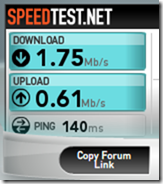
My first choice I was going to to go with, but changed my mind was a Qwest DSL line.  At $50 a month for at best 3mbps down and 680 up and bad reviews I didn't like the choice.  Until Qwest brings out fiber in my area and extends the range from the central office to my home, I  think my performance will be marginal.  And, my Mifi 2200 already does 1.5mbps down and 500 up or better.
image

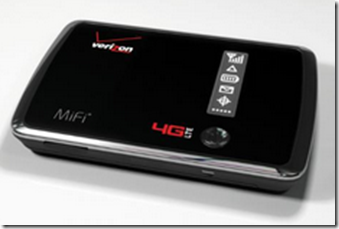
What I really want to get is the Verizon Mifi 4510 which is the 4G version of the current wireless modem I have with 10X the speed.
image

Here is Walt Mossberg's review of a Verizon 4G modem.

I disabled Wi-Fi on the ThinkPad, plugged in the LTE modem and ran 10 tests using the popular Speedtest.net website. The results were impressive. Verizon's 4G network averaged just a shade under 16 megabits per second for downloads and 6.6 mbps for uploads. That was 15 times the download speed, and 13 times the upload speed, of a Verizon 3G modem I tested immediately afterward using the same method in the same location.

To relate these speeds to real-world scenarios, I downloaded from iTunes a standard-definition episode of the TV show "The Good Wife"—a 588 megabyte file—in just seven minutes, instead of the two hours or so iTunes predicted it would take when I was using the 3G modem. I streamed several long videos, including two in HD, from the Web, and they played smooth as silk.

The Verizon mifi 4510 should be shipping within the next month.

So, what about automating the backup.  I was looking at Dual Wan Routers when I was considering Qwest DSL as a backup.  But, when going with the wireless modem as a backup I needed a 3G/4G modem backup.  Fortunately, there is a market for these type of devices for branch offices and point of sale locations.  The device that makes sense for my needs is a Cradlepoint MBR1200.

MBR1200 - FAILSAFE GIGABIT N ROUTER FOR MOBILE BROADBAND

MBR1200 - Failsafe Gigabit N Router for Mobile Broadband

ALWAYS CONNECTED

The CradlePoint MBR1200 is a robust 802.11n router with 3G/4G failover capabilities. Built for home, small business, branch offices, temporary and remote enterprise environments seeking to implement continuous, always-on connectivity.

With its failover/failback capability, the MBR1200 automatically switches to a secondary connection (either wired or wireless) when your primary service is interrupted. Once your service is restored, the MBR1200 will automatically failback to the primary connection - keeping your business online with minimal interruption to users.

Whether you’re wired or wireless, the MBR1200 Business Series Router keeps your business connected.

As soon as Verizon releases the Mifi 4150, I'll buy the Cradlepoint MBR1200.  And write a blog entry on whether I was able to get this to work and simulate losing Comcast Internet access.


Who will ship the first Thunderbolt Server? For now use a MacBook Pro as a server to test performance

10 GB Ethernet is expensive due to low volumes.  Fiber channel is lower cost, but still not high volume and not cheap enough for mass deployments.  Now that Apple and Intel have announced Thunderbolt, 10 GB IO connections will be low cost. 

Why not use Thunderbolt for SAN and network connectivity.  Look at the difference between these two designs.

Figure 1 illustrates a typical topology of building out a server cluster today, in which, while the form factors may change, the basic configuration follows a similar pattern. Given the widespread availability of open-source software and off-the-shelf hardware, companies have successfully built large topologies for their internal cloud infrastructure using this architecture.

Figure 1: Typical Data Center I/O interconnect

Figure 2 illustrates a server cluster built using a native PCIe fabric. As is evident, the usage of numerous adapters and controllers is significantly reduced and this results in a tremendous reduction in power and cost of the overall platform, while delivering better performance in terms of lower latency and higher throughput.

Figure 2: PCI Express-based Server Cluster

We'll see what server vendor is first with Thunderbolt support.  For now some innovative users could use a bunch of MacBook Pros.