The ultimate hidden test of whether users are important at a Data Center Conference, how good is the food?

I've attended many IT events and worked behind the scenes at many as well.  My wife also used to work on many events for Ziff-Davis, Seybold Publications, and IDG.  Whenever we entertain we spend lots of time planning the food we'll serve, and we both agree that good food is a must for a successful event.

I've been thinking of how I compare Uptime, 7x24 Exchange, DatacenterDynamics, Gartner Data Center Conference, and DataCenterWorld.

Sometimes what seems like a silly idea can be a test.  David Lee Roth had a story about not wanting brown M&Ms backstage.  What is explained behind the story is it was a test to see if the concert host read the complete contract and was prepared to support the multiple eighteen wheelers of gear that would arrive for a show which could create a logistics challenge for some.

Mac McKinley’s blog Boomer Opinion retells a story about the importance of reading and understanding contracts.

In his autobiography, David Lee Roth, wrote that their touring contract demanded that at each venue backstage there would be a bowl of M&Ms with all of the brown ones removed. To most that sounds like the demands of some quirky rock stars, right?

There was actually a very valid reason for this demand. At each venue, the band arrived with nine 18 wheelers full of gear. Stage setup was quite complicated and had to be done with the precision of a Swiss watch. The touring contract demanded very specific requirements of each venue. For example, one section stipulated, “There will be 15 amperage voltage sockets at 20-foot spaces, evenly, providing 19 amperes.”

According to David Lee Roth, that touring contract was voluminous and read “like a version of the Chinese Yellow Pages”. Buried in the middle of the contract, Article 126 read, “There will be no brown M&Ms in the backstage area, upon pain of forfeiture of the show, with full compensation.”

When Roth arrived at a new venue, he would walk backstage and check out the M&Ms bowl. If he saw a brown M&M in the bowl, he’d demand a line check of the entire production. He knew from past experience that when the promoter did not read the contract fully, that other problems and technical errors would occur unless they fully vetted the production setup prior to the show.

So the brown M&Ms were just a warning signal or red flag that indicated bigger issues might arise that could threaten the successful completion of the concert at that venue. It was his way of ensuring that the management and stagehands at the new venue were indeed paying attention to every detail and had read the contract thoroughly.

After reading the story about brown M&Ms and food details, it gave me the idea to evaluate the data center events based on how good the food is.  A test that is not evident.

Gartner Data Center Conference is the typical large enterprise event for 3,000 people at a Las Vegas venue.  OK, not great.  Average.

AFCOM Data Center World is less quality than Gartner Data Center Conference.

DatacenterDynamics is a one day event that is better than the other two mentioned, but different given it is a one day event without dinner.

Uptime Institute Symposium is not any better than these, but one of the most expensive to attend.  Note: many Gartner data center conference attendees get passes because of their subscription to Gartner research.

What about 7x24 Exchange?  They have the benefit of having a smaller crowd which makes serving good food easier.  This last conference had 700 attendees, and being a non-profit they put the users at the core of what they do.  So how was the food?  Better than all the above.  When talking to the folks at 7x24 Exchange they said the food has been better at their other events, and Phoenix will be better than Orlando.

This may seem like something that doesn't seem like it is that important, but when people spend the extra time thinking and planning the food to be enjoyable then they probably have spent more time thinking about how to host an enjoyable event and provide useful content.

Do sometimes you feel like you are attending an event where the #1 priority are the event executives and their business model, the #2 priority are the vendors, and the users are third on  the list?

I do.
Describing my blogger role, Fiercely Independent Guy (FIG)

I've been having a good time at 7x24 Exchange, and many of the people I see are good friends who I chat with and see regularly.  Part of going to a conference is to meet new people, and many times I am introduced as a blogger which many times brings up why I blog and how I make money.  One of my friends was describing what  I do and he made a description that is sticking in my mind.  Dave is a fiercely independent guy.

independent - free from external control and constraint; "an independent mind"; "a series of independent judgments"; "fiercely independent individualism"

I just ran into one of the new guys who I met at 7x24 before he headed out the door.  We chatted a bit, and he brought in up again.  "You are the FIG, fiercely independent guy."

This could be a fun title to put on a business card. FIG-Fiercely, Independent, Guy

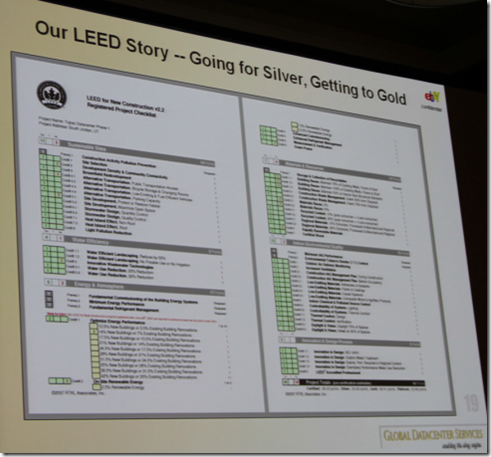
The right way to disclose Data Center LEED certification, eBay shows the points they earned for Gold

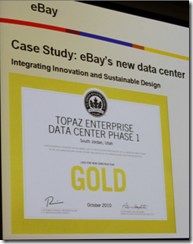
At 7x24 Exchange Orlando, eBay presented its story on achieving Gold LEED Certification.

image

image

eBay - Data Center Goes Gold

In May 2010, eBay officially opened its newest data center in South Jordan, Utah, named Topaz after the state stone of Utah. The facility was a green field development focusing on the design principles of reliability, maintainability, sustainability, and efficiency. As a result of the design and construction efforts, the facility achieved a LEED Gold rating in October of 2010.

Michael Lewis, Director Mission Critical Engineering, eBay
Stephen Spinazzola, Vice President, RTKL Associates Inc.

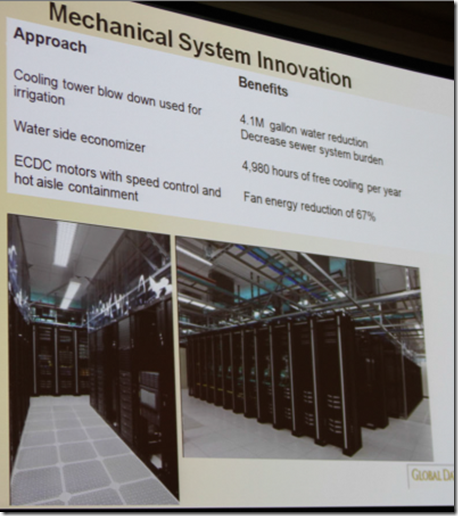
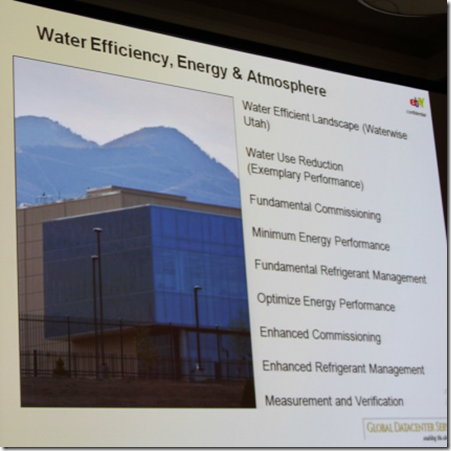
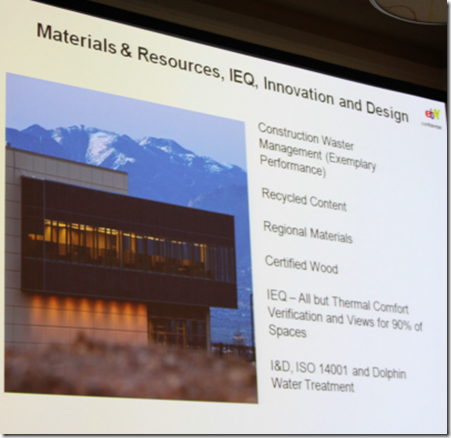
And, the one thing that eBay has done that I haven't seen any other data center is disclose its list of points earned to achieve Gold Certification.

Shouldn't this disclosure be a standard practice if someone markets their LEED certification?

image

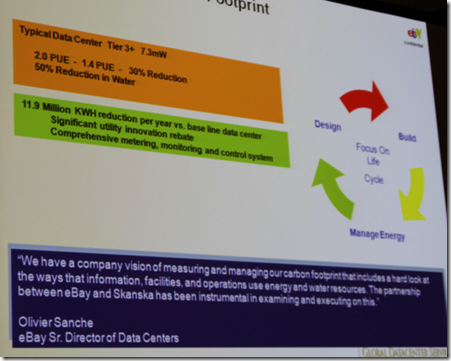
Here is a quote from Olivier Sanche.  Olivier is infamous as the departed Apple Data Center executive.  What few other people know is Olivier's baby, the data center he designed with Mike Lewis is the Topaz eBay Data Center.

We have a company vision of measuring and managing our carbon footprint that includes a hard look at the ways that information, facilities, and operations use energy and water resources.

image

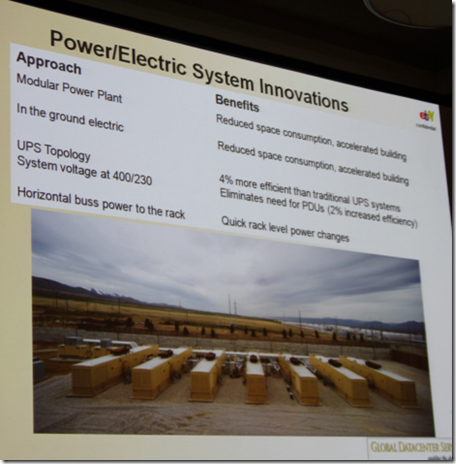
Here are few slides more slides that give details behind the LEED point achievements.

image

image

image

image

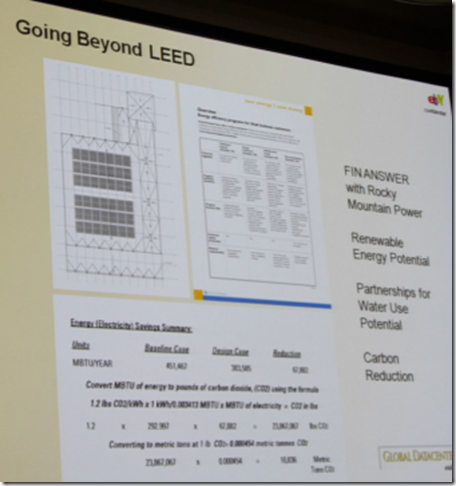
One of the last slides is going beyond LEED.

image

Reducing Human Error in the Data Center, checklist manifesto

Domenico Alcaro, VP of Sales Schneider Electric presented to a full room breakout session on Human Error in the Data Center.  Domenic shared his presentation and here it is for your viewing with his permission.

image

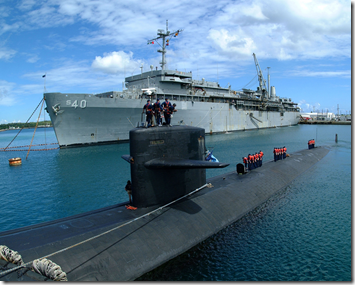
Breakout B: Case Study - Eradicating Human Error: Lessons Learned from the US Nuclear Navy

Human error continues to be cited as a leading cause of data center downtime. The goal of eradicating this blight from the data center can be advanced by studying the US Nuclear Navy. In fact, the similarities between a mission critical data center and a mission critical nuclear propulsion plant are striking and many. This presentation will demonstrate the operational methodologies utilized by the US Nuclear Navy to reduce human error drawing comparison to a modern day data center every step of the way.

Domenic Alcaro, Vice President, Enterprise Sales, Schneider Electric

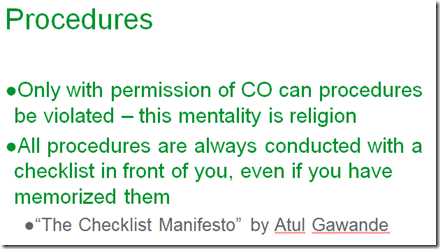
I was able to get access to Domenic presentation and I shared it with some other people ahead of time, and we started discussing human error in the data center.  One slide I especially liked is this one.

image

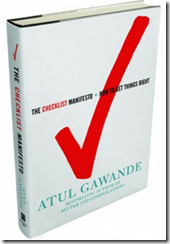
Note this last line for "The Checklist Manifesto" by Atul Gawande is a book suggested by a data center executive who I then passed on the information to Domenic.  Here is a web site too.

image

The book’s main point is simple: no matter how expert you may be, well-designed check lists can improve outcomes (even for Gawande’s own surgical team). The best-known use of checklists is by airplane pilots. Among the many interesting stories in the book is how this dedication to checklists arose among pilots.

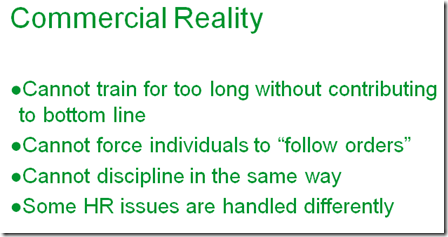
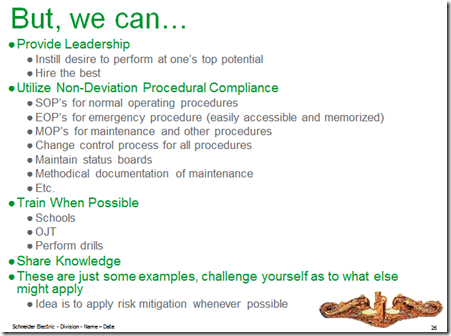
Can the USN Submarine procedures be applied?  Here are Domenic's points on what can be done and obstacles.

image

image

Solar Flares/Storms affect on Data Center is not known, an answer with data collection

One of the great talks at 7x24 Exchange was given by Alex Young on a subject few have thought about.

NASA - The Influence of Solar Flares and Solar Storms: Why We Should Care About Space Weather

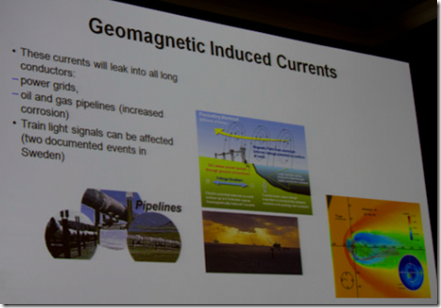
The Sun produces solar storms in the form of intense radiation and fast moving material. These storms can interact with the Earth to create electric currents in our atmosphere. The study of space weather developed to predict solar storms and understand their impact on our technology. The world's electrical grids-that fundamental technology enabling modern society-are vulnerable to these currents. While most days the sun's impacts are minimal, large solar storms have the potential to have a devastating impact on mission critical systems. This talk will present an overview of Space Weather to help your business begin to prepare for worst-case scenarios.

C. Alex Young, Ph.D., Solar Astrophysicist at NASA's Goddard Space Flight Center with ADNET Systems Inc. and the SOHO/STEREO Science Team

Here is a video of Alex discussing the Solar Flare on June 7, 2011.

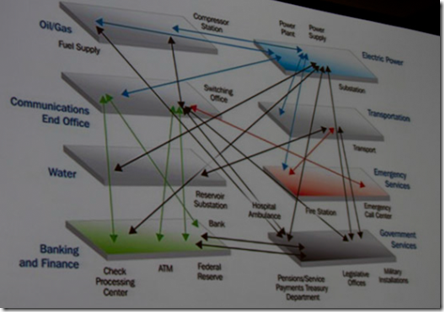
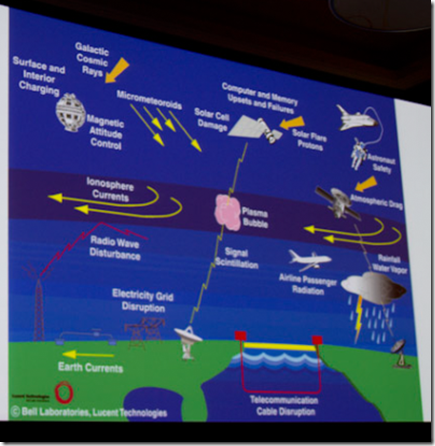
What are potential affects on the infrastructure is shown here.

image

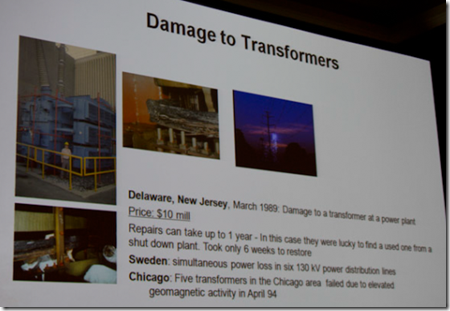
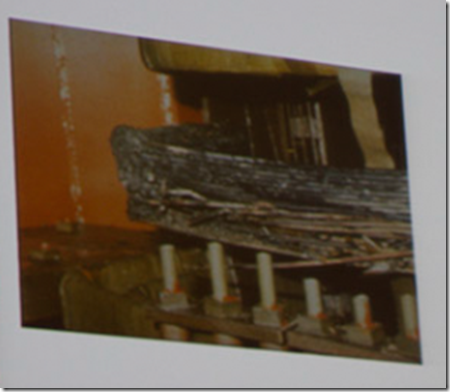
So what?  Check out this picture of what happened to a $10 Million power transformer in 1989.

image

image

And what is the affect on the electrical grid.

image

So other than risk of power outage what is the risk to a data center?

Luckily I sat with Alex at the speaker dinner and had a chance to chat much more and another data center executive joined in the discussion on what you could do about a solar storm that could last for days.

One choice we discussed is you could hope the arrival of solar storm is timed when it is night time and the storm strikes the other side of earth, but some storms last for days.  You could turn off the servers which is a strategy used by some satellites, but not a top choice.

So what could we do?  Here was my idea.  Why doesn't NASA notify the data center run by a company that is fanatical about data collection and tell them is the exact time when a solar storm will arrive at the data center site.  The data center operator then shares information back to NASA on error statistics that are potentially caused by the electromagnetic radiation storm.  Keep running this experiment to get data to answer the question of what happens to a data center during an electrical storm.

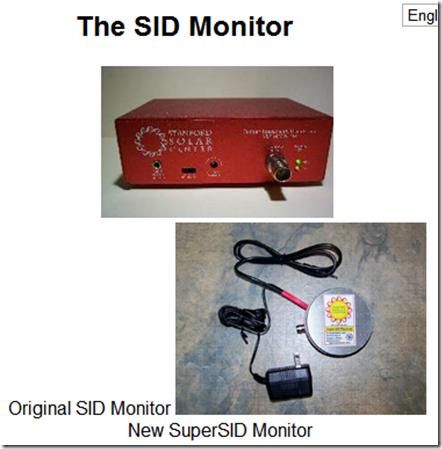
We moved to the Data Center Social 2.0 event and continued the discussions. One idea the data center executive came up with is can we collect information about the solar storm at the data center.  Alex said yes and pointed to Stanford Sudden Ionosphere Disturbance (SID).

image

So what is the plan.  The data center executive is going to back circulate the idea which we both agreed there would be two dozen data geeks who instantly jump on the idea.  Start the data collection and sharing with Alex at NASA, so he can start to answer the question of what is the effect on Solar Storms on a data center.

And, we may start an knowledge exchange that will get the data center industry ready for the peak in solar storms in 2013-2014, and answer the question what is the effect of a solar storm on a data center.

image