Cisco Lab Manager Chris Noland loses battle with cancer, passes away on June 20, 2011

I just heard from KC Mares that Chris Noland, Cisco Lab Manager passed away last night losing a battle with cancer.

Chris Noland

Chris Noland Lab Manager

San Francisco Bay Area
Information Technology and Services
Current

I had the pleasure of meeting Chris 1 1/2 years ago at Cisco to discuss his efforts to educate the Cisco development teams on the energy efficiency of their product designs.

The last time I saw Chris in person was at the Technology Convergence Conference.

Panel Discussion Topic: Data Center Challenges and Solutions in the R&D Lab

Moderator: Mark Thiele, VP of Data Center Strategy at ServiceMesh
Panelist: Chris Noland, Lab Manager at Cisco Systems Inc.
Panelist: Mark Honer, Senior Manager, Customer Service Labs Juniper Networks
Panelist: Val Sokolov, Senior Manager for Engineering lab services at Brocade

Unlike enterprise and production data centers, today's R&D electronics lab is a dynamic and constantly changing work environment with variable demands for power, space and cooling.  IT engineers expect as much autonomy and flexibility as possible in the way that they access their IT resources and then develop and test their IT solutions.  So, how realistic is it to believe that our new data center standards and "best practices" can be implemented in the IT lab as well?  Hear leading laboratory operators describe their challenges and barriers to success and explain how they have modified well established data center solutions to fit the needs of their unique R&D environments.

Chris was one of the guys who had a passion to green the data center by improving the energy efficiency of the network gear.

It is sad to hear I won't see Chris at another data center event.
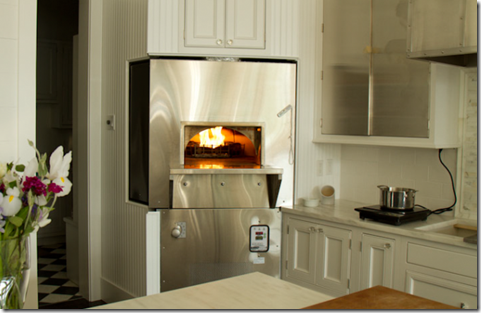
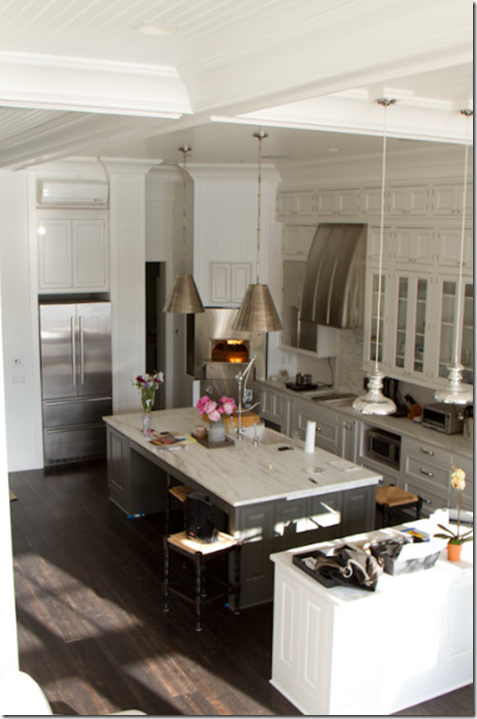
A view from 10 ft high of my new kitchen and living space

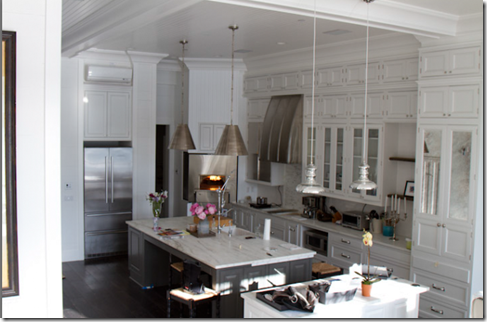
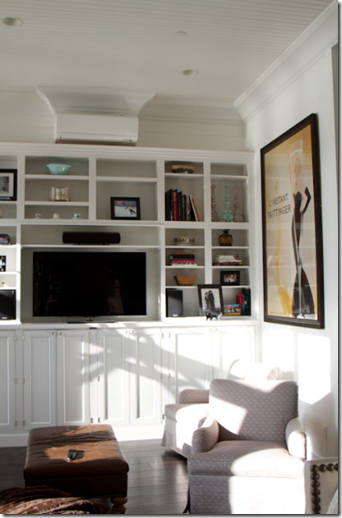
My Missouri Data Center friends were in town yesterday and they came over for lunch and a bottle of wine in the evening after they had finished their meetings.  I've spent many trips in Missouri to their homes and even went on a trip to Northern Missouri for Deer Camp which I renamed as Beer Camp as I saw way more beer than deer.  One of the comments my guests made is they have seen pictures of the house on this blog, but the living space and kitchen are hard to grasp until you are in the space.  So, let's try to show the space from a different view.  A view from 10 ft high.

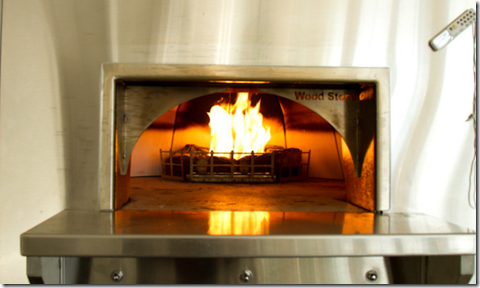
Here is a view 10 feet in front of my pizza oven at my height.image

Here is a view closer - 3 ft looking in the oven.image

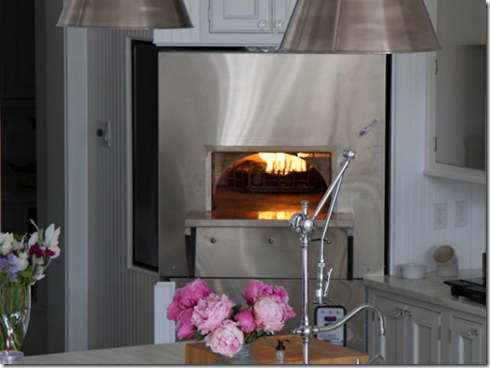
I backed up got on a ladder and went 3 ft higher on the ladder.  I am now about the same height as the light fixtures at 8 ft.image

From this angle I am now looking down into the oven.  BTW, love my new Canon 24-105 IS F4L lens.image

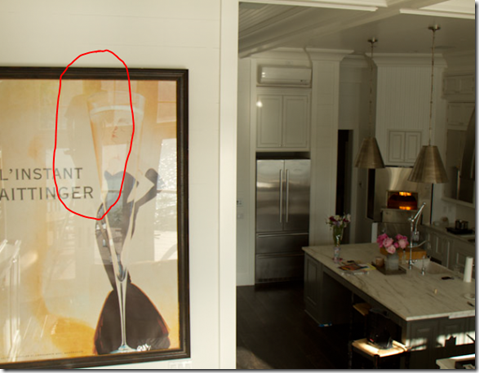
A little better, but let's try higher on the ladder.  I go up to the top rung and my head is now at 10 ft.  fyi, the ceilings are 12 1/2 ft.  When you look at this picture here. You can see my reflection in the frame glass.image

Here is this same picture shown from when I am standing on the ground.image

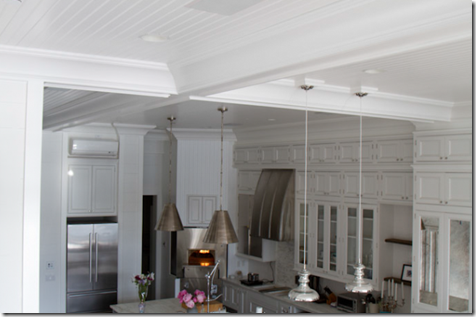
Back to the ladder let's look at my pizza oven in the kitchen through a wide angle 38mm lens.  The refrigerator to the left is 78" high.

image

I shoot a level shot across the room from 10 ft in the air.image

Coming back to the ground. Let's try a shot with my wife and son for some scale.

image

I have already made invitations to some of my data center friends to come on over for pizza, wine, and beer, and for them to make an excuse to visit the Redmond/Seattle area.  It was good to have my Missouri Data Center Friends as one of the first to see the house now that we are almost done.

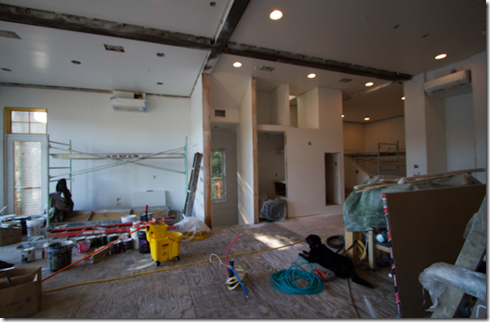
For you mechanical and construction guys, here is a view of the structural steel in the ceiling.

image

Robert Gates's 7 management rules for managing the Pentagon, some good ideas for Data Center Executives

I am lucky to spend a lot of time with some really good data center executives.  When I read this WSJ article on Robert Gates's 7 rules for managing the Pentagon it reminded me a lot methods I see these guys using.  I can name about 7 guys who use these methods.  Can you?  One who used these rules is my dear departed friend Olivier Sanche.

Guideline No. 1:  Symbols matter. Mr. Gates is a Kremlinologist by training, Studying the Soviet Union convinced him that people watch what leaders do, and getting the symbolism right can help win people over. At the Pentagon, rather than calling the combatant commanders to him all the time, Mr. Gates made a point of visiting them.

Guideline No. 2: Listen to the professionals. Mr. Rumsfeld was criticized for running roughshod over the opinion of the Pentagon’s admirals and generals.

Guideline No. 3: Hold the professionals accountable. In the wake of the 2007 scandal overpoor care at the Walter Reed Army Medical Center, Mr. Gates earned a reputation for quickly firing people. But he notes he never fired people for not knowing about a problem. He forced people out after they failed to fix problems once they came to light.

Guideline No. 4: Come alone, work with the existing team. Mr. Gates fell in on Mr. Rumsfeld’s team. And save for a few core people from the Bush administration that Mr. Gates asked to keep, he allowed the Obama administration to choose its own Pentagon political appointments.

Guideline No. 5: Lay out the vision, let the experts execute. Mr. Gates relished making decisions, taking in all the information he could about a problem then deciding where the Department should go. But he was not a micro-manager, and he left the details of how a decision should be executed to the military.

Guideline No. 6: Speak to all the layers of organization. Mr. Gates spread his ideas, like increasing the Air Force’s emphasis on drones, not just by ordering changes at the top, but also by speaking to young officers at the service academies and the war colleges, seeding his ideas in a new generation of leaders.

Guideline No. 7: Leave behind strong leaders. Mr. Gates said he worked hard to remake the Army, change its focus from major combat operations, to a broader array of missions including low intensity conflicts and training of local security forces. And he said thanks to the leaders he has promoted, like Gen. Ray Odierno and Gen. Martin Dempsey, there is little chance the Army will go back to its old ways.

Contrast this with Donald Rusmfeld's long pdf file.

The WSJ today has the full story of Mr. Gates’s evolution as a manager. But as an added bonus, Washington Wire has boiled the wisdom of Bob Gates into seven pithy “Gates’s Guidelines.” (Far fewer than the dozens of tips Mr. Gates’s predecessor, Donald Rumsfeld, collected in his “Rumsfeld’s Rules.”

Pacific Northwest unplugs Windpower when Hydroelectric capacity peaks

Ethanol subsidies are no longer seen as good, and there are efforts to unplug the subsidy system.  But, here is one I was surprised,  and made sense when I read more.  In the Pacific Northwest Windpower is being unplugged when Hydroelectric capacity peaks, leaving renewable energy projects with no revenue during some periods.  That is a painful outage.  Everything is working, but no money is flowing.

Here is the article in The Economist.

Tilting at windmills

Teething troubles in the clean-energy sector

Jun 16th 2011 | SEATTLE | from the print edition

 An embarrassment of riches

THE melting snows of spring and early summer are justly celebrated by Aaron Copland and Walt Whitman. But they are causing a lot of trouble in the Pacific north-west, as a federal power agency pushes private wind turbines off the grid in what critics call a case of favouritism towards electricity generated by federal dams.

The region’s windpower companies are enraged and are petitioning the regulators. Encouraged by politicians and their subsidies, they have invested hundreds of millions of dollars over the past six years on a 14-fold increase in generating capacity. But this year, as an unusually large snowmelt surges into the rivers of Oregon and Washington, the wind lobby is howling about government perfidy. “You can’t trust the guy who is running the grid,” says Robert Kahn, executive director of the Northwest & Intermountain Power Producers Coalition.

The evil doer is the Bonneville Power Administration (BPA).

BPA managers say near-flood conditions in the Columbia river—and strict laws protecting the river’s endangered salmon—give the agency no choice but to disconnect the windmills as it grapples with a large power surplus. Not making electricity is not an option on the river, the BPA argues, because only a limited amount of water can be kept out of turbines and spilled over federal dams. Too much spill dissolves too much nitrogen in the river, which can kill migrating salmon. There is a particular irony in the agency’s concern about fish, since the development of the hydroelectric system is largely responsible for destroying the Columbia as one of the world’s great salmon highways.

Makes you wonder as more renewable energy projects can this happen someplace else.

The clean-energy glut was predictable, given the tendency of snow to melt in the spring and given whopping increases in the region’s wind-generating capacity. Since 2005 wind capacity has surged from 250 megawatts to 3,500 megawatts, and is expected to double again by 2014. More effort by BPA to link this new capacity to grids in California and British Columbia could have avoided the need to idle those wind turbines, or so a number of power experts reckon.

How big will Dell's Quincy Data Center be? Phase 1 = 25 MW, permitted for 14 3.0 MWe diesel generators

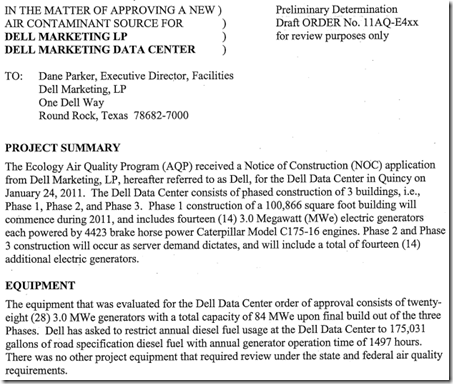
Dell is building a new data center in Quincy, WA.  How big is it?  The initial phase is permitted for 14 3.0 MWe = 42 MWe and another 14 3.0 MWe.  Depending on how they want to run the redundancy of the generators the power would most likely be 30 MW for total power.  Assume a PUE of 1.2 and you get 25 MW of IT load.

Here is the permit that gives you the information on the generators.

image

This is Phase 1.  Phase 2 & 3 is another 14 3.0 MWe diesel generators.

So, total for site is 50 MW of IT load.  This is a pretty big data center.