Data Center Expert sees Biomass-Powered as the next step, Yea! another vote for the Grass Fed Data Center

Emerson's Jack Pouchet has an article on the step for Green IT being a Biomass-Powered Data Center.  I know Jack and I've been working on the Biomass data center (aka Grass Fed Data Center) for 2 years that Jack refers to in Missouri.

Biomass-Powered Data Centers: Next Step for Green IT?

Jack Pouchet

Over the past several years, those of us in the data center industry have seen dramatic strides in Green IT, primarily focused on improving energy efficiency. It is now much more common to see data centers designed to meet the LEED standards of the U.S. Green Building Association (USGC).  In addition, through the efforts of The Green Grid, the industry has adopted a standard method for assessing the energy efficiency of data center infrastructure, known as power usage effectiveness (PUE). This standard gives data centers a better tool for messaging progress when evaluating ways to improve energy efficiency.
Director of Energy Initiatives
Emerson Network Power
...

These are important steps. But, as President Josiah Bartlet used to ask on The West Wing: “What’s next?” I think onsite generation of green energy would be a major step forward. For instance, several companies, including Emerson, have addedsolar power to their data centers as a supplementary power source. Wind power also scales nicely to data center energy demands.

Biomass, however, may offer the best near-term route to onsite power generation as a primary energy source for a data center. Biomass-to-energy facilities convert just about any organic material made from plants or animals into electricity. Examples include wood and sawdust from forest slash or lumber mills, or agricultural wastes from plants or animals. It’s a clean, renewable energy source that reduces CO2 emissions.

Jack lists three Biomass projects.

Plans for biomass data centers are underway in several states. As reported in Environmental Leader last year, HP Labs has developed a system that could power a 1 megawatt data center using manure from a 10,000 cow farm – with enough electricity left over the run the farm. In Missouri, community leaders are pushing for a data center to be powered by grass, wood or hay.

Closer to completion is the Vineyard Data Center Park in Colorado Springs, which will feature 100 percent renewable power. It’s scheduled to open this year. The 50-megawatt facility has been dubbed a “trash-burning data center” for its planned use of bio-solids and municipal waste. Based on recent discussions with industry experts, biomass projects are in various stages of development in Ohio and Georgia.

Jack even mentions the idea of siting a data center at an old pulp & paper mill.  This is what Google did by going to Hamina, and this idea has been kicked around by a few us for over three years.

I started thinking about this after talking to a friend from high school about a paper mill closing in Hoquiam, Washington. We concluded that maybe it’s time the high-tech electronics industry that is rapidly displacing the need for paper could be the solution to reinvigorating these communities, buildings, and local economies.

Renewable baseload energy is coming to green the data center.

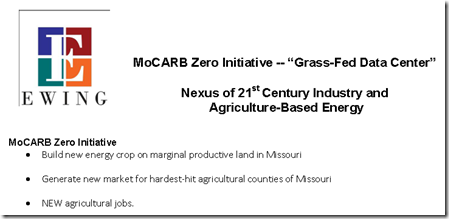
Here is more information about the Missouri project.
image

Wal-mart uses its purchasing power to change the supply chain, an idea worth considering

WSJ has an article on Wal-Mart going Local for sourcing more produce.

'Local' Grows on Wal-Mart

By MIGUEL BUSTILLO And DAVID KESMODEL

Wal-Mart Stores Inc., which scours the globe seeking the lowest-cost suppliers, is finding it can save money by buying more fruits and vegetables grown closer to its stores.

Other food retailers, including Supervalu Inc. and Safeway Inc., also are racing to expand the amount of locally grown food they offer, as more Americans flock to farmers markets and gourmet grocers such as Whole Foods Market Inc. in search of fresher produce.

Wal-mart has been able to go greener and save money.

Wal-Mart, the largest grocer in the U.S., with more than $120 billion a year in food sales, encourages its managers to buy produce grown within 450 miles of its distribution centers, even if local peaches, for example, cost more than those produced across the country in California.

That's because the Bentonville, Ark., giant has determined that, in an era of high diesel prices, trimming the number of "food miles" produce travels cuts fuel costs. Buying locally also reduces produce spoilage, Wal-Mart says, though it won't quantify the savings.

...

Wal-Mart spokesman says the retailer believes that saving money and improving the freshness of foods are not mutually exclusive ideas, adding that its is committed to doing more than just buying local to save money.

Wal-mart is using its purchasing power to change where produce is grown.

But Wal-Mart's drive to buy local is proving popular with some farmers. "They drive a hard bargain in Bentonville, but I know what I am getting paid before I put something in the ground, and for a farmer that is huge," says Sharon Heer of Fewel Farms, in Yakima, Wash., which is growing jalapeños for the chain, and has previously grown pumpkins for it.


A view of OSCON by Barton George

I wasn't able to make it to OSCON and one of the people I would have spent a lot of time with is Dell's Barton George.  I met Barton at Gartner Data Center Conference, and we frequently run into each other at other technology conferences.

Here are a few of Barton's OSCON posts.

OSCON: The Data Locker project and Singly

Who owns your data?  Hopefully the answer is you and while that may be true it is often very difficult to get your data out of sites you have uploaded it to and move it elsewhere.  Additionally, your data is scattered across a bunch of sites and locations across the web, wouldn’t it be amazing to have it all in one place and be able to mash it up and do things with it? 

OSCON: ex-NASA cloud lead on his OpenStack startup, Piston

Last week  at OSCON in Portland, I dragged Josh McKenty away from the OpenStack one-year anniversary (that’s what Josh is referring to at the very end of the interview) to do a quick video.  Josh, who headed up NASA’s Nebula tech team and has been very involved with OpenStack from the very beginning has recently announced Piston, a startup that will productize OpenStack for enterprises.

OSCON: How foursquare uses MongoDB to manage its data

I saw a great talk today here at OSCON Data up in Portland, Oregon.  The talk was Practical Data Storage: MongoDB @ foursquare and was given by foursquare‘s head of server engineering, Harry Heymann.  The talk was particularly impressive since, due to AV issues, Harry had to wing it and go slideless.  (He did post his slides to twitter so folks with access could follow along).

Is Foxconn using Robotics as its manufacturing push out of China?

Reuters has an article on Foxconn's plans for the use of robotics.

Foxconn to rely more on robots; could use 1 million in 3 years

Employees work inside a Foxconn factory in the township of Longhua in the southern Guangdong province in this May 26, 2010 file photo. REUTERS/Bobby Yip/Files

By Lee Chyen Yee and Clare Jim

HONG KONG/TAIPEI | Mon Aug 1, 2011 8:48am EDT

(Reuters) - Taiwan's Foxconn Technology Group, known for assembling Apple's iPhones and iPads inChina, plans to use more robots, with one report saying the company will use one million of them in the next three years, to cope with rising labor costs.

Foxconn's move highlights an increasing trend toward automation among Chinese companies as labor issues such as high-profile strikes and workers' suicides plague firms in sectors from autos to technology.

The one thing that caught my eye is Foxconn buying plants overseas.

Foxconn plans to buy a set-top plant in Mexico from Cisco Systems and is looking into investing more in Brazil, where it is already making mobile phone handsets.

It has bought LCD TV plants from Japan's Sony Corp in Mexico in 2009 and Slovakia in 2010 and is in cooperation talks with a number of top Japanese hi-tech firms, including Sharp, Canon and Hitachi.

Could server manufacturing be moving out of China as well in the future?

That's one way to solve the 100%+ tax for importing servers into Brazil.

Green Data Center Blog traffic almost 50,000 views a month

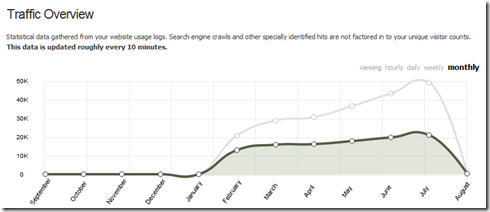
A few months ago I decided to change some ideas I was focusing on.  Part of any change normally you would worry about how it affects the traffic to your blog.  I purposely don't worry about the traffic as much as writing on things that I find interesting for my research, clients and just plain curiosity.  Frequently , I look at the traffic to see what people find interesting.

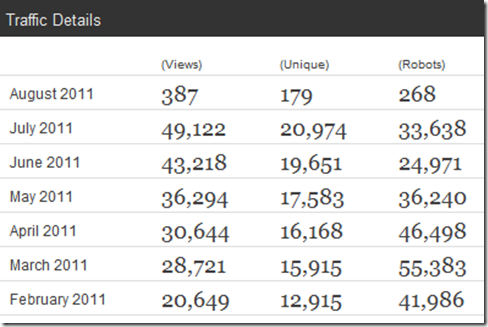
Yesterday I was watching my traffic as July 31 numbers for my blog looked like I would hit 50,000 views.  I got so close.  Note: I switched from TypePad to SquareSpace hosting in Feb which is why the Sept - Jan numbers are at 0.image

The exact numbers for Feb to July are.

image

I expect August to be lower traffic with summer holidays for Northern Hemisphere readers.  Here are the top 25 cities that hit my blog.

image

Thanks for visiting The Green (Low Carbon) Data Center blog.  I should  hit over 50,000 views by end of year. 

-Dave Ohara