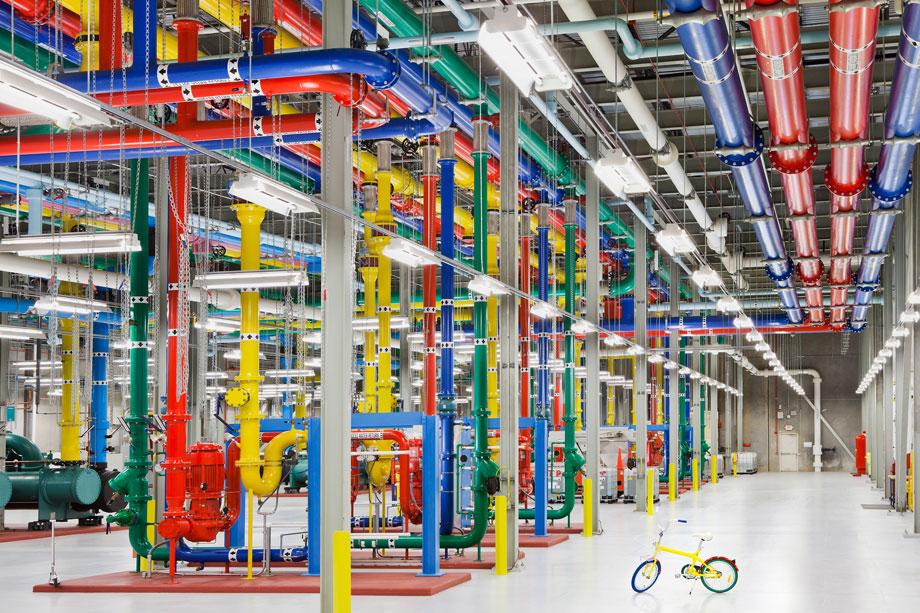
Google's Data Center Photos continue to make the news, Slate publishes Photo Blog post

Google's data center photos continue to show life. Slate has a post just of the photos.

Meeting the Wizard: Inside Google's Data Centers


A glimpse inside Google's data centers.

So it turns out the Internet really is a series of tubes. Last October, for the first time ever, Google posted dozens of rare photographs inside and around its data centers revealing the absurd level of organization, energy, and design that goes into powering some of the largest, most powerful systems plugged into the Internet. My absolute favorite aspect is the color-coordinated design of their infrastructure as it correlates to the Google logo. What wonderful attention to detail. See many more photos of their eight data centers and Street View imagery of their Lenoir, N.C., data center at Where the Internet Lives. All photos by Connie Zhou.

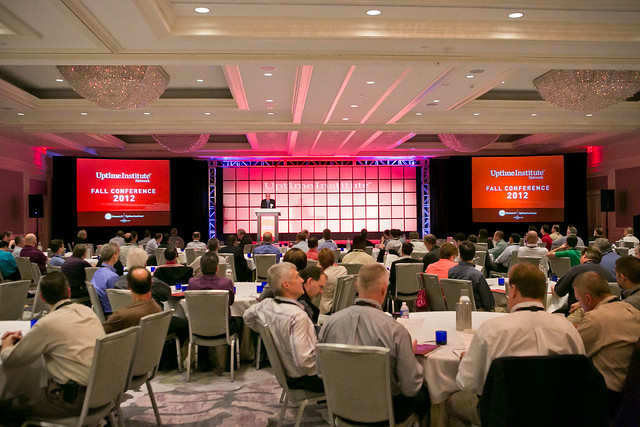
What Data Center facility staff is 75% 55-65 yrs old? Uptime Fall Conference 2012

I was reading the post on Uptimes' Fall Conference 2012 at the Altanta Ritz Carlton, and the post starts with this comment of the problem of retiring people.

One of the predominant themes of the event (and persistent discussions in the industry in general) is the looming retirement of the current generation of data center professionals. The data center industry doesn’t have a very good farm systeman organization or activity that serves as a training ground for higher-level endeavors.

Fall 2012 Uptime Institute Network Meeting

Now, I am used to hanging with old people.  I am 52, but when I saw this comment, I was thinking whoa what a different world of people are at this event.

“Over 75% of our facilities staff are between 55-65 years old,” one attendee said. “We all grew up in the industry together.” And many organizations worry that all of these skilled, experienced people are going to retire together as well, and a second generation of data center operators is not waiting to take their place.

Either there is a real problem in that there is a shortage of the 2nd generation of data center operators.  Or, the 2nd generation data center operators don't hang out with the 1st generation data center operators.

How many of you 2nd generation data center operators wanted to go hang out with a crowd 75% comprised of 55-65 year olds in Atlanta at the Ritz Carlton?

Maybe there is a problem with the young don't want to hang out with old timers.  

Growth of the web saves paper, 21% decline in paper in a decade

Being in the data center business we don't mind the decline of print.  But, the pulp and paper industry is going through some serious changes as the decline of print is faster than the rise.  Seattletimes has an article from the minneapolis star on the print industry.

As society sheds paper, an industry shrinks

The North American paper industry is in rapid decline. Towns from Washington to the coast of Maine have lost more than a hundred paper mills in a wave of consolidation in little more than a decade — a trend most people in the industry expect to continue.

Minneapolis Star Tribune

How much is the change?  100 paper mills and 21% decline over  10 years.

“It’s kind of disheartening,” said Jim Skurla, an economist at the University of Minnesota, Duluth. “Paper’s never going to disappear, but it’s going to be smaller than it has been.”

River towns in the forest from Washington to the coast of Maine have lost more than a hundred paper mills in a wave of consolidation in little more than a decade — a trend most people in the industry expect to continue.

North American demand for three types of coated and supercalendered paper — shiny magazine and advertising paper — has fallen 21 percent in the past decade, according to the Pulp and Paper Products Council.

There is not enough demand out there and some mills have to shut down.

“All you’re doing is you’re moving around the mills,” Quinn said.

“The reality is the demand is going down. Some mills are going to have to come out.”

Google influencing Amazon.com's server purchasing, and many others

It is accepted that the big Web2.0 companies don't buy what the enterprise guys buy.

Wired has an article on how Amazon changed its server purchasing to follow Google.

Pinkham was struck by how different the machines looked — and how hot they were. Even then, Google was running its website on dirt-cheap, stripped-down servers slotted into extremely tight spaces. They didn’t even have plastic cases.

“They were clearly not your average Dell, HP, IBM servers. They were white box machines, very densely packed. They weren’t in containers. They were just blades jammed into these custom racks,” remembers Pinkham, who went on to lead the team that built the Elastic Compute Cloud and now runs a cloud software startup called Nimbula. “And I remember a lot of heat coming off them — an indication of a lot of concentrated power.”

This isn't really new to most of you, but it is nice to have a Wired article tell a story to the rest.

Shh, a secret on why the Green Data Center is popular, it's the money

One of things I figured out long time ago as an Industrial Engineer is efficiency is good to some, but not all.  If you talk about being Green you get almost all the people saying being green is good with few fighting the green initiative.  And what is behind a big of being green?  A big part is being efficient.  

Chris Crosby does a good job of giving an insiders view of the secret of being green in the data center business.

“We all talk about being green like it’s our ticket to corporate sainthood, but really we just keep improving the energy efficiency of our data center operations because it helps us make more money”.

...

You really thought that all this incessant talk about being “green” was about saving the planet? How quaint. Well, why don’t you come sit up front here and let me explain a few things.

Got your attention?  Chris explains more.

Marketing, and its very close friend Public Relations, are all about making people want things because they think they are important. So about five years ago, some very bad people began to say that data centers used too much energy and that wasn’t good for the environment. While a whole bunch of folks in the data center business panicked, some marketing people got together and said, “This is awesome. We know that using too much power hurts our profit margins, and people that think that’s bad anyway, so let’s jump on the bandwagon and call our energy efficiency efforts “green initiatives” and then everyone will be happy”. This is what’s known as a win/win proposition. Naturally, the whole industry cheered.

NewImage

Seizing on this new vision, data center companies began to improve their energy efficiency. They even came up with a new standard to help measure the improvements in performance called PUE so customers could prove it to themselves. This new standard has become so popular that now data center providers and operators use it as part of their marketing and PR efforts. Really big operators love this concept. They do all kinds of wild things like spending large sums of money on horribly inefficient technologies like solar panels so they can turn around and talk about their commitment to being green. Now of course we all know that this is just to keep large groups of generally unshaven, Birkenstock wearing extremists from causing a big fuss and driving down their stock price, so we all play along and show our support by saying things like, “Man, that’s what I call a real commitment to green”. See the double meaning there? A lot of people don’t, but for obvious reasons we don’t bother to correct them.