The next Cloud Feature - Frequent Flyer program to lock you in

I am participating in a Route to the Cloud webinar tomorrow and one the points I want to make is whether you want to be cloud independent or not is an important decision.  What fool would want to be locked into a cloud?  In fact GigaOm's Barb Darrow just posted on the issue of lock-in preventing movement to the cloud.

Fear of lock-in dampens cloud adoption

SUMMARY:

Data portability — the ability to move your information between clouds (or in and out of clouds) with relative ease — is a key concern of companies considering a cloud move.

It’s become a truism to say that data is the new gold –but that doesn’t mean there are easy answers about where to store this gold. For now, many corporate customers will hold back on full cloud computing adoption until they’re convinced that they can move their data off a given cloud as easily as they put it there in the first place. Face it: fear of vendor lock-in is not limited to the on-premises IT world and it’s time enlightened vendors get this problem in hand.

What would motivate people to accept a lock-in?  Frequent Flyer program.  The human behavior to get points is ingrained in people.  

Can you imagine if AWS launched a point program for the amount of Cloud Services used and gave program owners the ability the redeem points for Amazon.com merchandise?  Users would then have the incentive to have larger AWS bills and loyalty to a cloud provider is common.

No one in the cloud service has a frequent flyer program, and this probably will never happen.  Note: this is a what if AWS launched a frequent flyer program, not they have.  

This may sound crazy, but we have all seen people who go through extreme lengths for Frequent Flyer Points.  You cloud kind of do this already if you set up a Amazon.com Rewards Visa card.  If you spent a $1,000/month on AWS that would be 3 points/$1 = 3,000 points / 100 points/$1 = $30.  You spend $10,000 a month on AWS.  Not hard to do. You get $300 a month in your account.

Companies tried to take away an employees frequent flyer points, but that didn't work.

Welcome Amazon.com Rewards Visa Cardmember


Earn points on every purchase*

  • 3 Points per $1 spent on Amazon.com
  • 2 Points per $1 spent at gas stations, restaurants, drugstores, and office supply stores
  • 1 Point per $1 spent on all other purchases

Redeem your points instantly at checkout with Shop with Points

You can use the points you earn to buy the stuff you want right at checkout.

  • See your points automatically
  • Pay for all or part of your purchase - there's no minimum
  • Every 100 points = $1.00 towards your purchase

Choosing a Path to the Cloud?

Moving to the cloud is assumed for almost all IT departments.  Choosing the path for you and what you take with you is not as clear.

On Feb 27, 2013 10-11a PT, I will be an webinar panel to discuss the routes that people can take.


What’s your best route to the cloud?


As organizations of all sizes make their move to the cloud, they are looking for ways to gain control over the chaos of ad hoc, unplanned and unmanaged adoption of cloud services. No single path is right for every company and thus a growing assortment of services is emerging to suit every use case. These range from direct peering, to one-stop-shops that offer it all, which is great as long as you like their flavor, to cloud services brokerages offering migration to specific cloud apps, to colo and hosting providers creating cloud exchanges or marketplaces where users can connect directly to best of breed cloud services all within the same data center.

Wow, PUE of 1.26 for 120v Nissan Leaf charging system vs. 1.08 for 240v

I have one friend who just bought a Tesla S and he mentioned something that doesn't get widely publicized for the Tesla's that typical charging is 85% of battery capacity.  So keep in mind the typical range of a Tesla is 85% of the stated range.  I asked him what kind of charging system he had and he had the 240V that is similar to an electric dryer circuit.  I told him I had another friend with a Nissan Leaf who was a bit more on the cheap side so he charging his leaf on 120V.  It takes 20 hours for a complete charge and is also recommended to not exceed the 80% battery charge.

What I found interesting in a Nissan Leaf Forum is there is 300 watts of overhead for the 120 Volt and 240 Volt charging. 

The question starts.

7 hours for 240V and 20 hours for 120V. I thought it would be exactly half for the lower voltage?

The answers posted are.

The 120v charging is limited to 12amps (1.44kW). 240v charging is done at 16a (3.84kW). That comes to 2.67 times slower, plus 120v charging is less efficient...there's a fixed overhead for the cooling system that brings the practical difference close to 3 times slower.

2). There is a parasitic load of about 300W that runs during charging. These pumps draw the same power regardless whether the charging is done with 120VAC or 240VAC. This power takes a larger fraction of the available power away from charging when using 120VAC, This further slowing charging. Interestingly, this causes 240VAC charging to be more efficient.

The last comment on 240VAC being more efficient got me curious to calculate the PUE of 1.44kW (120V) vs. 3.84 kW(240V) with a  0.3 kW overhead for the cooling and electrical distribution.

120V had a PUE of 1.26.

240V had a PUE of 1.08.

When you do the math on an individual basis this is not big deal, but add up all the 120V charging of electric vehicles and the numbers add up fast.

Google has a PUE of 1.08 for its Hamina Data Center.  Would it ever want to go back to a PUE of 1.26?

It is painful to think about charging at 120V vs. 240V both from a time perspective and waste of energy.

Baidu deploys ARM Servers

GigaOm's Stacey Higginbotham covers the deployment of ARM servers at Baidu.

Chinese search engine giant Baidu is using ARM-based servers from Marvell making it the first company to depend on servers using the cell-phone chip in a production environment. Baidu is using the new ARM servers in its cloud storage application named Baidu Pan.

The area the servers used are for cloud storage.

Marvell’s release says the chip firm customized the ARM servers specifically for Baidu’s cloud storage requirements, taking the concept of server customizationcommon in webscale deployments to the chip level. Marvell says the platform is designed to increase the amount of storage for conventional 2U chassis up to 96 TB, and to lower the total cost of ownership by 25 percent, compared with previous x86-based server solutions. The end result should cut Baidu’s power in its data center by half according to the release.

I know my Drobo FS is powered by an ARM.

We'll see who next launches ARM servers.  I have a feeling this could be a regular occurrence.

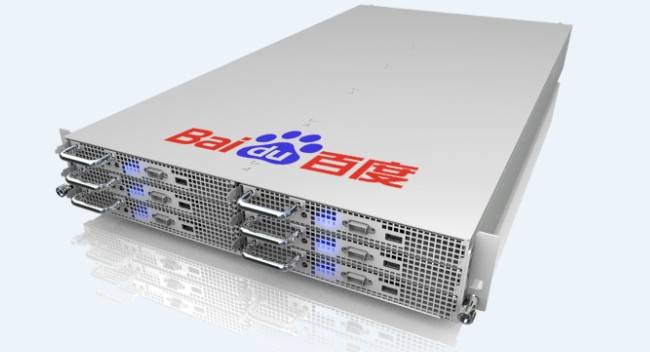
Here is a picture from the Register.

Avi Liebermensch, manager of server products at the maker of ARM processors and other kinds of chips, tells El Reg that the Baidu server is based on the company's Armada XP MV78460. This is the same quad-core processor that Dell chose for its "Copper" ARM sled servers announced last May and purchased by unspecified customers of its Data Center Solutions bespoke server business unit. TheBaserock slab ARM server from Codethink also uses this Marvell processor as its main engine.

Baidu has deployed an ARM server for cheap and dense storage

Baidu has deployed an ARM server for cheap and dense storage with local processing

Liebermensch was not at liberty to give a lot of details on the Baidu machines, and China is celebrating its New Year right now so people in Beijing are not around to answer calls. But Marvell did sneak us a picture and gave us some insight into the machine that Baidu has worked with Marvell and an unspecified ODM to create.

Finally an over current scenario identified as potential causes for 787 battery problem

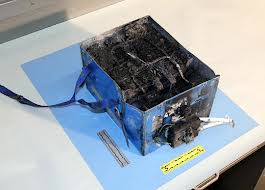
The burned out batteries on the 787 have grounded the 787 fleet.

NewImage

I've been waiting to write a blog entry on the 787 battery issue, and was amazed the amount of coverage discussing over voltage.

Japan transport-ministry investigator Hideyo Kosugi said the state of the battery indicated “voltage exceeding the design limit was applied” to it.

Eventually it was discovered over voltage was not an issue.

30 years ago I spent a lot of time working as a reliability engineer, tearing apart the insides of semiconductors to figure out why they failed.  Semiconductors failed for basically reasons of manufacturing defect (lifted bond), over voltage, or over current.  It was pretty cool milling the plastic down to create a trough down to the semiconductor, then using sulfuric acid to remove the remaining plastic to expose the semiconductor die and its wire bonds.  For over voltage you would look for where there was a break in a connection that was very small and hard to see.  But, when it was an over current problem, many times the plastic was cooked from the heat and the sulfuric acid would not remove the plastic.  These hard crusted plastic burned areas looked like the above picture.

Finally there is coverage for improperly wired batteries causing over current in the battery.

According to the AP, on the ANA flight, the Japanese Transport Ministry noted:

Flickering of the plane's tail and wing lights after it landed and the fact the main battery was switched off led the investigators to conclude there was an abnormal current traveling from the APU due to miswiring.

I am sure many of you have seen over current failures and you recognized as well that the 787 batteries were subjected to over current.