Strategy for getting the most out of an industry event. Case Example Google's Energy Summit

I don't know about you, but it can hard to focus on a day long industry event.  You start out ready, then your phone rings, txt msgs, and e-mail distracts you.  Some of the presentations are good.  Some have room for improvement.  Sometimes you just get bored and your mind drifts.

Let me walk through an example of what I choose as a strategy for Google's How Green is the Internet? event.  Here is the full agenda.

First I got there early.  The event started at 9a.  I got there at 8:45a - to allow for Mtn View traffic, get a close parking spot (you were told to park 1/2 mile away and bus you in, I parked 300 ft away on the street), maximize time to socialize, and chat with the event staff.

Out of the full list of speakers.  There were three I really wanted to listen to.  Urs Hoelzle's 10 min intro.  Jonathan Koomey's 20 min infrastructure of the Internet.  And, Eric Schmidt's 15 minute new digital age.  Al Gore and the rest were lower priority.  Active listening can be tiring.  I was looking for patterns that connected what Urs, Jon, and Eric were saying.  I figured what Al Gore would be saying would be his own agenda that really wasn't connected to the other three.  Also, in my opinion Urs, Jon, and Eric were some of the smartest guys in the room with a breadth of testing ideas and concepts.

Here is Eric's talk.

And, Jon's talk

Urs introduction isn't posted.  Urs did spend an hour with the media to answer questions and that session was not recorded.

The other three people I focused on where the Google event organizer, the executive sponsor, and media contact.  These three were making sure the event worked.  Chatting with them gives perspective on how to interpret the presentations and their opinion on the event and presentations.

When I was at 7x24 Exchange I was daily chatting the executive board of 7x24, the event staff, and even the photographer.  I do the same at Open Compute Summit and DatacenterDynamics.

This comes back to my journey through 10 data center conferences post.  The four conferences I mention above are all the ones where I feel like I use this strategy, and I get the most out of.

Can you see the influence and factions in the data center industry?

Part of what I have an interesting time is discussing the influence and factions in the data center industry.  It is hard to discuss the specifics in a blog entry especially when I want to build on a public disclosure.  I started writing this post a couple of days ago and didn't decide to publish until Chris Crosby threw up his inbreeding post.

 For our industry to continue to grow and mature we need to better understand the needs, not the buzzword wants, of our customers. At a time when we should be more open as an industry, it seems that we are only becoming more insular. While this may make us better banjo players, it doesn’t help us improve the product that we offer to our customers in any meaningful way.

So, let me discuss ideas from my own observations and general concepts.

I just posted on my 10 data center journey.  And one of the top criteria for attending an event is how is easy it to network.  Most conferences I exchange maybe 20 business cards at the most, many times only 10 or less.  When going to sessions, I'll quietly watching from a corner spot or if I want to really focus on the presenters I got up front where I can take pictures and I am not distracted by the audience.

One of the principles I use is to focus on location.  When I go to bfast I look for who is there and where is a good spot to see the people coming in for Bfast.  This allows me to see many people coming in and connect with people as they scope where to sit.  When I go to the bar I look for friends already there and where is a good place to get an overall view of the people.  When I go to receptions, I go early and look for the best table to sit/stand to watch the people.  If you try to wander around to talk to the people it can be frustrating and draining.  My strategy is to find the best spots to hang with some of the best people and just watch what happens.

The funny thing about this strategy is when you apply it to social situations it can look like you are uncomfortable as you don't move around and mingle.  You sit/stand and watch.  I've been lectured by my wife and her friends that I am introverted and it is hard for people to know me.  At 7x24 Exchange I was telling one of my friends this story, and he laughed so hard that I was being accused of being anti-social, introverted, and hard to talk to.  Well the truth is sometimes when I do get in social situations and I am not in a conversation, then I'll start working on thought experiments designing new features, iterating on different ways to solve the problem, more information I need, and I am perfectly happy just sipping on my wine watching people.  

Back to data center conferences, part of the observation is seeing those groups who stick together as a company.  I went to one social in LV at a hotel suite during Data Center World.  I got there mid party, which made it hard to find the right spot to watch people. I saw a friend by the food in the corner away from all the people and chatted.  The host came on by and we were poking of fun of the guys who were wearing the company polo shirts all collected together.  <ALERT: possible inbreed group.>  Then he said it was really hot as he came over to try and turn down the thermostat which was already set to 60 degrees.  I figured out I was in the 2 x 4 ft section of the suite that was comfortable as I was right next to the air conditioning vent.  New lesson, sometimes the best spot to be in a crowded party is where the air conditioning vents.  The cool air can work well to get people to come by and cool off.

When a large group of company employees from a vendor are together, then the thing to watch is their clients are most likely close by or their suppliers that they favor.  Seeing who interacts with who and spends time together gets you an idea who can work together.  One of the biggest mistakes made is when suppliers are picked that really don't get along with each other.  Sometimes worse case they really hate each other, and given the client has made the choices, they can't do anything about it.

There are those who are hunting for new business which is rarely successful, but often enough that some sales people will interject themselves wherever they think they have something they can.  This is when I am glad that I don't buy anything which means people leave me alone.  And, being a blogger it can work to scare off people who don't want to talk to press.  Sometimes I wonder if my friends use my press shield capabilities to keep people away.  :-)  Notice how the press badges are usually red.  Warning.  Don't talk to this person unless you are press trained and be careful what you say.

Some people are looking for new jobs.  At some point there are conversations on who has changed jobs, who is looking, who is hiring.  Do you see the talent?  <squirrel>  Who has had a reorganization which disrupts staff and execution.  
Why the Cloud is winning? It has less friction than legacy IT systems

Security systems work by making it harder for things to get done.  Security creates more friction in the system.  If you have enough momentum you can overcome the friction, if you don't then you get stuck.  If a cyber criminal has the login and password for a user, the security systems fail because he has taken the low friction path that gives him access.

Legacy IT systems are rampant with systems and processes that create more friction - standards, meetings, specifications, requirements all usually make it harder to get things done.

The Cloud is easy.  Login, give them a credit card number, request a service, and it is up and running in seconds.  The Cloud focuses on less friction and that is why it is winning.

Who would want a cloud service that took just as long as a legacy service, eating up your time and money just like you have always done in the past.  Whether it is virtualized or not who cares?  Well VMware does care, but most of you shouldn't really care if it virtualized environment.

One indicator of the coming growth in Emerging Markets, Boeing predicts 60% sold Asia, LATAM, and Middle East

Some of the folks out there have a US and EU focus on their data center services.  Others see the double digital growth in emerging markets.

Komonews reports on Boeing's 20 year forecast of airplane sales.

The 20-year forecast, which Boeing puts out annually, predicts 60 percent of the demand for aircraft will come from Asia, Latin America and the Middle East. The rest comes from carriers in Europe and North America.

With all that airline capacity the economic growth is there.

Among the new orders, 12,820 are expected to go to the Asia-Pacific region. The next-largest market is Europe, with 7,460 deliveries. Airline consolidation in the United States has caused orders to drop sharply there - a trend that is likely to spread to Europe in coming years, Tinseth said.

The double digit data center growth will happen in these markets, but it is much more expensive to build data centers in these places than the US.

IBM has a win in China City Tongliao with PureSystems

If you told me that a China City was buying IBM gear for its city infrastructure I would think you were talking about 20 years ago when China did not have the expertise in IT equipment.  But now, go down the list of servers, network, and storage and China makes all the parts to build IT infrastructure, so you would expect China to be powered by all China gear.  

IBM has a press announcement on its PureSystems being used in the China city Tongliao.

Tongliao City Turns to IBM PureSystems to Spur Economic Development

Inner Mongolian City Embraces Cloud Computing to Modernize Its Infrastructure and Support Adoption of an eGovernment Model

LAS VEGAS – Edge 2013 - 10 Jun 2013: IBM (NYSE: IBM) today announced that Tongliao City in Inner Mongolia is embracing IBM software and services to fuel the transformation and modernization of the city and its traditional industries. 

Tongliao City will take advantage of IBM’s cloud computing, networking and other advanced information technologies to enable local industries to move to cloud computing. As a result, the city will be able to innovate and transform its industries, helping to stimulate economic growth in the region. Tongliao City will use IBM PureSystems as the core platform for cloud computing as part of this project.


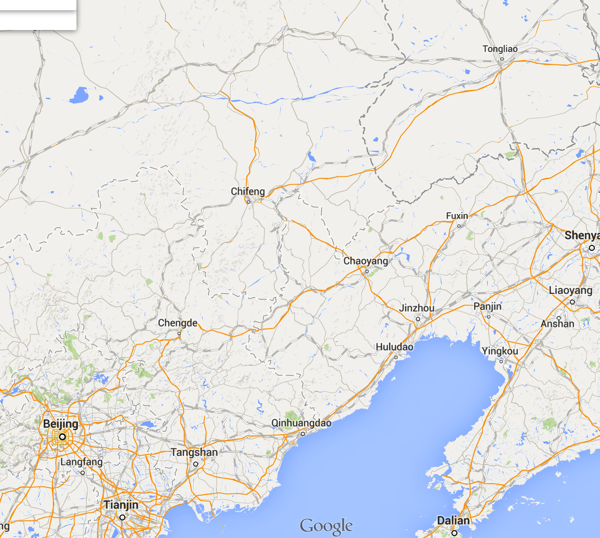
Where is Tongliao?  NorthEast of Beijing.  Located in the top right of this map.

NewImage

A couple of weeks I got a chance to chat with IBM's Technical Fellow Jason McGee who leads the team who created the Pure Systems platform.

Jason McGee
IBM Software Group - Durham, N.C.  

Jason McGee has been instrumental in establishing IBM as the leader in cloud technologies, Java based application server middleware and application aware virtualization. He led the development of critical technologies in WebSphere Application Server, including the Web container and the watershed version 5 system design. McGee's innovations in using application awareness have helped the application server move into the realm of virtualization and cloud computing. Those innovations are now being applied to expert integrated systems with his leadership of IBM PureApplication System. McGee will serve as technology ambassador to Egypt. 

Jason and I discussed many interesting points. One that Jason shared that I found good insight is how the PureSystems supports an environment for teams to work together.  I would expect China IT departments are no different than one in the US where the various silos create friction making it difficult to integrate systems well.  When you have a well designed IT system where parts all the parts are integrated, flaws in operations and development can be seen more easily and addressed. Why?  In poorly designed hardware systems it is hard to pinpoint whether the performance issues are hardware or software.

“With built-in expertise and highly integrated hardware and software capabilities, IBM PureApplication System was selected to be the core of Tongliao City's Smart Cloud infrastructure,” said Mr. XU Gang, general manager, WebSphere Software, Software Group, IBM Greater China Region. “With a wealth of practical experiences and leading cloud computing technology, IBM is in the position to work with Xi'an Future International to support Tongliao City to improve the lives of its citizens through this Smarter Cities project.” 

What I think the Chinese have figured out is that the integration of all the hardware let alone the software is something they need to buy and cannot make as easily as they thought. 

There is of course a Chinese partner in the project.

To meet Tongliao City’s needs, IBM and business partner Xi’an Future International Information Co. Ltd. developed the ‘Smarter Tongliao City on the Cloud’ solution. This cloud computing-based, Smarter Cities project is designed to advance Tongliao City’s ongoing economic development and meet the following goals: