Three books on data visualization

The Economist has a review of three books on data visualization.

Data Points: Visualisation That Means Something. By Nathan Yau. Wiley; 300 pages; $32 and £26.99. Buy from Amazon.comAmazon.co.uk

Facts are Sacred. By Simon Rogers. Faber and Faber; 311 pages; £20. Buy fromAmazon.co.uk

The Infographic History of the World. By James Ball and Valentina D’Efilippo. Collins; 224 pages; £20. Buy fromAmazon.co.uk

Here is a video that shows you how the books look.

The author of this article hit upon exactly a point that came to my mind as well.  Should these books have even been in print.

But should these books have been published on paper at all? Today’s most impressive works, like “Wind Map”, were created to be online. Future infographics will be digital, data will stream in real-time and viewers’ interactions will determine what is presented. When this happens, what constitutes a good infographic will change. The revolution has just begun.

It's been a dream of companies like Adobe and others to allow the creation of online books.  But it is a challenge of the distribution channel not just creation

The one company that could take the above books online and allow them to make money would be Amazon.com.  Wouldn't it be cool if there was an AWS service that allowed you to create book-like content, make it interactive. posting video, etc.  Or Google could do this or maybe even Apple.

When IT is abundant, The focus is shifting to the information and how well things work

HBR has a guest post by the CEO of Box, Aaron Levie.  The article starts by referring to Nicholas Carr's infamous IT doesn't matter post.

How to Compete When IT Is Abundant

"You only gain an edge over rivals by having or doing something that they can't have or do," wrote Nicholas Carr ten years ago in his controversial HBR article, "IT Doesn't Matter."

Carr predicted that an organization's ability to compete through investing in information technology was about to change dramatically. When "the core functions of IT — data storage, data processing, and data transport — have become available and affordable to all," he wrote, IT would cease to be a source of competitive advantage.

Aaron closes with the point of IT moving from scarcity to abundance and competitive advantage.

In this transition from a world of IT scarcity to abundance, competitive advantage has little to do with unique access to technology, and everything to do with unique access to — and use of — information. When technology is near-ubiquitous, it's the connection between people and information that drives business forward. Organizations that capitalize on this trend will ensure that as information eats the enterprise, they'll be the ones satiated.

Here is another way to look at.  The early days of IT was just getting things to work.  The Cloud is showing how to get things to work at scale so you can supply the same service to a lot more people.  So, it is no longer a question of whether IT systems work.  The question has shifted to how well does IT work for my business?

The old world of IT help the keys to technology.  With the cloud users have choice and they'll take their information to where they can get the best service.  

IT needs to make a shift to being a business enabler to survive.  If IT lives in the old risks averse world users will continue to look for ways to sidestep the corporate policies.

As software eats the world, information is eating the enterprise. Access to the right information at the right time from anywhere will transform every business and every industry. Competitiveness in IT will come from connecting employees and partners in meaningful ways to bring products to market faster (how does a supply chain process shrink from days to minutes?), supporting customers with new experiences (can my thermostat talk to my energy provider?), and surfacing the right people and knowledge to generate better ideas (how do I find experts across my organization that I'm not connected to?).

A Game Plan for Adoption and Implementation of DevOps GigaOm Webinar July 11, 2013 10-11a PT, sponsored by PuppetLabs

I've been spending a bunch of time in DevOps space, going so far into the operations perspective one of my friends it is like OpsDev where Operations is defining the Development.

On July 11, 2013 10-11a PT, I am moderating a panel discussion a PuppetLabs sponsored GigaOm Webinar.

NewImage

In this webinar, the panelists will present concrete steps IT can take to get started, provide strategies to quantify and benchmark the benefits of DevOps within their organizations, and examine case studies of successful DevOps adoptions in other businesses.

Given I am moderating the panel and in charge of putting together the slide deck I can tell you ahead of time what to expect.  The panelists are as follows.

Panelists

Research Director, GigaOM Research
CEO and CTO, Stelligent Analyst, GigaOM Research
CTO, Puppet Labs Puppet Labs
IT researcher and author, Puppet LabsPuppet Labs

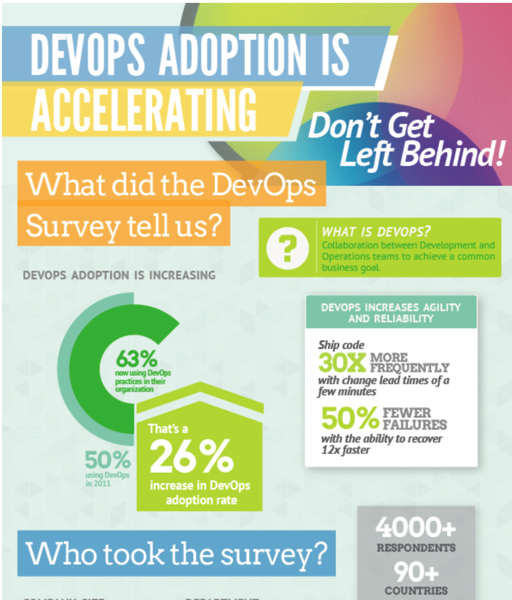
Instead of a typical Q&A type of format. We well be using survey results from a PuppetLabs DevOps study shared here as discussion areas for the panelists.

NewImage

Coal Pollution is projected to cut 5.5 yrs off of 5mil Chinese People

WashingtonPost covers a study that says coal pollution in China will cut 5.5 years off of 5 million people.

What they found was surprising. Concentrations of “total suspended particulates” were about 55 percent higher in the north, thanks to the heavy coal burning. And life expectancy for those living in the north was also about 5.5 years shorter — an effect due entirely to differences in cardio-respiratory problems, which is exactly what you’d expect if pollution was the cause. (There’s a long appendix detailing all the different controls they applied.)

...

The study concluded that nearly 500 million people living north of the Huai River will lose an estimated 2.5 billion life years because of pollution from widespread coal burning, compared with those south of the river. The study is based on analyses of health and air-quality data from 1981 to 2000.

The study is here.

Abstract

This paper's findings suggest that an arbitrary Chinese policy that greatly increases total suspended particulates (TSPs) air pollution is causing the 500 million residents of Northern China to lose more than 2.5 billion life years of life expectancy. The quasi-experimental empirical approach is based on China’s Huai River policy, which provided free winter heating via the provision of coal for boilers in cities north of the Huai River but denied heat to the south. Using a regression discontinuity design based on distance from the Huai River, we find that ambient concentrations of TSPs are about 184 μg/m3 [95% confidence interval (CI): 61, 307] or 55% higher in the north. Further, the results indicate that life expectancies are about 5.5 y (95% CI: 0.8, 10.2) lower in the north owing to an increased incidence of cardiorespiratory mortality. More generally, the analysis suggests that long-term exposure to an additional 100 μg/m3 of TSPs is associated with a reduction in life expectancy at birth of about 3.0 y (95% CI: 0.4, 5.6).

Wow.  2.5 billion life years vs. coal power.  Could you imagine if you were told given where you live you'll die 5.5 years earlier than others in a lower carbon region?

Thinking like Data Centers are Plumbing for IT services, Markit is an example of Plumbers in Suits

I've joked that part of the reason I can talk to so many different companies in the data center business is because we are talking at a low level that most don't care about - the plumbing in data centers.

Competing at a low level in data centers is as if BofA and Wells Fargo said they wanted to compete on Plumbing.  That's silly.  BofA and Wells Fargo both want the best plumbing to run their business.  What connects to the plumbing and goes through the pipes we don't really talk about.

The Economist has a post on Plumbers in Suits, Markit an unknown company to many that connects much of the financial system.  This financial plumbing is the data goes through the pipes and what it is connected to.

Markit

Plumbers in suits

A private company controlled by banks connects much of the financial system

Jul 6th 2013 |From the print edition

FEW people outside finance have heard of Markit. This week afforded two examples of how the company has worked itself into the fabric of the financial system. On July 1st it released a decent set of purchasing-managers’ indices (PMIs), a closely watched series of confidence gauges it compiles each month. That sparked a day-long rally. That same day the European Commission accused 13 big investment banks of having rigged the market for credit derivatives. The complaint also cited Markit for allegedly helping to prevent exchanges from entering the business.

Plumbing may not be glamorous, but Markit has visions of high growth.

Mr Uggla thinks Markit can double in size again in the next three to five years, and then again shortly thereafter. That would put it in the same league as Bloomberg, Thomson Reuters or McGraw-Hill Financial (the owner of Standard & Poor’s, a ratings agency). Its hope is that post-crisis regulations will prove so complex as to send banks scurrying to Markit asking it to take over even more of their back-office operations.

That kind of growth rate sounds like some of the top data center companies.