Rethinking what is the Truth in Economic Data, Premise Challenges Government Reporting

The movie Trading Places with Dan Aykroyd and Eddie Murphy made millions gaming the government disclosure of OJ futures.

It does seem pretty fragile that the future prices are determined by decades old manual methods.

A startup came out of stealth mode today.  I caught the news first in the WSJ print version, and there is a SFGate article that also covers the new service.

He began to wonder what information the government was relying on, and how they were gathering and analyzing it.

"They're reporting on about half a percentage point of reality," he said.

Soloff thought that in the digital age, there had to be more complete, reliable and rapid ways to collect the data that informs critical monetary decisions, here and abroad. A year and a half ago, he co-founded a company that aims to prove it, using an unusual online and offline approach that could offer fresh economic insights.

It's called Premise Data Corp., using the term from logic meaning the assumption that something is true. But it remains to be seen whether the company's own premise is true - that it can make money selling better data, indexes and tools than vast government agencies.

Office vs. Office-less workers, HP/Yahoo! vs. 37 Signals

One of the biggest daily carbon footprints is the daily commute.  Notice how more and more start-ups are having workers scattered around the world?  I started a company with friends and we are separated by 900 miles, but we are on the same time zone.  Google Hangout is our main method of connecting.  Some may think e-mail is for the old guys.  Well we are a bunch old guys, and at the stage we are in now e-mail works to allow everyone to be in their own mode without an interruptions. This e-mail approach is opposed to a quick collaboration Agile type of solution.

Here is a post by 37 signals on their office setup.

“Everyone in the same office” is less true now than it ever was. People are waking up to the benefits of remote working. From quality of life to quality of talent. It’s a new world, and thus a new set of assumptions.

The interesting, and tricky, part of choosing a work pattern is comparing these different worlds. What’s the value of a group of people who a) can only be picked from amongst those within a 30-mile radius of a specific office, b) who have to deal with the indignity of a hour-long daily commute, c) but who’s Agile with that capital A?

Versus a team composed of a) the best talent you could find, regardless of where they live, and b) who has the freedom to work their own schedule, c) but can’t do the literal daily stand-up meeting or pair in front of the same physical computer?

37 Signals followed the above post with another one focusing on HP/Best Buy/Yahoo!'s call for "all hands on deck" everyone must be in the office.

Neither is the hilarious corporate doublespeak that’s being enlisted to make the case. Here’s a choice bit on just how important employees are to the Vapid Corporate Slogan of The Day.. uhm, I mean HP Way Now:

Belief in the power of our people is a core principle of the HP Way Now. Employees are at the center of what we do, we achieve competitive advantages through our people. HP has amazing employees who are driving great change.

So we have great people, but we can’t trust them to get anything done unless we see butts in seats from 9-5? Who cares whether all these great people have designed a lifestyle around not having to commute long hours or live in a given city. That’s all acceptable collateral damage in the “all hands on deck” playbook for sinking companies.

Having a space where you can do your best work is your goal. Some companies think this way.  Some don't.

What is so often true is management doesn't give you the reasons why they are changing policy.

It’s sad when you see once-great companies reduced to this smoldering mess of mistrust and cargo culting. But hey, at least we know now the pitch of the whistle that says its time to abandon ship. It’s “all hands on deck”.

Steam Controller Video Demo, gets 1 mil views in 24 hrs, Users are ready to decrease use of keyboards

If you are in the business of selling keyboard switches, life is not good.  I used to be program manager for Apple Keyboards so got into all the details of making keyboards, PCB, key switches, printing.  I also worked on mice and trackballs, so data input devices was in my blood long, long ago.

Those who hang on to must have features like a physical keyboard have a lot in common with the loyal Blackberry users who are disappearing fast.

In Gaming there is a debate between the keyboard and mouse users vs. controllers.

Probably the single most-argued argument in all of gaming is the silly, ill-formed rivalry between the console gamepad and the PC mouse and keyboard.

Here is video by Valve Software on the Steam Controller.  This video has over a million views in 24 hours.

Think about some of those things in your data center that may be the old way doing things like typing on a keyboard.

Insight into The Soul of a Machine, read Tracy Kidder's Book on writing Non-fiction

I think most of you have read The Soul of a Machine by Tracy Kidder.  

Winner of the Pulitzer Prize and the American Book Award, The Soul of a New Machine was a bestseller on its first publication in 1981. With the touch of an expert thriller writer, Tracy Kidder recounts the feverish efforts of a team of Data General researchers to create a new 32-bit superminicomputer. A compelling account of individual sacrifice and human ingenuity, The Soul of a New Machine endures as the classic chronicle of the computer age and the masterminds behind its technological advances.
"A superb book," said Robert Pirsig, author of Zen and the Art of Motorcycle Maintenance. "All the incredible complexity and chaos and exploitation and loneliness and strange, half-mad beauty of this field are honestly and correctly drawn." The Washington Post Book World said, "Kidder has created compelling entertainment. He offers a fast, painless, enjoyable means to an initial understanding of computers, allowing us to understand the complexity of machines we could only marvel at before, and to appreciate the skills of the people who create them."

The Soul of a New Machine won the 1982 non-fiction Pulitzer prize and made Tracy Kidder a star along with many of the people he wrote about.

Tracy Kidder and his editor Richard Todd wrote a book on writing non-fiction, Good Prose.

Good Prose is an inspiring book about writing—about the creation of good prose—and the record of a warm and productive literary friendship. The story begins in 1973, in the offices of The Atlantic Monthly, in Boston, where a young freelance writer named Tracy Kidder came looking for an assignment. Richard Todd was the editor who encouraged him. From that article grew a lifelong association. Before long, Kidder’s The Soul of a New Machine, the first book the two worked on together, had won the Pulitzer Prize. It was a heady moment, but for Kidder and Todd it was only the beginning of an education in the art of nonfiction.

In Chapter 7 of Good Prose, the authors discuss the development of The Soul of a A Machine.

I was a fried of math and science, and consequently I disdained the class of people who were competent with them. The prospect of looking into computers seemed daunting and drab, as drab as the word "engineering." I wish I could claim that I was the sort of daring young reporter who would press forward and let himself be proven wrong. In fact I took Todd's suggestion because just then I couldn't think of anything else to look into.

Three years later I had a book, The Soul of a New Machine.

The word of the book spread through reviews like this.

Then the editors of The New York Times Book Review chose an engineer to review it -- Samual Florman, who had himself written a book called "The Existential Pleasures of Engineering," and was clearly delighted to read something that ran counter to what he felt was an anti engineering bias among the literati, delighted by a book that seemed to make a branch of his profession exciting. And the editors of the Book Review, put Mr. Florman's review on the magazine's cover.

I know many of you will not take the time to read Good Prose, but I did, and it now gives me a new perspective as I read The Soul of a New Machine again. 

Knowing the background of the author will let you see things not evident to others.  Knowing someone's background is different than an obsessed fan who suffers from hero-worship.  I have learned that some of the writers I admire are quite different in person than their writing.  Where I learn some insights to how an author works is when I am in a media briefing and I see what questions other writers ask and how they react to the answers.

BTW, this technique of studying someone's background is what most of you should be doing when you hire anyone to work on your data center. 

I have read Terry Brooks book about writing.
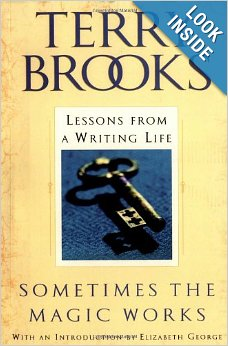
NewImage

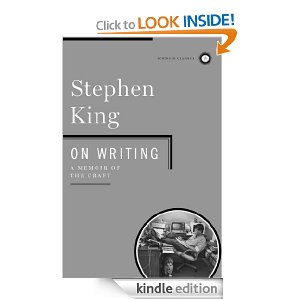
Stephen King's book.

NewImage

Tracy Kidder's book.

NewImage

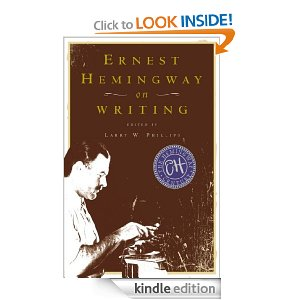
I have left Ernest Hemingways' book.

NewImage