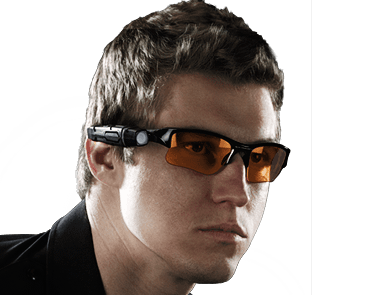
Video Cameras Enable Policing the Police Force, Changing the Enforcement Game

Arstechnica posts on London deploying video cameras in some of its workforce.


London police will soon wear video cameras

Manufacturer says cameras are a "game changer," cops not so excited.

Taser is behind the video cameras.

Taser has indicated that London's test is the largest such urban pilot anywhere in the world. Two response teams on each borough will be suited with such cameras when answering emergency 999 calls during the pilot. The findings of the pilot will be used to determine future implementation of such technologies.

"Our Axon body-worn cameras are a game changer for law enforcement agencies worldwide and are helping police officers reduce crime and build safer communities,” Jeff Kukowski, Taser International’s chief operating officer, told Ars. “When you look at community safety today, there are any number of scenarios where there is controversy. Video helps pool together what happens."

Opening Your Eyes Delivers 40% of Your Perception, The Rest Is From Your Memories or Patterns

Lately I have working on software for operations and part of what hit me is this point from Creativity Inc by Ed Catmull.

Pete Docter’s ambitious film that would eventually become known as Inside Out. During the intensive research phase of the film, Pete was surprised to hear from a neuroscientist that only about 40 percent of what we think we “see” comes in through our eyes. “The rest is made up from memory or patterns that we recognize from past experience,” he told me.

Animators have been trained to be observant— they know that viewers subconsciously register even the most subtle motions and that those, in turn, trigger recognition. If animators want a character to reach for something to their left, they anticipate that a split-second earlier by having the character move ever so subtly to the right. While most people aren’t aware of it, this is what the brain expects to see— it’s a tell, if you will, that signals what’s to come. We can use that tell to guide the audience’s eyes wherever we want them to look. Or conversely, if we want to surprise people, we can leave it out, making the unforeseen motion more startling. In Toy Story 2, for example, when Jessie talks about her fears, she twists one of her braids around her finger. Seeing this little motion, you sense her state of mind, perhaps without even knowing why. The meaning in that simple action is supplied by the audience , though —by their own experiences and emotional intelligence.

Catmull, Ed; Wallace, Amy (2014-04-08). Creativity, Inc.: Overcoming the Unseen Forces That Stand in the Way of True Inspiration (Kindle Locations 2767-2776). Random House Publishing Group. Kindle Edition.

Here is the movie that Pete Docter was researching for.

NewImage


Inside Out

U.S. Release Date: June 19, 2015

From the tepuis of South America to a monster-filled metropolis, Academy Award®-winning director Pete Docter has taken audiences to unique and imaginative places. In 2015, he will take us to the most extraordinary location of all - inside the mind of an 11-year-old named Riley. 

Growing up can be a bumpy road, and it's no exception for Riley, who is uprooted from her Midwest life when her father starts a new job in San Francisco. Like all of us, Riley is guided by her emotions – Joy (Amy Poehler), Fear (Bill Hader), Anger (Lewis Black), Disgust (Mindy Kaling) and Sadness (Phyllis Smith). The emotions live in Headquarters, the control center inside Riley’s mind, where they help advise her through everyday life. As Riley and her emotions struggle to adjust to a new life in San Francisco, turmoil ensues in Headquarters. Although Joy, Riley's main and most important emotion, tries to keep things positive, the emotions conflict on how best to navigate a new city,
house and school.

Director:  Pete Docter
Co-Director: Ronnie del Carmen
Producer:  Jonas Riveras

Avison Young's Jim Kerrigan Shares State of Chicago Data Center Market

Avison’s Jim Kerrigan is a native Chicago resident and his knowledge of the data center market is among the best.  Jim has a newsletter he just shared on the Chicago Data Center market.

NewImage

NewImage

You can see the past newsletter’s Jim has posted here.

Big Flaw of Keeping Everything in Your Head, Your Brain Hides your Blinds Spots

There are some people out there who believe if they were in charge then all things would be right as they know in their head what are the right things that need to be done.  This can occur in design, construction, operations and so many other areas.  What is really crazy is when you scale up the ideas in a person’s head the right way and underlings bow down in obedience.

I think this could explain why so many things in the data center world just don’t look right to people who objectively review what others have done.

Check out this Psychology Today article on problems on what your mind sees.

Our perception of the world is like a telegram with every other word missing. We get the gist of things, while our minds fill in the missing pieces. Sometimes our minds get it right; sometimes they are spectacularly wrong.

How many times have you run into this social situation?

For example, have you ever assumed that someone was upset with you because his or her behavior seemed cold or distant, then later discovered that their behavior had nothing to do with you?

We assign personalities to people that help us understand and predict their behavior. Cognitive psychologists call them schemas. When a person's behavior violates our schema, the mind is always at the ready with a quick and easy explanation: Uncle Marty forgot my birthday. Clearly he is angry with me.

From a mind's point of view, the most sensible explanation is the one that ensures our safety. If a mind assumes that Uncle Marty is angry, then we will feel compelled to respond, perhaps by repairing the relationship or distancing ourselves from it. ...Gosh, I better figure out why Uncle Marty is angry. Or, ...Screw Uncle Marty. I never liked him anyway.

 The good data center people know they have blind spots and they build a team that reduces the impact.  Some data center teams do the opposite and build a team that follows their vision.  I think the management consultants have blown up people’s egos too much many times to convince they need vision.

How many managers have failed because their vision had too many blind spots?