7x24 Exchange Conference Spring, ending with the best conversations

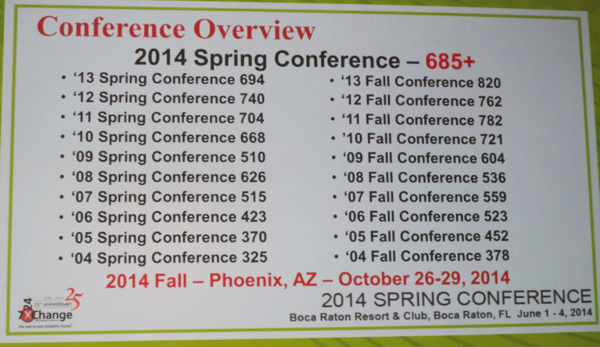
7x24 Exchange Spring Conference ended yesterday and after 4 years and 7 conferences I’ve learned a lot by making great friends.  The closing of a conference is a race to the airport for almost everyone.  One of the things I tried a few years ago was to book my return flight in the evening and go to the resort pool to enjoy the facilities.  Yesterday by the pool I ended with some of the best conversations with friends at the conference who also choose to enjoy the facilities.

Chatting after the close of the event is so much more relaxing and many times you talk about other things.  I’ve already booked my travel to Phoenix with a 6p return flight.  I can always get on an earlier flight, but my hope is David Schirmacher and I will keep our regular catch up lunch after the conference.  David is the person who convinced me to attend 7x24 Exchange for the first time 4 years ago, and now that I think about I should count him as my 1st 7x24 Exchange friend in a long line of many other friends I see at 7x24 Exchange.  See many of you at Fall 2014 event.

Fall 2014
October 26-29, 2014
JW Marriott Desert Ridge
Phoenix, AZ
Scaling to the Future

Is it time to get out of the Modular Data Center Business with Foxconn's Arrival?

DCD reports on Foxconn’s efforts in low-pue modular data centers.

A Foxconn senior VP, Fuming Fu, said: “We look forward to bringing our many years of technology development and manufacturing experience to the [data center] industry.”

Foxconn also makes servers, storage arrays and networking equipment for IT vendors, and runs a factory in the Czech Republic that produces HP’s modular performance optimized data centers.

IO data centers has been trying to iPO, but looks like the market is not ready as I haven’t heard or seen with IO data centers will IPO.

IO Data Centers Could Launch IPO in December <2013>

With Foxconn’s arrival it could be a tough next year to be in the modular data center business.

7x24 Exchange a Conference Focusing on Data Centers

I go to too many data center conferences.  And, I go to a lot of other technology conferences.  What has been interesting is the movement by many of the data center events and publications to add subjects like Cloud, Big Data, DevOps which on the surface can seem like a good idea as there is a relationship.  The problem is the # of people who focus on the relationship between data centers and these other technologies is not that big.

Spending the last couple of days at 7x24 Exchange it has been a pleasure to focus on data centers - designing, building, and operating data centers.

Attendance is as good as ever at 7x24 Exchange.  If you have an interest in data centers and want an event that focuses on data centers, then 7x24 Exchange may be the right event for you.  If you want to learn about Cloud, Big Data, Mobile, I head to Gigaom Structure where I’ll be speaking and other industry leaders attend. http://events.gigaom.com/structure-2014/  For Devops I’ll head to PuppetConf, http://2014.puppetconf.com 

NewImage

NewImage

Is Newark's Data Center LLC project a Green Data Center?

The Green Data Center aspect is being debated as many focus on the environmental impact.

Newark City Council reviews report on data center’s environmental impact

Newark Mayor Polly Sierer and City Council presented a report on the potential environmental impact of the proposed data center and its adjoining power plant on the University of Delaware’s STAR campus during a special meeting on Monday night.

The report, produced by Liberty Environmental, concludes The Data Centers’ project is relatively clean, but it’s use of combustion engines and non-renewable fossil fuels in a 279 megawatt, gas-turbine power plant does not make it green.

Here is a post that makes the statement this data center is not green.

City's environmental consultant deems TDC project 'not green'

...


Biebuyck presented Liberty's findings to city council during a special meeting held Monday night in council chambers where he shared several “concerns” regarding TDC's air permit, deeming some of the company's claims “questionable,” “incorrect” and “misleading.”


“This project is to some extent clean but it's certainly not green,” he said.


Google's Data Center Machine Learning enables shaving Electricity Peak Demand Charges

A week ago I was able to interview Google’s Joe Kava, VP of Data Centers regarding Better Data Centers through Machine Learning.  The media coverage is good and almost everyone focuses on the potential for lower power consumption.

Google has put its neural network technology to work on the dull but worthy problem of minimizing the power consumption of its gargantuan data centers.

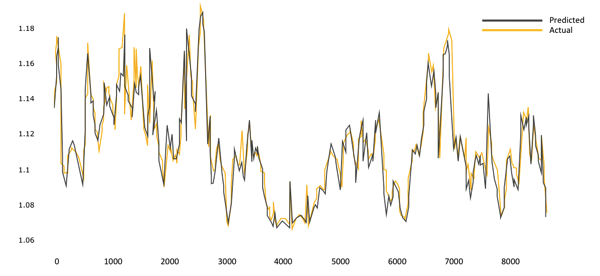
One of the topics I was able to discuss with Joe is the idea that accurately prediction of PUE and a mathematical model of the mechanical systems enables Google to focus on the Peak Demand during the billing period to reduce overall charges.  The above quote says power consumption is dull. What is focusing on peak power demand?  Crazy.  Or you understand a variable cost of running your data center. :-)

How you get billed is complicated and varies widely dependingUnderstanding Peak Demand Charges on your specific contract, but it’s important for you to understand your tariff. Without knowing exactly how you're billed for energy, it's difficult to prioritize which energy savings measures will have the biggest impact. 

...

In many cases, electricity use is metered (and you are charged) in two ways by your utility: first, based on your total consumption in a given month, and second, your demand, based on the highest capacity you required during the given billing period, typically a 15-minute interval during that billing cycle.

To use an analogy, think about consumption as the number that registers on your car’s odometer – to tell you how far you’ve driven – and demand as what is captured on your speedometer at the moment when you hit your max speed. Consumption is your overall electricity use, and demand is your peak intensity, or maximum “speed.”

National Grid does a great job explaining this: "The price we pay for anything we buy contains the cost of the product plus profit, plus the cost of making the product available for sale, or overhead.” They suggest that demand is akin to an overhead expense and note that “this is in contrast to charges…customers pay for the electricity itself, or the ‘cost of product,’ largely made up of fuel costs incurred in the actual generation of energy. Both consumption and demand charges are part of every electricity consumer’s service bill.”

When you think about the ROI of reducing your energy consumption the business people should understand the overall consumption and the peak demand of its operations.  Unfortunately it is all too common for people to focus only on the $/kWhr.

Google can look at the peak power consumption and see if there are ways the PUE could be improved to reduce the peak power for the billing period.
NewImage

Here are tips that can help you shave peak demand.

Depending on your rate structure, peak demand charges can represent up to 30% of your utility bill. Certain industries, like manufacturing and heavy industrials, typically experience much higher peaks in demand due largely to the start-up of energy-intensive equipment, making it even more imperative to find ways to reduce this charge – but regardless of your industry, taking steps to reduce demand charges will save money.

...

Consider no or low-cost energy efficiency adjustments you can make immediately. When you start up your operations in the morning, don't just flip the switch on all of your high intensity equipment. Consider a staged start-up: turn on one piece of equipment at a time, create a schedule where the heaviest intensity equipment doesn’t all operate at full tilt simultaneously, and think about what equipment can be run at a lower intensity without adverse effect. You may use more kWh – resulting in greater energy consumption or a higher “energy odometer” reading as discussed above – but you'll ultimately save on demand charges and your energy bill overall will be lower.