Two different ways of planning to attend a conference

Here is a post https://datacenterfrontier.com/how-to-get-the-most-out-of-data-center-conferences/?utm_source=twitter&utm_medium=social&utm_campaign=SocialWarfare by Bill Kleyman on “How to get the most out of a Data Center Conference”

There is some good advice in it - check out the schedule, plan logistics, know the schedule, etc.  Out of the long post here is the closing.

”Finally, just make sure you enjoy yourself and make some new friends. Honestly, that’s the best part of the conference – learning something new and meeting up with dear friends and industry colleagues.” 

After reading the post I found that there is different way I use.

The perspective I use when attending a conference is a networking exercise. Most of you think of networking like social networking. I am referring to networking like it is an engineering exercise. As an engineer what is the current state of my network and how can I use the conference to improve my network.  

#1 is network with the conference staff. They can help you find people and get insight that is hard to get without a face-to-face conversation.  I always do this at DCD and 7x24 Exchange.

#2 are any of my friends going to the conference and what are their plans. Friends expand your ability to network at an event. 

#3 identify the particular people you are looking for at the conference. Those connections you want to reinforce and the new ones you want to make.

At the end of the conference if you have improved your network then it is a success.

Google has a mindset perspective from its early days giving it an advantage over many

In 1998, Google had a $100k check from Andy Becholsheim. In 1998 you could buy between 5-15 Compaq Servers that were used for web content. To make a high Availability system you would have a hot spare which could mean you have 1/2 the available resources. Google took the path that few have taken back then to use consumer components.

IMG_0160.JPG

Above is the 1st Google Servers. The first iteration of Google production servers was built with inexpensive hardware and was designed to be very fault-tolerant.

In 2013, Google published it Datacenters as a Computer paper. http://www.morganclaypool.com/doi/pdf/10.2200/S00516ED2V01Y201306CAC024

A key part of this paper is discussion of hardware failure. 

“1.6.6 HANDLING FAILURES

The sheer scale of WSCs requires that Internet services software tolerate relatively high component fault rates. Disk drives, for example, can exhibit annualized failure rates higher than 4% [123, 137]. Di erent deployments have reported between 1.2 and 16 average server-level restarts per year. With such high component failure rates, an application running across thousands of machines may need to react to failure conditions on an hourly basis. We expand on this topic further on Chapter 2, which describes the application domain, and Chapter 7, which deals with fault statistics.”

Google has come a long ways from using inexpensive hardware, but what has been carried forward is how to deal with failures. 

Some may think 2 nodes in a system are required for high availability, but the smart ones know that you need 3 nodes and really want 5 nodes in the system. 

Best Place to get your weekly IOT Dose - Stacey On IOT

I am biased in this post. I have known Stacey for years from GigaOm.  I would attend the GigaOm conferences as a blogger, then Stacey reached out thanks to Barton George recommending she contact me to discuss data centers.  In those early days we would geek out regularly discussing data centers. Through our own separate paths we have both arrived at IOT, but Stacey is way more into IOT than I am. Stacey has a web site https://staceyoniot.com/ and weekly podcast on IOT https://staceyoniot.com/category/podcast/.


IMG_0159.JPG

I regularly listen to Stacey’s weekly podcast and many of friends do as well and we discuss points that Stacey has made. For example, GE’s decision to change its approach to Industrial IOT. https://staceyoniot.com/ge-discovers-that-industrial-iot-doesnt-scale/ One of my friends and I have had exposure to the GE team and we discussed the news that GE has changed its IOT strategy.

If you are interested in IOT and you have road or public transport time you should give a try to listen to Stacey on IOT. I usually listen to Stacey when I am on an hour long dog walk.  


Oracle Cloud is aggressively hiring

I have lived in Seattle, well actually Redmond for 25 years and I have no plans on moving. I was given an offer by Microsoft to leave Apple in 1992 and I said to myself, "something is going on in Redmond and the only way I am going to find out is to move there. If I don't like it I'll leave."

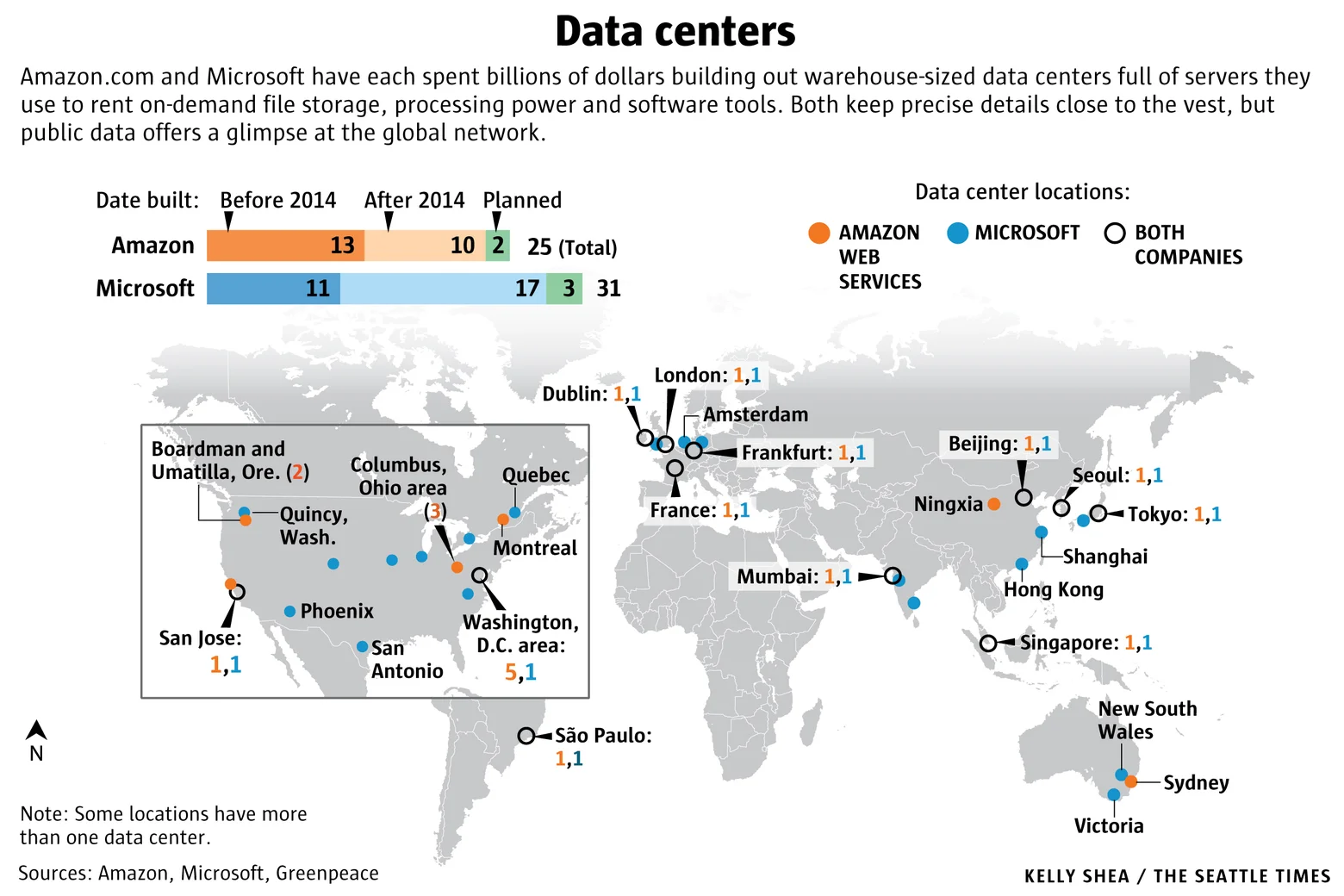
With Microsoft's strength in software it supported an ecosystem that made it easy for Amazon to create Amazon Web Services, hiring some top Microsoft people while importing many others. Now the Seattle area is a Cloud Hub with Google, Salesforce, and so many others.

What is a little known fact is Oracle is hiring aggressively for its cloud group and I know so many ex-Microsoft people who now work for Oracle. Bet you they never thought when they left Microsoft they would eventually end up at Oracle.

Here is the press release that says Oracle is hiring 5,000 people in the US for its cloud group.

This year, Oracle is hiring more than five-thousand new engineers, consultants, sales and support people into its rapidly growing cloud business. This injection of talent will help Oracle sustain the momentum in what is already the world’s fastest growing multi-billion dollar cloud business.

I need to have lunch with some of friends who are now at Oracle. I used to have lunch with friends who were at AWS when they first made the move.

We'll see how quickly Oracle expands its Cloud footprint.

WEB-microsoft-amazoncloud-2-1560x1040.jpg

60ghz millimeter wave technology is coming are you ready to take advantage of the changes?

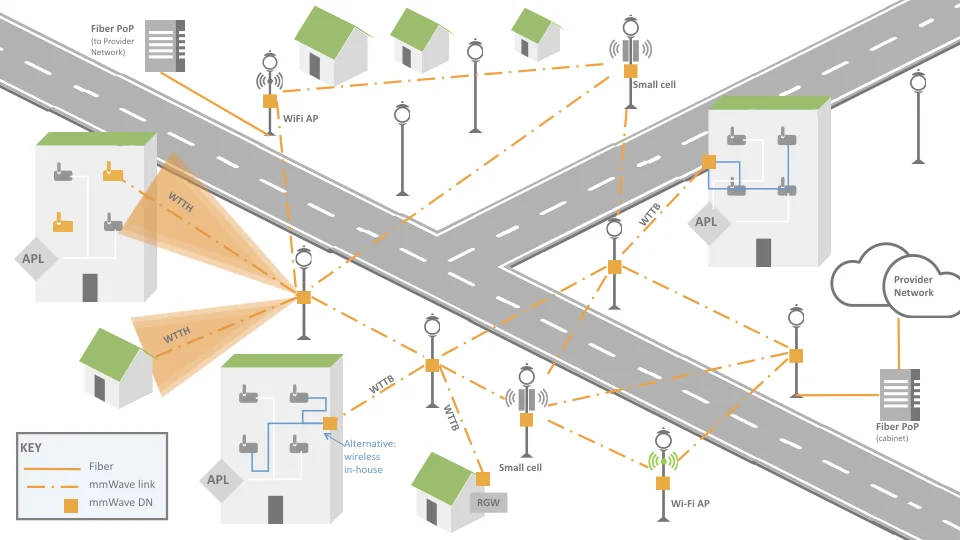
I’ve been keeping an eye on the 60ghz millimeter wave techology. Why? Because being able to go 200-300 meters at 10gbps and possibly up to 1km under the right conditions allows faster deployment and lower cost of high speed connections that in the past would require fiber. 40gbps systems are being worked on next.

TechCrunch covers 60ghz being added as a Telecom Infrastructure project. https://techcrunch.com/2017/09/12/facebook-backed-telecom-infra-project-adds-a-new-focus-on-millimeter-wave-tech-for-5g/ 


IMG_0158.JPG