Apple’s MobileMe, a Black Data Center (not Green)

There is a bunch of news about Apple’s MobileMe service and Steve Job’s email - http://news.google.com/news?hl=en&ned=us&q=apple+mobileme

The actual Steve Jobs email is published here.

GigaOm has some interesting background check which shows how Apple’s MobileMe service exhibits the characteristics of a Black Data Center.  Not even close to being a Green Data Center which means Apple’s costs are high for their services compared to their competitors.

I have picked up some tidbits from my Internet infrastructure sources, who tell me that:

  • There is no-unified IT plan vis-a-vis applications; each has their own set of servers, IT practices and release scenarios.
  • Developers do testing, load testing and infrastructure planning, all of which is implemented by someone else.
  • There’s no unified monitoring system.
  • They use Oracle on Sun servers for the databases and everything has its own SAN storage. They do not use active Oracle RAC; it is all single-instance, on one box, with a secondary failover.
  • Apparently they are putting web servers and app servers on the same machines, which causes performance problems.

One of my sources opined that Apple clearly wasn’t too savvy about all the progress made in infrastructure over the past few years. If this insinuation is indeed true, then there is no way Apple can get over its current spate of problems. It needs a crash course in infrastructure and Internet services. Apple’s problem is that it doesn’t seem to have recognized the fact that it’s in the business of network-enabled hardware.

The looks, UI and edge devices are only as good as the networking experience — whether it comes from Apple or from its partners. MobileMe could just be the canary in the coal mine as far as the Cupertino Kingdom is concerned. MobileMe isn’t that big a portion of their revenues right now, but what happens when the problems hit the iTunes store? Imagine the uproar when your 3G connections slow to a crawl because AT&T’s wireless backhaul can’t handle the traffic surge.

These are all the indicators of inefficient data center. I am not surprised by this as why would a great Infrastructure Architect work at Apple? Apple’s DNA is about iPhone, Mac OSX, Aperture, Final Cut Pro.  IT infrastructure isn’t a credible skill.

My Lesson’s from Apple

It’s been 16 years since I left Apple, and had a great time working on System 7 and Mac products, but had lost track of Apple colleagues. Due to my Staycation/Backyard Beach House, I had an Apple friend track me down and found there are a bunch of the people who I worked with on System 7 are back at Apple. Which could go to explain how Apple is doing better than Microsoft in OS development – Apple has a bunch of wise, experienced, and older managers who lived through the pains of OS development.

Working on OS’s for all those years at Apple and Microsoft taught me many lessons, and one key lesson I learned from Apple working on System 7 is the dangers of telling everybody “this is the OS we will innovative and we need to make big changes.”  System 7 had aspirations for features like a new graphics model and print model.  But how do you print some of the new graphics? How do legacy apps work with the new graphics model? Do developers/SW developers want a new graphics model? Apple eventually dropped the new graphics and print models as they didn’t work, but the pressure to be innovative was huge as that was what everyone else was doing. 12 years later at Microsoft, after finishing work on Windows XP leading a team, another group wanted to take over my group’s function for longhorn/Windows Vista, I gladly gave up the function as I knew Windows Vista was repeating the mistake of innovating the whole OS (Apple’s System 7).  I never ran Vista for the next 5 years as I knew it would be a pain, and only tried it last year when I got a new laptop.

As the Steve Jobs’ letter points out.

– Rather than launch MobileMe as a monolithic service, we could have launched over-the-air syncing with iPhone to begin with, followed by the web applications one by one – Mail first, followed 30 days later (if things went well with Mail) by Calendar, then 30 days later by Contacts.

Trying to get everything to work in a complex service is a difficult path which makes failure a high probability.  Imagine what Windows Vista had been like if Microsoft released features in phases, measuring the success of features based on the downloads and activation.  Base the dev teams bonus on use metrics.  It’s game changing, and flies in the face of the status quo. I like it!

Read more

Staycations are In, My Project Featured in Sunset Magazine

It is interesting reading how Staycations are popular with high energy prices and the economic conditions. MSNBC has an article on Staycations.

Get away on vacation — at home

Forget the chores on your 'staycation', and return really rested

UPPER ST. CLAIR, Pa. - Like a suburban stalker, I have watched from my front window as various neighbors packed body boards in their SUVs and headed to the Jersey shore, set off for a week at a North Carolina mountain resort, and jetsetted to Las Vegas.

I admit it. I suffered from vacation envy.

But after spending a relaxing two-week vacation at home with my family — with no packing, no airport delays, and no backseat chants of "Are we there yet?" — I was refreshed. It was just the vacation I needed. I recommend it to anyone who sighs with that sad Sunday night feeling each weekend when it's clear daily living requires more time and energy than a typical week can offer.

10 years ago, I wanted to build my staycation space, and this month in Aug '08 Sunset Print Magazine our "Backyard Beach House" is featured. The article is not online yet, but here are some images from the article.

IMG_0002 IMG_0006

IMG_0004  IMG_0005

The one problem hard to avoid is getting away from the office as my office is at home as well. I'll write a post about my office as well, but a quick summary is it is 500 sq ft, with 208 3 phase power in my office with air side economizers (I open the windows) as well as air conditioning for those rare hot days to keep the  computers cool.

image

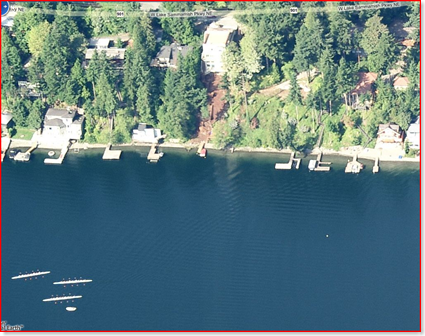
Our Beach House is the right structure with a small dock in front of it. My Office is the small structure above and our home is the next structure near the road.

Read more

ZDNet – Russia as Data Center Hub? Not So Fast, links to GreenM3

Another interesting link to my Russia Data Center Entry from ZDNet, and from Larry Dignan.

Larry DignanLarry Dignan is Editor in Chief of ZDNet and Editorial Director of ZDNet sister site TechRepublic. See his full profile and disclosure of his industry affiliations.


Russia as datacenter hub? Not so fast

Posted by Larry Dignan @ 7:08 pm

Russia apparently could become a datacenter hub. It has hydroelectric power, cold temperatures to keep all those servers cool and a booming economy with lots of engineering talent. But there are enough moving parts to require a little more homework on that Russia as datacenter capital theory.

The Green Data Center blog riffs off an Economist story connecting the datacenters with Russia’s hydroelectric capacity. RusHydro, which owns most of Russia’s hydroelectric plants, has 25 gigawatts of capacity. Why wouldn’t you put up a bunch of data centers in Russia? Om Malik connects a few more dots and notes that datacenters will be clustered near the power production. It only stands to reason that Russia would be a big player.

This is interesting to watch how the idea grows through blogs.  I’ll keep watching my blog metrics to see what other links I get.

Read more

Economist Article on Problems with Energy Conservation, the "Rebound Effect"

The Economist has a well written article on the issues with Energy Conservation. It gives a good perspective from the holistic view of the potential energy savings from conservation and dives into details of implementing programs and energy saving appliances.

Anyone who is thinking of Green Data Center projects should read this article to get a good perspective on the issues on saving energy.

Here are a few highlights from the article.

Energy efficiency

The elusive negawatt

May 8th 2008
From The Economist print edition

If energy conservation both saves money and is good for the planet, why don't people do more of it?

IN WONKISH circles, energy efficiency used to be known as “the fifth fuel”: it can help to satisfy growing demand for energy just as surely as coal, gas, oil or uranium can. But in these environmentally conscious times it has been climbing the rankings. Whereas the burning of fossil fuels releases greenhouse gases, which contribute to global warming, and nuclear plants generate life-threatening waste, the only by-product of energy efficiency is wealth, in the form of lower fuel bills and less spending on power stations, pipelines and so forth. No wonder that wonks now tend to prefer “negawatts” to megawatts as the best method of slaking the world's growing thirst for energy.

The problem, analysts explain, is a series of distortions and market failures that discourage investment in efficiency. Often, consumers are poorly informed about the savings on offer. Even when they can do the sums, the transaction costs are high: it is a time-consuming chore for someone to identify the best energy-saving equipment, buy it and get it installed. It does not help that the potential savings, although huge when added up across the world, usually amount to only a small share of the budgets of individual firms and households. Despite recent price increases, spending on energy still accounts for a smaller share of the global economy than it did a few decades ago.

For all these reasons, homeowners, as Lord Stern pointed out in his climate-change report, tend to demand exorbitant rates of return on investments in energy efficiency—of around 30%. They generally want new boilers or extra insulation to pay for themselves within two or three years, says Mark Hopkins, of the United Nations Foundation, an NGO. Businesses are not quite so demanding, he says, but they still tend to put greater emphasis on increasing revenues than on cutting costs.

Similar stories crop up in the markets for new homes and offices, appliances and vehicles. Builders are not the ones who end up paying the utility bills, so have little reason to add to the construction costs—and hence the price of a home or office—by incorporating energy-saving features. The makers of appliances and cars also know that not all consumers and drivers will think as carefully about running costs as about the purchase price. By the same token, landlords have scant incentive to invest in energy efficiency on their tenants' behalf. And power companies are usually keen to encourage their customers to consume as much power as possible.

And, as Microsoft's Christian Belady has pointed out increasing efficiency does not necessarily decrease demand.  The Economist reinforces the idea of the "rebound effect."

However, no matter what methods governments adopt to encourage energy efficiency, the results may not be as impressive as they imagine. The culprit is something called the “rebound effect”. Falling demand for electricity or fuel brought on by an efficiency drive should lead to lower prices. But cheaper energy, in turn, is likely to prompt greater consumption, undermining at least some of the original benefits. What is more, consumers with lower electricity or fuel bills often put the money they have saved to some other use, such as going on holiday or buying an appliance, which is likely to involve the consumption of fuel and power.

Economists disagree about the size of the rebound effect, which is hard to measure. The British government commissioned two studies of the effect, from two different universities. The first found that it cancelled out roughly 26% of the gains from energy-efficiency schemes; the other put the figure at 37%. Either way, negawatts are worth pursuing. But they are unlikely to satisfy the world's thirst for energy to the extent their advocates assume.

Another good example of the rebound effect is in virtualization projects.

Read more

Why Green can have Difficulty at the Executive Level, environmental movement is not always guided by science

WSJ has a column written by Patrick Moore, a co-founder of Greenpeace who left in 1968 and now works for the Clean and Safe Energy Coalition.

Why I Left Greenpeace

By PATRICK MOORE
April 22, 2008; Page A23

In 1971 an environmental and antiwar ethic was taking root in Canada, and I chose to participate. As I completed a Ph.D. in ecology, I combined my science background with the strong media skills of my colleagues. In keeping with our pacifist views, we started Greenpeace.

But I later learned that the environmental movement is not always guided by science. As we celebrate Earth Day today, this is a good lesson to keep in mind.

At first, many of the causes we championed, such as opposition to nuclear testing and protection of whales, stemmed from our scientific knowledge of nuclear physics and marine biology. But after six years as one of five directors of Greenpeace International, I observed that none of my fellow directors had any formal science education. They were either political activists or environmental entrepreneurs. Ultimately, a trend toward abandoning scientific objectivity in favor of political agendas forced me to leave Greenpeace in 1986.

The breaking point was a Greenpeace decision to support a world-wide ban on chlorine. Science shows that adding chlorine to drinking water was the biggest advance in the history of public health, virtually eradicating water-borne diseases such as cholera. And the majority of our pharmaceuticals are based on chlorine chemistry. Simply put, chlorine is essential for our health.

My former colleagues ignored science and supported the ban, forcing my departure. Despite science concluding no known health risks – and ample benefits – from chlorine in drinking water, Greenpeace and other environmental groups have opposed its use for more than 20 years.

Patrick continues his venting.

Sadly, Greenpeace has evolved into an organization of extremism and politically motivated agendas. Its antichlorination campaign failed, only to be followed by a campaign against polyvinyl chloride.

and closes

We all have a responsibility to be environmental stewards. But that stewardship requires that science, not political agendas, drive our public policy.

Keep this in mind if you are working on a Green Initiative and you are looking for executive support. Green has negative perceptions in some circles. 

Read more