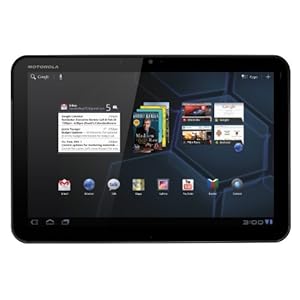
Are Tablets a longer term threat to Smart Phones than Laptops?

My AT&T bill just finished a billing cycle, I used 650 minutes total on my cell phone plan and 500 MB of data.  Most of my data access is on wifi.  Do I really need a smartphone?  Or will my future Motorola Xoom make the smartphone obsolete?  Some people are addicted to be connected all the time, but is it better to have a dumb cell phone and be connected with a Tablet when you want to?

Businessweek has an article exactly on this idea.

Size Matters: Tablets vs. Smartphones

When consumers weigh buying a tablet, a smartphone, and a basic, no-frills phone for calling, the smartphone looks expendable, contends analyst Eric Chan

By Eric Chan

STORY TOOLS

Smartphones are the products most at risk of cannibalization in the rising tide of tablet sales—not laptops, as some industry analysts are predicting.

Current forecasts for the 'tablet effect' are shortsighted and fail to consider the long-term implications that this phenomenon will have on the mobile electronics industry. While tablets are likely to crimp laptop and netbook sales for the first year or so—until consumers fully understand what a tablet is—the long-term trend is different. Laptop sales will bounce back. Smartphone sales will drop. This long-term trend should be clear just by looking at user surveys, product evolution, the redundancy factor, and basic economics.

Eric Chan sees the change in the younger audience.

I specifically see smartphone sales falling among consumers in the 13-17 and 18-24 year old markets. Young consumers will start buying down on their phones, opting to buy a tablet plus a feature phone, rather than the expensive redundancy of a smartphone and a tablet, or the limited features of just a smartphone. These age groups are particularly vulnerable because they are already adopting tablets and e-readers as book replacements. Changing readership habits provides a strong incentive for moving to a tablet device; these demographics' smaller budgets will necessitate a buy-down on the phone. In the 25-34 market, consumers will still use smartphones when employers provide them. Left to their own devices, a significant proportion will opt instead for a tablet, plus a basic phone.

Why I ordered a Motorola Xoom vs. an iPad 2, the Google Cloud

My family has an iPad original which is great for watching movies and surfing the web.  The iPad 2 just shipped on Mar 11, and it was tempting to get an iPad 2 to share with the family.  One of my friends got an iPad 2 on Mar 11 and shared his experience vs. his iPad 2.

I have been enjoying it as much as my original iPad.  Impressions:
- I still find them too slippery!  the smooth aluminum back slides around in my lap.
- it feels a lot thinner.  it feels more like Dave's Kindle 3 in thickness
- it feels a lot lighter, again, closer to Dave's Kindle 3.
- the screen feels brighter
- the operation is snappier.  I find that web pages are rendering faster.  I am getting less of the checkerboard placeholder while web pages render.  I also sense that the lag between starting a touch operation and the system detecting that is shorter, resulting in snappier response in games, etc.
- I read that the white bezel could be distracting and that the black was superior.  I deliberately bought the white to try that out, and to distinguish it from my original iPad (now my son’s).  I am not as used to it yet, but once I am reading, I can't say that I really notice it.  The content, especially that about Japan's earthquake and tsunami are so compelling that the bezel isn't really a factor.
- I haven't seen the fancy new covers yet, but I hear that they are great.  One site is predicting that Apple will sell nearly $1BN of the covers alone!!  what a business!!

Amazon.com and others are taking orders starting Mar 16, 2011 for the $599 Motorola Xoom 32GB wifi tablet.

by Motorola

new

Price:
$599.00 & eligible for free shipping with Amazon Prime

This item has not yet been released.
You may pre-order it now and we will deliver it to you when it arrives.
Ships from and sold by Amazon.com.

I decided to place an order for a Motorola Xoom as many of my technical friends prefer Google Android vs. Apple iOS operating system.

Forbes has a blog entry on the iPad 2 vs. the Xoom which has a high 22,781 views

Apple iPad 2 vs. Motorola Xoom: Which Wins As A Business Tool?

Mar. 14 2011 - 1:31 pm | 22,781 views | 2 recommendations | 9 comments

The iPad 2 (left) is thinner than the Xoom (right) but has a slightly smaller screen than its rival.

If you are a Travelgeek you either have or are considering one of the latest tablet computers. A lot has been written on this topic, so my focus is on the utility and value of these devices for the pro business traveler. Is it worth the investment?

After reading the Forbes post, it became clearer what I am looking for in the Xoom vs. the iPad.

Why do I believe that Android will prevail? It is because almost all of our lives are now wrapped around Google and its incredible data search and access capabilities. Apple, in my view, cannot compete with what Google can offer to Smartphone and tablet users: an amazing array of instant information from anywhere in the world which has been integrated into the functionality of a tablet or Smartphone through its Android operating system.

I use Gmail and Google Search more than any other app.  For the same reason Microsoft shipped apps for the Mac, but eventually developed more for Windows given they owned the OS, they could do more.  Google can do more on Android than Apple’s iOS.

There are many out there who are happy being an Apple device family.  But, in my work Google is the dominant player with almost no need for Apple software.  I may need to apps running on my iPhone, but I don’t actually need the iPhone.

Google is a company who lives in the cloud.  If you want to leverage the cloud why wouldn’t you get their device.  The Motorola Xoom is the better device for working with the Google cloud than the iPad.  The iPad may be better for entertainment and media, but that is not my work. 

Part 2 of the Forbes blog on iPad 2vs. Xoom closes with.

As the Xoom takes its place as the serious business tablet, then I guarantee you will appreciate its attributes over the iPad, especially if you are computer-savvy and can appreciate the design differences between it and the iPad 2.

As to the utility of tablets in general, I found more and more uses for my iPad during the past year and have come to realize its value and versatility as a computing device. Having said that, it has only taken me two weeks to all but discarded it in favor of what I consider as the “Grown Up” new tablet for business: the Xoom.

IT Professionals predict Mobile and Cloud Technologies will dominate by 2015, but where will IT professionals be?

IBM has research that supports the view the future is Mobile and Cloud Computing.

IBM Survey: IT Professionals Predict Mobile and Cloud Technologies Will Dominate Enterprise Computing By 2015

Trends Signal Shift in Skills Necessary for Businesses to Drive Growth

ARMONK, N.Y. - 08 Oct 2010: Information technology professionals predict that mobile and cloud computing will emerge as the most in-demand platforms for software application development and IT delivery over the next five years, according to a new IBM (NYSE: IBM) survey released today.

The 2010 IBM Tech Trends Survey, conducted online by IBM developerWorks, provides insight into the most significant enterprise technology and industry trends based on responses from 2,000 IT developers and specialists across 87 countries.  
IBM Survey: IT Professionals Predict Mobile and Cloud Technologies Will Dominate Enterprise Computing By 2015
According to the survey, more than half of all IT professionals – 55 percent -- expect mobile software application development for devices such as iPhone and Android, and even tablet PCs like iPad and PlayBook, will surpass application development on all other traditional computing platforms by 2015.

But with this paradigm comes an agile, competitive environment.  Which for a risk adverse IT professional can be pretty scary.

How much of the cloud computing growth is fueled by those business units frustrated by internal IT departments? 

How many users love the iPad, iPhone, Android phone because there is little IT involvement?

Blackberry's were top in popularity because IT departments can manage the devices.  How many iPhone and and Android users wish they could go back to their Blackberry?

Those IT departments who stick to the past and slow down the enterprise will have direct affect on the competitiveness of a company.

The future will have by 2015 a major company that suffers a catastrophic data center/IT outage that will cripple its business and market cloud just like BP. The nimble companies like Facebook and Foursquare quickly address their outages and are transparent with fixes.

Foursquare and Facebook Experience Downtime. World Continues to Spin.

Foursquare? The world found out Monday when the location-based social network went down due to technical difficulties -- not atypical for fast-growing startups, but still concerning at a time when Facebook and other rivals would gladly take its place.
Total downtime was around 11 hours all told," reports TechCrunch. "That's not good."

...

What's more, "Foursqaure isn't the only one experiencing downtime lately," VentureBeat points out. "Facebook recently had its worst downtime in 4 years when the service was unavailable for 2.5 hours."

I think the dominant technologies by 2015 are those who can survive outages. 24X7 is much harder in a cloud computing mobile world as people are connecting more than ever.

Read more

Nokia acquires MetaCarta, continues investment in geolocation services beyond Navteq

GigaOm's Om Malik has a post with Nokia's CEO on the future of the Mobile industry.

Nokia’s CEO on the Challenges & Promise of the New Mobile Industry

By Om Malik Apr. 8, 2010, 10:50am PDT 11 Comments

IMPORTANT POINTS
Expand

Nokia Chairman, CEO and President Olli-Pekka Kallasvuo has the second-toughest job in the mobile industry — that of turning the decades-old, set-in-its-ways, $58-billion-a-year mobile handset maker into a services-driven, Internet-oriented monster that not only catches up to but surpasses new upstart rivals Apple and Google. The good news is that unlike Palm CEO Jon Rubenstein (who has the toughest mobile gig), he doesn’t have to worry about running out of money anytime soon.

Part of the interview is the hot top of location services.

Location Gives the Internet Relevance

One of the things that gets Kallasvuo excited is location — or more specifically, location-based services. “Location is not an app, instead it adds a whole new dimension (and value) to the Internet,” he said, explaining why his company has made huge investments in location, including its $8 billion purchase of mapping company Navteq. Nokia earlier this year released a new Ovi Maps application that allows it to compete in markets such as India, Brazil and Russia, places where Google and Apple haven’t made inroads just yet.

“Putting location elements into different type of services is a big opportunity which makes the Internet more exciting,” Kallasvuo said. (I’ve written about Nokia’s location-oriented strategy in the past.) Location, along with different types of sensors and augmented reality, will open the mobile world up to different possibilities, he said.

For 2 weeks thanks to a friend who works on geolocation solutions,  I've known Nokia was acquiring MetaCarta.

MetaCarta Inc. is the leading provider of geographic intelligence solutions. MetaCarta’s unique technology combines geographic search and geographic tagging capabilities so users can find content about a place by viewing results on a map. MetaCarta’s products make data and unstructured content "location-aware" and geographically relevant. These innovative solutions make it possible for customers to discover, visualize, and act on important location-based information and news.

And, yesterday the press release went out on MetaCarta's website. And Nokia's. So, now I can reference public sources on the acquisition.

Nokia acquires MetaCarta Inc.

Espoo, Finland – Nokia announced today that it has acquired MetaCarta Inc. MetaCarta, based in Cambridge, Massachusetts, is a privately owned company which employs over 30 people and has expertise in geographic intelligence solutions. MetaCarta’s technology will be used in the area of local search in Location and other service.

Who is MetaCarta?  Here are what IT analysts say.

Dave Sonnen, Consultant, Spatial Information Management Research
Sue Feldman, Research Vice President, Content Technologies

Relevant Research


Whit Andrews, Vice President Research / Analyst
Jeff Vining, Vice President Research / Analyst
Allen Weiner, Managing VP

Relevant Research

Mike Boland, Senior Analyst

Relevant Research

Here are some of the companies who worked with MetaCarta and awards they have won.

  • Technology Partners: ArdentMC, Clickability, EMC/Documentum, Enterprise Search Solutions (ESS), ESRI, Google, Microsoft, MITRE, Northrop Grumman, OpenText, Raytheon, and SAIC
  • Awards: IndustryWeek Technologies of the Year, KMWorld 100 Companies That Matter in Knowledge Management, and 2-time KMWorld Trend-Setting Products, Red Herring Top 100 Private Companies, Red Herring Top Innovator

If you believe the media, Nokia is irrelevant in the battle between Apple, Google, and RIM.

Apple's iPhone OS 4 may have more than 100 new features, but it established three big targets for Apple: Microsoft, Google and RIM. To some extent, it also showed that Apple considers Palm and Nokia to be irrelevant.

But, I would guess this view exists because media users are mostly iPhone users, then RIM and Android.  With Nokia almost no market share with the US media reporters.  Note: I have a Nokia E71 I can use when I want a high quality phone, and thanks to OVI Maps April 6 release I can get free OVI maps for the phone.

After listening to your overwhelmingly positive feedback and feeling your love for your favourite mobile phone, we have now created a custom version that works on Nokia E71 and Nokia E66.

However, because of technical constraints, it isn’t possible to offer premium content such as Michelin and Lonely Planet guides on these devices.

I wouldn't count out Nokia the way most media does.  Om Malik doesn't.

If there was one point Nokia’s big boss wanted to make before we ended our conversation, it was that the Nokia in 2010 is going to be a lot different from the Nokia of the past. The company has its work cut out for it. The good news, if you can call it that, is that its CEO knows what to do. Acceptance is the first step toward recovery. And for me that’s a good start. I look forward to falling in love with Nokia all over again.

It will be interesting to see Nokia's new phones in 2010.

I am sure we'll here about big data center plans from Nokia to support its growth in services.

Read more

Google Android’s team adds web expert Tim Bray as "developer advocate" for open web mobile experience

The battle being Google and Apple is reaching a media high point. Tim Bray, XML co-creator has joined Google as developer advocate and the media is highlighting the competitive move.

Tim Bray lands on Android team

Posted by Dana Blankenhorn @ 6:12 am

XML co-creator Tim Bray has joined the exodus from Oracle and landed at Google, as a “developer advocate” for the Android.

Bray, who like tech titans Steve Jobs and Bill Gates, was born in 1955 (as was this humble blogger), is now expected to be a much more familiar face to reporters, contrasting what he calls Android’s open development vision with the Apple iPhone’s “sterile Disney-fied walled garden surrounded by sharp-toothed lawyers.”

Tim Bray is a well known blogger and he writes on his move to Google.

How? · Google and I have been a plausible match for a long time. Web-centric, check. Search,check. Open-source, check. The list goes on. We’ve talked repeatedly over the years, but the conversations all ended at the point when I said “...and I don’t want to move to the Bay Area”.

Being an experienced tech guy, born in 1955 he gets the importance of energy efficient computing.

I’m not going to stop worrying about concurrent programming, because our failure to equip developers to do it right is going to bite our asses just as hard in the mobile space as anywhere else. Maybe harder, since mobiles are power-starved by definition and current data seem to show that slower many-core CPUs give you more computing per milliwatt.

Combine the energy efficiency focus in Android Mobile with Urs Hoelzle data center team, and there are huge synergies for energy efficient systems.

He who can use less energy for the same performance and capability has the advantage.

Read more