EPA says GHG are harmful, what is the impact to the data center?

Updated:  Here is my post regarding the announcement. /2009/12/what-most-will-miss-in-epas-ghg-announcement-impact-on-water-and-power-infrastructure.html

What most will miss in EPA’s GHG announcement, impact on water and power infrastructure

It is pretty cool that you don’t have to be official press event on Dec 7, 2009 to see news events like EPA’s GHG announcement.  I could watch a live feed through MSNBC.

The official press announcement makes warnings to health and environment, but in the report is impact to water and power infrastructure both of which you need for data centers.

EPA executives have a news conference scheduled today.

TODAY: Administrator Jackson to Make Significant Climate Announcement

Release date: 12/07/2009

Contact Information: EPA Press Office, press@epa.gov, (202) 564-6794

WASHINGTON – U.S. Environmental Protection Agency Administrator Lisa P. Jackson will make a significant climate announcement at a press briefing TODAY, December 7. The media briefing will be held at U.S. EPA Headquarters at 1200 Pennsylvania Avenue, N.W., Washington, D.C.
WHO: EPA Administrator Lisa P. Jackson
WHAT: Media Briefing on significant EPA climate announcement
WHEN: Monday, December 7, 1:15 p.m.
WHERE: U.S. EPA Headquarters
Ariel Rios South Building
1200 Pennsylvania Ave, N.W.
Washington, D.C.

AP/MSNBC have a news article before the press conference.

EPA says greenhouse gases are harmful

Announcement comes as Obama prepares to attend climate conference

Image: The AES Corporation Alamitos gas-fired power station

The AES Corporation 495-megawatt Alamitos natural gas-fired power station stands on Oct. 1 in Long Beach, Calif. The Obama administration has announced that rather than wait for Congress to act, it has authorized the Environmental Protection Agency to move forward on enacting new regulations on greenhouse gas emissions emitted from hundreds of power plants and large industrial facilities.

David Mcnew / Getty Images file

WASHINGTON - The Environmental ProtectionAgency has concluded greenhouse gases are endangering people's health and must be regulated, signaling that the Obama administration is prepared to contain global warming without congressional action if necessary.

EPA Administrator Lisa Jackson scheduled a news conference for later Monday to announce the so-called endangerment finding, officials told The Associated Press, speaking privately because the announcement had not been made.

Is regulation coming?

Under a Supreme Court ruling, the so-called endangerment finding is needed before the EPA can regulate carbon dioxide and five other greenhouse gases released from power plants, factories and automobiles under the federal Clean Air Act.

The EPA signaled last April that it was inclined to view heat-trapping pollution as a threat to public health and welfare and began to take public comments under a formal rulemaking. The action marked a reversal from the Bush administration, which had declined to aggressively pursue the issue.

Read more

Why I didn’t live blog the Gartner data center conference

Originally I intended to live blog the Gartner to make observations.  I’ll write another post on the three things i got out of the event.

But for now here are the three reason I didn’t live blog the event.

  1. No photography is allowed.  If I can’t take pictures of presentation slides and the event, the content is much less interesting.  It is quicker and more effective to use pictures.
  2. Given Gartner’s protection of their IP and how they wanted their copyrights respected.  I was constantly asking what could I write about and not violate their copyright?  Safest thing was to not say much.  There were only 3 other media companies there, so there isn’t much media coverage.
  3. I found I wasn’t learning new things as much as hearing validation of ideas I have discussed in blog entries or personally.  So, what is the value of saying Gartner validated a concept discussed months if not years earlier?

So, I spent more time building my social network and met some great people that will help me write future blog entries.

Part of Gartner’s value is its social/business network of resources.  And for mass research, they are tops in IT.

What I did discover is the social network of innovative thinkers I get to discuss ideas with are 2 – 5 years ahead of Gartner. 

If you are going to smaller, you better be faster.

Read more

Media Coverage at Gartner Data Center conference - DataCenterKnowledge, SearchDataCenter

As my first time to Gartner’s Data Center conference and having a press pass, I was curious who else would be there.  I knew Rich Miller and Kevin Normandeau would be at  the event.

I was pleasantly surprised to see Mark Fontecchio from SearchDataCenter and he said Matt Stansberry was going to be there as well.

Mark has a couple of articles

http://searchdatacenter.techtarget.com/news/article/0,289142,sid80_gci1375821,00.html

Unified computing: A 2010 data center trend?

By Mark Fontecchio, News Writer
02 Dec 2009 | SearchDataCenter.com

LAS VEGAS -- Pundits and vendors swear that unified computing is the future of the server platform, but many IT pros won't sign on the dotted line.

Attendees at the Gartner Data Center Conference this week heard a lot about the future of servers, and that future involves a lot of so-called IT convergence, also known as unified computing," or 'converged architecture.' Andrew Butler, a Gartner vice president and analyst added his own buzzphrase: fabric-based computing and predicted that 30% of Global 2000 companies will run some form of it by the end of 2012.

http://searchdatacenter.techtarget.com/news/article/0,289142,sid80_gci1375836,00.html

Server depreciation cycles hold steady, Gartner attendees say

By Mark Fontecchio, News Writer
02 Dec 2009 | SearchDataCenter.com

LAS VEGAS -- Gartner Data Center Conference attendees say their server refresh cycles have stayed about the same despite the poor economy.

Recent numbers from the research firm indicate that the IT industry in stabilizing, with server shipments increasing 13.8% in the third quarter compared with the second quarter of this year. Server shipments declined 17.1% year over year.

IT pros at the show this week said their server refresh cycles – normally three to five years – haven't changed much, although some report that they're edging closer to the five-year end of the spectrum. "Three to five years is our average," said Greg Manahan, the deputy CIO of operations for Naval Air Systems Command. "They've definitely been stretching it out some. IT costs have been getting cut to pay for military environments and weapons systems. IT is certainly important, but not as important as that."

Rich Miller from DataCenterKnowledge doesn’t have any posts up yet, but I know he was pretty booked with meetings.  Kevin was busy as well.

One of the main benefits of going to an event like Gartner Data Center conference is to socialize.  It was good seeing Matt and Mark from SearchDataCenter, and we figured the next time we would all see each other is Uptime Institute’s spring event, but haven’t seen any dates for this.

Rich Miller and Kevin Nomandeau I had many small conversations discussing the industry and future direction.

Read more

Starting a cultural change in IT, think about power as a precious resource, 2 monitoring tools

Coming from the Gartner Data Center Conference where energy efficiency was regularly discussed. It is easy to think that what needs to be done is to tell people they need to change.

The conference is still going on, but I am back home. And, have time to think.

24 hours ago I had this view.

image

Now I have this view working from home. 

image

Cultural problem,getting people to measure power

Someone at the Gartner Conference asked me how to bridge the energy monitoring problem between IT and facilities with organizational obstacles to collaborate.  There are plenty of people at Gartner and the vendors that would be ready for advice on a top down approach and how energy monitoring needs to be put in place, requiring big equipment deployments, monitoring software and consulting hours. 

But, let me contrast a simple approach to the problem that doesn’t require a bunch of consultants.  Why contrast a different approach?  Because, I would rather sit at home and think of cool things than spend 50% of my time or more sitting in conference rooms on the road.  Which is also a lot greener.

So, let’s start with some ideas that a typical consultant is not going to tell you.

People don’t want to change

People don’t want to to change their behaviors.  And change is resisted for illogical reasons.   I could go into the illogical explanations, but that is a whole long post.  An example of a problem is the resistance to implement and share information across IT and facilities on power used by various parts of the data center infrastructure and IT equipment.

How do you address the resistance?  I fall back on ideas from my Aikido training where a sensei (teacher) explains being able to see where there is movement and blending with the motion is much easier than starting movement from none.

Changing people’s thinking is difficult until they start to move their own thoughts. So, look for those who are already moving.

I have been surprised numerous times to find people who have wanted to measure the energy consumption of IT equipment and data center infrastructure, but they didn’t have the tools or support.

Seed the motivated with equipment

Two Pieces of equipment to consider using are circuit monitoring and power monitoring power strips.

Mike Manos blogged his experience using non-intrusive clamping device to measure power.

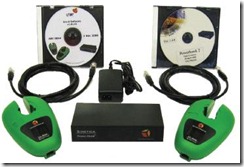
I received a CL-AMP IT package from the Noble Vision Group to review and give them some feedback on their kit.   The first thing that struck me was that this kit seemed to essentially be a power metering for dummies kit.    There were a couple of really neat characteristics out of the box that took many of the arguments I usually hear right off the table.
nvg

First the “clamp” itself in non-intrusive, non-invasive way to get accurate power metering and results.   This means contrary to other solutions I did not have to unplug existing servers and gear to be able to get readings from my gear or try and install this device inline.  I simply Clamped the power coming into the rack (or a server) and POOF! I had power information. It was amazingly simple. Next up -  I had heard that clamp like devices were not as accurate before so I did some initial tests using an older IP Addressable power strip which allowed me to get power readings for my gear.   I then used the CL-AMP device to compare and they were consistently within +/- 2% with each other.  As far as accuracy, I am calling it a draw because to be honest its a garage based data center and I am not really sure how accurate my old power strips are.   Regardless the CL-AMPS allowed me a very easy way to get my power readings easily without disrupting the network.  Additionally, its mobile so if I wanted to I could move it around you can.  This is important for those that might be budget challenged as the price point for this kit would be incredibly cheaper than a full blown Branch Circuit solution.

For monitoring individual IT equipment you can use a power monitoring strip like Raritan’s.  Here is an 8 port device.

Dominion PX CR8-15

Raritan's Dominion® PX Intelligent Remote Power Management Solutions help IT administrators improve uptime and staff productivity, save money and improve utilization of power resources.

With the Dominion PX:

  • Emergencies can be resolved with remote serial and TCP/IP access to outlet-level switching, improving MTTR.
  • Capacity planning is simplified with unit-level and outlet-level power utilization information.
  • Staff can gather detailed power information to improve uptime and productivity.
  • Travel costs and time can be saved with remote power cycling and monitoring.

Information provided by the Dominion PX — displayed at the strip via an LED display, and remotely through a Web browser — can be used to improve capacity planning through power consumption information for both the PDU and individual receptacle. Precise, outlet-level access and control allows users to reboot attached devices.

There are many choices out there, and the above two will get you started on your search.

Use a viral strategy

I was talking about viral strategy and a person said I don’t get it.  “What is viral?”  Here is a good explanation of a viral ideas.

What makes an idea viral?

For an idea to spread, it needs to be sent and received.

No one "sends" an idea unless:
a. they understand it
b. they want it to spread
c. they believe that spreading it will enhance their power (reputation, income, friendships) or their peace of mind
d. the effort necessary to send the idea is less than the benefits

No one "gets" an idea unless:
a. the first impression demands further investigation
b. they already understand the foundation ideas necessary to get the new idea
c. they trust or respect the sender enough to invest the time

This explains why online ideas spread so fast but why they're often shallow. Nietzsche is hard to understand and risky to spread, so it moves slowly among people willing to invest the time. Numa Numa, on the other hand, spread like a toxic waste spill because it was so transparent, reasonably funny and easy to share.

Buy some of these tools and give them to some of the people who want to measure energy consumption.  Tell them if they know of someone else that can use the tools, they can request an additional equipment deployment.  The one request you have is to get a report on what they discover is the energy consumption of their devices.

As you discover useful information start to share the information. You will discover some interesting data.

What are you after?  A cultural shift where people regularly talk of the kilowatts used by systems. Where these is waste, and where there are efficiencies.

Keep in mind there is a viral aspect of the ideas. I wrote an article for Microsoft’s TechNet magazine last year.  Look at the below figure.  There was network switch that consumed 100 watts when powered off vs 350 watts when on.  This an example of something that would get people’s attention.

Figure 4 Power-consumption comparison of on versus off

You are driving for the same behavior change as those who drive a Prius with instant MPG of the car and how the hybrid system is running.

Formalizing the power monitoring and data collection

After you get some momentum you want to start to bring some structure in power monitoring data collection.  Here are some areas I would suggest next.

  1. What is the actual power consumption of the device at idle, off, under load, peak, and expected loads?
  2. What are the expected power changes in a minimum, maximum configuration vs. planned?
  3. Can any of the components be upgraded to energy efficiency?  Hard drives, power supplies, or processors?
  4. Is energy savings turned on in the server BIOS and/or OS?  How much do you save with power management turned on vs. off?
  5. Are there alternative designs that can be tested?
  6. The biggest waste is over-provisioning. Do devices have to be as powerful as originally specified?  Keep in mind, this saves money as well as power.

Hope this help you think about how to change people’s behavior to ask “what is the power consumption?” whenever they talk about data center equipment.

BTW, this time of the year, I can enjoy looking at the lake, but we don’t go out on the lake as the dock is under water. Having come from a desert (Las Vegas) I find it nice to return to a  water environment.

In Chinese Taoist thought, water is representative of intelligence and wisdom, flexibility, softness and pliancy

image

Read more

Gartner Data Center 2009 Conference – Day 2 – Green Data Center and Regulation

Green IT is a hot topic here at the Gartner Data Center Conference with 250 people in John Phelps presentation.

More and more enterprises are considering a green data center and what that actually means. This presentation looks at some best practices that can be done today and also looks at key green technologies and processes to consider for the future.

Key Issues:

  • What critical forces will drive enterprises to consider green data center strategies during the next five years?
  • What best practices and processes should users follow when creating a green data center?
  • What are some of the new green technologies that are emerging that companies should be tracking?

John covered a good overview of Green Data Center.

Mike Manos’s presentation was a more specific drill down into the topic of Carbon Regulation coming.

Regulation. It's Real. It's Coming. It's Expensive.

Wednesday, 02 December 2009
01:45 PM-02:45 PM

Speaker: Mike Manos
Location: Octavius 2
Session Type: Solution Provider Session

Energy regulation is coming. The US House of Representatives has already passed its Cap and Trade legislation and the Senate has a bill in committee. In Europe it already exists. The operational and cost impact on datacenters in the today's regulatory environment is substantial. In this presentation Mr. Manos will provide a detailed overview of the pending industry-impacting legislation and what you will need to do to negate its impact.

Mike was as passionate as ever. Mike started off asking if Data Center Regulation is an issue. 80% of audience raised their hands.

There are about 125 people in the room.

One specific Mike drilled into Carbon Reduction Commitment CRC in the UK, and the impact of the act.

CRC is designed to improve energy efficiency in large organisations. It will operate as a 'cap and trade' mechanism, providing a financial incentive to reduce energy use by putting a price on carbon emissions from energy use. In CRC, organisations buy allowances equal to their annual emissions. The overall emissions reduction target is achieved by placing a ‘cap’ on the total allowances available to each group of CRC participants. Within that overall limit, individual organisations can determine the most cost-effective way to reduce their emissions. This could be through buying extra allowances or investing in ways to decrease the number of allowances they need to buy.

Let me drop to the closing statement.

Preparing for Regulation.  What to do?

  1. Prepare for regulation. (make a plan)
  2. Measure energy consumption.
  3. May require work changes.
  4. Select appropriate tools.
  5. Need to determine how to look at data centers in aggregate. (holistic view)

Overall it was good to see that the audience was engaged on the topic.

Yeh!!!  Mike told the audience water is the next issue.

Matt Stansberry was in the audience as well, so hopefully he’ll write something as well.

Read more