EPA vs. Carbon motivated Congress Members debating who sets Energy Policy

Alaska (Oil) and West Virginia (Coal) Senators are making statements that congress should set energy policy and not the EPA, and are attacking the EPA's scientific findings.

EPA Stripped of Authority Would Be Threat to Climate Change Bill

Posted by Bridgette Outten in The District23 hours ago

President Barack Obama is planning to veto a bill that — if it passes Congress — would strip the Environmental Protection Agency of the authority to regulate greenhouse gas emissions and derail efforts for a climate change bill.

Alaska Senator says.

GOP Alaska Sen. Lisa Murkowski will ask senators to approve the measure Thursday, which willreportedly signal the Senate’s official disagreement with the EPA’s finding that carbon is a danger and needs to be regulated. The proposal uses a technique that can’t be filibustered and is an official mechanism to disagree with the rulings of executive branch agencies, according to reports.

Support for the Murkowski is coming from both sides of the aisle as lawmakers dispute the EPA’s right to set energy policy.

West Virginia says.

“I have long maintained that the Congress — not the unelected EPA — must decide major economic and energy policy,” said Democratic Sen. Jay Rockefeller of West Virginia in a press release. “EPA regulation will have an enormous impact on the economic security of West Virginia and our energy future.”

The White House says.

The White House said this week that Murkowski’s proposal would “undermine the administration’s efforts to reduce the negative impacts of pollution and the risks associated with environmental catastrophes, like the ongoing BP oil spill.”

The EPA says.

The Miami Herald reported that EPA Administrator Lisa Jackson “had even harsher words:”

“She called the oil spill a ‘tragic reminder of the hazards of our oil addiction’ and accused Murkowski of undermining the agency’s efforts to zero in on large emitters, not small ones.

‘It would take away EPA’s ability to take action on climate change,” Jackson said. “And it would ignore and override scientific findings, allowing big oil companies, big refineries and others to continue to pollute without any oversight or consequence. Finally, it will result in exactly zero protections for small businesses.’”

As the NYTtimes reports the battle is for jobs in States with a high carbon impact.

Republicans voted in unison, with some arguing that the emission program would suffocate millions of jobs and others asserting that EPA's plan is an unparalleled power shift toward "unelected bureaucrats," weakening Congress. Altogether 47 lawmakers, including six Democrats, supported moving forward with a vote to reverse the agency rules.

This is an interesting consequence of 2 Senators from each State vs. the House of representatives for the population.  The States get to argue for their own livelihood vs. the population at large.

Some think the Climate Bill is too hard this year, but next it could be done.

One Dem: Climate bill next year

But there's evidence for less optimism: 47 senators signaled discomfort with a federal policy reducing greenhouse gases. Six of them are Democrats, a margin of mutiny that, if transferred to a vote on climate legislation, would likely spell disaster.

They include: Sens. Evan Bayh of Indiana; Mary Landrieu of Louisiana; Ben Nelson of Nebraska; Jay Rockefeller of West Virginia; and Blanche Lincoln and Mark Pryor, both of Arkansas. All come from states that lean heavily on fossil fuels.

The final tally, combined with heightening campaign partisanship, seems to have convinced some cap and trade supporters that the climb is too steep this year.

"I think it's difficult to pass a big bill a few months before a big election," Sen. Dianne Feinstein (D-Calif.) said after the vote. "But I think it can get done next year."

Where should you build your next data center?  What colocation facilities will be in high demand.

If you aren't thinking of a carbon impact and a green data center strategy you better get started soon.

Read more

Bill Gates other execs recommend $16 billion/yr investment in clean energy

CNET news covers Bill Gates and other execs recommendations for clean energy investment.

Gates, other execs call for more energy spending

by Lance Whitney

Bill Gates and other corporate figures say America's current energy strategy is hurting the economy, the environment, and national security and is asking the government to devote more money to fuel alternative energy.

The group, dubbed the American Energy Innovation Council (AEIC), released a detailed report on Thursday highlighting the problem and offering its own recommendations (PDF). Members of the group were due to meet with President Obama in the White House to discuss their concerns and possible remedies.

The site with Bill Gates and others is here.

OUR COMMITMENT TO CLEAN ENERGY

We have had the great privilege, as business leaders, of building companies that have become leaders in their respective fields, and employ hundreds of thousands of American workers. Our experience in building these companies has given us a common and unshakable belief in the power of innovation.

And, a PDF. With 5 recommendations.

OUR RECOMMENDATIONS


Create an independent national energy strategy board.


Invest $16 billion per year in clean energy innovation.


Create Centers of Excellence with strong domain expertise.


Fund ARPA-E at $1 billion per year.


Establish and fund a New Energy Challenge Program to build large-scale pilot projects.

Read more

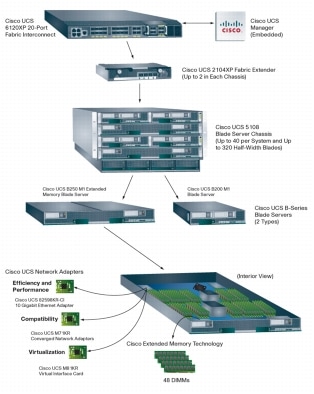
Rackforce builds a Green Data Center Stack with Cisco UCS Servers

I had the pleasure of spending 1 1/2 hrs chatting with Brian Fry VP of Sales and Marketing from RackForce and Kash Shaikh sr marketing manager of Cisco's Data Center Switch. There is no way I can capture all we talked about in one blog entry, so let's start with an overall approach that was refreshing and logical to see.

I asked Brian Fry what led him to pick the Cisco UCS solution.  The simple thing that Brian explained is he wanted the least amount of people to support using the least amount of power.  Now if that isn't a path to a Green Data Center, I don't know what is.  Yet, few take this approach.

If you want the least amount of people and power to provide compute where do you start?  At the beginning of the conversation, Brian explained RackForce is on its 4th generation of data centers since 2001.  And, over this time Rackforce has hired their own power and cooling expert to design and run its data centers.

So, a funny part I can't skip is Cisco UCS.

Cisco UCS blade center

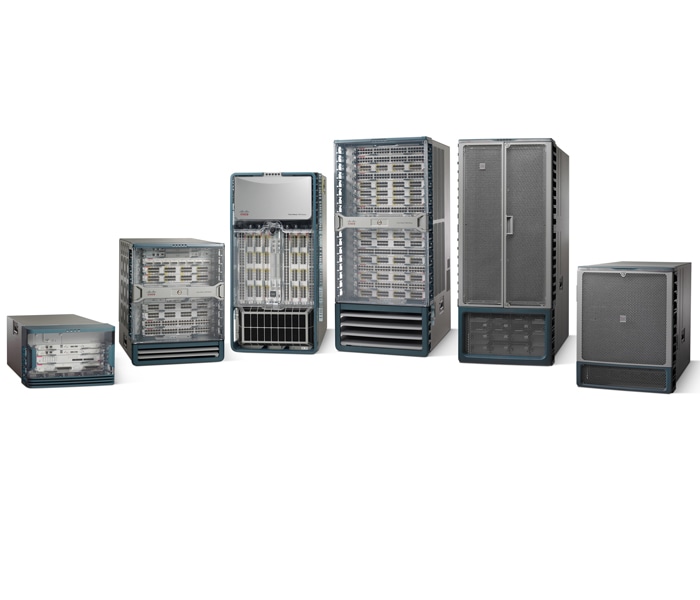
Connected with Cisco Nexus switches.

Large Photo

Running in an IBM rack.

IBM XIV SAN

With a modular data center design that can partially roll out Power and Cooling infrastructure up to 10MW to fill the 30,000 sq feet of data center space.

All of this together creates a Green Data Center stack, starting from the hydro-electric power, power and cooling systems, racks, network, servers, to virtualization ready for an OS install.

I am going to write more about RackForce, and need to digest what they are doing to integrate it into other ideas.

Selling the Green Data Center to the CFO is one area I've been thinking about and Brian provide some other good data points.

Read more

Wonder what Data Center industry would look like without Google, Amazon Web Services, Microsoft, Apple, Yahoo, Facebook

Print Publishing is going through a rapid change that some will point fingers at Google to blame.  Google has a presentation they are giving to show the history of print, analyzing print media's revenue stream.

Newspaper economics: online and offline

Tuesday, March 9, 2010 at 9:00 AM ET

Posted by Hal Varian, Chief Economist
It is widely recognized that the news industry is facing financial difficulties, but there is little agreement about the source of those difficulties or what can be done about them. The debate about the role of the web has been particularly heated: is it the source of the problem or the source of the solution? The Federal Trade Commission is exploring questions like this through a series of workshops on the future of the news industry. At the first round in December, Josh Cohen from the Google News team spoke about how we're working with news publishers to help them attract bigger audiences and generate more revenue. The next round of the workshop kicks off in Washington D.C. this morning, and I will be speaking about the economics of news -- offline and online. I first gave this talk at the UC Berkeley Graduate School of Journalism in January and wanted to give you a summary of my remarks here.

One interesting thing about the big companies I mention in the title is whenever they run their services in colocation facilities they are running at power utilizations that make cost effective use of the capacity that would put others to shame if shown side by side.  The economics and business are changing in data centers with these players that reminds me of how publishing had a slow change that eventually builds to forcing those with unsustainable business models to go out of business.

Somehow the publishers were able to make the numbers look good to advertisers even though circulation wasn't holding up.

image

Above is circulation per household, below is daily circulation.

image

huh.  There are some interesting numbers going on in data center space that don't make sense like above.

I talked to a person who is thinking about blogging about the data center business, and hopefully, he can shed some light on the potential direction of the data center industry.

Years from now are we going to see an analysis by Google on the data center industry that states the facts?  Here is what they said about print publishing.

image

Read more

If 25% can achieve status will it motivate the other 75%, EPA announces Energy Star for Data Centers

The EPA announced its Energy Stare Labe for Data Centers.

EPA Announces Data Centers Can Now Earn Energy Star Label

Release date: 06/07/2010

Contact Information: Enesta Jones, jones.enesta@epa.gov, 202-564-7873, 202-564-4355

WASHINGTON – The U.S. Environmental Protection Agency (EPA) announced today that stand-alone data centers and buildings that house large data centers can now earn the Energy Star label. To earn the label, data centers must be in the top 25 percent of their peers in energy efficiency according to EPA’s energy performance scale. By improving efficiency, centers can save energy and money and help fight climate change.

The metric is defined using PUE.

EPA uses a commonly accepted measure for energy efficiency, the Power Usage Effectiveness metric, to determine whether a data center qualifies for the Energy Star label. Before being awarded the Energy Star, a licensed professional must independently verify the energy performance of these buildings and sign and seal the application document that is sent to EPA for review and approval.

Which I am sure The Green Grid and other PUE supporters are happy with.

But, will a standard that says 25% of the top performers in PUE earning an ENERGYSTAR label drive others to follow?

The standard implies that running energy efficient servers will help you run improve data center energy efficiency.

Data centers can improve energy efficiency in many ways, such as purchasing Energy Star qualified servers and ensuring that all HVAC equipment functions properly.

The efficiency of the IT load actually could hurt your PUE, because you would need less power, and the lower load on the data center infrastructure makes it harder to achieve a low PUE.  If you are focused on a low PUE you want a nice consistent high load on your infrastructure that allows your equipment to run at optimal conditions.

Would you rather run a higher PUE with a lower total power usage or a lower PUE with a higher total power usage.  If you are paying the electricity bill you want the lowest bill.

This can be confusing, and only time will determine if the other 75% will be motivated by the 25% who have ENERGYSTAR for their data center.

Read more