One way to tame those low utilization energy wasting server cpus, switch to ARM

Seems like this is the time to pick on the energy waste in data centers.  Wired has a post on the waste from servers.

Data Center Servers Suck — But Nobody Knows How Much

Mozilla’s servers average around 6 percent CPU utilization, but maybe that’s OK. Photo: Ariel Zambelich/Wired

If the computer industry’s dirty little secret is that data centers are woefully inefficient, the secret behind the secret is that nobody knows how bad things really are.

On its surface, the issue is simple. Inside the massive data centers that drive today’s businesses, technical staffers have a tendency to just throw extra servers at a computing problem. They hope that by piling on the processors, they can keep things from grinding to a halt — and not get fired. But they don’t think much about how efficient those servers are.

Mozilla is quoted as pointing out the low cpu utilization is what comes with the territory, and they have a much higher utilization of RAM and network.

Over at Mozilla, Datacenter Operations Manager Derek Moore says he probably averages around 6 to 10 percent CPU utilization from his server processors, but he doesn’t see that as a problem because he cares about memory and networking. “The majority of our applications are RAM or storage constrained, not CPU. It doesn’t really bother us if the CPU is idle, as long as the RAM, storage, or network IO [input-output] is being well-utilized,” he says. “CPU isn’t the only resource when it comes to determining the effectiveness of a server.”

One way to make this problem go away is to use a cpu that uses a lot less power.  an ARM processor.  HP thinks ARMs will be 15% of the server market in 2 years. ?

HP Believes ARM Will Conquer 15% of the Server Market in Two Years


Adjust text size:  

 
Calxeda Marketing Shot
Enlarge picture
The world’s largest PC manufacturer, American company HP is also one of the largest server makers in the IT world. The company is working with Calxeda to build ARM servers, but it has strangely introduced Atom micro-servers first.

Can you hear the leaks in the Data Center hype bubble?

I haven't written a post for a few days. My main machine needed to go in for repairs, and it took me offline for two days and forced me to go to back-up computers.  Instead of getting frustrated I went with the flow and spent more time reading and thinking.

What comes to mind is the number of things that are not panning out to meet the hype.

Like what?  The Yahoo Chicken coop.  DCK took a trip in the Yahoo chicken coop.

Inside Yahoo’s ‘Chicken Coop’ Data Center

  •  
  •  
  •  
  • Share

If you’re a regular reader of Data Center Knowledge, you’ve seen plenty of images we’ve posted of the Yahoo Computing Coop data center in Lockport, New York. But we’ve never seen any video from inside the facility until we came across this footage on YouTube from the grand opening of the data center. There’s brief comments from politicians and executives, but also some views of the racks and aisles. This video runs about 5 minutes.

The media was all excited.  Who else is building a chicken coop type of design?

The Modular Data Center has almost every data center company saying they can go modular or containers.  Where is the massive container park DC?  There a few, but modular doesn't seem as big as the hype.

DCIM is supposed to be big.  Many are using systems, but they are finding out how much there is marketing hype vs. the reality of operating DCIM.

The number of data center consultants, real estate, and site selection people has added a lot more people over the past 5 years, but the business has not grown as much.

The data center shows are not as crowded as they used to be and the vendors are questioning their marketing spend.

Thanks to Facebook, Amazon, Microsoft, and Google data centers are in the media more often, but the number of data centers isn't even close to the increase in media coverage.

You could look at all of this as leaks in the data center hype bubble.  The bubble will not burst like other hyped events, but it does seem like you can hear the air deflating out of the bubble.

Google, Microsoft, Facebook presenting at 7x24 Exchange Nov 2012

The 7x24 Exchange Conference has announced their agenda and two people who I have had on 7x24 panels are presenting on their own this next conference, Microsoft's Amaya Souarez and Google's Joe Kava.

One of the reasons I enjoy the 7x24 Exchange conference is how people who have something good to say can get a speaking spot without a sponsorship package.  

NewImage

Monday Amaya Souarez is presenting on Capacity Planning.

1:30 P.M.
Microsoft: DC Capacity Planning - From Rack to Future Market

Capacity Planning for Data Centers is a uniquely challenging adventure, and is not a one size fits all problem. All data center owners, hosting providers and business strategy planners are at some point in time dealing with a capacity planning issue. The complexity of managing capacity is particularly accelerated in the online services industry, due to rapidly changing market requirements.


Amaya Souarez
Director, DC Strategy & Automation
Microsoft

Tues Joe Kava is Keynoting with some new material never presented to the public.

9:00 A.M.
Keynote:
Google Data Centers: A Behind the Scenes Look at Infrastructure and Innovations


Google's data center practice helped develop the company's competitive edge for online services and products. Now, nearly seven years after the first data center went into production, there is an ever increasing need to be creative in order to drive efficiency and minimize the impact on the planet. This presentation hopes to uncover some of Google's early day decisions, why they were made and how those decisions led to future innovation. Take a virtual tour with us of our facilities and join the discussion of what challenges we all face in the industry.


Joe Kava
Senior Director
Google Data Centers

Weds Facebook is presenting data on their operations in humid climates.

10:15 A.M.
Facebook OCP: Operation in Humid Climate & DC Reliability Calculations

Facebook has completed the of construction of custom greenfield datacenters in Prineville, OR, and Forest City, NC, and is currently constructing in Lulea, Sweden. Previously, Facebook leased datacenter capacity, as is typical for Internet startups. As demand continued to grow, it was clear that Facebook would reach a scale where design and construction of a customized site would be beneficial. Control of the application, the server configurations, and the datacenter design would allow for customization beyond what is typical industry practice. The following Open Compute Project technologies and topics will be discussed (opencompute.org): quick review of design; operational data in east coast datacenter humid climate; review of our reliability calculations.


Paul Hsu, P.E.
Datacenter Electrical Engineer
facebook

Dan Lee. P.E.
Datacenter Mechanical Engineer
facebook

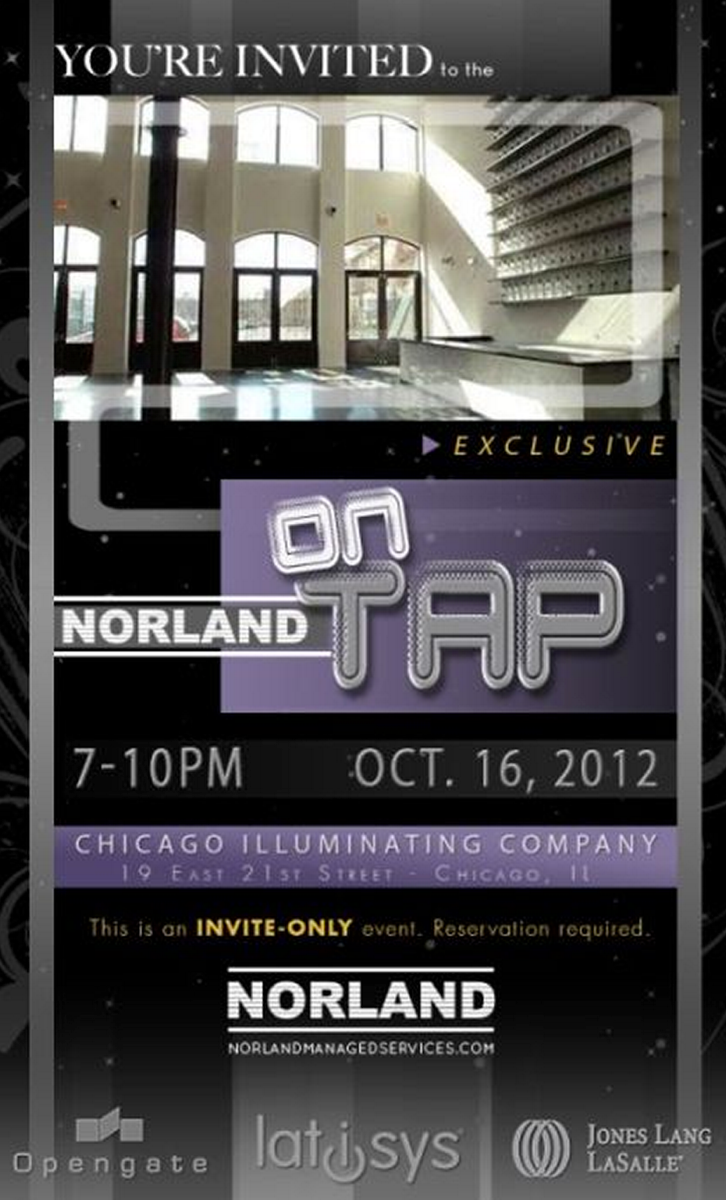
Chicago "On Tap" Social, Oct 16, 2012, 7-10p

It’s that time of year for Steve Manos’s “On Tap” social.  This year it is Norland On Tap at Chicago Illuminating Company.  The sponsors are Norland, Opengate, Latisys, and JLL.

If you’ll be in Chicago on Oct 16 your best bet to attend is to reach out to your contacts at the sponsoring companies for an invitation.

Unfortunately, I cannot make it this year, but I will be in Chicago the week after for another event.

NewImage

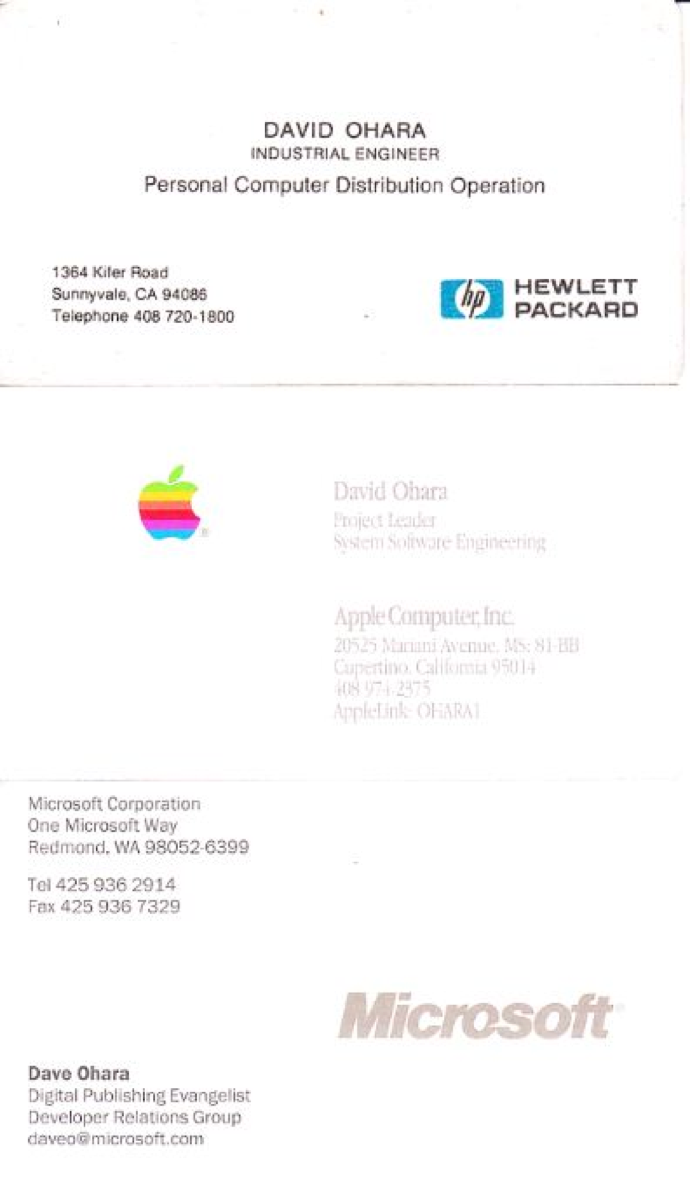
A time history of Dave Ohara

I was at a data center social last week and a construction guy asked me what I do. 

I have the about me page on this blog, but it doesn't really answer the question what I do, so let me try a different way to explain.

My degree is in Industrial Engineering and Operations Research.  What does in IEOR focus on?

The Department of Industrial Engineering and Operations Research (IEOR) educates students to become highly skilled in:

the quantitative modeling and analysis of a broad array of systems-level decision problems concerned with economic efficiency, productivity and quality;

the collection of data and analysis of data using database and decision-support tools;

the comprehensive modeling of uncertainty;

the development and creative use of analytical and computational methods for solving these problems;

and to obtain the broader skills, background and knowledge necessary to be an effective professional in a rapidly-changing global economy.

I spent 5 years at HP working in manufacturing and logistics from 1980 - 1985. When the printer business was building up and one of the divisions I worked in was the HP division that was the distributor for printers and computer supplies.

In 1984, HP introduced both inkjet and laser printers for the desktop. Along with its scanner product line, these have later been developed into successful multifunctionproducts, the most significant being single-unit printer/scanner/copier/fax machines. The print mechanisms in HP's tremendously popular LaserJet line of laser printers depend almost entirely on Canon's components (print engines), which in turn use technology developed by Xerox. HP develops the hardware, firmware, and software that convert data into dots for the mechanism to print.

I made the switch from HP to Apple and worked on distribution and supply chain logistics, OEM peripheral procurement, and operating systems from 1985 - 1992 coinciding with rise and fall period of Apple.  Working on the Mac II and System were great. Working on the Mac Portable provided some good life lessons.

1986–1993: Rise and fall

The Macintosh Portable was Apple's first "portable" Macintosh computer, released in 1989.

Having learned several painful lessons after introducing the bulky Macintosh Portable in 1989, Apple introduced the PowerBook in 1991. The Macintosh Portable was designed to be just as powerful as a desktop Macintosh, but weighed 7.5 kilograms (17 lb) with a 12-hour battery life. The same year, Apple introduced System 7, a major upgrade to the operating system, which added color to the interface and introduced new networking capabilities. It remained the architectural basis for Mac OSuntil 2001.

The success of the PowerBook and other products brought increasing revenue.[49] For some time, it appeared that Apple could do no wrong, introducing fresh new products and generating increasing profits in the process. The magazine MacAddict named the period between 1989 and 1991 as the "first golden age" of the Macintosh.


At Microsoft I was recruited to work on Win3.1 Far East fonts, then spent most of my time working on Windows Operating system up until Windows XP.  After Windows XP, I switched to server, management tools, and evangelism.  1992 - 2006 was a long 14 years with a lot of changes.  The Microsoft years can be long so I just embedded the three time periods below.

In 2006 I took a year off, then started working on data centers with Mike Manos at first, then Olivier Sanche.  

I don't think I answered the question from the construction guy on what I do, but you have a better idea of what I did in my past.

NewImage