Looking forward to DCD SF, July 12, 2013

I am heading to DCD SF on July 12, 2013.

NewImage

Looking forward to see many friends and catching up on the latest from the DCD crew.

WHO SHOULD ATTEND

Datacenter Dynamics Converged San Francisco is the most important gathering of data center industry leaders in the bay area, bringing together:

  • End users and operators of the world’s largest data centers
  • C-level executives driving strategic direction of data center policy and investment
  • Key influencers on tactical decisions: operations, networks, IT applications, facilities, engineering, finance, and real estate


Converged San Francisco is an event you won’t want to miss!  You’ll hear from thought leaders on industry-changing strategy, explore the extensive exhibition floor to discover the latest disruptive innovations, and exchange ideas and experiences as you network with your peers from industries such as:

  • Information and communications technologies
  • Telecoms
  • The public sector
  • Education and research
  • Healthcare
  • Professional services
  • Media
  • Construction
  • Transport and logistics
  • Manufacturing
  • Energy and utilities
  • Retail
  • Travel and hospitality

Twitter and Youtube enabling more accurate reporting bypassing the media to distribute news

The reporting of Asiana Airlines accident at SFO has been interesting to watch.  I have this theory that the media are kind of like random efforts to get more traffic than others looking for the angle to tell that gets the most traffic.  Many times what gets the most traffic is not the truth, but what is most viral and gets shared through social media.  So what happens if social media itself is the best source of what is going on.

Example, PetaPixel reports on some of the most powerful photographs are coming from the NTSB.

The Asiana Airlines Flight 214 Crash Site, As Photographed by the NTSB

The Asiana Airlines Flight 214 Crash Site, As Photographed by the NTSB 9116ZRx

The media has been dominated by coverage of Asiana Airlines Flight 214′s crash landing in San Francisco this past weekend. What’s interesting is that some of the most powerful photographs showing the aftermath were not captured by professional photojournalists, but rather those with the most access to the site: US government employees.

The National Transportation Safety Board (NTSB) of the United States maintains a very active Twitter account, and has been Tweeting live updates to this story since news of the crash first emerged Saturday morning.

The officials have access to the real good stuff, and the media is looking for ways to get access.

NewImage

Here is B Roll of the wreckage that is again powerful, informative and without the colored commentary of a media reporter.

If you want the facts of what has been disclosed you can watch the NTSB media briefing on YouTube.  It is a bit dry, but that is what happens when you discuss the facts.


What I find interesting is this 2nd media briefing is missing the mass of media logo microphones on the podium.

With the use of Twitter and Youtube by those who have public information to share there is a change in how media operates.  

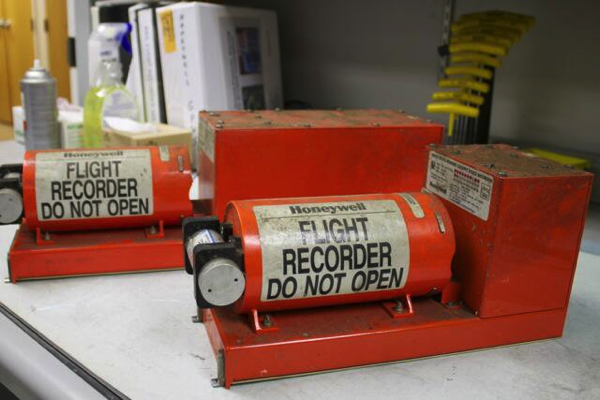
There are many who are curious what the conditions of the flight recorders are.  and the NTSB provides one photo.  This clearly answers there are two.  They are recovered.  Look undamaged.  There are thousands of more pictures and videos the NTSB has taken and they pick those that they think are most useful.  

NewImage


Three books on data visualization

The Economist has a review of three books on data visualization.

Data Points: Visualisation That Means Something. By Nathan Yau. Wiley; 300 pages; $32 and £26.99. Buy from Amazon.comAmazon.co.uk

Facts are Sacred. By Simon Rogers. Faber and Faber; 311 pages; £20. Buy fromAmazon.co.uk

The Infographic History of the World. By James Ball and Valentina D’Efilippo. Collins; 224 pages; £20. Buy fromAmazon.co.uk

Here is a video that shows you how the books look.

The author of this article hit upon exactly a point that came to my mind as well.  Should these books have even been in print.

But should these books have been published on paper at all? Today’s most impressive works, like “Wind Map”, were created to be online. Future infographics will be digital, data will stream in real-time and viewers’ interactions will determine what is presented. When this happens, what constitutes a good infographic will change. The revolution has just begun.

It's been a dream of companies like Adobe and others to allow the creation of online books.  But it is a challenge of the distribution channel not just creation

The one company that could take the above books online and allow them to make money would be Amazon.com.  Wouldn't it be cool if there was an AWS service that allowed you to create book-like content, make it interactive. posting video, etc.  Or Google could do this or maybe even Apple.

When IT is abundant, The focus is shifting to the information and how well things work

HBR has a guest post by the CEO of Box, Aaron Levie.  The article starts by referring to Nicholas Carr's infamous IT doesn't matter post.

How to Compete When IT Is Abundant

"You only gain an edge over rivals by having or doing something that they can't have or do," wrote Nicholas Carr ten years ago in his controversial HBR article, "IT Doesn't Matter."

Carr predicted that an organization's ability to compete through investing in information technology was about to change dramatically. When "the core functions of IT — data storage, data processing, and data transport — have become available and affordable to all," he wrote, IT would cease to be a source of competitive advantage.

Aaron closes with the point of IT moving from scarcity to abundance and competitive advantage.

In this transition from a world of IT scarcity to abundance, competitive advantage has little to do with unique access to technology, and everything to do with unique access to — and use of — information. When technology is near-ubiquitous, it's the connection between people and information that drives business forward. Organizations that capitalize on this trend will ensure that as information eats the enterprise, they'll be the ones satiated.

Here is another way to look at.  The early days of IT was just getting things to work.  The Cloud is showing how to get things to work at scale so you can supply the same service to a lot more people.  So, it is no longer a question of whether IT systems work.  The question has shifted to how well does IT work for my business?

The old world of IT help the keys to technology.  With the cloud users have choice and they'll take their information to where they can get the best service.  

IT needs to make a shift to being a business enabler to survive.  If IT lives in the old risks averse world users will continue to look for ways to sidestep the corporate policies.

As software eats the world, information is eating the enterprise. Access to the right information at the right time from anywhere will transform every business and every industry. Competitiveness in IT will come from connecting employees and partners in meaningful ways to bring products to market faster (how does a supply chain process shrink from days to minutes?), supporting customers with new experiences (can my thermostat talk to my energy provider?), and surfacing the right people and knowledge to generate better ideas (how do I find experts across my organization that I'm not connected to?).

A Game Plan for Adoption and Implementation of DevOps GigaOm Webinar July 11, 2013 10-11a PT, sponsored by PuppetLabs

I've been spending a bunch of time in DevOps space, going so far into the operations perspective one of my friends it is like OpsDev where Operations is defining the Development.

On July 11, 2013 10-11a PT, I am moderating a panel discussion a PuppetLabs sponsored GigaOm Webinar.

NewImage

In this webinar, the panelists will present concrete steps IT can take to get started, provide strategies to quantify and benchmark the benefits of DevOps within their organizations, and examine case studies of successful DevOps adoptions in other businesses.

Given I am moderating the panel and in charge of putting together the slide deck I can tell you ahead of time what to expect.  The panelists are as follows.

Panelists

Research Director, GigaOM Research
CEO and CTO, Stelligent Analyst, GigaOM Research
CTO, Puppet Labs Puppet Labs
IT researcher and author, Puppet LabsPuppet Labs

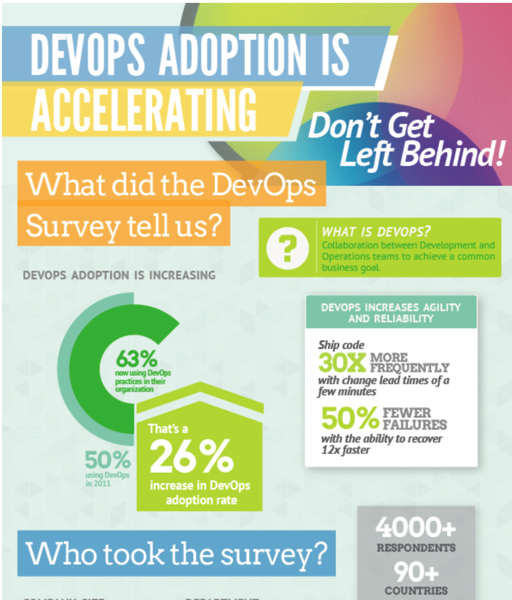
Instead of a typical Q&A type of format. We well be using survey results from a PuppetLabs DevOps study shared here as discussion areas for the panelists.

NewImage