7x24 Exchange Fall 2019 Keynote - Mike Massimino’s Words of Operational Wisdom

Mike Massimino gave the opening keynote at the Fall 2019 7x24 Exchange conference. Who is Mike Massimino? He sent the first tweet from outer space and SNL choose to add it to its routine.

Mike’s talk was entertaining as he used humor to intermix with words of wisdom he wanted to share.

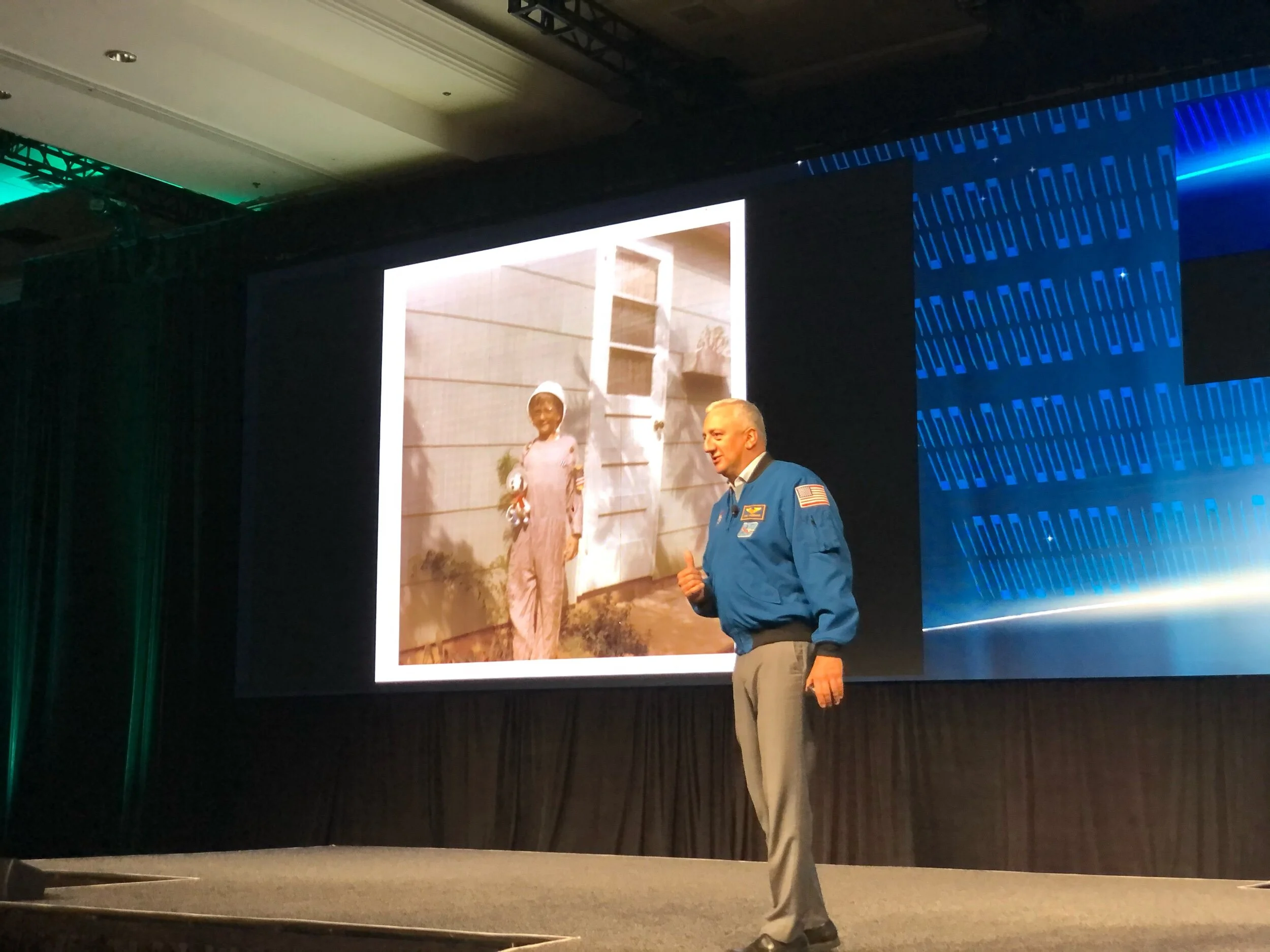
Below Mike shares a picture when he is 8 years old dressed up like astronaut, his hero Neil Armstong.
IMG_0826.jpeg

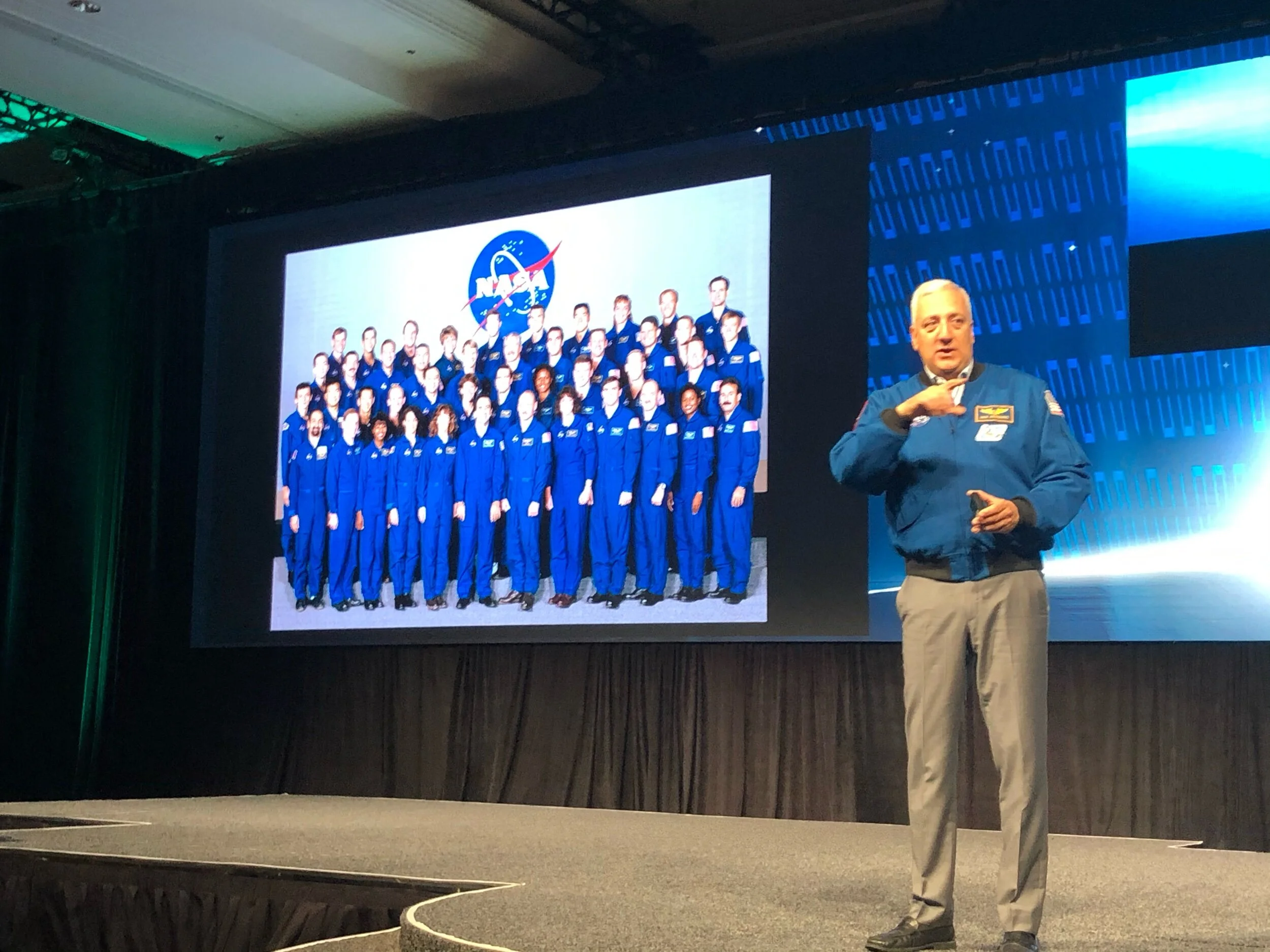
On a more serious note Mike shared the importance of a diverse team and working together as a team. He shared his experience to pass the swimming tests and the challenges he had to pass the test. The change he shared is having the trainers telling him that the best swimmers should pair with the poor swimmers because no one is going home after the tests until everyone passes. Mike’s emphasis with knowing the team applies well to the data center industry as the best companies have the best teams.
IMG_0827.jpeg

Much of what Mike spoke about is in an article he wrote in Esquire that you can read here. Reading the article nicely added more words of wisdom.

In Mike’s keynote he shared the “oh crap” moment when he has a stripped screw that he cannot remove. His words of wisdom are “30 seconds of regret. Cap it and then move on. Remember you can make it worse. Stay engaged.”
Apple's Lisa Jackson explains the effort tone greener is a never ending story

Some think being carbon neutral for power consumption is the end game. But data centers consume much more resources than power. The IT equipment is refreshed every 3-5 years. Sometimes quicker. How much of that IT gear is recycled? Hard drives are destroyed to protect data.

For a long read the Independent has an interview with Apple’s Lisa Jackson.

That simple, economic argument is cutting through, she says, and Apple’s leadership is also being pushed by those who work for the company. It is not simply good economic sense to be environmentally friendly, she suggests, but a change that is demanded by the young and engaged workers of Silicon Valley and elsewhere.

When you have an executive like Lisa Jackson reporting to the CEO Tim Cook in charge of sustainability the green effort is not simply a marketing message. It is part of who they are.

Restarting Green Data Center Blog v2.0

12 years ago I started blogging on green data centers. A that time no one was carbon neutral. PUE was not yet a standard. I thought greening the data center would make things better. 2 years ago I got bored and reduced my writing. Why? Because being carbon neutral and more efficient did not change data centers and it was getting boring. Same old stuff.

Taking a break I got more into construction issue. Then found how bad wireless was constraining innovation. And there were so many other things interesting going on that was not being covered at conferences and data center news. These entities also found the attendance and readership was falling and they added more things. Cloud, SaaS, IOT, and now Edge. But that stuff is boring and irrelevant to the core DC crowd that are where so many of friends work in.

One of my good friends who runs a big data center site and has worked for two of the big companies asked a great question 8 years ago. “How do you do PLM (product lifecycle management) in a data center?” This is something that our departed friend Olivier Sanche would be asking as well.

Over the past 8 years I have tried a variety of approaches to solve the problem of how to do PLM? One of the top problems is few people want to solve the PLM problem, but the benefits are huge.

What is PLM? Wikipedia has this post.

In industry, product lifecycle management (PLM) is the process of managing the entire lifecycle of a product from inception, through engineering design and manufacture, to service and disposal of manufactured products.[1][2] PLM integrates people, data, processes and business systems and provides a product information backbone for companies and their extended enterprise.[3]

So do you want the complete view? You can think of a data center which runs huge amount of services as a product.

I was deep into the technical issues, but nothing works. Why? Because the approach is wrong. There was so much data in silos that was hidden. Or information was not being collected. Groups would not work together. Groups would optimize for their own ways. You could say do the “Toyota Way” but few industries have been successful adopting the Toyota Way.

How to solve a hard problem that is like a big puzzle problem?

A couple of weeks ago I saw a Smithsonion Channel video on Bletchley Park - the Code Breaking’s Forgotten Genius. This video is an hour long and know most of you will not watch this.

A 3 minute video that may be more interesting is on how this same Genius paved the way for the Cloud.

I have much more to write on what it takes to green the data center, and what can be done beyond carbon neutral and a low PUE>

Dell Announces Wireless shielded Rack Enclosure

Electromagnetic Radiation is a complex topic that is heavily regulated, but not necessarily in the data center. Users are figuring out though that there are times when you want to protect what runs in the racks from what gets out and what can peak in.

For the past few years I have had fun connecting with old, old, old EMC (Electromagnetic Compliance) friends who I worked with 30 years ago when I was at Apple. These are friend I worked with to ship a wide range of Apple hardware products that needed to pass FCC and other government regulations. These guys were magicians in figuring out how shielding, cabling, and other changes could be made. This is stuff you do not see as it is hidden inside the box.

Dell has a cool rack they just announced for addressing electromagnetic radiation of server mounted gear.

This not easy to do, but I believe the Dell team has heard the customers and created a solution that customers have been asking for.