Rackforce builds a Green Data Center Stack with Cisco UCS Servers

I had the pleasure of spending 1 1/2 hrs chatting with Brian Fry VP of Sales and Marketing from RackForce and Kash Shaikh sr marketing manager of Cisco's Data Center Switch. There is no way I can capture all we talked about in one blog entry, so let's start with an overall approach that was refreshing and logical to see.

I asked Brian Fry what led him to pick the Cisco UCS solution.  The simple thing that Brian explained is he wanted the least amount of people to support using the least amount of power.  Now if that isn't a path to a Green Data Center, I don't know what is.  Yet, few take this approach.

If you want the least amount of people and power to provide compute where do you start?  At the beginning of the conversation, Brian explained RackForce is on its 4th generation of data centers since 2001.  And, over this time Rackforce has hired their own power and cooling expert to design and run its data centers.

So, a funny part I can't skip is Cisco UCS.
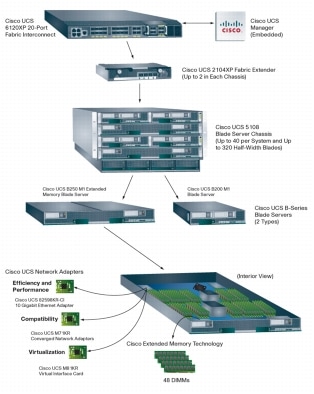
Cisco UCS blade center

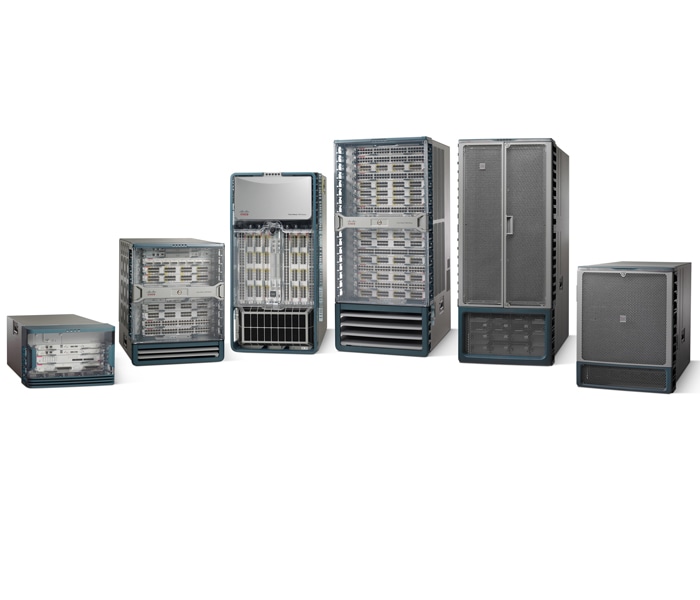
Connected with Cisco Nexus switches.

Large Photo

Running in an IBM rack.

IBM XIV SAN

With a modular data center design that can partially roll out Power and Cooling infrastructure up to 10MW to fill the 30,000 sq feet of data center space.

All of this together creates a Green Data Center stack, starting from the hydro-electric power, power and cooling systems, racks, network, servers, to virtualization ready for an OS install.

I am going to write more about RackForce, and need to digest what they are doing to integrate it into other ideas.

Selling the Green Data Center to the CFO is one area I've been thinking about and Brian provide some other good data points.

Read more

Wonder what Data Center industry would look like without Google, Amazon Web Services, Microsoft, Apple, Yahoo, Facebook

Print Publishing is going through a rapid change that some will point fingers at Google to blame.  Google has a presentation they are giving to show the history of print, analyzing print media's revenue stream.

Newspaper economics: online and offline

Tuesday, March 9, 2010 at 9:00 AM ET

Posted by Hal Varian, Chief Economist
It is widely recognized that the news industry is facing financial difficulties, but there is little agreement about the source of those difficulties or what can be done about them. The debate about the role of the web has been particularly heated: is it the source of the problem or the source of the solution? The Federal Trade Commission is exploring questions like this through a series of workshops on the future of the news industry. At the first round in December, Josh Cohen from the Google News team spoke about how we're working with news publishers to help them attract bigger audiences and generate more revenue. The next round of the workshop kicks off in Washington D.C. this morning, and I will be speaking about the economics of news -- offline and online. I first gave this talk at the UC Berkeley Graduate School of Journalism in January and wanted to give you a summary of my remarks here.

One interesting thing about the big companies I mention in the title is whenever they run their services in colocation facilities they are running at power utilizations that make cost effective use of the capacity that would put others to shame if shown side by side.  The economics and business are changing in data centers with these players that reminds me of how publishing had a slow change that eventually builds to forcing those with unsustainable business models to go out of business.

Somehow the publishers were able to make the numbers look good to advertisers even though circulation wasn't holding up.

image

Above is circulation per household, below is daily circulation.

image

huh.  There are some interesting numbers going on in data center space that don't make sense like above.

I talked to a person who is thinking about blogging about the data center business, and hopefully, he can shed some light on the potential direction of the data center industry.

Years from now are we going to see an analysis by Google on the data center industry that states the facts?  Here is what they said about print publishing.

image

Read more

If 25% can achieve status will it motivate the other 75%, EPA announces Energy Star for Data Centers

The EPA announced its Energy Stare Labe for Data Centers.

EPA Announces Data Centers Can Now Earn Energy Star Label

Release date: 06/07/2010

Contact Information: Enesta Jones, jones.enesta@epa.gov, 202-564-7873, 202-564-4355

WASHINGTON – The U.S. Environmental Protection Agency (EPA) announced today that stand-alone data centers and buildings that house large data centers can now earn the Energy Star label. To earn the label, data centers must be in the top 25 percent of their peers in energy efficiency according to EPA’s energy performance scale. By improving efficiency, centers can save energy and money and help fight climate change.

The metric is defined using PUE.

EPA uses a commonly accepted measure for energy efficiency, the Power Usage Effectiveness metric, to determine whether a data center qualifies for the Energy Star label. Before being awarded the Energy Star, a licensed professional must independently verify the energy performance of these buildings and sign and seal the application document that is sent to EPA for review and approval.

Which I am sure The Green Grid and other PUE supporters are happy with.

But, will a standard that says 25% of the top performers in PUE earning an ENERGYSTAR label drive others to follow?

The standard implies that running energy efficient servers will help you run improve data center energy efficiency.

Data centers can improve energy efficiency in many ways, such as purchasing Energy Star qualified servers and ensuring that all HVAC equipment functions properly.

The efficiency of the IT load actually could hurt your PUE, because you would need less power, and the lower load on the data center infrastructure makes it harder to achieve a low PUE.  If you are focused on a low PUE you want a nice consistent high load on your infrastructure that allows your equipment to run at optimal conditions.

Would you rather run a higher PUE with a lower total power usage or a lower PUE with a higher total power usage.  If you are paying the electricity bill you want the lowest bill.

This can be confusing, and only time will determine if the other 75% will be motivated by the 25% who have ENERGYSTAR for their data center.

Read more

Microsoft's Bob Muglia says Cloud Computing provides early feedback

Cloud Computing has many benefits, but here is one you don't hear often.  We run the Cloud for early validation.  CNET has an interview with Microsoft's Bob Muglia.

You mentioned that Microsoft is pretty much doing everything for the cloud first. Does that mean that over time on-premises customers are actually going to be getting technology that's somewhat older, for better and for worse?
Muglia: Well, I think the way to look at it is that we're able to use the cloud to do a lot more of our early validation than we've ever been able to do before. You know, you see us with labs, you know, Live Labs and things like that, being able to take ideas and put them up in the cloud. More and more what you'll see is the beginning of our beta processes will be run for new things up in the cloud, because our ability to get feedback from customers is so much more rapid if customers don't have to deploy the infrastructure themselves. So, there's a set of things that we can do, which will help to reduce our cycle time, and bringing new features to market.

Could Microsoft provide a cloud environment as part of enterprise sales agreements?

I mean, in general our products run on two- to three-year cycles, and it very often takes customers at least that long to deploy them. I actually think the cloud will expedite customers' ability to get our software and our innovations, even if they run it themselves, because it will shorten our cycle for delivery, and also I think customers as they see these things available in the cloud will have a better understanding of the advantages they can get if they deploy it themselves. So, I actually don't think it slows down things at all for our customers that choose on-premises.

Or help customers run their own private clouds.

We hear a lot about this term, private cloud, meaning taking a cloud-like infrastructure and deploying it in one's own data center, taking the idea of a public cloud and having a completely private version of that replicated in someone else's data center. I guess I'm kind of curious what are you hearing the most demand from customers for when they say private cloud.
Muglia: Well, you know, one of the things we've learned is that customers have different views of the term private cloud. And so what we've been talking about is customers' ability to build their own clouds in their own data centers or for partners to be able to build clouds.

But fundamentally we do see a great deal of demand for that, because customers have some very reasonable concerns about their ability to control the environment, and they often have security concerns. So, for many circumstances having a customer build their own cloud is what absolutely makes sense for them, and we're supplying them with the tools and products they need in the form of Windows Server, System Center, and SQL Server to build their own clouds.

The business models for cloud computing is where there new opportunities.  Most focus on an AWS type of model.  But, it is interesting to think down the path of what Bob Muglia suggests as a cloud computing run as part of product development.

BTW, one of the problems Microsoft has is Microsoft Update which was started in the Office team then Windows, is almost always turned off in the Server product.  So, Microsoft gets very little product crash data from Server.  In Azure though they can get all the for known environments.  That in itself is a big help for Microsoft's Server business.

Read more

Analyst predicts Video is next big thing for Apple's New Data Center

ComputerWorld covers an analyst that says Video is the next big thing for Apple's giant data center in North Carolina.

Apple's next big thing? Video, analyst says

Clues in future iPhones and iPads, massive data center point to video-based subscription services

By Gregg Keizer

April 21, 2010 02:31 PM ET

Computerworld - Apple's next big thing may be a video platform that combines cameras in the next versions of the iPhone and iPad with the giant data center the company's building in North Carolina, an analyst said today.

Will video be the market battle between Apple iVideo vs. Google YouTube.

Gottheil thinks that Apple is ready to make a major move into video, and based his bet on a series of clues in the company's upcoming hardware, as well as the $1 billion data center in North Carolina that's now hiring personnel.

Apple has the creative audience and a business model already for downloading videos. 

In the same way that Apple changed the market with iTunes App Store.  Why not sell videos authored in the iPhone 4G?

$0.99 amateur videos could make Apple way more money than Google ads on YouTube.  YouTube is stuck with a free business model.  Apple doesn't have to be free.

Video is one the tough authoring and distribution problems that Apple could solve.

In the same way that the iPod changed music.

Will Apple change video?

And, will AT&T make more money as people download videos on 3G.  That new 2 GB data plan can look really expensive.

Speaking of AT&T, their account site went down today.

AT&T's account site crumbles under iPhone owner load

Early eligibility offer for iPhone 4 upgrade swamps site

By Gregg Keizer

June 7, 2010 05:35 PM ET

Computerworld - AT&T's account management site went dark Monday after Apple announced that its U.S. partner would waive contract requirements to allow more customers to upgrade to the new iPhone 4 this month.

The site came back online at about 5 p.m. ET.

Read more